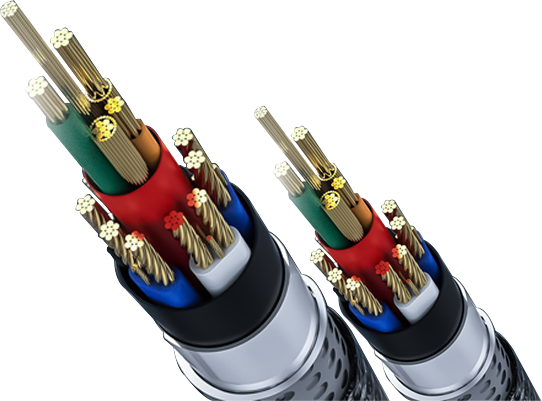
THHN and THWN wires are among the most common types used in building electrical installations. Understanding their characteristics and differences is crucial for ensuring the quality and safety of electrical installation projects.
Common Application Scenarios for
THHN and THWN Wires
THWN Wire Applications
With its outstanding waterproof performance, THWN wire finds extensive use in indoor and outdoor environments where water exposure is possible. In outdoor lighting applications, streetlights and landscape lighting in parks, plazas, and streets typically utilize THWN wire. These outdoor fixtures endure prolonged exposure to natural elements, inevitably facing erosion from rain and dew. THWN wire's waterproof properties effectively prevent moisture intrusion, ensuring stable and reliable operation of the lighting system to provide adequate illumination for nighttime activities. THWN wire is also indispensable for electrical installations around swimming pools. Swimming pool areas feature high humidity and frequent water splashes. Ordinary wires are highly susceptible to short circuits and leakage in such environments, whereas THWN wire adapts well to these damp conditions. It safeguards the secure operation of electrical equipment like pool lighting, pumps, and filtration systems, creating a safe and comfortable swimming environment. THWN wire is also extensively used for wiring electrical equipment in indoor damp environments like basements, laundry rooms, and bathrooms. Applications include basement lighting and ventilation systems, laundry room washing machines and dryers, and bathroom heating lamps and lighting fixtures. This effectively prevents electrical accidents caused by moisture.
In-Depth Analysis of THHN Wire
Insulation Material Properties
The insulation layer is a core component of THHN wire, composed of polyvinyl chloride (PVC) and nylon. PVC, serving as the inner insulation layer, offers numerous advantages. It possesses excellent electrical insulation properties, effectively preventing current leakage and ensuring safe energy transmission within the conductor. Simultaneously, PVC offers a degree of flexibility, allowing the wire to bend and route easily during installation, adapting to various complex electrical environments. Additionally, PVC material is relatively cost-effective, making THHN wire a good value proposition while maintaining performance, widely used in diverse building electrical projects. However, PVC has certain limitations, such as relatively limited heat resistance. In high-temperature environments, its physical and chemical properties may change, affecting insulation effectiveness. To address this shortcoming, nylon is applied as an outer coating on THHN wire. Nylon possesses excellent heat resistance, capable of withstanding higher temperatures, thereby further enhancing the wire's overall heat resistance rating. In industrial settings where motors generate significant heat, the nylon coating effectively shields THHN wire from elevated ambient temperatures, ensuring stable operation. Nylon also offers outstanding mechanical properties, including high abrasion resistance and tear strength, protecting the internal PVC insulation and conductors from external physical damage.
The operating temperature range for THHN wire is typically 90°C in dry conditions, meaning it maintains stable electrical performance and physical structure under such temperatures, ensuring safe and reliable power transmission. In humid environments, its rated temperature drops to 75°C. This reduction accounts for moisture's potential impact on insulation integrity and heat dissipation, guaranteeing safe operation. Regarding voltage ratings, THHN wire has a typical voltage rating of 600 volts. This voltage level suits most common building electrical systems, meeting the power demands of lighting, outlets, small appliances, and similar equipment.
Typical Application Examples
In dry indoor environments, THHN wire finds extensive and specific applications. Take lighting systems as an example: office areas in commercial buildings often install numerous fluorescent or LED lights to meet workplace illumination needs. THHN wire serves as the vital link connecting fixtures to power sources, reliably delivering electricity to each luminaire. This ensures ample illumination throughout workspaces, fostering productive environments for employees. In commercial shopping centers, diverse lighting fixtures—ranging from large chandeliers to recessed spotlights—are deployed to create bright, inviting atmospheres. THHN wire reliably powers these fixtures, safeguarding uninterrupted mall operations. THHN wire also plays a critical role in outlet circuits. In residential homes, appliances like living room televisions and air conditioners, or bedroom lamps and computers, rely on outlets for power. THHN wire transmits electricity from the home's distribution panel to each outlet, enabling these devices to function properly and meet daily electrical needs. In offices, power for equipment like computers, printers, and fax machines relies on outlet circuits connected by THHN wire. This ensures stable operation of office equipment and enhances work efficiency. For small appliance circuits—such as microwaves, rice cookers, electric kettles in kitchens, and hair dryers in bathrooms—THHN wire delivers stable power support with its excellent performance, ensuring these small appliances function reliably in household use.
In-Depth Analysis of THWN Wire
Key Feature: Water Resistance
THWN wire's most notable characteristic is its exceptional water resistance, achieved through its unique construction and material selection. The nylon sheath serves as the primary water barrier, featuring a tightly packed molecular structure that repels water molecules. When exposed to damp environments, this sheath effectively prevents moisture from penetrating the internal conductors and insulation, preserving the wire's electrical integrity. In contrast, the insulation of standard wires may swell, deform, or even dissolve after prolonged moisture exposure, degrading insulation integrity and causing safety hazards like short circuits or electrical leakage.
Regarding temperature ratings, THWN wire withstands up to 90°C in dry conditions, enabling its use in high-temperature settings. In industrial workshops, equipment like motors and transformers generate significant heat, creating elevated ambient temperatures. THWN wire reliably transmits power in such environments, safeguarding industrial machinery. In humid environments, its temperature rating drops to 75°C. This is because moisture impairs the wire's heat dissipation, reducing its thermal tolerance. Operating under humid conditions at the same temperature rating as dry environments risks overheating and damaging the insulation, potentially causing safety incidents. Regarding voltage ratings, THWN wire shares the same typical 600-volt rating as THHN wire. It is suitable for most common low-voltage electrical systems, meeting general power requirements across residential, commercial, and industrial applications.
Expanded Application Areas
Thanks to its waterproof and heat-resistant properties, THWN wire finds extensive use, particularly in indoor and outdoor environments demanding high water resistance. Streetlights represent a common outdoor application. Whether illuminating city streets or enhancing landscapes in parks and plazas, these fixtures endure prolonged exposure to natural elements—wind, rain, and sunlight. THWN wire reliably delivers stable power under such harsh conditions, ensuring nighttime road safety. It is also frequently used in electrical systems for outdoor billboards. Outdoor billboards are typically mounted at heights, making wire replacement and maintenance challenging. Therefore, wires must possess excellent durability and waterproofing properties.
Indoors, basements are areas with relatively high humidity, susceptible to groundwater seepage and damp air. THWN wires are commonly used for wiring basement lighting, ventilation, and drainage equipment. When installing lighting fixtures in basements, THWN wire prevents short circuits and fixture damage caused by damp conditions, safeguarding basement illumination needs. For ventilation and drainage equipment like exhaust fans and sewage pumps, THWN wire ensures stable operation in humid environments, promptly removing moisture and standing water to maintain basement dryness and safety. In areas like bathrooms and laundry rooms, where water and steam are abundant, humidity levels are extremely high. THWN wiring is also widely used in these spaces.
Key Differences Between THHN and THWN Wiring
Water Resistance Comparison
THWN wiring excels in water resistance, primarily due to its unique structure and materials. Structurally, THWN wire features a specially designed nylon sheath. Nylon's tightly packed molecular structure resists water penetration, forming a robust waterproof barrier. Beyond conventional polyvinyl chloride (PVC) inner insulation, this nylon sheath further enhances overall water resistance. When exposed to humid environments—such as underground installations where soil moisture is abundant or outdoor settings subjected to prolonged rainfall—the nylon sheath effectively blocks moisture from infiltrating the internal conductors and insulation. This ensures the wire's electrical properties remain unaffected, guaranteeing stable and safe power transmission.
In contrast, while THHN wire also features a nylon coating, it is not specifically designed for waterproof environments and has significant limitations in water resistance. When exposed to damp conditions, moisture can penetrate the insulation layer, degrading its performance. This occurs because the nylon coating primarily enhances heat resistance and abrasion resistance rather than providing waterproofing, offering weak moisture barrier capabilities. Prolonged use in humid environments allows moisture to gradually erode the insulation, reducing insulation resistance and increasing the risk of short circuits and electrical leakage.
Differences in Heat Resistance
Regarding heat resistance, THHN wire holds certain advantages. It operates stably in elevated temperatures, typically rated for 90°C in dry conditions. This capability stems from its insulation materials and structural design, which resist performance degradation at elevated temperatures. In industrial settings like steel mills or aluminum smelters—where high-temperature equipment and ambient heat are prevalent—THHN wire ensures reliable power transmission for electrical equipment, maintaining operational integrity. Its insulation combines polyvinyl chloride (PVC) and nylon materials, maintaining excellent physical and chemical properties at elevated temperatures. The nylon coating further enhances heat resistance, effectively preventing insulation softening, deformation, or decomposition under heat, thereby safeguarding the wire's electrical insulation integrity.
THWN wire offers slightly lower heat resistance compared to THHN. While it can withstand temperatures up to 90°C in dry conditions, its rated temperature drops to 75°C in humid environments. This is because moisture impairs the wire's heat dissipation, causing internal heat buildup and reducing its thermal tolerance. Operating THWN wire in humid conditions at the same temperature rating as in dry environments risks overheating and damaging the insulation, potentially leading to safety incidents. When wiring electrical equipment around outdoor swimming pools, where humidity is high, THWN wire must be strictly operated below 75°C to ensure safe performance.
Similarities Between THHN and THWN Wire
Nylon Outer Jacket
The nylon outer jacket is a significant common feature of both THHN and THWN wire, providing critical protection during use.、阿萨?xxxxxxxx, enabling the wire to withstand external friction and scratches during installation and use. When wires are run through conduits, they may rub against the inner walls. Without a durable outer jacket, the insulation could easily wear down, compromising insulation integrity and potentially causing safety hazards like short circuits. The nylon jacket withstands this friction, safeguarding the internal insulation and conductors from damage. Nylon also possesses high mechanical strength, enhancing the overall structural stability of the wire. When subjected to external forces like pulling or compression, the nylon outer jacket disperses stress, preventing damage to the internal wire structure.
The nylon outer jacket further exhibits chemical stability, resisting corrosion from certain substances. In industrial settings where acids, alkalis, salts, and other chemicals are present, standard wire insulation materials may react chemically upon contact, leading to performance degradation. The nylon jackets on THHN and THWN wires offer protection against chemical damage to the internal structure, ensuring reliable operation in environments with high chemical corrosion risks.
Applications in Building Wiring
THHN and THWN wires hold significant positions in building wiring systems, widely used in electrical installations across various structures. In residential buildings, both are extensively employed in new developments and electrical retrofits of older homes. From household lighting fixtures to power connections for various appliances, they are indispensable. Electrical circuits for devices like living room chandeliers, televisions, air conditioners, bedroom lamps, computers, kitchen stoves, and microwaves typically utilize THHN or THWN wiring. These cables deliver stable electrical power to household appliances, ensuring comfort and convenience in daily life. In commercial buildings like shopping malls, office towers, and hotels, electrical systems are more complex and demand greater quantities of wiring. THHN and THWN wires are not only used for lighting and outlet circuits but also for critical electrical equipment wiring, such as elevators, ventilation systems, and fire protection systems.
Voltage Rating
Regarding voltage rating, THHN and THWN wires share similarities, both typically rated at 600 volts. This voltage level enables their widespread use in most common low-voltage electrical systems.
How to Choose: THHN or THWN?
Indoor vs. Outdoor Installation Factors
For indoor environments in dry spaces—such as living rooms and bedrooms in residential homes, or offices and conference rooms in commercial buildings—THHN wire is the preferred choice. These areas typically lack moisture interference, allowing THHN wire's high heat resistance and excellent electrical performance to fully deliver stable power to indoor electrical equipment. Its relatively lower cost also helps reduce overall electrical installation expenses. In contrast, THWN wire holds a distinct advantage in indoor areas prone to moisture, such as basements, laundry rooms, and bathrooms. THWN wire's waterproof properties effectively prevent safety hazards like short circuits or electrical leakage caused by dampness, ensuring the reliable operation of electrical systems and user safety.
In outdoor environments, where wires are directly exposed to natural conditions like rain, dew, and humid air, THWN wire is virtually the only choice. Using THHN wire in these outdoor scenarios risks moisture erosion of its insulation, leading to degraded electrical performance and potentially causing electrical accidents.
Degree of Exposure to Moisture
For environments with occasional or mild moisture exposure, such as bathrooms in ordinary residences, THWN wire is well-suited. While some humidity may be present, as long as adequate ventilation is maintained, moisture does not accumulate for extended periods. However, when environments are subject to prolonged or heavy moisture, higher waterproofing requirements for wiring become essential. In underground parking garages, where high groundwater levels and relatively poor ventilation create high humidity and potential for standing water, THWN wire must be used. In buildings near water sources like rivers or lakes, or in regions with prolonged rainy seasons like southern China, internal electrical systems may endure prolonged damp conditions. Selecting THWN wire ensures better adaptation to these harsh environments and maintains stable electrical system operation. In specialized locations like sewage treatment plants and swimming pools, where substantial moisture is present, THWN wire is indispensable. It maintains excellent performance under prolonged immersion or high humidity, safeguarding the normal operation of electrical equipment in these environments.
Budget Considerations
Generally, THHN wire carries a relatively lower cost. This stems from its design primarily for dry environments. Its insulation materials and manufacturing processes are simpler, requiring less focus on specialized waterproofing, thereby reducing production expenses.
THWN wire, owing to its waterproof properties, requires specialized materials and processes during production to ensure water resistance, resulting in higher costs. However, from a long-term perspective, it effectively prevents wire failures and maintenance costs caused by damp environments, offering superior cost-effectiveness.
Summary:
THHN/THWN dual-rated wire demonstrates numerous advantages in modern building electrical installations, making it an ideal choice for many projects. Its performance benefits are significant, seamlessly combining the high heat resistance of THHN wire with the waterproofing of THWN wire. In damp environments, its outstanding waterproofing capability effectively prevents electrical failures caused by moisture intrusion, ensuring stable operation of electrical systems.