Insulated Wires in Electrical Systems
In modern electrical systems, insulated wires are crucial for ensuring stable power transmission. They are widely used in various scenarios, undertaking the vital tasks of conveying electricity and transmitting signals.
Insulation is vital for both the safety and performance of electrical systems. In terms of safety, it isolates live conductors from the external environment, preventing current leakage and avoiding electric shock accidents—many electrical incidents stem from insulation failures. Regarding performance, effective insulation minimizes power transmission losses and ensures stable electricity delivery. For instance, high-quality insulation materials in high-voltage transmission lines reduce corona discharge, enhancing transmission reliability.
Polyvinyl chloride (PVC) is a widely used insulation material in the electrical industry. It appears as an amorphous white powder with a relative density of 1.4. PVC offers excellent overall performance, featuring a stable molecular structure, outstanding electrical insulation properties, good flexibility and plasticity, and ease of processing. It also exhibits superior chemical resistance, water resistance, and inherent flame retardancy, making it adaptable to complex environments. Furthermore, PVC is cost-effective, offering high value for money, which contributes to its popularity.
What is PVC-insulated wire?
PVC-insulated wire uses polyvinyl chloride (PVC) as the insulating material to encase the conductor, serving for power transmission and insulation protection. It consists of a conductor and a PVC insulation layer. The conductor forms the core, commonly made of copper or aluminum. Copper offers superior conductivity, high mechanical strength, and corrosion resistance, ensuring efficient power transmission and extended wire lifespan. Aluminum, with its lower density and cost, is widely used in cost-sensitive applications where conductivity requirements are less stringent.
The PVC insulation tightly encases the conductor, preventing current leakage and resisting external corrosion. It protects against conductor rust in humid environments and provides flexibility for easy installation.
Compared to other insulated wires, PVC-insulated wires offer lower costs, making them advantageous for projects with strict cost control requirements like building wiring. However, they exhibit inferior high-temperature resistance compared to cross-linked polyethylene (XLPE) insulated wires, reduced flexibility compared to rubber-insulated wires, and fall short in high-temperature and chemical corrosion resistance compared to silicone-insulated wires.
Key Characteristics of PVC Insulation
PVC insulation is highly favored in the electrical industry as an ideal insulating material, primarily due to the following properties:
Excellent electrical insulation performance: PVC's stable molecular structure and extremely low electrical conductivity effectively prevent current leakage, ensuring safe and stable power transmission. Its moderate dielectric constant reduces electric field distortion and enhances transmission efficiency.
Good Heat Resistance, Moisture Resistance, and Chemical Corrosion Resistance: Although its long-term operating temperature is limited to 70°C - 105°C, it meets the requirements of most conventional electrical applications. The material is hydrophobic and resistant to chemicals, protecting conductors in humid and chemical environments and extending wire lifespan.
Flame-retardant and self-extinguishing properties: Chlorine content provides inherent flame resistance, suppressing combustion upon exposure to fire and self-extinguishing when removed from the ignition source—critical in high fire safety applications.
High mechanical strength and flexibility: Withstands moderate external forces while allowing easy bending during routing, ensuring uninterrupted power transmission and enhancing installation convenience.
Cost Advantage: With readily available raw materials, mature manufacturing processes, and low production costs, PVC-insulated wires and cables offer competitive pricing, making them widely adopted in electrical projects.
Manufacturing and Construction Details
The materials used to manufacture PVC-insulated wires undergo rigorous selection to ensure high quality and performance. The key insulating material is a high-purity PVC compound, specially formulated and processed to achieve a stable chemical structure and outstanding
Materials for manufacturing PVC-insulated wires undergo rigorous selection to ensure high quality and performance. The core insulation material is a high-purity PVC compound. Through specialized formulation and processing, it achieves a stable chemical structure and outstanding physical properties. It excels in electrical insulation, weather resistance, chemical corrosion resistance, and mechanical strength. Its low impurity content reduces failure risks, enhancing reliability and service life.
Conductors commonly use annealed copper or aluminum. Annealing improves physical properties: annealed copper offers low resistivity and good flexibility, while annealed aluminum, with its lower density and cost, is widely used in cost-sensitive applications with less stringent conductivity requirements.
The insulation layer is applied via extrusion, where molten PVC compound is uniformly coated onto the conductor surface using an extruder. Production strictly controls parameters like temperature, pressure, and extrusion speed, with online inspection equipment ensuring insulation quality.
PVC-insulated wires employ color coding for circuit identification and wiring, with different colors representing distinct circuit functions—an internationally recognized standard.
PVC-insulated wires offer multiple temperature ratings: 70°C for standard electrical environments and 105°C for high-temperature specialized applications.
Types of PVC-Insulated Wires
Single-Core PVC-Insulated Wire: Featuring a simple structure comprising a single conductor tightly encased in PVC insulation. The conductor is typically solid copper or aluminum, offering high mechanical strength to effectively resist external tension and pressure without breaking easily. It is widely used in internal wiring applications. For example, in household lighting circuits, single-core PVC-insulated wire reliably supplies power to lighting fixtures, ensuring the normal operation of the lighting system. It also plays a crucial role in the internal wiring of small appliances, guaranteeing their reliable operation.
Flexible PVC-Insulated Wire: The conductor of flexible PVC-insulated wire consists of multiple strands of fine copper or aluminum wires twisted together. This unique structure provides exceptional flexibility, allowing it to easily adapt to complex bending and movement requirements. It is commonly used in portable devices and machinery, such as vacuum cleaners and power tools, as their power cords. During the operation of these devices, the wires undergo frequent bending and movement. Flexible PVC-insulated wires effectively meet this requirement, preventing wire breakage that could disrupt normal device function. Moreover, due to their excellent flexibility, they are also frequently used in applications requiring flexible wiring, such as internal wiring within control cabinets, facilitating installation and maintenance for operators.
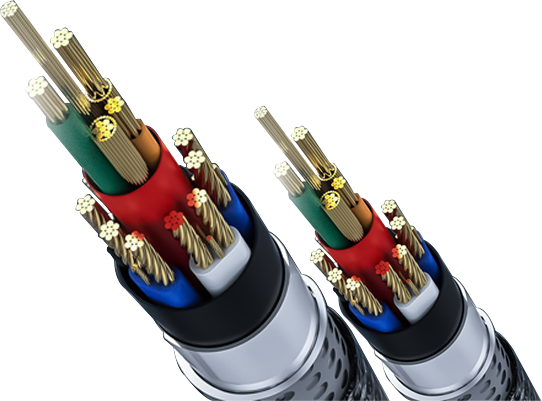
Multi-core PVC Cable: Multi-core PVC cables consist of multiple insulated conductors bundled together and enclosed within a single PVC sheath, forming a compact assembly. The number of conductors varies based on application requirements, with common configurations including 2-core, 3-core, 4-core, and 5-core. Multi-core PVC cables are primarily used in control and signal transmission applications. Within industrial automation control systems, they connect various sensors, controllers, and actuators to ensure accurate signal transmission and stable system operation. In communication equipment, these cables also shoulder the critical task of signal transmission, guaranteeing seamless communication.
Applications of PVC-Insulated Wires
PVC-insulated wires offer outstanding performance and diverse types, playing a critical and widespread role in modern electrical systems.
Residential Electrical Wiring Systems: In homes, PVC-insulated wires power various appliances. Single-core wires supply living room lighting, while multi-core cables meet the demands of high-power kitchen appliances. Color-coding facilitates installation.
Commercial and Office Buildings: Their complex electrical systems impose high demands on wiring. PVC-insulated wires are used for lighting, outlets, and other applications, enabling long-distance high-current transmission. Flexible wires facilitate office equipment wiring, while flame-retardant properties reduce fire risks in high-safety environments.
Industrial Control Panels and Machinery: Multi-core PVC cables connect sensors for signal transmission in industrial production. Their mechanical strength and flexibility meet the mechanical demands of large-scale machinery operation.
Automotive and Appliance Wiring: PVC-insulated wires are extensively used in automotive electrical systems due to their conductivity, high-temperature resistance, and flexibility. In appliances, they power both large and small devices, with flexible cables adapting to frequently bent and moved environments like washing machines.
Power Distribution and Lighting Circuits: Used for power distribution and transmission in electrical systems, they are commonly laid as underground cables in urban distribution networks. They also reliably supply power to lighting fixtures.
Advantages of PVC-Insulated Wires
High Safety and Reliability: PVC-insulated wires offer exceptional electrical insulation, effectively isolating current to reduce leakage risks and safeguard personnel and equipment. Their flame-retardant and self-extinguishing properties play a critical role during fires, slowing spread to allow time for evacuation and firefighting. In building electrical systems, PVC-insulated wires significantly reduce the probability of electrical fires, safeguarding lives and property.
Long Service Life: With excellent resistance to heat, moisture, and chemicals, PVC-insulated wires operate stably in diverse complex environments. They resist rapid aging or damage from environmental factors, ensuring extended longevity. In outdoor power facilities, PVC-insulated wires withstand harsh weather conditions like wind, sun exposure, rain, and freezing temperatures, ensuring reliable long-term power transmission.
Easy Installation and Maintenance: PVC-insulated wires are relatively flexible, making them easy to bend and handle during wiring. They adapt effortlessly to complex installation environments, reducing construction difficulty and time costs. Moreover, their simple structure facilitates fault location and repair during maintenance, enhancing efficiency and reducing upkeep costs.
High Cost-Effectiveness: PVC's low material cost and mature production processes give PVC-insulated wires a significant price advantage. In large-scale electrical projects, using PVC-insulated wires effectively controls costs while ensuring reliable performance, providing a cost-effective solution.
Summary
PVC-insulated wires play a critical role in electrical systems, impacting both safety and efficiency. Their outstanding electrical insulation prevents current leakage, reducing the risk of electric shock incidents. The flame-retardant and self-extinguishing properties help contain fire spread during emergencies. Stable power transmission ensures reliable operation of electrical equipment, minimizing failures and energy loss.
PVC-insulated wires demonstrate outstanding durability, maintaining performance under harsh conditions such as high temperatures, humidity, chemical corrosion, and mechanical stress. This extends service life while reducing replacement and maintenance frequency. Simultaneously, their high cost-effectiveness and value proposition meet the demands of large-scale electrical projects.
PVC-insulated wires find extensive applications across all aspects of daily life and industrial production. From residential and commercial buildings to industrial plants, and from automotive and appliance manufacturing to power distribution and lighting circuits, they provide reliable electrical transmission for systems in every sector.