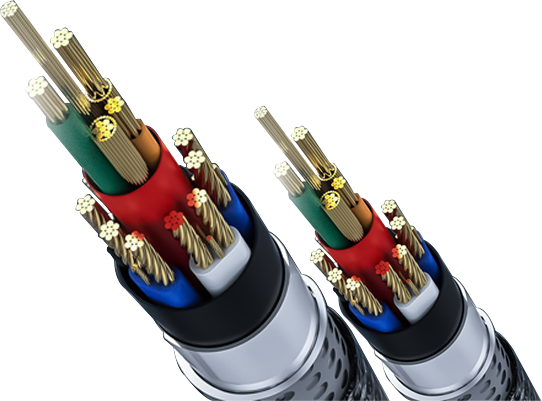
In various electrical projects, selecting the appropriate cable is crucial. As the core of power transmission, it directly affects system safety, efficiency, and cost. Improper selection can lead to increased losses, equipment failures, and even fires, making it fundamental to ensuring the stable operation of the project.
Rubber cables and PVC cables are commonly used in various industries. The former, with its excellent flexibility and durability, is suitable for scenarios with frequent movement, while the latter, with its good insulation and low cost, is the preferred choice for indoor fixed wiring. The two differ significantly in materials, performance, and applicable scenarios.
This article will compare the two from the dimensions of material properties, flexibility, durability, safety, and applicable scenarios to help readers accurately select the appropriate type based on project needs.
Comprehensive Analysis of R
ubber Cables
Definition
Rubber cables are cables that use rubber as the insulating material. The high elasticity of rubber gives them unique properties. Commonly used materials include natural rubber and synthetic rubber. Natural rubber is derived from plants and, after processing, possesses good flexibility and basic insulation properties, making it suitable for cable insulation.
Synthetic rubber is widely used in rubber cables: EPDM has excellent weather resistance, chemical corrosion resistance, and insulation, making it suitable for outdoor or harsh chemical environments; neoprene rubber has outstanding oil resistance, flame retardancy, and mechanical properties, making it suitable for fire-resistant and oil-resistant applications such as industrial equipment and mining machinery. The diverse rubber materials, through formulation and processing, enable rubber cables to offer multi-faceted performance, meeting the needs of complex applications.
Core Structure
The core structure of rubber cables focuses on conductivity and insulation. The internal conductive core is mostly made of copper or aluminum. Copper has high conductivity and good flexibility, reducing losses and making it suitable for applications with high conductivity requirements, such as precision electronic equipment; although aluminum has slightly lower conductivity, it is lightweight and low-cost, suitable for weight-sensitive or large-scale transmission applications such as overhead power transmission and power supply for large factories.
The conductive core is covered with multiple layers of carefully selected rubber insulation, which not only isolates current and prevents leakage but also resists physical impact, friction, and chemical corrosion, ensuring insulation effectiveness and durability. Special applications may also include shielding layers and armor layers to enhance anti-interference capabilities and mechanical strength, meeting the needs of special environments such as mines and ships.
Flexibility Highlights
The most prominent advantage of rubber cables is their excellent flexibility, stemming from the high elasticity and soft texture of rubber material, allowing them to adapt to scenarios involving frequent bending and movement. In industrial automated production lines, moving parts of equipment require cables to continuously extend, contract, and rotate. Rubber cables can maintain their electrical performance and structural integrity even after thousands of bends, preventing conductor breakage, insulation damage, and other malfunctions.
In construction, rubber cables are easy to bend and coil, facilitating the installation and adjustment of temporary electrical equipment. For equipment requiring frequent cable handling, such as port cranes and electric hoists, their flexibility reduces the risk of twisting, knotting, and damage, extending their service life. In summary, rubber cables are an ideal choice for scenarios involving frequent movement or bending, ensuring stable equipment operation.
In-Depth Analysis of PVC Cables
Definition and Explanation
PVC cables are cables using polyvinyl chloride (PVC) as insulation material. PVC is a synthetic plastic polymer polymerized from vinyl chloride monomers. Its molecular chain contains chlorine atoms, providing good electrical insulation to prevent current leakage, and it also possesses certain mechanical strength and stability, meeting basic insulation requirements. In production, performance can be adjusted by adding additives such as stabilizers, plasticizers, and flame retardants: stabilizers improve thermal stability, plasticizers enhance flexibility and plasticity, and flame retardants impart flame-retardant properties. The appropriate combination of additives allows for diverse and customizable performance of PVC cables, suitable for various electrical applications.
Structural Interpretation
The core structure of a PVC cable consists of a conductive core and a PVC insulation layer. The conductive core is typically made of copper or aluminum: copper cores offer superior conductivity and low resistance, reducing losses and making them suitable for applications with high power quality requirements, such as power supply for precision electronic equipment and urban low-voltage power distribution; aluminum cores have lower density and cost, making them more advantageous in weight- and cost-sensitive applications such as long-distance overhead power transmission and factory power supply trunk lines.
The PVC insulation layer tightly wraps around the conductive core, forming an electrical isolation barrier. Its thickness is designed according to voltage level, operating environment, and safety standards: thinner insulation for low-voltage applications to control costs and reduce length, while thicker insulation for high-voltage applications to prevent electrical breakdown. The surface of the insulation layer is treated to be smooth, reducing laying friction for easier installation and minimizing localized electric field concentration, thus improving operational stability.
Flexibility Analysis
PVC cables possess basic flexibility, meeting the needs of conventional indoor wiring in home renovations and office remodeling, and can be adapted to cable trays and conduits for layout. However, due to their molecular structure, their flexibility is far inferior to that of rubber cables. Strong molecular chain forces result in poor flexibility, limiting their deformation capacity during bending and twisting.
This lack of flexibility becomes particularly problematic in scenarios involving frequent movement and bending: cables for moving parts in industrial production lines and electric hoists on construction sites require repeated bending, making PVC cables prone to conductor breakage and insulation damage, potentially leading to malfunctions or safety accidents. Therefore, PVC cables are best suited for fixed, static installations, while rubber cables are more suitable for dynamic, high-flexibility applications.
Key Differences Comparison
Material Composition Comparison
Rubber cables are primarily made from natural or synthetic rubber compounds. Natural rubber possesses excellent flexibility and basic electrical insulation properties, and is obtained from rubber trees and processed for cable insulation. Synthetic rubbers such as EPDM possess good weather resistance, chemical corrosion resistance, and electrical insulation, making them suitable for outdoor or harsh chemical environments. Neoprene rubber, with its excellent oil resistance, flame retardancy, and mechanical properties, is often used in applications requiring high fire resistance and oil resistance. These rubber components endow cables with good flexibility, excellent weather resistance, and mechanical durability, enabling them to adapt to complex and changing environments.
PVC cables have an insulation layer made of the plastic polymer PVC. PVC is obtained through the polymerization of vinyl chloride monomers; its molecular chains contain chlorine atoms, giving it good electrical insulation properties, effectively preventing current leakage and ensuring the safety of electrical systems. Stabilizers, plasticizers, flame retardants, and other additives are added during production to further adjust its performance. However, compared to rubber cables, PVC cables are less flexible, putting them at a disadvantage in scenarios requiring frequent bending.
Comparison of Flexibility and Durability
Rubber cables exhibit excellent flexibility, thanks to the high elasticity and soft texture of rubber. They can adapt to the frequent extension, contraction, and bending movements of moving parts in industrial automated production lines, maintaining their performance even after tens of thousands of bends. In temporary wiring during construction and frequent deployment/retraction scenarios such as port cranes, they are easy to install, resistant to torsion, and demonstrate outstanding durability.
PVC cables are far less flexible than rubber, with limited bending and torsional deformation capabilities. In dynamic scenarios such as industrial production lines and frequently deployed/retracted equipment, they are prone to conductor breakage and insulation damage. However, in fixed, static installation environments, they offer stable performance, low cost, and good durability, allowing for long-term stable operation.
Analysis of Electrical Insulation Performance
Rubber cables possess excellent insulation performance, effectively isolating current and ensuring safe current transmission. Their insulation materials have high insulation strength, preventing current leakage between the internal conductor and the external environment, reducing the risk of electric shock. In situations with extremely high electrical safety requirements, such as power supply for medical equipment in hospitals and electrical systems in underground mines, the insulation performance of rubber cables provides reliable protection for the normal operation of equipment and the safety of personnel. PVC cables also possess excellent insulation properties, effectively blocking current and ensuring the stability of signal or power transmission. They are widely used in low- and medium-voltage power transmission and distribution systems, such as lighting circuits and socket wiring in homes, and low-voltage electrical equipment connections in factories. The insulation performance of PVC cables meets the needs of these conventional electrical environments, reducing the occurrence of leakage accidents and ensuring the normal operation of electrical systems.
Flame Retardancy Comparison
Many rubber cables possess certain flame-retardant properties, which can delay the spread of fire and reduce fire damage to some extent when exposed to a fire source. However, most rubber cables are not self-extinguishing; if exposed to high-temperature flames for a prolonged period, the rubber will continue to burn, increasing the fire risk.
PVC cables have natural flame-retardant properties, determined by their chemical structure. When a PVC cable encounters a fire source, even if ignited, it can quickly self-extinguish once the ignition source is removed, effectively preventing further fire spread. This self-extinguishing property gives PVC cables a significant advantage in indoor environments and places with high fire safety requirements, such as internal wiring in buildings and electrical systems in shopping malls, providing better protection for personnel and property.
Ideal Application Scenarios
Applications of Rubber Cables
Industrial machinery is the core application scenario for rubber cables. High-speed mobile devices such as machine tools and automated production lines have extremely high requirements for the vibration resistance and flexibility of cables. Rubber cables, with their superior performance, can withstand long-term mechanical stress, ensuring stable power and signal transmission.
In outdoor scenarios, rubber cables have significant advantages in weather resistance and chemical resistance. Construction equipment such as tower cranes require frequent movement, and their flexibility facilitates installation and resists dust and mud erosion. In agricultural irrigation, cables are resistant to moisture and harsh weather, ensuring stable power supply.
Portable tools such as electric drills and chainsaws require frequent movement, and rubber cables, with their high flexibility and resistance to breakage, provide stable power supply and ensure safe operation.
The shipbuilding and automotive industries need to cope with complex operating conditions such as oil, water, high temperatures, and vibration. Rubber cables, with their excellent comprehensive performance, are the first choice for electrical wiring in these two industries.
Common Applications of PVC Cables
Residential and commercial buildings are the core application scenarios for PVC cables. Their excellent insulation, low cost, and ease of installation perfectly suit the needs of household lighting, sockets, and other electrical connections, as well as the power wiring requirements of commercial buildings. In home renovations, they can be easily concealed in conduits, balancing aesthetics and safety; in large-scale commercial buildings, cost control and system stability are ensured.
PVC cables are suitable for fixed indoor installations in schools, hospitals, office buildings, etc., providing stable power to lighting and teaching equipment in classrooms and laboratories, and medical equipment in wards and operating rooms, while meeting safety and reliability requirements.
In low- and medium-voltage scenarios such as televisions, refrigerators, office equipment like computers and printers, and small industrial equipment, PVC cables are the preferred choice due to their stable working environment and low requirements for flexibility and weather resistance, as well as their insulation performance and cost advantages.
For large-scale wiring projects such as newly built residential communities and industrial park infrastructure, where cost is a concern, PVC cables, due to their low raw material and processing costs, can significantly control costs while meeting electrical performance requirements, improving project economic efficiency.
Cost Factors
Cost Analysis of Rubber Cables
The high cost of rubber cables stems primarily from raw materials and manufacturing processes. Natural rubber relies on specific environmental conditions for cultivation, artificial maintenance, and tapping, requiring significant investment. Synthetic rubbers such as EPDM and neoprene require complex chemical processes and specialized equipment, resulting in substantial raw material and production costs.
In terms of manufacturing processes, to ensure flexibility and electrical performance, the rubber insulation layer requires precise control of vulcanization levels and additive ratios, placing stringent demands on equipment and technology, further increasing costs.
However, the high cost is justified in specific scenarios: the aerospace industry demands stringent requirements for cable flexibility and resistance to extreme environments, where rubber cables ensure equipment stability; high-end medical equipment requires highly secure and stable power transmission, where rubber cables ensure precise equipment operation, making their performance value far exceed their cost.
Cost Advantages of PVC Cables
PVC cables offer significant cost advantages, primarily due to raw materials and manufacturing processes. As a synthetic plastic, PVC has a wide range of raw material sources and a mature and simple production process, allowing for large-scale and efficient production through the polymerization of vinyl chloride monomer. Furthermore, its price is stable, less affected by natural and market fluctuations, and its cost is easily controlled, giving it a cost advantage over rubber cable raw materials. In terms of manufacturing process, PVC cables do not require the complex vulcanization process of rubber cables, resulting in high production efficiency and low equipment investment and maintenance costs. Furthermore, PVC material is easy to mold, and the insulation layer can be completed through conventional processes such as extrusion, significantly reducing labor, material, and time costs.
This low cost makes it the preferred choice for large-scale cabling: New residential communities, large shopping malls, office buildings, and other projects requiring extensive cabling can use PVC cables to significantly control total costs while meeting electrical performance requirements, improving project economic efficiency. This makes it an ideal choice for cost-sensitive projects.
How to Make an Wise Choice
Choice Based on Flexibility
In scenarios requiring frequent cable movement and bending, flexibility is a primary consideration. For example, in stage performance equipment, lighting, sound, and other equipment need to be frequently repositioned during performances, requiring cables to be constantly bent and stretched. In this case, rubber cables, with their excellent flexibility, can easily cope with this dynamic environment, ensuring that the power and signal transmission of the equipment are not affected. However, PVC cables, due to their poor flexibility, are prone to internal conductor breakage or insulation damage after frequent bending, leading to equipment failure. Therefore, they are unsuitable for such scenarios. In scenarios such as experimental equipment and temporary exhibition facilities where frequent cable plugging and unplugging is required, the flexibility of rubber cables facilitates operation and reduces the risk of cable damage due to plugging and unplugging.
Judgment Based on Environmental Conditions
In outdoor, industrial, and extreme environments, environmental factors place stringent demands on cable performance. In oil extraction projects in desert areas, cables face harsh conditions such as high temperatures, strong ultraviolet radiation, and sandstorms. The high-temperature resistance, ultraviolet radiation resistance, and sandstorm resistance of rubber cables ensure stable operation and guarantee the normal operation of oil extraction equipment. In chemical enterprises, various corrosive gases and liquids are generated during production processes. The chemical corrosion resistance of rubber cables allows them to resist the erosion of these chemicals, ensuring the safety of electrical systems. In conventional indoor environments, such as offices and residences, where temperature and humidity are relatively stable and there is no strong ultraviolet radiation or chemical corrosion, PVC cables can meet the needs of electrical wiring. Furthermore, their lower cost and ease of installation make them a common choice for these scenarios.
Summary
The core differences between rubber and PVC cables are significant: Rubber cables have excellent flexibility, resistance to high and low temperatures, and weather and chemical resistance, making them suitable for frequent movement and harsh environments, but they are more expensive; PVC cables have good insulation and low cost, making them suitable for indoor fixed wiring, medium and low voltage, and large-scale low-cost projects, but their flexibility and resistance to extreme environments are weaker.
Selection should be closely aligned with project requirements: Choose rubber cables for frequent movement or harsh environments; choose PVC cables for indoor fixed wiring and limited budgets. From a safety perspective, prioritize the self-extinguishing property of PVC cables in densely populated areas, and choose the corrosion resistance of rubber cables in chemical environments.