What is a SAC cable
Within the vast aerial power transmission and distribution network, SAC cables (Self-Supporting Aerial Cables) are emerging as a standout product in the industry. With their unique advantages, they are revolutionizing aerial power systems through cost efficiency, infrastructure optimization, and enhanced safety.
What is a SAC cable
The SAC cable, officially known as Self-Supporting Aerial Insulated Cable (Self-Supporting Aerial Cable), is also referred to as a self-supporting fiber optic cable. Its name clearly indicates its unique application: it is primarily used in overhead power distribution lines that do not require additional suspension cables. In various power engineering scenarios such as urban grid upgrades and rural electrification projects, the SAC cable's ability to operate without extra suspension cables significantly simplifies construction processes, reduces material usage, and substantially cuts both project costs and time.
Exploring the Structure of SAC Cables
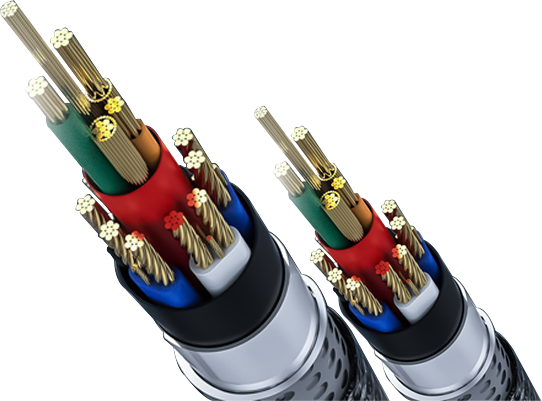
The SAC cable features a sophisticated design where all components work in harmony to ensure efficient operation in overhead distribution systems. Structurally, it consists of a conductor, insulation layer, optional steel core, and outer protective layer.
•Conductor: The conductor is the core component of the SAC cable, serving as the channel for current transmission. Its material directly affects the cable's conductivity. Common conductor materials include copper and aluminum.
•Insulating materials: These protective layers encase conductors, functioning like safety gear to prevent electrical leakage. They ensure stable power transmission along designated paths while avoiding accidents like electric shocks. Common insulating materials include polyvinyl chloride (PVC), polyethylene (PE), and cross-linked polyethylene (XLPE).
•Steel core hybrid: In some applications with high mechanical strength requirements, such as long-distance transmission lines and lines that need to cross complex terrain, SAC cables will adopt steel core hybrid structure.
•Optional outer layer: The outer layer of SAC cables serves as a protective barrier for the internal structure. Depending on the application environment and requirements, the materials and configurations of the outer layer vary. Common materials include neoprene (a type of chloroprene rubber) or specialized plastic alloys.
SAC cable types
Naked SAC and insulated SAC
Naked SAC cables, as the name suggests, lack additional insulation layers, leaving conductors directly exposed. These cables are cost-effective and relatively easy to install, making them widely used in areas with low insulation requirements, dry environments, and minimal safety risks—such as rural open spaces far from buildings and populated areas where the surrounding environment is dry. While meeting basic power transmission needs, naked SAC cables help reduce engineering costs. However, due to the absence of insulation protection, they pose significant safety hazards in humid environments or areas with frequent human activity, as they are prone to causing electric shock accidents.
SAC Twisted or Bundled
A stranded SAC cable is formed by twisting multiple single strands into a unified conductor structure at a specific pitch and direction. This design resembles a rope with multiple strands twisted together, significantly enhancing the cable's flexibility to easily adapt to various complex wiring environments.
A bundled SAC cable bundles multiple insulated conductors together, secured through binding or other methods. This configuration offers distinct advantages in applications requiring centralized power transmission.
SAC with different voltage levels
SAC cables with different voltage ratings serve distinct functions in power transmission systems. Low-voltage SAC cables, typically rated up to 1kV, are primarily used in residential power supply and small commercial facilities for low-voltage distribution applications.
Medium-voltage SAC cables are typically used in voltage ranges of 3kV to 35kV, commonly deployed in urban power distribution networks. They serve to step down and distribute electrical energy from high-voltage transmission lines, delivering power to industrial zones, large commercial complexes, and other facilities.
High-voltage SAC cables are suitable for voltage levels of 110kV and above. They are mainly used for long-distance transmission lines to efficiently transmit the electricity generated by power plants to distant cities and areas of consumption.
technical specifications
In the complex network of power transmission, SAC cable provides a reliable choice for different power projects with its precise technical specifications.
•Voltage range: SAC cables can adapt to a variety of voltage levels, covering low voltage, medium voltage and high voltage fields.
•Conductor size range: The selection of conductor size is critical to the performance of SAC cable. The common conductor size range is large to meet different power transmission needs.
•Operating temperature: The operating temperature range of SAC cable is also one of its important technical specifications.
•Compliance with standards: SAC cables strictly adhere to a series of international and domestic standards to ensure quality and safety. Internationally, they must comply with relevant standards established by the International Electrotechnical Commission (IEC).
Key Features and Advantages
Easy to install and low maintenance cost
SAC cables demonstrate exceptional ease of installation. Unlike conventional overhead cables, they eliminate the need for additional suspension wires, significantly simplifying the construction process.
In terms of maintenance costs, SAC cables have obvious advantages. Due to their relatively simple structure, SAC cables reduce the number of components that need to be checked and maintained during maintenance.
High security and strong environmental resistance
SAC cables demonstrate exceptional safety performance, with their superior insulation being the key to ensuring safety. The advanced materials and processes used in the insulation layer effectively prevent current leakage, thereby avoiding electric shock accidents.
In terms of environmental resistance, SAC cables also perform excellently. They can operate stably in various harsh environments.
Lightweight and strong
The lightweight nature of SAC cables significantly facilitates transportation and installation. The reduced weight lowers transportation costs and decreases energy consumption during transit. This advantage is particularly evident in power projects requiring long-distance cable transportation.
Meanwhile, SAC cables boast exceptional tensile strength, enabling them to adapt to diverse overhead conditions. They maintain stable performance whether deployed in short-distance urban block power distribution or long-distance inter-regional transmission lines.
Showcase in a wide range of applications
Residential and small industrial connections
In residential and small industrial settings, SAC cables serve as reliable power conduits, quietly delivering stable electricity to homes and small factories. In the realm of small-scale industries, SAC cables also play a vital role. Within these facilities, various production equipment such as small machine tools, injection molding machines, and packaging machines all depend on the stable power supply provided by SAC cables to operate.
rural electrification
Rural electrification is a vital initiative for boosting economic development and improving farmers 'quality of life, with SAC cables playing an indispensable role in this transformative process. These cables deliver electricity to every corner of rural areas, bringing about a complete transformation in rural residents' lives.
SAC vs. ABC Cable Showdown
In the field of overhead power transmission, SAC cables (self-supporting aerial insulated cables) and ABC cables (Aerial Bundled Cables) are two highly regarded products. Each with unique features and advantages, they play a key role in different application scenarios.
Structure comparison
The SAC cable features a sophisticated structural design engineered to meet diverse aerial installation requirements. Its core component consists of conductors, typically made from materials like copper, aluminum, steel-wound wires, or aluminum alloys. Each conductor material offers distinct advantages: Copper conductors excel in electrical conductivity, effectively minimizing energy loss during transmission, while aluminum conductors stand out for their lightweight and cost-effective nature. The conductors are tightly encased in insulating layers, commonly using materials such as polyvinyl chloride (PVC), polyethylene (PE), and cross-linked polyethylene (XLPE), which provide reliable insulation to prevent electrical leakage. For applications requiring enhanced mechanical strength, SAC cables incorporate steel cores that act as a robust "backbone," significantly improving tensile strength and structural support. Additionally, depending on environmental conditions, SAC cables may feature protective outer layers with varying performance levels, including weather-resistant chloroprene rubber coatings or armored layers offering superior mechanical protection.
ABC cables feature a more compact design, typically consisting of multiple insulated conductors tightly bundled together through binding or specialized processes. This configuration gives ABC cables a bundled appearance, forming a striking contrast to the individual conductors of SAC cables.
Cost comparison
In terms of material costs, SAC cables are relatively more expensive due to their structure containing steel cores and outer layers with varying protective properties, along with a wider range of insulation material options. In contrast, ABC cables feature a simpler structure without complex steel cores or diverse outer layer configurations, resulting in lower material costs.
From a manufacturing perspective, SAC cables require a more complex production process. This involves precise control over the production and assembly of conductors, insulation layers, steel cores (if present), and outer layers to ensure tight coordination between components and stable overall performance. These factors contribute to higher production costs for SAC cables. In contrast, ABC cables feature a simpler manufacturing process. The bundled wire cores allow for easier automation during production, resulting in higher efficiency and lower processing costs.
Regarding installation costs, SAC cables, while eliminating the need for separate suspension lines, require more sophisticated equipment and skilled personnel due to their complex structure and heavier weight. This necessitates specialized lifting equipment and trained technicians, resulting in higher installation expenses. In contrast, ABC cables feature a compact design and lighter weight, making installation simpler and requiring less specialized equipment and personnel. Consequently, their installation costs are significantly lower.
Scenario Comparison
SAC cables have obvious advantages in long-distance transmission lines and complex terrain conditions due to their excellent mechanical properties and insulation properties.
ABC cables are more suitable for urban distribution networks and densely populated areas.
Maintenance difficulty comparison
Due to the complex structure of SAC cable, which contains multiple parts, it is necessary to comprehensively check the conductor, insulation layer, steel core (if any) and outer layer in daily maintenance, and there are many maintenance items.
ABC cables feature a simple structure with minimal maintenance requirements, primarily involving checks on core conductivity and insulation integrity. Their bundled core design and straightforward configuration make fault detection and repair more straightforward, significantly reducing maintenance complexity. For example, when a single core malfunctions, technicians can easily identify and address the issue without extensive troubleshooting.
How to choose the right SAC cable
Select based on voltage and span
When selecting SAC cables, voltage requirements are the primary consideration. Different power transmission scenarios have specific voltage level requirements, and it is essential to ensure that the rated voltage of the selected SAC cable meets or exceeds the actual operating voltage. For low-voltage distribution systems, such as power transmission within residential communities, SAC cables with a rated voltage of 0.6/1kV are typically used to safely and reliably deliver electricity to every household. In medium-voltage distribution networks, such as power transmission from substations to industrial zones, the voltage level usually ranges between 3kV and 35kV. In such cases, SAC cables with corresponding voltage ratings must be selected to ensure stable and secure power transmission.
The overhead span is equally critical. For shorter spans, such as those in urban power lines, where cables experience relatively low tension, SAC cables with simpler structures and lower costs are preferable.
Consider mechanical tension and standard
Mechanical tension is an important factor affecting the service life and performance of SAC cable.
Compliance with relevant standards is a fundamental principle that must be strictly followed during the selection process. The production and application of SAC cables are governed by a series of international and domestic standards. Internationally, the International Electrotechnical Commission (IEC) has established standards such as IEC 60228 and IEC 60502, which provide detailed specifications for the electrical performance, insulation properties, and structural design of cables.
Summary and Call to Action
As a vital component in overhead power distribution systems, SAC cables have become indispensable in various power transmission scenarios through their unique design, diverse types, superior technical specifications, and distinctive advantages. These cables not only provide stable and reliable power connections for residential and small industrial facilities, accelerating rural electrification, but also demonstrate unique value when compared with other products like ABC cables. Whether considering installation convenience, maintenance cost control, safety, or environmental resistance, SAC cables excel in all aspects, making significant contributions to the efficient and stable development of the power industry.
If you have any questions or requirements regarding SAC cables for power transmission projects, feel free to contact our professional team. With extensive industry experience and technical expertise, we provide comprehensive support and customized solutions. Whether it's cable selection advice, installation guidance, or after-sales maintenance services, we are committed to serving you wholeheartedly. Let's collaborate to leverage the advanced technology of SAC cables and build a more reliable and efficient power transmission system for your projects.