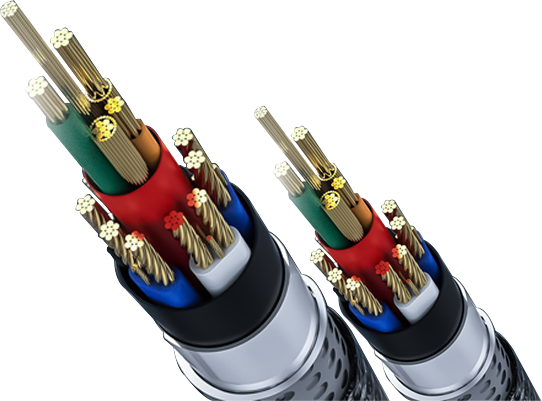
Rubber cables, simply put, are electrical wires and cables that use rubber as both insulation and sheathing. Their development has provided effective solutions to numerous challenges in power transmission. Compared to other common cable insulation materials like polyvinyl chloride (PVC) and cross-linked polyethylene (XLPE), rubber cables offer superior flexibility and durability—two properties that are crucial in many modern applications. In environments requiring frequent cable movement—such as construction sites or stage lighting installations—PVC cables may suffer insulation cracks and internal conductor damage from repeated bending, compromising power transmission and potentially causing safety hazards. While XLPE cables demonstrate good heat resistance and electrical performance, their relatively poor flexibility makes them ill-suited for dynamic applications. Rubber cables, however, leverage their superior flexibility to effortlessly withstand frequent bending and stretching, ensuring stable power transmission.
.jpg)
Unveiling the “Mysterious Composition” of
Rubber Cables
Material Breakdown
The constituent materials form the foundation of rubber cables' exceptional performance, primarily comprising natural rubber, ethylene propylene rubber (EPR), and chloroprene rubber (CR). Natural rubber, derived from the highly elastic sap of rubber trees and other plants, offers outstanding mechanical strength and excellent electrical insulation. Its elasticity surpasses all other rubbers, maintaining good performance even at -50°C. It also exhibits excellent processability, easily blending and vulcanizing with other materials. However, natural rubber has some drawbacks: poor heat resistance, ozone resistance, and oil resistance, along with a tendency to propagate flames.
Ethylene propylene rubber (EPR) is a copolymer of ethylene and propylene, categorized into diene-free EPR and terpolymer EPR. It exhibits exceptional electrical insulation properties, maintaining stability even when submerged in water due to its minimal water absorption. Its resistance to corona discharge and free discharge is also notably outstanding. EPDM exhibits good heat resistance, capable of sustained use at 85–90°C and short-term exposure up to 150°C. Its ozone and weather resistance are exceptional: it remains crack-free after 2430 hours in a 100ppm ozone environment and shows no cracking after three years of direct sunlight exposure. Additionally, EPDM exhibits favorable low-temperature performance with a low brittleness temperature. It maintains good flexibility at -55°C and remains functional at -65°C.
Neoprene rubber is produced via emulsion polymerization of chloroprene monomers. Its physical and mechanical properties resemble those of natural rubber, with raw rubber or carbon black-reinforced vulcanized rubber exhibiting extremely high elongation. Neoprene's most notable characteristic is its superior aging resistance, particularly outstanding resistance to atmospheric and ozone aging. It also possesses unique flame retardancy and excellent oil resistance.
Performance Highlights
The physical properties of rubber cables ensure stable operation across diverse complex environments. Its exceptional flexibility enables outstanding performance in applications requiring frequent movement and bending, effortlessly accommodating dynamic usage demands while significantly reducing damage risks from flexing. Weather resistance is another major advantage. Whether exposed to intense sunlight, wind and rain, or extreme temperatures, rubber cables maintain reliable performance through their UV resistance, ozone resistance, and tolerance to high and low temperatures. They resist aging and cracking, ensuring stable power transmission. Regarding insulation strength, the rubber material used in rubber cables possesses excellent insulating properties. It effectively isolates electrical currents, preventing leakage accidents and providing reliable assurance for the safe operation of electrical equipment.
Certification: The “Identity Card”
Within the quality assurance system for rubber cables, common standards and certifications play a crucial role. Rubber cables conforming to the H07RN-F standard are typically used for various mobile electrical equipment. They have clear specifications for electrical performance, mechanical properties, weather resistance, and other aspects, ensuring safe and reliable operation even in complex environments. Rubber cables compliant with IEC (International Electrotechnical Commission) standards indicate adherence to internationally recognized electrical safety and performance guidelines in design, manufacturing, and testing. They enjoy high recognition and universality worldwide. BS (British Standards) and VDE (Association of German Electrical Engineers) standards similarly impose stringent requirements on rubber cable performance metrics. From raw material selection and production process control to final product testing, these standards provide detailed specifications. Products certified under these standards offer enhanced quality and safety assurance, meeting the needs of users across different countries and regions.
The Rubber Cable's “Professional Resume”
Industrial “Jack-of-All-Trades”
In industrial settings, rubber cables serve as indispensable “jacks-of-all-trades.” In steel mills, cranes frequently lift, lower, and traverse heavy loads, demanding exceptional cable flexibility and mechanical strength during operation. Rubber cables, with their outstanding flexibility, can bend smoothly with the crane's movements while maintaining sufficient strength to withstand their own dragging forces and potential external impacts. This ensures stable power supply to the crane, safeguarding efficient production operations. YC heavy-duty rubber-sheathed cables are commonly used in such industrial equipment. Capable of withstanding significant mechanical stress, their insulation and sheathing are made from natural rubber, offering excellent electrical insulation properties and chemical stability. With a maximum allowable operating temperature of 65°C, they are suitable for equipment rated at AC 450/750V or below, meeting the demands of industrial machinery like cranes.
On construction sites, temporary power supply is critical. Equipment like welders, saws, and cranes requires frequent relocation within complex environments featuring sharp objects, damp surfaces, and potential chemical exposure. Rubber cables' abrasion resistance, weatherproofing, and waterproofing make them ideal for temporary power solutions. During main building construction, welding machines require frequent relocation for welding tasks. Using rubber cables as connection cables effectively prevents outer sheath damage and internal conductor breakage even when cables are dragged, bent, or exposed to sharp objects like cement and gravel. This ensures welding machines operate normally, maintaining construction progress.
In harsh environments like mining and quarries, where humidity, dust, and corrosive gases are prevalent, equipment must frequently maneuver through confined, rugged spaces. Rubber cables' high flexibility adapts to complex terrain and frequent equipment movement, while their abrasion and chemical resistance ensure long-term, stable operation in severe conditions. In coal mining, mining rubber-sheathed cables supply power to equipment like coal cutters and scraper conveyors. Their specialized structural design and material selection—such as tin-plated copper wires as conductors, natural styrene-butadiene rubber as insulation, and neoprene rubber for the sheath, endowing them with oil resistance, abrasion resistance, flame retardancy, and impact resistance. These cables reliably transmit power to equipment in the harsh underground coal mine environment, ensuring safe and efficient mining operations.
Outdoor “Explorers”
In ports and shipyards, large-scale loading/unloading equipment operates 24/7, demanding exceptional durability and stability from cables. Port environments subject cables not only to frequent equipment movement and immense tensile forces but also to erosion from sea winds, seawater, and salt spray corrosion. Rubber cables' weather resistance and corrosion resistance enable long-term stable operation in such conditions. Power cables for port cranes typically employ specially designed rubber cables. Their sheathing materials effectively resist seawater and salt spray corrosion, while their internal structure is engineered to withstand frequent bending and stretching. This ensures reliable power supply during cargo handling, enhancing port loading and unloading efficiency.
During large-scale events, stage performances, and entertainment venues, stage lighting systems require frequent adjustments in position and angle to meet diverse performance demands. The flexibility of rubber cables allows for more adaptable wiring of lighting equipment, enabling staff to quickly install and adjust setups according to stage layouts and performance effects. Moreover, with large crowds and complex environments at event sites where unexpected incidents may occur, the insulation properties and mechanical strength of rubber cables effectively prevent electrical leakage and cable damage, ensuring the safe execution of performances. During the stage setup for a major music festival, extensive lighting equipment is interconnected via rubber cables. These cables adapt seamlessly to the stage's intricate wiring environment and maintain functionality throughout the performance—even when subjected to external forces like accidental foot traffic or minor equipment collisions—ensuring spectacular lighting effects for the audience.
In agricultural production, farm equipment and irrigation systems also rely on rubber cables. Agricultural machinery like tractors and harvesters operate for extended periods in fields, where environments filled with soil, muddy water, and crop residues can cause cable wear and corrosion. Rubber cables' abrasion resistance, oil resistance, and water resistance enable them to withstand the harsh conditions of agricultural production. In farm irrigation systems, rubber cables connect water pumps to power sources. Even when submerged in water for extended periods, they maintain excellent insulation and mechanical properties, ensuring the irrigation system operates reliably to provide ample water for crop growth.
Household “Little Helper”
In homes and light commercial settings, rubber cables transform into thoughtful “little helpers,” bringing convenience to daily life and small-scale business activities. Within households, the use of power tools like drills, saws, and vacuum cleaners is increasingly common. These tools require frequent movement and plugging/unplugging, demanding flexibility and durability from cables. The flexibility of rubber cables prevents damage from repeated bending during use, facilitating smooth operation of power tools. During home renovations, when drilling with an electric drill, power cords made from rubber cables can easily bend with the drill's movement without snapping or causing poor contact. This ensures stable drill operation and enhances renovation efficiency.
In gardens and courtyards, outdoor power distribution is essential for lighting, electric lawnmowers, fountains, and other appliances. Rubber cables' weather resistance allows them to withstand sunlight, rain, wind, and snow, ensuring stable power transmission in outdoor environments. When installing solar lights in gardens, rubber cables connect solar panels to fixtures. Even under harsh weather conditions, these cables maintain functionality, providing ample illumination to create a warm ambiance. In light commercial applications—such as lighting for small shops or powering display equipment—rubber cables similarly play a vital role through reliability and convenience, delivering stable power support for uninterrupted business operations.
Rubber Cable “Family Members” Overview
EPR Cable
EPR cable, or ethylene propylene rubber cable, holds a significant position within the rubber cable family due to its unique properties. Copolymerized from ethylene and propylene, it exhibits exceptional water-tree resistance. In humid environments, it effectively resists moisture damage to cable insulation, ensuring stable power transmission. EPR cables also demonstrate outstanding high-temperature resistance, operating normally at temperatures up to 90°C. Under special conditions, they can function in low-temperature environments as low as -50°C, making them adaptable to diverse and complex temperature conditions. Their excellent mechanical properties and superior flexibility allow them to easily accommodate complex bends and twists during cable installation, facilitating setup. Additionally, EPR cables are environmentally friendly, being halogen-free and emitting no toxic gases during combustion, aligning with modern eco-conscious principles. In South America, where climates are variable and some regions experience year-round humidity, EPR cables are widely adopted for medium-voltage, high-voltage, and even extra-high-voltage applications due to their water-tree resistance and high-temperature tolerance, making them an ideal choice for local power transmission. Compared to other rubber cables, EPR cables demonstrate superior water-tree resistance and flexibility, making them particularly suitable for humid environments or applications requiring frequent cable bending.
Chloroprene Rubber Cables
Chloroprene rubber cables, also known as CR rubber-sheathed cables, are the “all-rounders” within the rubber cable family. Its chloroprene rubber sheath offers excellent oil resistance, ozone resistance, aging resistance, and weather resistance. It features high mechanical strength, good elasticity, and inherent flame-retardant properties. With an operating temperature range typically spanning 40°C to 90°C, it meets the demands of most conventional environments. Chloroprene rubber cables are widely used in outdoor equipment, mining machinery, port facilities, and marine applications. In port cranes, these cables serve as power supply lines, withstanding sea breeze and seawater corrosion while enduring the tensile forces and bending stresses from frequent crane movements to ensure stable operation. In mining environments, harsh conditions demand exceptional abrasion and corrosion resistance from cables. Chloroprene rubber cables excel in these conditions, providing reliable power transmission for mining equipment.
Silicone Rubber Cables
Silicone rubber cables are the “specialists” within the rubber cable family for high-temperature environments. Utilizing silicone rubber as the insulating material, they exhibit outstanding high-temperature resistance with a broad operating temperature range typically spanning -60°C to 200°C. Certain specially customized silicone rubber cables can withstand even higher temperatures. At elevated temperatures, silicone rubber cables do not soften or melt, maintaining their original shape, dimensions, and electrical properties. Its low-temperature performance is equally impressive. Even in environments around -60°C, its properties do not deteriorate sharply with temperature changes, maintaining stable electrical and physical characteristics. Additionally, silicone rubber cables offer advantages such as oil resistance, chemical corrosion resistance, aging resistance, flexibility, and abrasion resistance. They feature stable electrical performance and are typically flame-retardant, low-smoke, and halogen-free. Silicone rubber cables play a vital role in demanding environments: high-temperature furnaces in steel metallurgy, oil contamination and chemical corrosion in petrochemicals, frequent bending or friction in machinery manufacturing, and extreme conditions like high altitude, low temperatures, and high radiation in aerospace. They serve as critical components ensuring equipment reliability.
Summary:
Rubber cables have become the undisputed “all-rounder” in modern power transmission due to their exceptional flexibility, outstanding weather resistance, excellent insulation properties, and reliable performance across diverse complex environments. Whether powering heavy machinery in industrial settings, providing temporary power at construction sites, supporting outdoor port operations or stage lighting installations, or fueling everyday household appliances, rubber cables consistently meet diverse application demands with stable performance.
When selecting rubber cables, users should comprehensively consider factors such as specific voltage ratings, environmental exposure conditions, and mobility requirements to choose the appropriate cable type. Additionally, proper installation and maintenance practices must be followed to avoid common mistakes, ensuring long-term stable operation and maximizing the value of rubber cables.