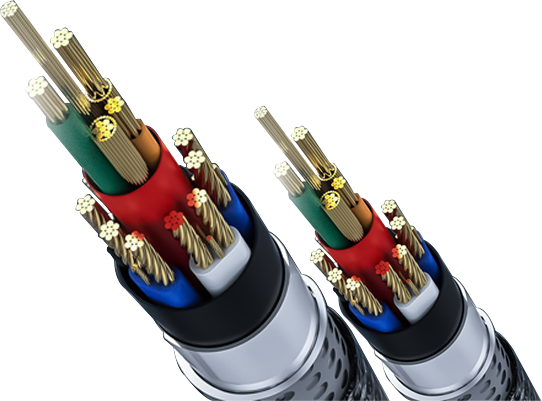
The global solar energy industry is experiencing explosive growth, with large-scale ground-mounted power plants and distributed rooftop systems becoming core pillars of renewable energy. In the design and construction of photovoltaic (PV) systems, cable selection directly determines system efficiency, safety, and lifespan—solar cables and ordinary cables, though similar in appearance, differ drastically in design, materials, and performance.
Many industry professionals mistakenly use ordinary cables due to insufficient understanding, resulting in power generation efficiency losses and safety hazards such as insulation aging, short circuits, and fires. This article will analyze the definitions, standards, and characteristics of both, dissect five key differences, and clarify the importance of selection, providing professional guidance for PV projects.
Only by clearly understanding the differences can the correct "energy transmission lifeline" of the PV system be selected, ensuring long-term stable operation.
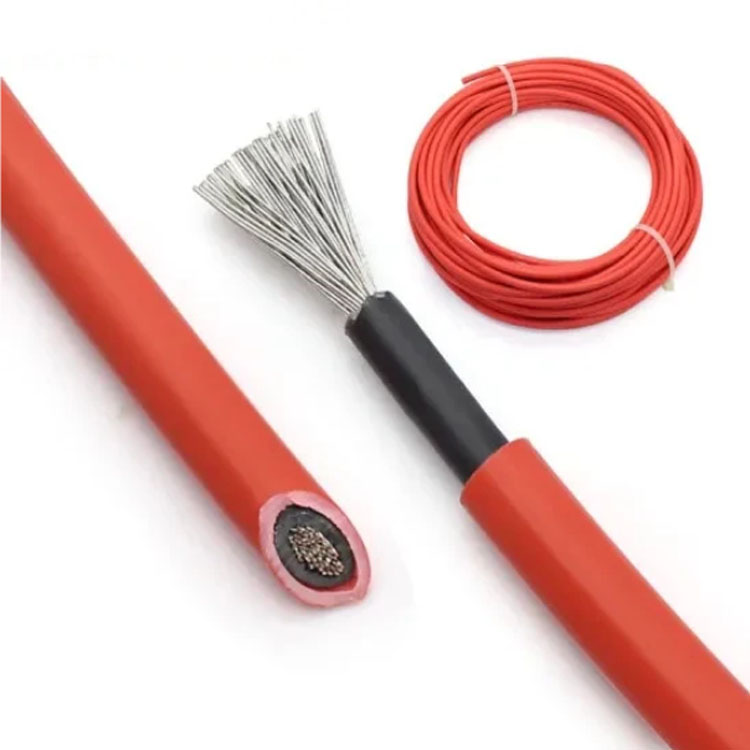
In-depth Understanding of Solar Cables: The Dedicated "Energy Vein" of PV Systems
Solar cables are specialized transmission cables designed specifically for PV systems. Their core function is to connect key equipment such as PV modules, combiner boxes, inverters, and junction boxes, achieving efficient and safe transmission of direct current. Their application scenarios cover various complex environments, including outdoor open spaces, rooftops, deserts, and coastal areas, requiring long-term resistance to extreme climates, ultraviolet radiation, and high-voltage DC surges.
As a core component of photovoltaic (PV) systems, solar cables must strictly adhere to professional design standards. Major international standards include EN 50618 (European standard), IEC 62930 (International Electrotechnical Commission standard), and TUV 2PfG 1169 (German Rheinland certification standard). These standards set stringent requirements for key indicators such as cable insulation performance, temperature range, aging resistance, and flame retardancy, ensuring the product meets the PV system's lifecycle requirements for over 25 years.
Based on these professional standards, solar cables possess three core characteristics: first, strong environmental adaptability, with excellent UV resistance, ozone resistance, and weather resistance, capable of withstanding extreme temperatures from -40°C to 120°C; second, high safety assurance, employing a double insulation structure and flame-retardant materials to effectively prevent risks such as leakage and fire; and third, ultra-long service life, capable of stable operation for 25-30 years in harsh outdoor environments, perfectly matching the lifespan of the PV system.
Comprehensive Understanding of Ordinary Cables: The Basic Transmission Carrier for General Applications
Ordinary cables, also known as general-purpose electrical cables, are primarily used in conventional scenarios such as household indoor wiring, low-voltage power distribution in industrial plants, and connections for household appliances. Their core function is to transmit low-voltage electrical energy indoors or in mild environments. Their design focuses on basic transmission needs under normal operating conditions and is not optimized for extreme outdoor environments or special voltage scenarios.
The production of ordinary cables follows general electrical standards, commonly including IEC 60227 (polyvinyl chloride insulated cable standard) and IEC 60245 (rubber insulated cable standard). These standards mainly regulate the basic conductivity and indoor safety requirements of cables, with requirements for outdoor anti-aging, extreme temperature resistance, and high-voltage withstand capabilities far lower than those for solar cable-specific standards.
The typical characteristics of ordinary cables are characterized by "limited application scenarios": First, they are suitable for a single environment, mainly indoors or sheltered outdoor environments with mild temperatures, and have weak resistance to ultraviolet radiation, high temperatures, and high humidity; second, they have a narrow temperature tolerance range, with typical operating temperatures between -15°C and 70°C; third, they have a short lifespan, lasting only 5-10 years in typical indoor environments, and significantly shorter to 3-5 years in outdoor environments.
Five Core Differences Between Solar Cables and Ordinary Cables
Insulation and Sheath Materials: The "Fundamental Difference" in Outdoor Resistance
Solar cables use high-end materials specifically designed for extreme outdoor environments. The insulation layer and sheath are mostly made of cross-linked polyethylene (XLPE) or halogen-free rubber (manufactured using electron beam cross-linking technology). These materials undergo special cross-linking treatment to form a dense molecular structure, which not only possesses excellent insulation performance but also effectively resists ultraviolet radiation, ozone corrosion, and extreme temperature shocks, while achieving halogen-free flame retardancy and improving safety levels.
Ordinary cables prioritize cost control in material selection, with insulation layers typically made of ordinary polyvinyl chloride (PVC) or simple rubber, lacking anti-aging and cross-linking reinforcement treatments. These materials are prone to aging and embrittlement in outdoor environments, and sheath cracking can directly expose the conductor, leading to insulation failure.
Temperature Resistance: The "Bottom Line" for Extreme Environments
The outdoor installation scenarios of photovoltaic systems necessitate cables that can withstand drastic temperature fluctuations. Solar cables typically have a rated temperature range of -40°C to 90°C, with high-end products reaching -40°C to 120°C. They maintain stable conductivity and insulation integrity regardless of whether it's the snow-covered landscape of northern winters or the scorching rooftop temperatures of southern summers.
Ordinary cables, however, have significantly limited temperature resistance. The applicable temperature range for conventional products is only -15°C to 70°C. During summer outdoor exposure, cable temperatures easily exceed the 70°C limit, causing the insulation layer to soften and flow, resulting in decreased conductivity. In winter's low temperatures, the insulation layer can become brittle and crack, directly shortening its lifespan. The difference in temperature resistance directly leads to performance degradation in ordinary cables within 1-2 years in photovoltaic systems, while solar cables can operate stably for over 25 years.
UV and Weather Resistance: The "Core Guarantee" for Long Outdoor Lifespan
Solar cables are specifically optimized for outdoor ultraviolet radiation and complex weather conditions during the R&D phase. By adding special components such as UV stabilizers and anti-ozone agents, combined with the dense structure of cross-linked materials, they can achieve long-term outdoor exposure without aging. Even in environments with strong ultraviolet radiation in tropical regions, high salt spray in coastal areas, or dusty deserts, they can effectively resist corrosion, preventing sheath cracking and insulation degradation.
Ordinary cables completely lack targeted weather resistance design. Their PVC or simple rubber materials will yellow on the surface within 3-6 months under ultraviolet radiation, begin to crack within 1-2 years, and the insulation layer will completely fail within 3-5 years. A case study of a rooftop photovoltaic project shows that an array using ordinary cables experienced large-area cable insulation damage in the fourth year, leading to system leakage and tripping. The repair and replacement costs were more than three times the initial cable purchase cost, and caused up to 15 days of downtime.
Electrical Performance and Safety: A "Safety Barrier" for High-Voltage Transmission
Photovoltaic systems employ high-voltage direct current (HVDC) transmission (mainstream systems reach 1500V DC). Solar cables have been specifically optimized for electrical performance: firstly, a low dielectric loss design ensures minimal energy loss during HVDC transmission; secondly, high current carrying capacity adapts to the peak current output of photovoltaic modules; and thirdly, a double insulation structure effectively prevents the risk of high-voltage leakage, ensuring the safety of personnel and equipment.
Ordinary cables are designed for low-voltage AC scenarios, with rated voltages typically between 600V and 1000V AC, and cannot withstand the high-voltage DC impact of photovoltaic systems. Forced use would result in two major problems: firstly, the insulation layer is easily broken down by high voltage, causing short-circuit fires; secondly, mismatched DC resistance characteristics lead to excessive voltage drops, reducing system power generation efficiency by 5%-10%. Furthermore, ordinary cables are often made of halogen-containing materials, which release toxic gases when burned, posing serious safety hazards.
Lifespan and Durability: A “Key Impact” on Return on Investment
Solar cables are designed to perfectly match the lifespan of the photovoltaic system. Through material optimization, structural reinforcement, and stringent standard certification, they can achieve 25-30 years of stable outdoor operation without the need for large-scale replacement and maintenance, perfectly synergizing with the lifespan of photovoltaic modules.
The lifespan of ordinary cables is greatly affected by the environment. In normal indoor environments, they can only be used for 5-10 years. When used in outdoor photovoltaic systems, the lifespan is shortened to 3-5 years due to ultraviolet radiation and temperature fluctuations. This means that a 25-year photovoltaic project using ordinary cables would require 5-8 replacements, resulting in high material and labor costs, and significant power generation revenue loss due to frequent downtime. Ultimately, the total cost is 4-6 times that of using solar cables.
Why Choose the Right Cable? Three Core Values Explained
Ensuring Efficiency and Improving Returns: Cable loss directly affects power generation efficiency. Solar cables, with their low dielectric loss and high current carrying capacity design, can control losses to within 1%, while ordinary cables exceed 5%. Eliminating Hidden Dangers and Reducing Risks: Photovoltaic outdoor high-voltage environments demand high safety standards. Solar cables, with their double insulation, halogen-free flame retardant construction, and TÜV/IEC certifications, provide robust safety. Ordinary cables are prone to aging and breakdown outdoors; statistics show that over 80% of photovoltaic safety accidents are related to the misuse of ordinary cables.
Reducing Total Lifecycle Costs: While the initial purchase cost of solar cables is 30%-50% higher, their advantages over the entire lifecycle are significant. For example, a 1MW project's total cost over 25 years (purchase + maintenance) is approximately 120,000 yuan, only 20% of the 600,000 yuan cost of ordinary cables (including replacement and downtime losses), shortening the investment payback period by 2-3 years.
Strong Adaptability: Dedicated solar cables employ a double insulation structure and utilize high-performance polymer materials such as cross-linked polyethylene (XLPE) or cross-linked polyolefin (XLPO). These materials not only have excellent insulation properties but also possess strong resistance to moisture, oil, and corrosion. Ordinary cables typically use insulation made of common polyvinyl chloride (PVC) and similar materials, offering weak protection. They are prone to mold growth in humid environments, leading to a decrease in insulation resistance. In oily or dusty environments, the insulation layer is easily corroded, causing insulation failures. Furthermore, ordinary cables have poor adaptability to temperature fluctuations; frequent temperature changes accelerate insulation aging, increasing the risk of system downtime.
Conclusion
Choosing Dedicated Cables: Building a Solid "Lifeline" for Photovoltaic Systems The difference between solar cables and ordinary cables lies essentially in the distinction between "customized for specific scenarios" and "suitable for general scenarios." Through material upgrades, structural optimization, and standard certification, solar cables achieve perfect adaptation to the extreme outdoor environments of photovoltaic systems. Their lifespan of over 25 years, superior electrical performance, and comprehensive safety guarantees are irreplaceable by ordinary cables. As a long-term investment, the choice of cables directly determines the efficiency, safety, and profitability of photovoltaic projects. It is recommended that all photovoltaic practitioners strictly follow professional standards such as EN 50618 and IEC 62930, select solar cables that have passed authoritative certifications such as TÜV and UL, and refuse to use ordinary cables in order to control short-term costs.