Definition and Characteristics: Understanding the Unique
Features of Armored Cable
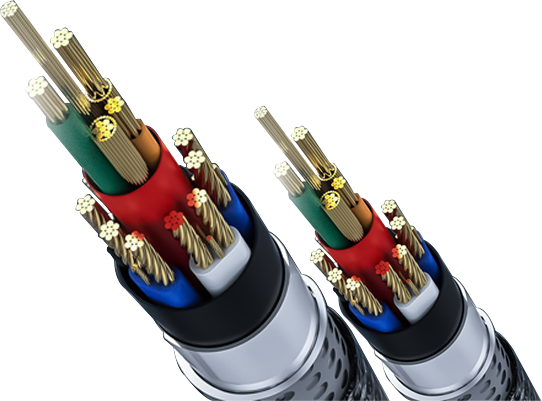
Armored cable is a specialized cable that incorporates a metallic armor layer onto the standard cable structure, significantly enhancing its protective capabilities. This armor layer typically consists of steel tape, steel wire, or aluminum tape. These metallic materials undergo specialized processing to form a tightly wrapped, robust protective barrier around the cable's insulation.
Compared to non-armored cables, armored cables exhibit significant differences in multiple aspects. Structurally, non-armored cables consist only of conductors, insulation, and sheathing, featuring a relatively simple design and softer texture that facilitates bending and installation. Armored cables, however, incorporate the additional metal armor layer, resulting in a more complex structure with increased overall hardness and weight. In terms of mechanical protection, non-armored cables are relatively vulnerable and susceptible to damage from external mechanical forces. For instance, during construction, accidental impacts or compression may damage the internal conductors or insulation layers. Armored cables, however, leverage their robust armor layer to effectively withstand various mechanical stresses, significantly reducing the risk of cable damage. Even when subjected to substantial external impacts, they ensure the integrity of the internal structure, safeguarding stable power transmission.
Armored cables also offer distinct advantages in grounding. Their armor layer can be directly grounded. In the event of faults like leakage currents, the armor rapidly diverts the fault current into the earth, providing additional safety for the entire electrical system. This reduces the risk of electric shock to personnel and equipment damage, enhancing the safety and reliability of the electrical system. Furthermore, armored cables significantly outlast non-armored counterparts in durability. The metallic armor not only enhances mechanical strength but also effectively resists chemical corrosion, moisture penetration, and rodent damage. This significantly extends the cable's service life, enabling long-term stable operation in harsh environments. Consequently, it reduces the frequency of cable replacement and maintenance, lowering overall costs.
Armored Cable Structure
Armored cables maintain stable operation in complex environments thanks to their multi-layered construction. From inner to outer layers, they primarily consist of a conductor, insulation layer, inner sheath, armor layer, and outer jacket.
Conductor: The core component, commonly made of copper or aluminum. Copper offers high conductivity, excellent ductility and mechanical strength, along with oxidation and corrosion resistance, making it suitable for applications demanding high power transmission. Aluminum is economical and lightweight but has lower conductivity, weaker mechanical strength, and prone to surface oxidation. It is suitable for weight-sensitive applications like long-distance overhead transmission. Conductor selection requires comprehensive consideration of multiple factors, with cross-sectional area determined by current transmission requirements.
Insulation Layer: Ensures safety and shields against electromagnetic interference. Common materials include polyvinyl chloride (PVC), cross-linked polyethylene (XLPE), and ethylene propylene rubber (EPR). PVC offers flame retardancy, good mechanical and processing properties, and low cost, but has poor cold resistance, making it suitable for low-voltage cables. XLPE is commonly used in medium- and high-voltage cables, significantly improving temperature resistance, environmental stress cracking resistance, creep resistance, and mechanical strength, with low dielectric loss. EPR provides excellent water tree resistance, high-temperature resistance, and superior mechanical properties, suitable for medium-, high-, and extra-high-voltage cables.
Inner Sheath: Located between the insulation and armor layers, it protects the insulation, maintains cable shape, and secures the conductors in multi-core cables. Materials include PVC, PE, etc., with halogen-free options for halogen-free cables. Thickness and material depend on cable structure; low-voltage cables typically use wrapped liners, while medium-voltage cables commonly employ extruded liners.
Armor Layer: A defining structural component. Steel wire armor provides tensile strength and impact resistance, suitable for low-voltage applications; steel tape armor resists lateral pressure, used in medium-voltage cables; aluminum wire armor is employed in single-core cables to prevent magnetic interference; flexible armor structures enhance cable flexibility, ideal for indoor and industrial wiring.
Outer Sheath: Resists environmental corrosion. PVC sheaths offer good mechanical properties, chemical resistance, and flame retardancy, but release toxic gases when burning. PE sheaths provide weather resistance, UV resistance, flexibility, and low-temperature performance, making them suitable for outdoor cables. Low-smoke, zero-halogen (LSZH) sheaths are environmentally friendly, emit no smoke or toxins when burning, and are used in locations with strict fire safety and environmental requirements.
Voltage Classification: Key to Matching Different Scenarios
Low-Voltage (0.6/1kV) Armored Cable
Low-voltage armored cables are rated at 0.6/1kV, primarily handling terminal distribution. They are widely used in residential buildings (e.g., household service lines, lighting, outlets, air conditioning, elevator power supply), industrial production (powering small equipment), temporary construction sites, and emergency lighting systems. Their structure consists of a conductor, insulation layer, inner sheath, armor layer, and outer sheath. Common insulation materials include polyvinyl chloride (PVC) and cross-linked polyethylene (XLPE). PVC offers lower cost but inferior heat resistance, while XLPE provides superior performance and broader applicability. Armoring layers may utilize steel tape or steel wire armor depending on environmental conditions and requirements. Outer sheaths are typically PVC or polyethylene (PE), with low-smoke zero-halogen (LSZH) sheaths employed in locations demanding high environmental and safety standards.
Medium-Voltage (3.6–35kV) Armored Cable
Medium-voltage armored cables operate at rated voltages of 3.6–35kV, serving as a critical link in power transmission. They form essential components of urban distribution grids, primary factory power systems, and renewable energy integration systems. Compared to low-voltage armored cables, they feature a more complex structure: a semiconductor shield surrounds the conductor, the insulation layer uses XLPE and is thicker (5–15 mm), and a metallic shield is added externally. The armor layer is typically steel tape or steel wire, while the outer sheath commonly uses highly weather-resistant materials. Medium-voltage armored cables are used for medium-distance power transmission, demanding high standards for current-carrying capacity, insulation, mechanical strength, and environmental resistance. Selection requires comprehensive consideration of multiple factors to ensure safe and stable operation.
Outstanding Performance of Armored Cables
Robust Mechanical Protection
Armored cables offer distinct advantages. Taking steel-wire armored cables as an example, their armor consists of multiple high-strength steel wires tightly wound together, providing resistance against mechanical stresses like impacts and compression during construction. This protects the internal structure, particularly in urban development projects. Steel tape armored cables provide lateral pressure resistance through steel tape wrapping, making them suitable for underground installations and ensuring power supply in subterranean building locations. Additionally, the metal armor layer resists rodent damage, reducing failure risks caused by pests.
Adaptability to Harsh Environments
Armored cables are suitable for direct burial and harsh conditions. During direct burial, the metal armor and outer sheath resist soil moisture, acid-alkali corrosion, and other environmental factors. In extreme environments like high temperatures, high humidity, or strong acid-alkali exposure—such as chemical plants, steel mills, and basements—special materials ensure stable operation.
Extensive Application Scenarios
Armored cables deliver outstanding performance across diverse applications. In underground distribution networks, they transmit power from substations to distribution boxes. In outdoor and industrial settings, they meet factory equipment and outdoor lighting demands. Flexible armored cables serve construction sites, while steel wire or steel tape armored cables are used in mining operations. Power plants and substations rely on them to connect electrical equipment. Within renewable energy systems, they transmit electricity to the grid. In petrochemical and hazardous locations, armored cables with explosion-proof designs and materials ensure safe operation.
Comparative Selection: Choosing Between Armored and Non-Armored Cables
Armored and non-armored cables each possess distinct characteristics suited for different scenarios. The following comparison based on mechanical protection, installation areas, cost, and application scenarios will assist you in making an informed choice.
Mechanical Protection
Armored cables offer superior mechanical protection. Steel tape armor resists crushing impacts, while steel wire armor provides strong tensile resistance, reducing damage risks. Unarmored cables rely primarily on their outer sheath for protection and are vulnerable to damage from significant mechanical forces, potentially causing electrical failures.
Installation Areas
Armored cables thrive in harsh, complex environments. They can be directly buried underground and withstand adverse outdoor and industrial conditions. Non-armored cables are suited for indoor and protected environments, offering advantages in applications requiring high flexibility.
Cost
Armored cables feature complex structures and demanding manufacturing processes, resulting in higher costs. Non-armored cables have simpler designs and lower prices, making them the preferred choice for cost-sensitive projects.
Application Scenarios
Armored cables are deployed in industrial and heavy-duty power transmission sectors, such as factories, mines, and underground power grids. Non-armored cables serve light commercial and residential applications, including homes and small business premises.
In summary, cable selection requires balancing usage scenarios, protection requirements, and budget constraints to achieve safe, stable, and economical power transmission.
Conclusion: Armored Cables—Reliable Protection for Electrical Systems
Armored cables are a critical component of modern electrical systems, providing comprehensive protection for power transmission and ensuring stable operation of electrical networks.
Their multi-layered protective structure works synergistically, with each layer playing a vital role in enabling reliable operation in harsh environments and minimizing failures. Different types—such as steel wire, steel tape, aluminum wire, and flexible armored cables—suit various scenarios and should be selected based on environmental conditions and specific requirements.
When selecting armored cables, comprehensively consider voltage and current requirements, operating environment, single/multi-core configurations, and protective performance, while ensuring compliance with local regulations and standards. With their outstanding performance and broad applicability, armored cables will continue to play a vital role in the power sector. Adhere to certified, high-quality products, and follow standard procedures for selection, installation, and maintenance to ensure safe, stable, and efficient power supply.

.jpg)