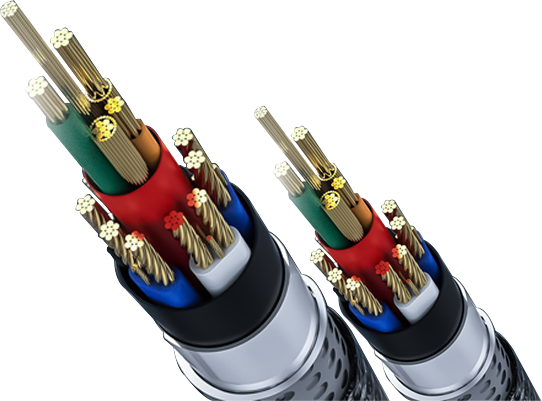
The
XHHW cable, a high-performance wire and cable insulated with cross-linked polyethylene (XLPE), is widely used in electrical wiring for industrial, commercial, and residential applications due to its exceptional heat and moisture resistance. As a core product in modern electrical installations, it not only meets power demands in complex environments but also ensures the stability and safety of power supply systems, making it the preferred choice for electrical engineers, contractors, and purchasers. Its core value lies in balancing performance, durability, and safety, making it suitable for diverse wiring scenarios ranging from ordinary residences to large industrial facilities.
Analysis of the Meaning of the Letter XHHW
XHHW isn't just a random acronym—each letter represents a key cable feature. A clear breakdown helps you understand its core strengths:
•X: stands for cross-linked polyethylene (XLPE) insulation material, which offers superior heat resistance, mechanical strength, and chemical stability compared to traditional PVC, forming the core foundation for the high-performance XHHW cable.
•HH: denotes high heat resistance rating, enabling the cable to withstand 90°C operating temperatures in both dry and humid environments. This far exceeds the heat resistance standards of conventional wires, significantly enhancing safety in high-temperature applications.
•W signifies its suitability for humid environments, featuring exceptional moisture and water resistance, enabling stable operation in harsh conditions like outdoor or underground damp areas.
Compared to similar cables, XHHW offers distinct advantages: While THHN cables are only suitable for dry environments with a heat resistance of 90°C, XHHW provides enhanced adaptability to humid conditions. THWN cables, which withstand 75°C in humid environments, are outperformed by XHHW's 90°C heat tolerance. USE cables, primarily designed for direct underground burial, lack the flexibility and multi-scenario adaptability of XHHW. Although RHW cables are moisture-resistant, their heat resistance and mechanical strength are slightly inferior to XHHW's XLPE insulation.
The Structure of XHHW Cable
Conductor material
XHHW cables feature two primary conductor types: copper and aluminum. Copper conductors, renowned for their superior conductivity and oxidation resistance, are the preferred choice for mid-to-high-end projects. Aluminum conductors, on the other hand, offer lower costs and lighter weight, making them ideal for long-distance power transmission and large-scale projects with cost constraints. Both types meet diverse current transmission requirements and comply with relevant industry standards.
Insulation Layer and Structure
The insulation layer is made of cross-linked polyethylene (XLPE), which undergoes a specialized cross-linking process to form a tightly packed molecular structure. This not only enhances thermal and weather resistance but also strengthens the mechanical properties of the insulation. A standard XHHW cable consists of a conductor, an XLPE insulation layer, and, depending on requirements, an additional sheath or shielding layer.
Color Identification and Recognition
XHHW cables feature standardized color coding for insulation layers, facilitating clear identification and wiring during installation: black for phase lines, white or gray for neutral lines, green or yellow-green for ground lines, while other colors (e.g., red, blue) are assigned to specific circuits as required. This standardized color system significantly improves both construction efficiency and electrical safety.
Temperature and voltage ratings
Temperature rating
A key advantage of XHHW cables is their exceptional environmental temperature adaptability. They maintain a rated temperature of 90°C in dry conditions and even in humid environments, making them ideal for high-temperature and high-humidity settings like industrial workshops and underground garages. This feature effectively prevents the accelerated insulation aging that common cables face under extreme heat.
Rated voltage
The standard XHHW cable, rated at 600V, meets the voltage requirements for most building power supplies, industrial equipment, and power distribution systems. It is widely used in medium and low-voltage circuits and ranks among the most prevalent voltage levels in building wiring.
Effect of Temperature on Load Capacity
The rated temperature directly determines a cable's current-carrying capacity. With its 90°C rated temperature, XHHW cables outperform low-temperature cables of the same conductor cross-sectional area. For example, XHHW cables of the same specifications can carry 10%-15% more current than 75°C-rated cables. This means smaller cross-sectional area cables can be used for the same power transmission, reducing both engineering costs and wiring complexity.
Core Characteristics of XHHW Cable
Excellent moisture resistance
The XLPE insulation layer features exceptionally low water absorption, maintaining stable insulation performance even under prolonged exposure to moisture or brief water immersion. This effectively prevents safety hazards like electrical leakage and short circuits, making it ideal for wet environments such as underground cabling and outdoor equipment connections.
Excellent thermal stability
The rated temperature of 90℃ enables the cable to operate stably in high-temperature environments for extended periods. Even under conditions of poor heat dissipation or sudden temperature surges, issues such as insulation layer softening or accelerated aging are prevented, thereby extending the cable's service life.
High strength mechanical property
The XLPE insulation layer outperforms traditional PVC insulation in mechanical strength, demonstrating superior tensile, wear, and compression resistance. During wiring, it minimizes insulation damage from dragging, bending, or compression, reducing construction risks while also withstanding accidental impacts during long-term use.
Chemical Corrosion and Anti-Aging
The XHHW cable can withstand the corrosion of common chemicals such as engine oil, diesel, and acidic or alkaline solutions, making it suitable for industrial workshops, chemical plants, and other environments with complex chemical conditions. Additionally, the XLPE material exhibits excellent anti-aging properties, with slow performance degradation even under prolonged exposure to sunlight and oxygen, ensuring a service life of over 20 years.
Application scenarios of XHHW cable
building electric power distribution
In commercial and residential buildings (e.g., office towers and shopping centers), XHHW cables are widely used for power distribution systems, floor-level wiring, indoor lighting, and socket installations. They effectively address complex power supply requirements while being compatible with diverse installation environments including ceilings, walls, and shafts.
Industrial plants and factories
Industrial environments demand cables with exceptional heat resistance, moisture-proofing, and chemical corrosion resistance. XHHW cables are widely used in factory production lines, machinery power supply, and workshop distribution circuits, particularly suited for high-temperature workshops, humid environments, and areas with chemical media.
Underground pipeline wiring
With outstanding moisture resistance and mechanical strength, XHHW cables are the ideal choice for underground conduit wiring. They are suitable for urban underground power distribution and residential underground garage power distribution, effectively resisting damp underground environments and soil pressure.
Household line and feeder circuit
As a service entrance cable, XHHW cable safely delivers external power to the building's internal distribution system. In the power supply circuit, it enables efficient transmission from the main distribution box to the distribution boxes, ensuring stable power distribution.
Control panel and switchgear
Within electrical control cabinets and switchgear, XHHW cables interconnect various electrical components. Their high-temperature resistance and aging resistance ensure long-term stable operation, minimizing equipment downtime caused by cable failures.
Comparison of XHHW, THHN and THWN Cables
Insulation materials: XHHW uses cross-linked polyethylene (XLPE) with excellent heat resistance and mechanical strength; THHN features a nylon-coated polyvinyl chloride (PVC) sheath for superior wear resistance; THWN employs standard PVC, providing only basic insulation.
Temperature ratings: XHHW withstands 90℃ in both dry and humid environments; THHN maintains 90℃ in dry conditions but drops to 75℃ in humid conditions; THWN operates at 75℃ across all scenarios.
Moisture resistance: XHHW offers excellent moisture resistance, allowing long-term use in humid environments; THHN is only suitable for short-term moisture exposure and degrades easily over time; THWN provides moderate moisture resistance, meeting only basic requirements.
Flexibility: XHHW is rigid, requiring ample workspace; THHN is flexible and bendable, ideal for tight spaces; THWN offers moderate flexibility.
Application scenarios: XHHW is designed for industrial facilities, underground cabling, and humid environments; THHN is primarily used for residential indoor cabling and equipment connections in dry environments; THWN is suitable for general building power distribution and mildly humid scenarios.
Recommendations: For applications in humid, high-temperature, or underground environments, XHHW cables are recommended as the preferred choice. THHN cables are suitable for dry indoor wiring with high flexibility requirements, while THWN cables are ideal for general distribution scenarios with moderate performance needs.
Advantages and Disadvantages of XHHW Cable
Superiority
The insulation layer is thicker and more durable, effectively resisting external damage and environmental erosion.
It performs stably in humid environments, supports a wider range of scenarios, and requires no additional protective measures.
It has good high temperature stability and large current-carrying capacity, which can reduce the selection of cable cross-section and save cost.
It has strong anti-aging and chemical corrosion resistance, long service life, and reduces the cost of maintenance and replacement in the later stage.
Inferior strength or position
The flexibility is inferior to THHN cables, requiring more workspace during installation.
The production cost is relatively high, and the market price is slightly higher than that of traditional PVC insulated cables.
A larger bending radius is required, and sufficient space must be reserved during construction to prevent insulation layer damage caused by excessive bending.
XHHW-2 cable: Differences from XHHW
The XHHW-2 is an upgraded version of the XHHW cable, featuring further optimized insulation formulation and production process. While maintaining the same rated temperature of 90°C (applicable to both dry and humid environments), it offers superior weather resistance, aging resistance, and mechanical strength.
The XHHW-2 cable has become the go-to choice for modern engineering projects for two key reasons. First, as the construction industry raises its standards for electrical safety and durability, the XHHW-2's superior performance better meets complex scenario demands. Second, its enhanced compatibility allows it to work with a wider range of connectors and terminal devices, while also complying with the latest industry standards and environmental requirements. As a result, in recent new projects, the XHHW-2 has seen significantly higher adoption rates than traditional XHHW cables.
Installation Notes
Minimum bending radius
The minimum bending radius for XHHW cables is typically 8-10 times the conductor diameter (refer to the product specifications). During installation, this requirement must be strictly followed to prevent excessive bending that could cause insulation cracking or conductor damage.
Traction and Lubrication
During cable pulling, the tension must be controlled: the maximum pulling tension for copper conductor cables should not exceed 135N/mm², and for aluminum conductor cables, it should not exceed 80N/mm². For longer pulling distances, a dedicated cable lubricant should be used to minimize insulation layer wear.
Catheter requirements
When using conduit wiring, the inner diameter of the conduit should be no less than 1.5 times the outer diameter of the cable to ensure smooth passage and provide adequate space for heat dissipation. The conduit material must be compatible with the cable to avoid chemical interactions that could lead to insulation aging.
Connector and Terminal Compatibility
Select connectors and terminal devices compatible with XHHW cables to ensure insulation performance and conductive stability at connection points. Before connection, remove oxide layers from conductor surfaces (especially aluminum conductors) to prevent poor contact-induced heating.
Key Points of Aluminum Conductor Installation
When using aluminum conductor XHHW cables, note the oxidizing properties of aluminum: use anti-oxidation terminals during connection and regularly check the tightness of the connection points. Avoid direct contact between aluminum and copper conductors (use transition joints) to prevent electrochemical corrosion.
Conclusion
The XHHW cable, featuring XLPE insulation that provides high-temperature resistance, moisture resistance, and chemical corrosion resistance, along with its broad applicability, has become a trusted choice in electrical wiring. Whether for industrial production, commercial buildings, or residential power supply, it ensures stable performance for safe power transmission while reducing maintenance costs.
For electrical engineers and contractors, selecting XHHW cables (particularly the upgraded XHHW-2 model) can significantly enhance project safety standards and durability. For procurement teams, understanding the specifications, features, and identification methods of these cables helps avoid purchasing inferior products. As the electrical industry evolves with technological advancements, the XHHW series will play a pivotal role in emerging sectors like renewable energy and smart cities, serving as a core material that drives efficient and secure electrical system operations.