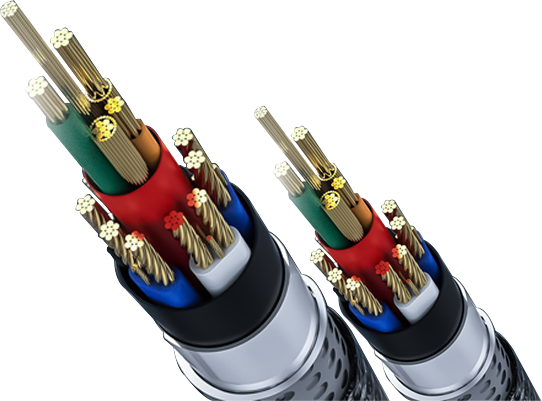
What are the main causes of electrical cable failure?
Why Cable Faults Are a Safety Hazard That Demands Immediate Attention
Cables are the "blood vessels" of power transmission, industrial production, and building wiring, directly supporting the stable operation of power systems, industrial equipment, and household electricity. Their reliability is crucial to the safety and efficiency of the entire system.
The consequences of cable faults are far greater than imagined: minor faults can lead to equipment shutdown, production interruption, and power outages for users, resulting in huge economic losses; serious faults can cause insulation breakdown, short-circuit fires, and even endanger personal safety. Many people mistakenly believe that cable faults are "sudden accidents," but in fact, most faults are the result of long-term wear and tear and the accumulation of hidden dangers, which are preventable and controllable.
This article comprehensively analyzes the eight core causes of cable faults, helping purchasers, engineers, and construction teams identify the root causes of faults, avoid risks in advance, and ensure the long-term stable operation of cables.
What are Cable Faults?
Cable faults refer to the phenomenon where cables, during operation or storage, experience performance degradation due to electrical, mechanical, thermal, or environmental factors, making them unable to transmit electrical energy or signals normally. They are mainly divided into four categories: electrical faults, mechanical faults, thermal faults, and environmental aging faults.
From the perspective of the fault location, they are mainly divided into insulation faults (insulation layer damage and aging leading to leakage and breakdown) and conductor faults (conductor breakage and corrosion leading to poor conductivity); from the perspective of the development process, early performance degradation (such as a decrease in insulation resistance) occurs first, and if not dealt with promptly, it will gradually develop into complete failure.
Overview of Core Causes of Cable Faults
Cable faults are not caused by a single factor. The core causes can be summarized into four categories: material-related causes (improper selection, quality defects), installation-related causes (non-standard construction), operation and environmental causes (overload, environmental corrosion), and aging and maintenance causes (long-term wear and tear, lack of maintenance). The eight specific causes are interrelated and jointly lead to faults.
Cause One: Improper Cable Selection (Root Cause of Hidden Dangers)
Voltage Level Mismatch
Using cables with a voltage level lower than the actual requirements means the insulation layer cannot withstand the working voltage or instantaneous overvoltage, easily leading to insulation breakdown; even if it operates normally in the short term, it will accelerate insulation aging and bury hidden dangers for future faults.
Undersized Conductor Wire Diameter
Using cables with insufficient wire diameter to save costs means they cannot carry the actual operating current, leading to conductor overheating and increased resistance. This not only causes excessive voltage drop and increased energy loss but also accelerates insulation aging and triggers short circuits.
Poor Suitability of Insulation/Sheath Materials
Failure to select appropriate insulation and sheath materials for the specific application, such as using ordinary PVC cables (temperature resistance 70°C) in high-temperature environments or non-chemical-resistant cables in chemical environments, will lead to rapid material degradation and damage, causing malfunctions.
Cause Two: Non-Standard Installation and Construction (Most Common Human-Induced Hazard)
Excessive Bending and Pulling
During construction, excessively small bending radii and excessive pulling force can cause conductor strands to break and micro-cracks to appear in the insulation layer. These micro-cracks are difficult to detect initially but will gradually expand during long-term operation, eventually leading to insulation breakdown.
Improper Termination and Joint Treatment
Loose crimping of connectors and poor sealing of terminals can lead to excessive contact resistance and localized heating, or cause moisture ingress; defects in the joint process of medium and high-voltage cables can also generate partial discharge, accelerating insulation aging.
Insufficient Mechanical Protection
Buried cables without conduits, outdoor cables without protection, and unfastened cables in cable trays are susceptible to compression, abrasion, and impact, leading to sheath damage and insulation layer damage, directly causing malfunctions.
Cause Three: Thermal Overload and Overheating (The "Killer" of Accelerated Aging)
Long-term operation of cables above the rated current, or poor heat dissipation conditions, will cause the conductor temperature to rise, leading to a series of problems: accelerated thermal aging of the insulation layer, reduced strength, and increased susceptibility to cracking; increased conductor resistance, further exacerbating heating, forming a vicious cycle of "overheating - increased resistance - even more overheating".
In addition, dense cable laying, poor ventilation, and proximity to heat sources, without proper current carrying capacity derating according to specifications, will also lead to insufficient heat dissipation and localized overheating, inducing malfunctions.
Cause Four: Electrical Stress and Insulation Degradation (High- and Medium-Voltage Cables: A Major Problem Area)
Partial Discharge and Electrical Treeing Aging
When the insulation layer of high- and medium-voltage cables contains tiny impurities and bubbles, partial discharge occurs; long-term partial discharge forms "electrical tree" cracks in the insulation layer, which gradually expand and lead to insulation breakdown, one of the main causes of faults in high- and medium-voltage cables.
Overvoltage and Transient Surges
Transient surges such as lightning overvoltage and switching overvoltage create stress concentrations in weak points of the cable insulation, leading to localized damage to the insulation layer; repeated overvoltage surges accelerate insulation degradation, ultimately leading to failure.
Cause Five: Environmental Factor Erosion (Long-Term Invisible Damage)
Moisture and Humidity Ingress
Poor sealing of cable joints, damaged sheaths, or buried cables in humid environments for extended periods can lead to moisture penetration, reducing insulation resistance and causing leakage; it also corrodes conductors and shielding layers, exacerbating faults.
Chemical Corrosion
In chemical workshops, oil fields, coastal areas, and other environments, cables come into contact with oil, acids, alkalis, salt spray, and other chemical substances. These substances corrode the sheath and insulation layer, leading to material swelling, cracking, and aging, ultimately causing failure.
Ultraviolet Radiation and Weathering Aging
Outdoor exposed cables are subjected to long-term ultraviolet radiation and wind and rain erosion, leading to cracking of the sheath surface and a decrease in mechanical strength, gradually losing their protective function and ultimately causing damage to the insulation layer.
Cause Six: Mechanical Damage During Operation
Mechanical damage to cables during operation is often long-term and invisible: such as repeated bending and wear caused by industrial equipment vibration; buried cables subjected to ground settlement and soil pressure; outdoor cables being gnawed by rodents or impacted by external forces; and cables used in mobile equipment experiencing conductor fatigue fracture due to frequent dragging.
Cause Seven: Aging and Natural Degradation (Inevitable due to End of Lifespan)
Cables are consumables and undergo natural aging during long-term operation: insulation and sheath materials are affected by temperature and oxygen, leading to oxidation, hardening, and embrittlement; long-term heating of conductors leads to performance degradation; these changes gradually reduce cable performance, and the probability of failure increases significantly after reaching the end of its service life.
Early Warning Signals of Cable Faults
Before a cable fault occurs, there will be obvious warning signals. Timely inspection can prevent the fault from escalating:
• Abnormal increase in operating temperature, the cable surface becomes hot to the touch;
• Continuous decrease in insulation resistance, indicating leakage;
• Partial discharge signals in medium and high-voltage cables;
• Damage, cracking, discoloration, or bulging of the cable sheath;
• Overheating of joints and terminals, or the appearance of unusual odors or smoke.
How to Prevent Cable Faults? Four Core Measures
Precise Selection to Avoid Hidden Dangers from the Source
Based on voltage level, operating current, ambient temperature, chemical corrosion, installation method, and other scenario requirements, select cables that meet the relevant standards (such as GB/T 12706, IEC 60502) and are of the appropriate grade, avoiding "making do" or "under-specifying."
Standardized Construction to Avoid Human-Induced Damage
Strictly follow construction specifications, control the bending radius and pulling force of the cable; properly handle the joints and terminals to ensure tight sealing; provide mechanical protection for buried and outdoor cables to prevent damage.
Regular Inspection to Timely Identify Hidden Dangers
Regularly conduct insulation resistance testing, thermal imaging detection, and partial discharge monitoring; for cables in long-term operation, conduct periodic sampling tests to timely detect early signs of deterioration and address them in advance.
Prioritize Quality and Cooperate with Reliable Manufacturers
Prioritize cable manufacturers with production qualifications and who can provide factory test reports and third-party certifications, avoiding the purchase of inferior or non-standard cables, thus ensuring quality from the source.
Typical Cable Fault Scenarios and Cases
Building Wiring Faults
Using 1.5mm² thin wires for household air conditioners and water heaters, long-term overload leads to wire overheating and insulation aging, causing short circuits and fires; excessive bending of cables during construction, undetected damage to the sheath, and moisture penetration can lead to leakage.
Industrial Plant Faults
Cables in chemical workshops were not selected with chemical-resistant sheaths, leading to sheath cracking and insulation damage due to oil and grease corrosion; dense cable laying without derating results in poor heat dissipation, causing localized overheating and insulation breakdown.
Buried Cable Faults
Buried cables were not installed in conduits, leading to sheath damage and conductor breakage due to ground settlement and compression; poor joint sealing allows moisture penetration, causing a decrease in insulation resistance and leakage faults.
Conclusion: Most Cable Faults Can Be Prevented
Most cable faults are caused by improper selection, non-standard construction, lack of maintenance, and substandard quality, not sudden accidents. Identifying the root cause and ensuring proper selection, construction, testing, and quality control can significantly reduce the probability of faults.
Effective fault prevention can ensure electrical safety, reduce losses, and extend cable life. When purchasing, don't just focus on price; prioritize reliable manufacturers with professional technology to avoid problems from the source.