What is Insulation in Cable?
Introduction: The Core Value of Insulation
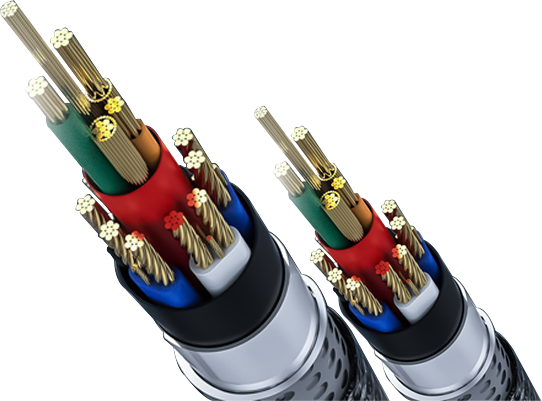
Cable insulation is a non-conductive layer enveloping the conductor. Its primary function is to isolate the conductor from the external environment, prevent current leakage, and protect the conductor from mechanical damage and environmental corrosion. For cables, insulation is not merely an auxiliary structure but a critical element ensuring safety and enhancing performance: Without high-quality insulation, conductors are prone to short circuits and leakage, leading to safety incidents like fires and electric shocks. Insufficient insulation performance directly shortens cable lifespan, increases maintenance costs, and causes system downtime.
The characteristics of the insulation layer directly influence cable selection and application scenarios: different voltage levels, operating temperatures, and installation environments demand vastly different performance requirements for insulation materials. Therefore, a thorough understanding of cable insulation is essential for achieving scientifically sound selection and ensuring reliable system operation.
Definition and Core Distinctions of Cable Insulation
Cable insulation is a high-quality non-conductive material layer covering the conductor surface. Its core functions are to isolate the conductor from the external environment and other conductors, prevent current leakage, and ensure directed current transmission. It must possess high insulation resistance, low dielectric loss, and excellent thermal and mechanical properties to suit diverse scenarios.
Its core functions are twofold: first, electrical isolation to prevent personnel electrocution and equipment short circuits; second, protection of the conductor against moisture, chemical corrosion, and mechanical friction/crushing damage.
It is crucial to distinguish between the insulation layer and the outer sheath: the former, directly adjacent to the conductor, is primarily responsible for electrical isolation; the latter, located outside the insulation layer (or armor layer), provides only mechanical protection and environmental sealing, lacking core insulation functionality.
Bare conductors (e.g., overhead bare conductors) lack insulation and are only suitable for simple scenarios with no contact hazards or corrosion at high altitudes, offering low safety redundancy. Insulated conductors achieve comprehensive protection through their insulation layer, making them adaptable to indoor, underground, and complex industrial environments—the mainstream choice.
Core Functions of Cable Insulation
Electrical Isolation and Shock Prevention: This is the fundamental function of insulation. High-insulation materials block current leakage to the exterior, preventing electric shock when personnel contact cables. It also prevents short circuits caused by conductor contact, ensuring normal power system operation.
Short-Circuit and Leakage Prevention: The insulation layer effectively isolates conductors from surrounding metal components and environmental media (such as moisture and dust). This prevents short-circuit failures caused by insulation damage and reduces energy loss and safety risks resulting from leakage.
Thermal Resistance and Heat Dissipation Management: During operation, cables generate heat from current flow. The insulation layer must possess adequate thermal resistance to withstand temperature increases caused by conductor heating. It also aids in heat dissipation, preventing accelerated aging of the insulation layer due to high temperatures and ensuring stable cable operation within the rated temperature range.
Mechanical Protection: The insulation layer cushions damage to conductors from external mechanical impacts, friction, and compression, preventing conductor breakage or deformation. This is particularly crucial during cable installation, handling, and routine operation, effectively safeguarding the structural integrity of the conductors.
Environmental Protection: Resists external environmental corrosion of conductors, including moisture resistance, water resistance, chemical corrosion resistance (e.g., acids, alkalis, salt spray), and UV radiation resistance. Suitable for diverse environments such as indoor, outdoor, underground, coastal, and industrial corrosion settings.
Common Cable Insulation Materials
PVC (Polyvinyl Chloride)
PVC is currently the most widely used low-voltage cable insulation material. It offers advantages such as low cost, mature processing techniques, resistance to acid and alkali corrosion, and good flame retardancy. Its long-term allowable operating temperature is 60-70°C. Its high plasticity allows it to be formed into insulation layers of different colors, facilitating line identification. It is one of the preferred materials for civil building wiring and low-voltage equipment cables.
XLPE (Cross-linked Polyethylene)
XLPE serves as the core insulation material for medium- and high-voltage cables. Through cross-linking reactions, it forms a three-dimensional network structure, delivering outstanding heat resistance, aging resistance, low dielectric loss, and high mechanical strength. It can withstand long-term operating temperatures up to 90°C and short-term overload temperatures up to 130°C. Its insulation properties remain stable across temperature variations, making it suitable for low-voltage (LV), medium-voltage (MV), and high-voltage (HV) cables. It is widely used in power transmission and distribution, industrial plant power cables, and collection lines for new energy power stations.
Rubber Insulation (EPR, EPDM, Natural Rubber)
Rubber insulation materials offer core advantages of high flexibility, resistance to extreme temperatures, and aging resistance, making them suitable for cables requiring frequent bending and movement. Among these, EPR (ethylene propylene rubber) and EPDM (ethylene propylene diene monomer) exhibit excellent heat resistance (long-term operating temperature 80-120°C), ozone resistance, and chemical corrosion resistance, making them ideal for mining, metallurgy, and welding equipment cables. Natural rubber offers superior flexibility but limited heat resistance, making it primarily used in low-voltage flexible cables. Typical applications include mining rubber-sheathed cables, welding cables, and mobile equipment interconnects.
PE (Polyethylene)
PE insulation materials feature low dielectric loss, excellent moisture resistance, waterproofing, and chemical stability, coupled with high insulation resistance. They are suitable for scenarios demanding high signal transmission stability. It is categorized into low-density polyethylene (LDPE) and high-density polyethylene (HDPE). The former offers superior flexibility, while the latter provides high mechanical strength. Both are widely used in communication cables, coaxial cables, and underground direct-burial waterproof cables, particularly suited for long-distance signal transmission and installation in humid environments.
LSZH/LSHF (Low Smoke Zero Halogen) Insulation
LSZH/LSHF insulation materials are fire-safe solutions. Their core advantages include low smoke density during combustion and the absence of toxic halogenated hydrogen gas emissions. This effectively reduces smoke hazards and secondary pollution in fires, meeting stringent environmental and fire safety requirements. With temperature resistance and mechanical strength comparable to PVC, it is widely used in public buildings (e.g., hospitals, shopping malls, subways), rail transit, ships, data centers, and other densely populated or environmentally sensitive scenarios. It is currently the mainstream insulation material for safety-rated cables.
Classification Methods for Cable Insulation Layers
Cable insulation layers can be categorized across multiple dimensions to facilitate precise selection based on application scenarios. Core classification methods include:
By Voltage Rating: - Low-voltage insulation (≤1kV): Suitable for residential and low-voltage equipment cables, commonly using PVC or XLPE.
- Medium-voltage insulation (1kV-35kV): Primarily used in industrial power distribution and urban distribution networks, predominantly employing XLPE.
Classification by Temperature Rating: Standard-temperature insulation (60-90°C): PVC, standard XLPE;High-temperature-resistant insulation (105-200°C): Silicone, EPR - Low-temperature-resistant insulation (≤-40°C): PE, silicone, suitable for frigid environments
By fire resistance: Flame-retardant insulation (ZR series) prevents flame propagation for general fire protection; Fire-resistant insulation (NH series) maintains power supply during fires for fire protection circuits; Low-smoke, zero-halogen insulation (LSZH) prioritizes environmental safety and low smoke toxicity for densely populated areas.
Classification by Environmental Resistance: Moisture-proof and waterproof insulation (PE, XLPE) for underground and humid environments; corrosion-resistant insulation (fluoroplastic, EPDM) for chemical plants and coastal salt spray environments; UV-resistant insulation (modified PE, XLPE) for outdoor exposed installations.
Conclusion
Cable insulation serves as the core barrier ensuring the safe and stable operation of power systems, encompassing functions such as electrical isolation, mechanical protection, and environmental adaptation. Material selection and quality directly determine the cable's service life and application value. From conventional PVC and XLPE to specialty silicone and fluoroplastic, and from low-voltage residential applications to high-voltage power transmission, insulation selection must precisely match application requirements while balancing safety, performance, and cost.
In practical applications, prioritize high-quality insulated cables certified by authoritative bodies and compliant with relevant standards to avoid safety hazards caused by substandard products. Simultaneously, scientifically select materials based on factors such as voltage level, operating temperature, installation environment, and fireproofing requirements. Consult professional cable technicians when necessary to develop customized solutions. Looking ahead, driven by environmental sustainability and technological advancements, cable insulation will evolve toward greater safety, eco-friendliness, and intelligence, delivering more reliable power transmission solutions across all industries.