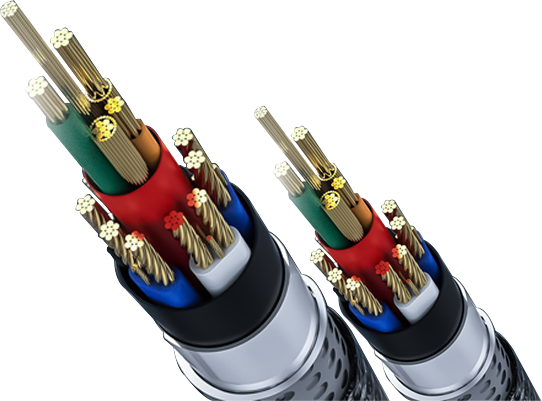
What are the four factors that affect the resistance of a wire?
Wire Resistance – More Impactful Than You Think
Wire resistance is a core indicator of cable performance, directly determining power transmission efficiency, energy consumption, and system safety. It affects not only voltage loss and heat generation but also the normal operation of equipment and electrical safety.
Many buyers have a misconception: "As long as the wire diameter is the same, the wire performance is the same." They are unaware that differences in resistance can lead to cable overheating, increased energy consumption, and even short circuits and fires. Especially in long-distance power transmission and high-load industrial scenarios, improper resistance control can significantly increase operating and maintenance costs.
This article analyzes the four core factors affecting wire resistance from a practical perspective, helping buyers, engineers, and installers understand the essence of resistance, make accurate selections, and avoid purchasing and usage pitfalls.
What is Wire Resistance?
Wire resistance is the opposition to current flow through a conductor, measured in ohms (Ω), and is an inherent property of the conductor itself. According to Ohm's Law (R=U/I), resistance is directly proportional to voltage (U) and inversely proportional to current (I). The higher the resistance, the greater the energy loss (P=I²R) and the more severe the cable heating.
Resistance cannot be completely eliminated, but it can be precisely controlled through reasonable design. It is a key consideration in cable design and selection, directly affecting cable current carrying capacity, service life, and operational safety.
Core Calculation Formula for Wire Resistance
The calculation of wire resistance follows the core formula: R = ρ × L / A
A simple explanation of the parameters in the formula:
• R: Wire resistance (unit: Ω);
• ρ (resistivity): An inherent property of the conductor material, related to the type of material;
• L: Wire length (unit: m);
• A: Cross-sectional area of the wire conductor (unit: mm²).
This formula is the core basis for cable selection: during procurement, you can adjust the material, length, and wire diameter to match the resistance requirements of the application scenario, balancing performance and cost.
Factor One: Conductor Material (Resistivity ρ) – The Core Basis Determining Resistance
What is Resistivity?
Resistivity (ρ) is an intrinsic property of a conductor material, representing the resistance value of a conductor per unit length and unit cross-sectional area. It directly determines the conductivity of the conductor: the lower the resistivity, the better the conductivity and the lower the resistance. Different metals have different atomic structures, resulting in significant differences in resistivity.
Comparison of Common Conductor Materials and Resistivity
• Copper (Cu): Extremely low resistivity (approximately 0.0172 Ω·mm²/m at 20°C), excellent conductivity and heat dissipation. It is currently the most widely used conductor material, suitable for most applications;
• Aluminum (Al): Higher resistivity than copper (approximately 0.0283 Ω·mm²/m at 20°C), slightly poorer conductivity, but lightweight (only 1/3 the weight of copper) and low cost, suitable for long-distance overhead power transmission;
• Aluminum alloy: Through alloy modification, a balance between strength and conductivity is achieved. The resistivity is between that of copper and pure aluminum, suitable for industrial applications requiring high strength.
Practical Impact on Procurement and Selection
Material selection directly affects cable current carrying capacity and cost: copper cables have high current carrying capacity and low energy consumption, but high procurement costs; aluminum cables are low-cost and lightweight, but require larger wire diameters to compensate for higher resistance, suitable for long-distance, low-load applications. Copper cables are preferred for industrial plants and building wiring, while aluminum cables can be used for long-distance overhead power transmission.
Factor Two: Wire Length (L) – Resistance is Proportional to Length
Linear Relationship between Length and Resistance
According to the resistance formula, with the material and wire diameter unchanged, the resistance is directly proportional to the wire length: the longer the length, the stronger the resistance to current flow, and the greater the resistance. For example, the resistance of a 100m copper core wire is twice that of a 50m copper core wire of the same specification.
In long-distance power transmission, the influence of length on resistance is particularly significant and is the main cause of voltage drop.
Voltage Drop Problem in Long-Distance Wiring
Excessive resistance can easily lead to excessive voltage drop: when current flows through a long-distance cable, part of the electrical energy is converted into heat loss, resulting in the terminal voltage being lower than the rated value, causing problems such as unstable equipment operation and insufficient power. For example, in long-distance wiring in factory workshops, neglecting the effect of length can lead to difficulties in starting motors.
Practical Solutions
• Increase the conductor cross-sectional area: The thicker the wire, the lower the resistance, effectively offsetting the increase in resistance caused by length;
• Use high-voltage transmission: In a high-voltage environment, the current decreases, and the power loss (P=I²R) is significantly reduced;
• Choose materials with low resistivity: Prioritize the use of copper cables to reduce the impact of length on resistance.
Factor Three: Wire Cross-sectional Area (A) – The thicker the wire, the lower the resistance
Inverse Relationship between Cross-sectional Area and Resistance
With the material and length remaining constant, resistance is inversely proportional to the conductor's cross-sectional area: the thicker the wire, the larger the space for electron flow inside the conductor, the less resistance, and the lower the resistance. It's like a wide road having less traffic congestion; thin wires restrict electron flow, naturally resulting in higher resistance.
Small diameter wires (e.g., 1.5mm²) have high resistance and low current carrying capacity; large diameter wires (e.g., 16mm²) have low resistance and high current carrying capacity.
Relationship between Standard Wire Diameter and Resistance
International and domestic standards (such as IEC 60228, GB/T 3956) clearly specify the upper limit of resistance for conductors of different wire diameters. A common mistake during procurement is to choose undersized cables to save costs, leading to excessive resistance, severe overheating, and even fire.
Impact on Heating and Safety
The greater the resistance, the more heat is generated from the conversion of electrical energy: when the wire diameter is insufficient, the cable is prone to overheating during long-term operation, accelerating the aging of the insulation layer, and even igniting surrounding flammable materials. For example, high-power equipment such as household air conditioners and water heaters require cables with a wire diameter of 2.5mm² or more to avoid excessive resistance and overheating.
Factor Four: Wire Temperature (Ambient + Operating Temperature) – The higher the temperature, the greater the resistance
Relationship between Temperature and Resistance
Metal conductors have a positive temperature coefficient: as the temperature rises, the vibration of atoms inside the conductor intensifies, increasing the resistance to electron flow, and the resistance increases accordingly. Typically, for every 1°C increase in temperature, the resistance of a copper conductor increases by approximately 0.4%. For example, during operation, cables generate heat due to current loss, causing the temperature to rise from 20℃ to 70℃. This increases the resistance by approximately 20%, further exacerbating the heating and creating a vicious cycle.
Influence of Operating Temperature and Ambient Temperature
Cable resistance is affected by both operating temperature (self-heating) and ambient temperature: outdoor exposure, high-temperature industrial workshops, and densely laid cables can lead to increased cable temperature and resistance; in cold environments, the resistance is slightly lower, but low temperatures can affect cable flexibility.
The temperature rating of the insulation material determines the maximum allowable operating temperature of the cable, thus limiting the increase in resistance.
Impact on Long-Term Reliability
Excessive temperature leading to increased resistance accelerates the thermal aging of the insulation layer and shortens the cable's lifespan. In high-temperature industrial environments and for high-power equipment wiring, cables with high-temperature ratings (such as XLPE insulated cables, rated for 90℃) should be selected to control the increase in resistance and ensure long-term stable operation.
Synergistic Effects of the Four Major Factors: Impact in Real-World Scenarios
Cable resistance is not determined by a single factor, but rather by the synergistic effect of four major factors, directly affecting voltage drop and energy loss:
• Building wiring: For short distances and high loads, prioritize thicker copper cables to control the impact of material and cross-sectional area on resistance;
• Industrial cables: In high-temperature, long-distance scenarios, use high-temperature resistant copper core cables with larger wire diameters to offset the increase in resistance caused by length and temperature;
• Power distribution: For long-distance power transmission, use low-resistivity aluminum cables or thick copper cables, combined with high-voltage transmission, to reduce resistance loss.
When purchasing, it is necessary to refer to the resistance values in the cable datasheet and make a comprehensive judgment based on the specific scenario, rather than focusing on a single factor.
Common Misconceptions about Wire Resistance
• "The thicker the wire, the better the performance" – Excessively thick wires increase costs and installation difficulty. The wire diameter should be matched to the length and material for the specific application; thicker is not always better.
• "Copper and aluminum cables have the same performance" – Aluminum cables have higher resistivity and lower current carrying capacity than copper cables of the same diameter, requiring a larger diameter for equivalent performance.
• "In low-voltage systems, resistance is irrelevant" – In low-voltage systems, excessive resistance can easily lead to excessive voltage drop, causing equipment malfunctions. Resistance is equally important in low-voltage systems.
How can procurement and engineers use resistance knowledge for selection?
• Prioritize checking resistance data: When purchasing, request the cable datasheet to confirm whether the resistance value for the corresponding wire diameter and material meets the standards (e.g., GB/T 3956);
• Match needs to the application: For long distances, choose low-resistivity materials and thicker wires; for high-temperature environments, choose temperature-resistant cables; for low-voltage, high-load applications, choose copper cables;
• Consult the manufacturer for long-distance wiring: For wiring scenarios exceeding 100m, consult the cable manufacturer to optimize wire diameter and material through voltage drop calculations.
Conclusion: Resistance is the "invisible key" to cable performance
The four major factors affecting wire resistance—conductor material, length, cross-sectional area, and temperature—interact and jointly determine the cable's transmission efficiency, energy consumption, and safety. Understanding these factors can help us avoid selection misconceptions, accurately match application needs, and ensure safe and stable system operation while optimizing procurement and maintenance costs.
When purchasing cables, do not only consider the price. Focus on resistance performance, consider the application comprehensively, and prioritize manufacturers with mature technology and guaranteed quality.