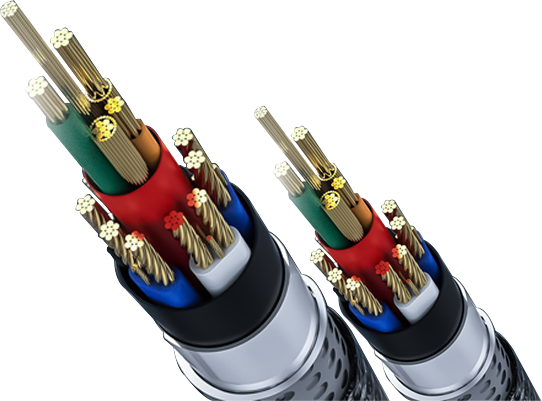
The Importance of Flat Wire in Modern Industry
Flat wires, also known as flat conductors or rectangular conductors, are conductive materials with a rectangular or strip-shaped cross-section, forming a distinct geometric contrast to traditional circular wires.
Amid the rapid advancement of modern electrical and electronic industries, equipment is evolving toward miniaturization, efficiency, and flexibility. Flat wires have emerged as an essential industry necessity due to their unique advantages. From power systems in new energy vehicles and internal wiring in precision electronics to compact designs in large transformers, these applications demand higher spatial efficiency, thermal performance, and conductivity. Flat wires effectively address the limitations of traditional round wires, meeting the core requirements for high power density and miniaturization. As related industries continue to upgrade, the market demand for flat wires is steadily increasing.
Analysis of the Core Technology of Flat Wire
Material Composition: The Basic Guarantee of Conductivity
The material selection of flat wires directly determines their conductivity efficiency, mechanical strength, and application scenarios. Mainstream materials can be classified into three major categories:
•Copper flat wires are categorized into three types: bare copper, tin-plated copper, and silver-plated copper. Bare copper exhibits exceptional conductivity with a conductivity rate exceeding 99.9%. Tin-plated copper incorporates an anti-oxidation layer to enhance corrosion resistance, while silver-plated copper further optimizes conductivity and high-temperature stability, making it suitable for high-frequency and high-temperature applications.
•Aluminum flat wire: Available in both pure aluminum and aluminum alloy materials. Pure aluminum has a lower cost and weighs only one-third of copper, making it suitable for weight-sensitive applications; aluminum alloy, through compositional adjustments, enhances mechanical strength while maintaining the lightweight advantage, thereby compensating for the brittleness of pure aluminum.
Manufacturing Process: Precise Control from Raw Materials to Finished Products
The manufacturing process of flat wire directly affects its performance stability, and the core process includes:
•Raw material preparation: High-purity metal blanks are selected, with strict composition testing to ensure conductivity meets standards. Common forms include wire or ingot.
•Forming processes: Primarily categorized into rolling and drawing. The rolling process compresses the blank into a rectangular cross-section using a rolling mill, offering high production efficiency and suitability for mass production. The drawing process, on the other hand, forms the blank into the desired dimensions through a die, achieving higher precision and is suitable for small-scale, high-precision flat wires.
•Annealing treatment: The formed flat wire undergoes high-temperature annealing to relieve internal stresses, enhancing flexibility and conductivity. The annealing temperature must be precisely controlled according to material properties to prevent strength reduction caused by over-annealing.
•Surface treatment and coating: Perform surface treatments according to application scenarios, such as anti-oxidation treatments like tin plating or silver plating, or apply insulating layers. The coating process must ensure uniformity to guarantee a smooth surface free of bubbles, thereby enhancing product stability.
•Dimensional Tolerance and Quality Control: Critical parameters including thickness, width, and aspect ratio are measured with precision instruments to ensure tolerances comply with industry standards. Concurrently, sampling tests for conductivity and mechanical strength are conducted to prevent substandard products from entering the market.
Electrical and Mechanical Characteristics: The Core Advantages of Flat Wire
•Electrical Performance: The flat wire's rectangular design maximizes heat dissipation area, delivering over 30% higher cooling efficiency than circular conductors of equivalent cross-section. This structure effectively suppresses skin effect and reduces resistance losses. The expanded contact area minimizes contact resistance, ensuring stable current flow with 20%-50% higher current-carrying capacity than circular wires, making it ideal for high-current applications.
•Mechanical Properties: The flat wire demonstrates exceptional flexibility with a significantly smaller bending radius than circular conductors, facilitating wiring in confined spaces. It exhibits high tensile strength and fatigue resistance, capable of withstanding frequent vibrations and bending, making it ideal for vibration-prone environments such as automotive and motor applications. During prolonged use, its robust structural stability resists deformation, ensuring consistent and reliable electrical performance.
Advantages and Limitations of Flat Wire
Core Advantages: Why It Is the First Choice for High-end Electrical Equipment
•Enhanced space utilization: Flat wires allow tighter packing density, outperforming circular wires by over 40%, effectively reducing device size to meet miniaturization requirements for applications like new energy vehicle battery packs and compact transformers.
•Outstanding heat dissipation performance: The larger surface area enhances heat dissipation, lowers operating temperatures, and extends service life, making it ideal for high-power-density devices such as motors and inverters.
•Low-profile design: The thin wire allows flat installation, reducing equipment height. Ideal for slim electronic devices and flat cables.
•Enhanced electrical efficiency: The low-resistance and low-loss design minimizes energy waste, boosting device performance and aligning with eco-friendly trends, such as solar inverters and energy storage systems.
Limitations: Precautions in Application
•Higher production costs: Compared to round wires, flat wires involve more complex manufacturing processes and lower material utilization rates, resulting in production costs 30%-80% higher. This limitation restricts their widespread application in standard electrical equipment.
•Processing challenges: The bending and cutting of flat wire require specialized equipment, resulting in more complex manufacturing processes. This difficulty is particularly pronounced for high-precision and custom specifications flat wire.
•Limited flexibility in the width direction: Flat wires exhibit poor flexibility in the width direction, and excessive bending may cause cracking. When routing, pay attention to the bending direction and avoid sharp bends perpendicular to the width direction.
•Limited standard specifications: The industry currently offers few standardized flat wire sizes, requiring customized production for most applications. This results in extended lead times and higher procurement costs.
A Comprehensive Comparison of Flat Wire and Circular Wire
The fundamental distinction between flat wires and round wires lies in their cross-sectional geometry, with each type prioritizing different performance metrics and application scenarios.
•Structure and space utilization: Under the same volume, the packing density of flat wires is more than 1.4 times that of circular wires.
•Heat dissipation and conductivity performance: Under the same cross-sectional area, the current-carrying capacity of flat wires is 20%-50% higher than that of circular wires.
•Manufacturing and Cost: The flat wire manufacturing process is complex, requiring significant equipment investment and resulting in higher costs. In contrast, the round wire production technology is mature, highly efficient, and more cost-effective, making it the most widely used type of wire currently.
•Application scenarios: Flat wires are suitable for high power density, miniaturization, and high current transmission applications, such as motors, transformers, new energy vehicle power systems, battery packs, and bus bars. Circular conductors are widely used in general electrical wiring, household electronic devices, and standard electrical installations, offering higher cost-effectiveness and versatility.
Common Types of Flat Wire and Insulation Coating
Common types
•Bare conductors: Without insulation coating, suitable for applications requiring direct conductivity or subsequent insulation layer application, such as bus bars and internal connections in large transformers.
•Insulated flat wire: With a surface coating of high-performance insulation, it is ideal for internal wiring in motors and electronic devices to prevent short-circuit risks.
•Enamel flat wire: The insulation layer is made of enamel material, such as polyimide enamel and polyester enamel, which has high-temperature resistance and wear resistance, and is a core component of motors and transformers.
•Braided flat wire: Composed of multiple fine conductors, it offers superior flexibility, making it ideal for applications requiring frequent bending, such as automotive wiring harnesses and industrial equipment connections.
•Multi-layer stacked flat conductor: Composed of multiple flat wires stacked and isolated by insulating layers, it enables multi-circuit transmission. This design is ideal for high-voltage and high-current applications, such as high-voltage busbars and large-scale energy storage systems.
Insulation and coating options
•PVC coating: Cost-effective and offering excellent insulation, it is suitable for electrical equipment in standard environments with a temperature range of-15℃ to 70℃. Widely used in household electronics and low-voltage circuits.
•XLPE coating: Made of cross-linked polyethylene, it is heat-resistant and aging-resistant, with a temperature range of-20℃ to 90℃. Its stable insulation performance makes it suitable for medium and high-voltage lines and outdoor equipment.
The Wide Application Scenarios of Flat Wire
Industrial and power equipment
•Motors and Generators: Flat wires, with their high power density and superior heat dissipation, are the core conductors in high-end motors, including those used in new energy vehicle drives, industrial asynchronous motors, and generator stator windings. This technology enhances motor efficiency, reduces size, and lowers energy consumption.
•Transformers and inductors: The compact arrangement of flat wires reduces the size and weight of transformers while improving heat dissipation efficiency. They are widely used in power transformers, electronic transformers, and high-frequency inductors, particularly in miniaturized and high-frequency equipment applications.
New Energy and Transportation
•Battery Pack and Busbar: In new energy vehicle battery packs and energy storage battery systems, flat wires serve as busbars and connecting conductors to enable high-current transmission, thereby improving the spatial utilization efficiency and thermal performance of the battery pack while extending battery life.
•New energy vehicle power systems: Beyond the drive motor, flat wires are also utilized in core components like inverters and chargers, meeting the demands for high power, compact size, and vibration resistance, thereby enhancing the vehicle's power performance and range.
•Solar and Energy Storage Systems: Flat wires are utilized in solar inverters and energy storage converters for high-current transmission to enhance equipment efficiency. In the battery connections and busbar designs of energy storage systems, the spatial advantages and thermal performance of flat wires ensure stable system operation.
Electronic equipment and other fields
•Consumer electronics: In thin electronic devices such as smartphones, laptops, and tablets, flat wires serve as internal connection lines to achieve flat wiring and reduce device thickness; in headphones and smart wearable devices, the flexibility and miniaturization advantages of flat wires meet the requirements for portability.
•Heating elements: Stainless steel flat wire and nickel alloy flat wire are commonly used in heating tubes, heating plates, and other heating components. They are heat-resistant, oxidation-resistant, and highly efficient, making them suitable for household appliances and industrial heating equipment.
Standard of Flat Wire
Industry standards and specifications
The production and application of flat wires must comply with strict industry standards to ensure product compatibility and safety.
•International standards: IEC (International Electrotechnical Commission) standards specify dimensional tolerances, conductivity, and insulation requirements for flat wires; ASTM (American Society for Testing and Materials) standards focus on material properties and testing methods, applicable to the North American market.
•Domestic and regional standards: JIS (Japan Industrial Standards) emphasizes precision and is suitable for the Japanese and Southeast Asian markets; DIN (German Industrial Standards) focuses on reliability and is suitable for the European market; China's GB/T standards combine international general requirements and establish specific specifications for domestic application scenarios.
•Tolerance and Testing Requirements: The dimensional tolerance is typically controlled within ±0.01mm to ±0.05mm. The conductive performance must comply with the GB/T 3956 standard, and the insulation layer must pass multiple tests including voltage withstand and aging tests.
Conclusion
Despite its limitations such as high production costs and complex processing, flat wire is gradually overcoming these challenges through technological innovations and the development of new materials. In the future, driven by industries like new energy, miniaturized electronic devices, and high-efficiency motors, flat wire will evolve toward higher performance, greater customization, and more energy-efficient and environmentally friendly applications, becoming a key component in the upgrade of electrical equipment.Flat wire applications not only enhance equipment efficiency and reduce size but also lower energy consumption, contributing to green and low-carbon development. It serves as an ideal conductor choice for high-end electrical equipment.