In our era where smartphones, laptops, and electric vehicles have become indispensable in both daily life and industrial production,
charging cables—often overlooked as mere power connectors—play a pivotal role. While most people view them as ordinary accessories, few realize they are not just simple connectors but critical components that determine charging efficiency, device safety, and even battery longevity. From recharging mobile devices to powering electric vehicles, charging cables have permeated every aspect of modern life. This article will explore the technical principles behind these everyday essentials, systematically examining their core functions, structural components, classification methods, and selection strategies. Through professional insights, we aim to uncover the technological logic behind this seemingly ordinary yet vital product.
What is a charging cable?
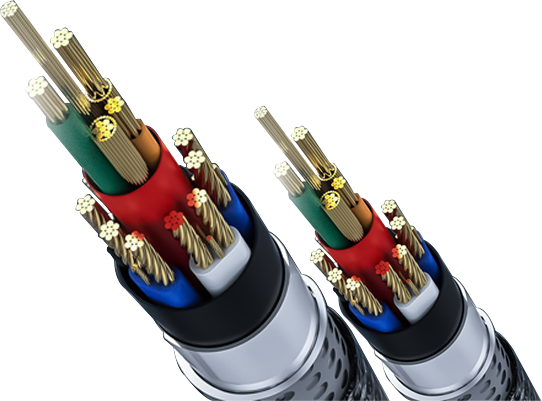
Technically defined, a charging cable is an electronic component designed for directional power transmission. Its primary function is to establish an energy transfer pathway, delivering stable electricity from power sources like chargers, power banks, and charging stations to devices such as smartphones, computers, and electric vehicles' batteries or power modules. With technological advancements, modern charging cables have evolved into two main categories: "single-function" and "multi-functional" types. The "charging-only" cables, featuring a relatively simple internal structure with just positive and negative conductors, primarily serve basic power transmission needs. In contrast, multi-functional cables combine power supply with data transmission capabilities. These include dedicated data cores and signal shielding layers, enabling simultaneous charging, file transfer, and system debugging. This explains why some cables only support charging when connected to computers, while others facilitate data exchange.
The core components of a charging cable
Conductor material
A compliant charging cable is a precision system comprising four core components: conductors, insulation layers, outer sheaths, and connectors. The material quality and manufacturing processes of these components directly determine the cable's performance metrics. As the primary medium for electrical energy transmission, conductor material selection plays a decisive role in conductivity efficiency. Currently, pure copper conductors remain the most widely used option in the market, featuring low resistivity (approximately 0.0172Ω·mm²/m at 20°C) and excellent conductivity that effectively reduces energy loss during transmission. Tin-plated copper represents an upgraded version of pure copper, with its surface coated with tin layers significantly enhancing oxidation resistance. This design prevents conductivity degradation caused by copper oxidation during prolonged use, extending service life by over 50% compared to pure copper. In contrast, cost-effective aluminum or copper-clad aluminum conductors, with their higher resistivity (approximately 0.0283Ω·mm²/m), are only suitable for low-power, short-distance temporary charging scenarios. These materials not only exhibit low charging efficiency but also risk heat accumulation due to excessive resistance, posing safety hazards.
Insulation material
If conductors are the "blood vessels," insulation materials serve as their "walls," shielding against electrical currents and preventing short circuits. PVC, widely used in low-end cables due to its cost-effectiveness, faces challenges like hardening at low temperatures and softening at high temperatures, often cracking after prolonged bending. TPE, the preferred choice for mid-range cables, combines flexibility with wear resistance, offering a smooth texture and aging resistance. High-end cables typically use silicone, which withstands extreme temperatures from-40°C to 150°C while maintaining excellent tensile strength—resisting deformation even under force. XLPE insulation, used in industrial settings, excels in withstanding high temperatures and pressures, making it the go-to material for charging cables in new energy vehicles and industrial equipment.
Outer sheath
The outer sheath and connector serve as the core components for "physical protection" and "interface compatibility," respectively. Key technical specifications of the outer sheath include wear resistance, flexibility, and environmental adaptability. High-quality cables typically feature a composite structure combining "woven reinforcement layer + elastic substrate," such as nylon braided mesh paired with TPE material, which can withstand over 10,000 bending cycles and effectively resist daily friction and tension. In contrast, inferior cables often use a single-layer rigid plastic sheath, which is prone to brittleness in low-temperature environments and may develop sheath damage or exposed internal conductors after prolonged bending.
Type of charging cable
Consumer electronics charging cables
Charging cables are clearly categorized into three types—consumer electronics, industrial power, and electric vehicles—based on their technical requirements for specific applications. In the consumer electronics sector, these cables prioritize lightweight and portability, with common variants including USB-C to USB-C, USB-A to USB-C, and Lightning cables.
Charging cables for industrial and power applications
In industrial and power applications, charging cables must prioritize "high reliability" and "strong load capacity". For instance, solar charging cables (PV cables) require specialized sheathing materials resistant to UV radiation and extreme temperatures to ensure stable performance in harsh outdoor conditions. Meanwhile, high-current charging cables for industrial equipment feature larger conductor cross-sections, capable of handling currents ranging from dozens to hundreds of amperes, thus meeting the charging demands of high-power devices like industrial motors and energy storage systems.
Electric vehicle charging cable
Electric vehicle charging cables are the category with the highest technical threshold. Based on charging methods, they can be divided into AC charging cables and DC fast-charging cables. The power of AC charging cables typically ranges from 3.3kW to 22kW, mainly used for slow charging in household scenarios. They integrate AC contactors and control chips internally to achieve safe monitoring during the charging process. DC fast-charging cables, on the other hand, are the core equipment for rapid energy replenishment in new energy vehicles, with power capacities reaching 480kW or higher. They can handle high currents of hundreds of amperes, achieving a charging efficiency of "10 minutes of charging, 300 kilometers of range." This imposes extremely high requirements on the conductor cross-section, insulation material's heat resistance, and heat dissipation structure of the cables. Some high-end DC fast-charging cables even incorporate liquid cooling systems to control temperature rise during charging. From a regional perspective, different countries and regions have developed differentiated connector standards based on their technical approaches and industrial needs: Europe primarily uses the Type 2 standard, supporting both AC and DC charging; the United States promotes the CCS standard, adding a DC charging interface to Type 2; China has independently developed the GB/T standard, which possesses full intellectual property rights and better meets the safety and compatibility requirements of the domestic electric vehicle industry. These differences in standards also reflect the global technological competition landscape in the new energy industry.
How a charging cable works
Mechanism of electric energy transmission
The charging cable's operation consists of two core functions: power transmission and data communication. Power transmission follows fundamental electrical principles, while data communication relies on specialized protocols for intelligent control. During power transmission, the relationship between voltage, current, and resistance adheres to Ohm's Law (I=U/R). A lower resistance in the cable conductor reduces energy loss and improves charging efficiency. Conversely, excessive conductor resistance generates significant Joule heat, causing cable overheating—a key reason why low-quality cables tend to overheat during charging.
Data Communication and Fast Charging Protocols
For charging cables with data transmission capabilities, their internal data cores utilize dedicated fast-charging protocols (such as USB-PD, QC, SCP, etc.) to enable "two-way communication" between devices and chargers. The device transmits parameters like battery capacity, current voltage, and temperature to the charger via these protocols, while the charger adjusts its output voltage and current accordingly to achieve an "on-demand power supply" smart charging mode. For instance, USB-PD-compatible cables support multi-level voltage adjustments (e.g., 5V/3A,9V/3A,12V/3A) to accommodate various charging requirements. If a cable lacks support for a specific fast-charging protocol, even pairing it with a high-power charger will not enable fast charging—it can only operate in basic 5V/1A or 5V/2A modes. This explains why "fast chargers paired with standard cables cannot achieve fast charging."
Key technical parameters of charging cable
When selecting a charging cable, it is essential to focus on its core technical parameters, which directly determine the cable's applicability and safety. These parameters can be categorized into the following six types: First, the cable specification (AWG), which is the standard for measuring the thickness of the core. A smaller value indicates a thicker core and stronger current-carrying capacity. For example, the core diameter of a 20AWG cable is approximately 0.81mm, while that of a 24AWG cable is about 0.51mm. The current-carrying capacity of a 20AWG cable is over 50% higher than that of a 24AWG cable, making it more suitable for fast charging scenarios. Second, the rated current value, which must match the charging current requirements of the device. Smartphones typically require 3A-5A, laptops need 5A-10A, and electric vehicles require over 32A. Third, the rated voltage value, which must comply with the power grid standards of the usage region (e.g., China is 220V, the US is 110V). Charging cables for industrial and automotive applications need to support higher voltages (e.g., DC fast charging cables for electric vehicles require over 500V). Fourth, the compatibility of the charging protocol, which should be chosen based on the fast charging protocol supported by the device. For example, Apple devices should prioritize cables supporting USB-PD, while Huawei devices can opt for cables supporting SCP protocol. Fifth, material quality, where the conductor should preferably be pure copper or tin-plated copper, and the insulation layer and sheath should preferably use aging-resistant materials like TPE or silicone. Sixth, safety certification, which must include authoritative certifications such as CE (EU safety certification), UL (US safety certification), and RoHS (environmental certification) to ensure the cable's safety in extreme conditions like short circuits or overcurrent.
Core advantages of premium charging cables
The value of high-quality charging cables lies in their long-term stability and cost-effectiveness, with core advantages summarized as follows: 1) Enhanced charging efficiency: The low-resistance pure copper conductors reduce energy loss, cutting charging time by over 30% compared to standard cables. 2) Robust device protection: Superior insulation and heat dissipation designs prevent battery swelling and equipment damage caused by overheating during charging, extending the lifespan of both devices and batteries. 3) Stable data transmission: The shielding layer in composite cables minimizes electromagnetic interference, ensuring smooth performance for data-intensive tasks like file transfers and video editing – ideal for professional users including photographers and video creators. 4) Versatile application: Materials resistant to extreme temperatures and wear enable reliable use in complex environments such as outdoor settings and industrial workshops. 5) Reduced safety risks: Authoritative-certified cables automatically activate protection mechanisms during extreme conditions like overcurrent, short circuits, or high temperatures, preventing fire hazards and electric shock incidents. For EV users, the stability of premium charging cables is paramount, effectively avoiding charging interruptions and contact issues to ensure safe charging and reliable battery performance.
How to choose the right charging cable
When selecting charging cables, adhere to the core principles of "matching requirements, focusing on specifications, and verifying certifications" based on the above technical considerations. First, choose cables with matching specifications according to device interface types (e.g., USB-C, Lightning) and power demands (e.g., 30W for smartphones, 100W for laptops, 60kW for electric vehicles). Second, verify key information like AWG gauge, rated current, and protocol compatibility through product datasheets to avoid being misled by vague claims like "fast charging." Third, prioritize products from reputable brands, as they offer better material quality, manufacturing reliability, and comprehensive after-sales service. Finally, pay attention to daily usage and maintenance: avoid excessive bending or pulling, and refrain from prolonged use in harsh environments like high temperatures, humidity, or oil contamination. Regularly inspect cable sheaths and connectors for damage, and replace them promptly to prevent safety risks. From a cost perspective, while premium charging cables may cost 2-3 times more than regular ones, their lifespan can extend 5-10 times, making long-term use more economical.
Epilogue
From early feature phone charging cables to today's fast-charging cables for electric vehicles, the evolution of charging cables has kept pace with the development of electronic devices. Their technological sophistication has progressed from basic "conductive" functions to integrated systems combining "power transmission, data communication, and safety protection." As the critical link between power sources and devices, the quality of charging cables not only affects charging efficiency but also directly impacts device safety and operational costs. Through this article's educational exploration, we aim to dispel the misconception that "charging cables require no selection," helping readers establish rational criteria based on technical specifications. Whether choosing a fast-charging cable for smartphones or configuring charging cables for electric vehicles, focusing on core parameters like conductor materials, protocol compatibility, and safety certifications ensures the selection of high-quality products that meet individual needs. This approach truly maximizes the utility of electronic devices, delivering safe and efficient charging experiences.