Why Does The Cable Need a Shielding Layer?
What Is a Cable Shielding Layer?
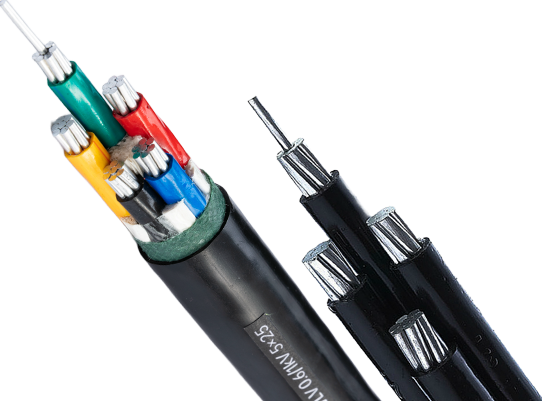
A cable shielding layer refers to a layer of conductive metal or semi-conductive material specially arranged on the outer side of cable conductors and insulating layers. It is the key functional component for cables to realize Electromagnetic Compatibility (EMC) standards and suppress Electromagnetic Interference (EMI), and is also an important symbol of high-performance professional cables. Many people confuse shielding layers with cable armor or outer protective sheaths, but their core functions are completely different. Cable armor and outer sheaths focus on physical mechanical protection, resisting external extrusion, stretching, friction and corrosion damage; while the shielding layer is dedicated to electromagnetic field isolation, static conduction and electric field homogenization, focusing on optimizing electrical performance and ensuring transmission stability rather than mechanical protection.
According to different structural materials, weaving and wrapping processes, and functional positioning, the mainstream cable shielding layers on the market are divided into four core categories: single-layer aluminum foil shielding, tinned copper wire braided shielding, copper tape seamless wrapping shielding, and aluminum foil + copper braid double composite shielding. Each shielding type has unique electromagnetic wave response characteristics, adaptive frequency bands and application advantages. Some are good at suppressing high-frequency signal interference, while others excel in resisting low-frequency magnetic field interference. These differentiated performances cover all mainstream engineering scenarios from civil weak current signal transmission, industrial automatic control to medium and high-voltage power transmission, forming a complete cable shielding system.
The working principle of the cable shielding layer is mainly based on the Faraday cage effect and electromagnetic induction eddy current balancing principle. The closed metal shielding structure forms an independent electromagnetic isolation space inside and outside the cable. On the one hand, it can reflect and absorb external stray electromagnetic waves to prevent interference signals from invading the internal cable core; on the other hand, it can tightly confine the electromagnetic field generated by the internal operating current inside the shielding layer, avoiding outward radiation interference. Cooperating with standard grounding treatment, the shielding layer can quickly guide accumulated static electricity and induced current to the ground, eliminate potential voltage differences, and fundamentally solve various electrical hidden dangers caused by electromagnetic disorder.
Core Reasons Why Cables Need a Shielding Layer
In all professional electrical engineering scenarios, the necessity of configuring cable shielding layers is mainly reflected in four irreplaceable core dimensions: resisting external electromagnetic interference to stabilize transmission signals, blocking internal electromagnetic radiation to prevent adjacent circuit crosstalk, homogenizing internal electric field distribution to delay insulation aging, and conducting static leakage to improve overall circuit safety. These four core functions complement each other, solving the common pain points of unstable signal, easy aging, poor safety and low anti-interference ability of ordinary cables in complex environments, and also explain why shielded cables are indispensable in high-standard engineering wiring.
Resist External Electromagnetic Interference and Stabilize Transmission Signals
In modern industrial workshops, urban commercial comprehensive buildings, subway power distribution systems, and new energy photovoltaic and wind power plants, a large number of high-power electrical equipment are concentrated, including frequency converters, servo motors, high-power transformers, contact switches and rectifier equipment. These devices will continuously generate alternating electromagnetic fields of different frequencies during operation. The electromagnetic waves diffuse outward in all directions and can easily penetrate the insulating sheath of ordinary non-shielded cables. After invasion, they will induce irregular alternating induced current in the cable conductor, superimpose on the normal operating current, and cause serious interference to power transmission and signal transmission.
For weak current signal cables responsible for sensor data detection, equipment linkage control, and real-time data transmission, such subtle electromagnetic interference is often fatal. Slight electromagnetic clutter will cause signal transmission delay, real-time data drift and deviation, inaccurate instrument detection values, and even disordered start-stop actions of automated equipment, resulting in production line shutdown and equipment failure. The complete metal shielding layer can form an effective isolation barrier, completely shielding external electromagnetic noise, filtering clutter interference, ensuring the authenticity, continuity and stability of transmission signals, and meeting the high-precision and high-stability operation requirements of intelligent automated equipment and industrial control systems.
Prevent Internal Electromagnetic Radiation and Avoid Interfering with Adjacent Equipment
While vulnerable to external electromagnetic interference, cables themselves are also important electromagnetic radiation sources. High-frequency pulse current, variable-frequency alternating current and instantaneous switching current inside the cable will generate continuous electromagnetic radiation outward during operation. In intensive wiring scenarios such as equipment control cabinets, bridge wiring, and centralized power distribution rooms, multiple power cables and signal cables are arranged in clusters at close distances. The electromagnetic radiation generated by a single cable will interfere with adjacent cables, resulting in mutual crosstalk between strong current power circuits and weak current signal circuits, seriously affecting the normal operation of the entire circuit system.
The complete cable shielding layer can tightly wrap the cable core, effectively confine the electromagnetic field generated by the internal operating current within the shielding structure, and block outward electromagnetic radiation diffusion. It thoroughly avoids mutual electromagnetic crosstalk between densely arranged cables, ensures the independent and stable operation of each power supply circuit and control circuit, and eliminates system failures caused by signal confusion. This anti-radiation and anti-crosstalk function is particularly critical for high-density wiring scenarios such as industrial automatic control cabinets, computer server rooms, and intelligent building weak current integrated wiring systems.
Uniform Internal Electric Field and Extend Cable Service Life
For medium and high-voltage power cables above 10kV, the internal operating voltage and current are extremely high, and the electric field strength around the conductor is huge. If there is no professional shielding layer structure, the electric field around the cable conductor will be unevenly distributed, forming local high electric field concentration points at conductor gaps and insulation depressions. Under long-term high electric field action, the cable insulation layer will produce partial discharge phenomenon. Tiny discharge sparks will continuously erode the insulating material, accelerate insulation aging and damage, and eventually lead to insulation breakdown, cable short circuit and other serious faults, greatly shortening the overall service life of the cable and bringing huge hidden dangers to power transmission safety.
The semi-conductive shielding layer matched with high-voltage cables can effectively fill the tiny gaps between conductors and insulating layers, eliminate residual air gaps inside the cable, make the internal electric field distribution uniform and balanced, and completely avoid partial discharge caused by electric field concentration. This structure can significantly reduce the loss of insulating materials, delay insulation aging speed, and effectively prolong the service life of high-voltage power cables by more than 30%. This is also the core reason why national and international electrical standards clearly stipulate that all medium and high-voltage power cables must be equipped with professional shielding structures as mandatory configurations.
Improve Electrical Safety and Eliminate Leakage Hazards
During the long-term operation of cables, affected by environmental humidity, temperature change, aging of insulating materials and external mechanical damage, the cable insulation layer is prone to aging, cracking and partial breakdown. At this time, the internal live wire current will induce residual voltage on the cable outer layer. For unshielded cables, the induced voltage will directly act on the cable outer sheath, causing the cable surface to be live. Once contacted by construction personnel or equipment shell, it will easily cause electric shock accidents, and also lead to continuous electrification of mechanical equipment shells, bringing serious safety risks to on-site operation and maintenance.
After the cable shielding layer is grounded in strict accordance with industry standards, it can quickly and stably guide the fault leakage current, induced voltage and accumulated static electricity generated by insulation damage to the ground, clamp the cable surface potential to zero in real time, completely avoid static accumulation and outer sheath live leakage problems, and greatly improve the overall safety and stability of the circuit system. Especially in special harsh environments such as flammable and explosive chemical workshops, humid underground pipe galleries, and corrosive coastal engineering sites, the safety protection function of the shielding layer is the key guarantee for the safe operation of electrical systems.
Working Principle of Cable Shielding Layer (Professional & Easy to Understand)
Most engineering practitioners know that cable shielding layers can resist electromagnetic interference, but few fully understand the underlying physical working logic. The excellent shielding effect of the cable shielding layer is not achieved by a single principle, but by the joint action of three core physical mechanisms: electromagnetic reflection, eddy current absorption, and grounding diversion. The three mechanisms cooperate with each other to achieve full-band coverage of high-frequency, medium-frequency and low-frequency electromagnetic interference, realizing comprehensive electromagnetic isolation and ensuring stable cable operation in complex electromagnetic environments.
First, electromagnetic reflection mechanism. The metal shielding layer has excellent electrical conductivity and wave impedance characteristics. When external high-frequency electromagnetic waves such as radio frequency signals, switch pulse noise and communication interference hit the shielding layer surface, most of the electromagnetic energy will be reflected back to the external environment and cannot penetrate the shielding layer to contact the internal cable core. This mechanism has an excellent suppression effect on high-frequency electromagnetic interference, which is the main principle for shielded cables to stabilize high-precision signal transmission.
Second, eddy current absorption mechanism. For low-frequency magnetic field interference with strong penetration and difficult reflection, such as motor operation magnetic field and power frequency interference, the changing magnetic field will induce uniform eddy current on the surface of the metal shielding layer. The eddy current will generate a reverse alternating magnetic field, which can offset most of the external low-frequency magnetic field energy. The remaining tiny interference energy will be consumed in the form of heat energy on the shielding layer, realizing full absorption and elimination of low-frequency interference and making up for the deficiency of single reflection shielding.
Third, grounding diversion mechanism. Standard grounding is the core premise for the shielding layer to give full play to all functions. The interference current, residual voltage and static charge absorbed and captured by the shielding layer will accumulate on the shielding layer surface if not discharged in time, forming secondary electromagnetic interference. After reliable grounding, these residual charges will be quickly guided to the ground through the grounding wire to maintain zero potential of the shielding layer. It is worth emphasizing that incorrect grounding modes such as floating grounding and wrong double-ended grounding will make the shielding layer completely invalid, and even trigger ground loop interference and aggravate circuit signal chaos.
Common Types of Cable Shielding Layers and Their Differences
Different shielding layer structures and manufacturing processes bring great differences in electromagnetic shielding efficiency, mechanical performance, bending resistance and environmental adaptability, corresponding to completely different applicable interference scenarios and engineering fields. Scientific and targeted selection of shielding types according to actual project environment and circuit functions is the key to giving full play to the shielding effect and avoiding cost waste and functional deficiency. The following is a detailed professional analysis of the four mainstream shielding types in the industry, covering performance advantages, defects and applicable scenarios.
Aluminum Foil Shielding
Aluminum foil shielding is the most cost-effective lightweight shielding structure in the cable industry. It adopts a thin aluminum foil layer to fully wrap the cable core, with ultra-thin thickness, soft texture and strong wiring flexibility. This shielding type has a significant suppression effect on high-frequency electric field interference, and is widely used in ordinary weak current signal cables, network communication cables, audio and video transmission cables and household low-power signal lines. However, it has obvious limitations: the shielding effect on low-frequency magnetic field interference is extremely weak, the aluminum foil material is easy to crack and break after repeated bending and extrusion, and the mechanical durability is poor, so it is not suitable for frequent movement and strong interference industrial scenarios.
Copper Wire Braided Shielding
Copper wire braided shielding is made of high-purity tinned copper wires woven into a dense mesh structure to wrap the cable core. It has excellent overall performance, with good ductility, repeated bending resistance and strong mechanical toughness. Different from aluminum foil shielding, copper braided shielding can effectively suppress both high-frequency electric field interference and low-frequency magnetic field interference, achieving balanced full-band shielding effect. It is the most widely used shielding type in industrial engineering, applicable to industrial control cables, instrument signal cables, frequency converter special cables and servo motor connecting lines. The shielding efficiency is directly determined by the braided mesh density: the higher the mesh count and density, the better the anti-interference performance, which can fully meet the high-precision control and stable operation needs of industrial automated production lines.
Copper Tape Wrapping Shielding
Copper tape wrapping shielding adopts seamless lapping and wrapping process with high-purity copper tape, forming a fully closed shielding structure with no gaps on the cable surface. It has ultra-high sealing performance, uniform electric field distribution effect and strong pressure resistance and stability. This shielding type is specially designed for medium and high-voltage power cables, which can effectively uniform the internal electric field of high-voltage cables, eliminate partial discharge hidden dangers, and bear instantaneous fault short-circuit current. Its mechanical stability, pressure resistance and durability are far better than copper wire braided shielding, which can adapt to long-term high-voltage operation and harsh buried laying environments, fully meeting the long-term safe operation requirements of urban power grids and industrial high-voltage power transmission lines.
Double Composite Shielding
Double composite shielding adopts a stacked composite structure of "aluminum foil inner shielding + copper wire braided outer shielding", integrating the high-frequency shielding advantage of aluminum foil and the low-frequency anti-interference advantage of copper braiding. This structure realizes true full-band electromagnetic shielding, with the highest shielding efficiency among all cable shielding types, and can completely eliminate all kinds of high, medium and low frequency electromagnetic interference. Although the cost is high and the process is complex, it is irreplaceable in high-standard precision engineering scenarios. It is mainly applicable to high-precision medical monitoring equipment, laboratory precision detection instruments, aerospace control circuits, semiconductor production equipment and high-end industrial automatic production lines with extremely strict anti-interference and signal stability requirements.
Conclusion
All types of cable shielding layers have clear positioning and applicable scenarios: aluminum foil shielding is suitable for civil weak current high-frequency signal anti-interference scenarios with low cost and flexible wiring; copper wire braided shielding is the preferred choice for most industrial control circuits with balanced performance and strong adaptability; copper tape shielding is a mandatory configuration for medium and high-voltage power cables to ensure power transmission safety; double composite shielding is used for high-precision and high-standard equipment systems with strict anti-interference requirements. In actual engineering design, cable procurement and construction, practitioners need to comprehensively judge the on-site electromagnetic environment, circuit functional attributes and safety standards, select matched shielded cable types, and standardize grounding and laying construction. Only scientific selection and standard operation can give full play to the shielding effect, effectively avoid equipment faults and electrical safety hazards caused by electromagnetic interference, and ensure the safe, stable and efficient long-term operation of all electrical wiring systems.