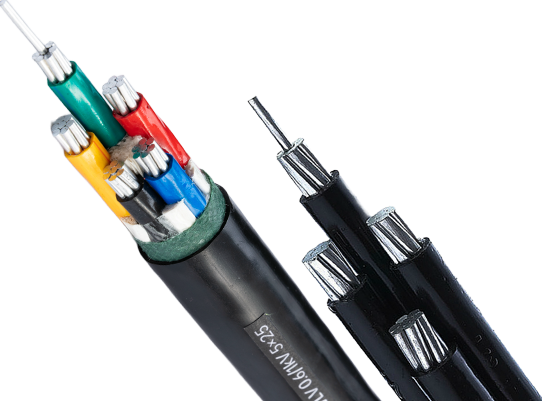
What is XLPE Cable?
Introduction: Understanding the core cable of modern power systems – XLPE cables
In modern power transmission and distribution systems, the insulation performance of cables directly determines the safety, stability, and service life of the power system. Among the various cable insulation materials available, XLPE insulation has become one of the most widely used core materials in the field of power cables due to its outstanding comprehensive performance. Whether in urban underground power grids, industrial production zones, new energy projects such as photovoltaic and wind power installations, or in the power systems of commercial buildings and residential areas, XLPE power cables play a pivotal role in the transmission of electrical energy.
Compared with traditional insulated cables, XLPE-insulated cables overcome the performance limitations of conventional cables by offering significant advantages across multiple dimensions—including high-temperature resistance, anti-aging properties, insulation performance, and mechanical strength—making them perfectly suited for modern power applications involving high voltage, heavy loads, and complex operating conditions. This article provides a comprehensive analysis of XLPE cables from various perspectives—such as their definition and working principles, structural composition, performance advantages, classification categories, and selection criteria—aimed at helping readers gain a systematic understanding of this mainstream type of power cable.
Fundamental Definition and Working Principle of XLPE Cables
The core definition of XLPE
XLPE is the English abbreviation for Cross-Linked Polyethylene, a high-molecular-weight insulating material produced through specialized modification processes. Ordinary polyethylene (PE) possesses a linear molecular structure, which results in significant limitations in its material properties; in contrast, cross-linking technology employs chemical processes to alter the molecular arrangement of polyethylene, converting the linear structure into a stable three-dimensional cross-linked network. This fundamentally optimizes the material's various physical, chemical, and electrical properties—this is precisely why the performance of XLPE cables far surpasses that of conventional PE cables.
Production Process for XLPE Insulated Cables
The high-quality performance of XLPE cables is achieved through a standardized and meticulous production process. The process begins with the screening and pretreatment of polyethylene raw materials to ensure their purity and stability; next, a chemical cross-linking reaction is carried out using specialized equipment to reshape the molecular structure of the material; thereafter, the modified XLPE material is extruded at high temperatures around the outer layer of the cable conductor to form a uniform insulation layer; finally, after cooling and curing at a constant temperature to achieve final shaping, the finished cable undergoes comprehensive testing for electrical properties, mechanical properties, and temperature resistance; only cables that pass these tests are released to the market, ensuring consistent quality throughout the entire production process.
Performance enhancements enabled by crosslinking processes
Crosslinking modification technology enables XLPE to completely overcome the limitations of conventional PE materials, resulting in a striking difference in their performance characteristics. Conventional PE cables exhibit poor heat resistance, with a maximum long-term operating temperature of only 70°C, an extremely low withstand temperature for short circuits, and relatively low mechanical strength and chemical stability. In contrast, XLPE material treated via crosslinking exhibits significantly enhanced heat resistance, allowing its maximum long-term operating temperature to reach 90°C and its instantaneous withstand temperature for short circuits to reach as high as 250°C. Additionally, its mechanical strength, acid-and alkali resistance, moisture resistance, and anti-aging properties are substantially improved, enabling it to adapt to a wide range of complex operating conditions—this is precisely why XLPE has replaced conventional PE and become the dominant insulation material.
Complete structural composition of XLPE cables
XLPE cables feature a multi-layer composite structure design, where each layer performs a specific function; the coordinated interaction of these layers ensures the safe and stable operation of the cable, with its core structure divided into six major modules from the inside out.
Cable conductor
Conductors serve as the core carriers for electrical energy transmission; the mainstream materials available are copper conductors and aluminum conductors. Copper conductors offer superior conductivity, lower power losses, and a more compact size; in contrast, aluminum conductors are lighter and provide better cost-performance ratios, making them suitable for large-scale power transmission projects. Common conductor types include solid conductors, stranded conductors, and pressed-stranded conductors; their manufacturing process strictly adheres to international standards such as IEC 60228 and ASTM B8, ensuring both high electrical conductivity and structural stability.
Conductor shielding layer
This structure is primarily applied to medium-and high-voltage XLPE cables and is fabricated from a conductive material. Its core function is to smooth out minor surface irregularities of the conductor, thereby forming a uniform and smooth electric field; this effectively prevents electric field stress concentration and avoids local discharge-induced breakdown of the insulation layer, thereby enhancing the operational safety of high-voltage cables at their source.
XLPE insulating course
As the core functional layer of a cable, the XLPE insulation layer plays a pivotal role in providing electrical insulation, thermal insulation, and moisture protection. Leveraging the stable properties of cross-linked polyethylene, this layer effectively prevents current leakage, resists the effects of extreme temperature fluctuations, and blocks the ingress of water vapor and moisture, serving as the critical safeguard for ensuring the long-term stable operation of the cable.
insulation screen
Similarly, semiconductor materials are employed to be bonded to the outer side of the insulating layer; these materials are primarily used for precise control of the electric field distribution, balancing the electric field pressures inside and outside the insulating layer, thereby preventing insulation aging and breakdown caused by electric field distortion under high-voltage operating conditions, and further enhancing the voltage withstand stability of the cable.
Metal shielding layer
Common materials include copper tape, copper wire, and aluminum foil; their primary functions are grounding protection and electromagnetic shielding. On one hand, they can rapidly divert fault currents to the earth, thereby mitigating the risks of electric leakage and short circuits; on the other hand, they can effectively attenuate the electromagnetic interference generated during cable operation, preventing it from affecting the operation of surrounding electrical equipment.
Inner and outer sheath layers
The sheath serves as the outer protective barrier for cables; the mainstream materials used include PVC, PE, and Low Smoke Zero Halogen (LSZH) materials. Among these, LSZH materials are environmentally friendly and flame-retardant, producing no toxic gases during combustion, making them suitable for applications such as enclosed buildings and rail transit systems. The sheath layer can withstand external forces such as compression, impact, and abrasion, while also shielding the cable from environmental erosion caused by rainwater, soil, ultraviolet radiation, and other factors, thereby extending the service life of the cable.
Core Advantages and Performance Characteristics of XLPE Cables
Excellent heat resistance and high-temperature tolerance
Thermal resistance is one of the most critical advantages of XLPE cables. They can operate continuously at normal conditions up to 90°C, withstand temperatures as high as 130°C under emergency overload conditions, and endure instantaneous peak temperatures of 250°C during short-circuit events without experiencing insulation melting, damage, or breakdown. Compared with the maximum operating temperature of 70°C for traditional PVC cables, XLPE cables offer significantly greater thermal endurance, making them well-suited for power applications involving high loads and continuous operation.
Offers greater current-carrying capacity and higher transmission efficiency.
When the cable specifications and dimensions are identical, XLPE cables exhibit a significantly higher current-carrying capacity than PVC-insulated cables. Their excellent thermal resistance mitigates the impact of high temperatures on conductive efficiency, enabling them to handle greater electrical loads and meet the power transmission requirements of high-power applications such as industrial parks, large-scale power plants, and data centers, while offering superior transmission efficiency and lower power losses.
Stable electrical performance and excellent insulation properties
XLPE material exhibits exceptionally high insulation resistance, extremely low dielectric loss, and outstanding voltage withstand stability. During long-term high-voltage operation, it does not experience issues such as insulation degradation, leakage current, or partial discharge; its electrical properties remain unaffected by temperature or environmental variations, making it perfectly suited for high-voltage and extra-high-voltage power transmission applications and ensuring the operational stability of power systems.
Excellent mechanical and environmental compatibility
The cross-linked modified XLPE material features a dense structure and exceptional toughness, offering outstanding compressive, impact, and vibration resistance, enabling it to withstand external forces such as construction tensioning, ground subsidence, and equipment compression. Additionally, the material exhibits high resistance to moisture, acid and alkali corrosion, and soil aging; when paired with a specialized protective sheath, it can also resist ultraviolet radiation, ensuring stable performance in both dry indoor environments, humid underground conditions, and outdoor open-air settings.
Long service life and excellent overall cost-performance ratio.
Under standardized installation and normal operational conditions, XLPE cables can have a service life of over 40 years, which is significantly superior to that of traditional PVC cables. Although their single-order procurement cost is slightly higher, their exceptional long service life, extremely low failure rate, and elimination of frequent replacement requirements substantially reduce subsequent maintenance and replacement costs, making their long-term overall cost-effectiveness far superior to that of conventional cables.
Main Categories and Application Scenarios for XLPE Cables
Low-voltage XLPE cable
For nominal voltages ≤ 1 kV, these cables are commonly used in civil and general industrial applications; typical models include YJV and XLPE/PVC power cables. They are widely applied in power distribution for commercial buildings, residential properties, small factories, and distributed photovoltaic systems, and are suitable for conventional low-load electrical applications.
Medium-voltage XLPE cables
The voltage rating range covers 6 kV–35 kV, with two mainstream configurations: single-core and three-core; these cables are primarily used for power transmission in urban distribution networks, substations, mining sites, and large or medium-sized industrial complexes, serving as core cables for both industrial and municipal power engineering applications.
High-voltage XLPE cables
Voltages above 35 kV are primarily used for cross-regional power transmission, grid integration of large-scale power grids, and large-scale renewable energy projects such as wind farms and hydropower plants, enabling long-distance, high-capacity power transmission.
Armored XLPE Cable
Equipped with a steel strip, steel wire, or aluminum tape armor layer, this product significantly enhances its resistance to crushing and rolling; it is specifically designed for harsh operating conditions such as direct underground burial, complex geological environments, and heavy industrial areas, effectively resisting soil pressure and mechanical damage.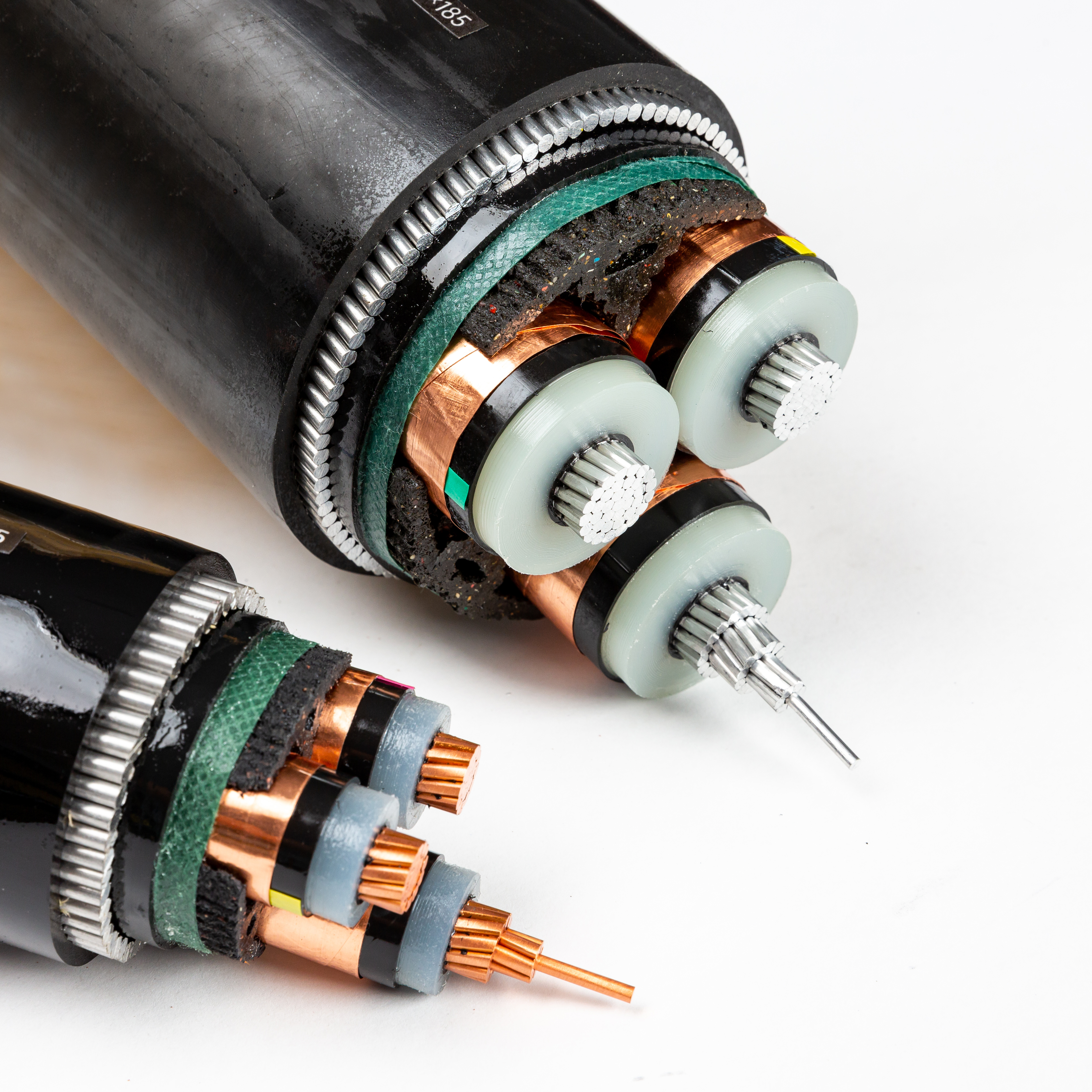 Comparison of the core differences between XLPE cables and PVC cables
As the two most commonly used types of power cables, XLPE cables and PVC cables differ significantly in their applicable scenarios. PVC cables use polyvinyl chloride as their insulation material; they have a maximum operating temperature of only 70°C, low current-carrying capacity, high dielectric loss, average mechanical strength, and a relatively short service life; however, they are inexpensive and are suitable only for low-load applications, temporary power needs, or low-cost small-scale installations.
XLPE cables lead comprehensively in terms of temperature resistance, current-carrying capacity, insulation performance, mechanical strength, and service life, making them suitable for complex operating conditions such as high-load applications, high-temperature environments, outdoor installations, underground deployments, and industrial corrosive settings. Simply put, when seeking long-term stability, safety, durability, and optimal performance for high-power transmission, XLPE cables are the preferred choice; whereas for scenarios with limited budgets or low-load, simple applications, PVC cables may be selected.
Key Considerations for XLPE Cable Selection
Matched voltage level
The appropriate voltage specification must be determined based on the application scenario; common voltage ratings include 0.6/1 kV, 6/10 kV, 12/20 kV, 35 kV, etc. An incorrect voltage selection can directly lead to cable overload-induced breakdown and frequent safety hazards.
Select conductor material
For high-precision, low-loss, and miniaturized applications, copper conductors are the preferred choice; for long-distance, large-scale power transmission projects where cost control is paramount, aluminum conductors may be selected to balance practicality with economic efficiency.
Determine cable specifications
By considering the equipment load current, installation method, line voltage drop, and short-circuit protection requirements, the cable cross-sectional area can be precisely selected to avoid issues such as cable overheating due to overload or excessive power transmission losses.
Compatible with environmental conditions
For indoor conventional applications, standard sheathed cables are recommended; for outdoor applications, UV-resistant sheathed cables should be used; for direct underground burial or in complex geological conditions, armored cables must be selected; for enclosed spaces or public buildings, low-smoke, halogen-free, flame-retardant cable models are preferred.
Conclusion: XLPE Cables – The Reliable Foundation of Modern Power Systems
With exceptional heat resistance, stable electrical performance, robust environmental adaptability, and an exceptionally long service life, XLPE cables have effectively overcome the performance limitations of traditional cables, making them the preferred choice for municipal power grids, industrial production, new energy applications, and infrastructure development. In the current era of power systems evolving toward higher voltages, increased intelligence, and enhanced stability, as well as amid the ongoing expansion of the new energy industry, XLPE insulated cables will continue to play a pivotal role in providing secure, efficient, and durable support for global power transmission networks.