What is a multi-strand stranded cable?
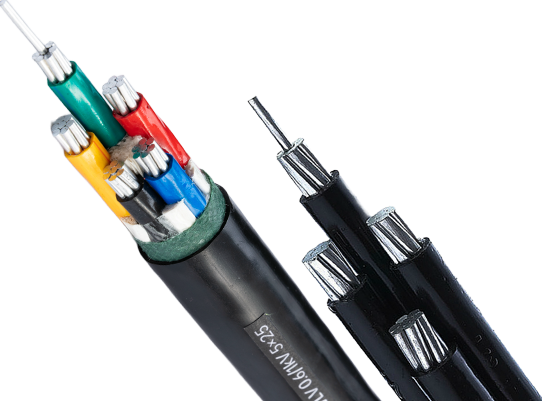
Multi-strand stranded cables, often referred to as stranded cables, are characterized by conductors composed of multiple thin metal wires that are twisted together and arranged in a specific configuration to form a single conductive core—rather than being made from a single solid metal conductor. Many people confuse the terms "stranded conductor," "multi-strand wire," and "multi-strand stranded cable"; however, "stranded" describes the internal structure of the conductor and does not equate to an entire cable. Manufacturers abandon the use of solid conductors in favor of multi-strand stranded configurations, with the primary objective of enhancing the overall mechanical properties of the cable.
The most prominent characteristic of multi-strand stranded cables is their flexibility, which simplifies installation and wiring processes, allows them to withstand repeated bending, and makes them suitable for vibration-prone environments as well as equipment operating under displacement or oscillating conditions. The mainstream conductor materials used are copper and aluminum; in certain specialized applications, copper-clad metal materials are employed to balance cost with electrical conductivity. Simply put, a multi-strand stranded cable is an electrical wire or cable formed by twisting dozens of fine metal wires together and then encasing them with insulation and a protective sheath; such cables find extensive application across industrial, construction, new energy, and automation sectors.
Introduction to stranded conductors
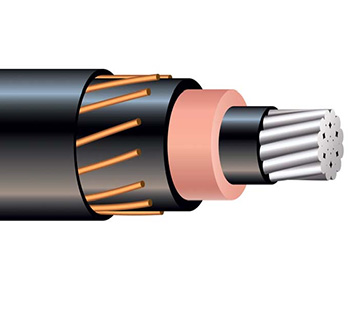
The stranded conductor is the core component of a multi-strand stranded cable. There exists an inclusive relationship among the stranded conductor, the multi-strand wire, and the multi-strand stranded cable: the term "stranded conductor" refers to the conductive portion within the cable; the "multi-strand wire" may refer to a stranded conductor without an outer sheath; whereas a "multi-strand stranded cable" is the complete finished product resulting from the combination of a stranded conductor with insulation, a sheath, and other external protective layers. The term "stranded" merely describes the manufacturing method of the conductor and does not represent the overall performance characteristics of the entire cable.
Basic structural configurations of stranded conductors
The fundamental manufacturing process for stranded conductors comprises several steps: drawing, annealing, stranding, (optional) compression, insulation, cable forming, and sheathing. A single copper or aluminum metal blank is drawn into a fine metallic wire of specified diameter; subsequently, multiple such fine wires are twisted together according to a specific arrangement pattern. Different stranding configurations are tailored to suit entirely distinct application scenarios.
Common stranded configurations include 7-strand, 19-strand, 37-strand, and 61-strand configurations. The three mainstream arrangement methods in the industry are concentric layering, compression stranding, and bundling. The number of fine strands within the stranded structure, the diameter of each single strand, and the arrangement method directly affect the flexibility and overall outer diameter of the conductor, as well as its electrical and mechanical performance.
Multi-strand stranded cable manufacturing process
Copper and aluminum wire drawing
The first step in production is conductor wire drawing. Copper or aluminum rods are successively extruded and stretched through multiple drawing dies to achieve the required fine single-wire diameter specified by the process. The wire-drawing process requires strict control of dimensional tolerances to ensure that every metal wire has uniform thickness; the dimensional consistency of these wires directly determines the electrical stability of the conductor after subsequent stranding.
Annealing treatment
After wire drawing, metals become harder and more brittle. Annealing involves subjecting copper conductors to high-temperature heat treatment to eliminate the processing stresses introduced during wire drawing, soften the metal's texture, enhance its flexibility, and restore its mechanical toughness. Without an annealing process, the stranded cable will become hard, making it highly prone to fracture after repeated bending. Similarly, aluminum conductors also require corresponding annealing processes to adjust their hardness level.
Twisting process
The twisting process involves twisting a large number of annealed single strands around a central axis to form the cable. In a concentric stranded cable, each layer is wound sequentially around the central single strand; in contrast, a stranded cable consists of multiple fine strands that are randomly bundled together; stranded cables are typically used for high-flexibility applications. Different twisting directions and twist pitches result in variations in flexibility and tensile strength.
Conductive compression molding
The compression process is applicable only to certain model stranded conductors. After the stranding process is complete, a die is used to compress the entire conductor, reducing its outer diameter and eliminating gaps between individual strands. Following compression, a conductor with the same cross-sectional area will have a smaller overall outer diameter, thereby saving internal cable space; this advantage is particularly pronounced during multi-core cable stranding.
Insulation and outer sheath extrusion
Once the conductor is processed, the insulation layer must be extruded; suitable materials include PVC, XLPE (cross-linked polyethylene), PE (polyethylene), LSZH (low-smoke zero-halogen), nylon, among others. The selection of insulation material depends on the voltage rating, temperature resistance, flame retardancy, and operating environment. Multiple insulated wire cores can then be further bundled into a cable, followed by the extrusion of an outer protective sheath, ultimately resulting in a complete multi-strand stranded cable product.
Main classifications of multi-strand stranded cables
Copper-core multi-strand stranded cable
Copper exhibits excellent electrical conductivity and balanced flexibility, making it the most widely used conductor material for stranded cables on the market. Copper-stranded cables are extensively employed in building wiring, control cables, power cables, and flexible equipment cables. They offer stable electrical conductivity, strong oxidation resistance, and compatibility with the vast majority of conventional industrial and civil applications.
Aluminum-core multi-strand stranded cable
Aluminum-core stranded cables are significantly lighter than copper cables, offering a pronounced cost advantage in applications requiring large cross-sectional areas. Aluminum stranded conductors are widely used in overhead transmission lines and power distribution mainlines. Their disadvantage is that their electrical conductivity is lower than that of copper; therefore, the connection terminals must be treated to resist oxidation, making these cables particularly suitable for high-power transmission applications involving fixed installations.
High-flexibility multi-strand stranded cable
High-flexibility stranded cables are constructed from finer-stranded wires and are specifically engineered to withstand frequent movement and reciprocating bending conditions. These cables are widely used for internal wiring in industrial machine tools, robots, and mobile equipment, as they can endure continuous repeated swinging and pulling forces.
Compact-type multi-strand stranded cable
After the conductor is stranded, it undergoes a compression process that reduces the conductor's outer diameter and eliminates internal voids. This method is particularly recommended for projects with limited installation space where reducing the overall external diameter of the cable is required; it is commonly used in building power distribution systems and power cable applications.
Fine stranded cable
Fine-twisted cables utilize ultra-fine single wires, which offer exceptional flexibility and are specifically designed for equipment that requires thousands or even tens of thousands of cyclic bending cycles. While finer single wires provide superior flexibility, they also entail correspondingly higher processing difficulty and cost.
Key differences between multi-strand stranded cables and solid-core cables
Solid cables consist of a single continuous metal conductor; stranded cables are composed of multiple thin wires. Solid cables exhibit high hardness and limited bending capability, making them suitable for fixed installations; in contrast, stranded cables offer excellent flexibility and superior bending performance. For applications such as conduit wiring or internal equipment routing, stranded cables provide greater flexibility in routing.
In terms of vibration resistance, stranded cables demonstrate a clear advantage: they are less prone to fracture on equipment subjected to continuous vibration, whereas solid conductors are more susceptible to metal fatigue fracture under prolonged vibration conditions. Solid cables are simpler to manufacture and more cost-effective; in contrast, the manufacturing process for stranded cables is more complex.
In terms of application scenarios, solid cables are primarily used for long-term fixed wiring within building walls; stranded cables, on the other hand, are suitable for control circuits, equipment connections, and lines that require bending or relocation. There is no absolute superiority between the two; cable selection should be based on the specific site conditions, conductor cross-sectional area, and applicable installation standards and specifications. It is not appropriate to simply conclude that stranded cables are necessarily superior to solid cables.
(1).jpg)
Advantages and disadvantages of multi-strand stranded cables
Key Advantages
These cables feature exceptional flexibility, with multiple thin metal wires working in concert to deform collectively, allowing the cable to be easily bent; this makes cable installation within conduits, cable trays, and equipment cabinets significantly more convenient. When exposed to continuous equipment vibration, the stranded structure can effectively distribute stress, providing superior fatigue resistance. High-flexibility stranded products can withstand thousands of repeated bending cycles.
For large-cross-section conductors, manufacturing solid conductors would result in excessive weight and make bending and installation nearly impossible; however, the stranded construction process enables the production, handling, and installation of large-cross-section cables to be made feasible. For on-site cable pulling and terminal wiring operations, multi-strand stranded cables offer a superior hands-on experience.
Existing limitations
Multi-strand stranded cables involve a more extensive manufacturing process, require specialized stranding equipment, and have a complex production workflow. Given the same material cross-sectional area, the procurement cost of stranded cables is often higher than that of solid-core cables.
Special care must be taken when handling terminal connections; if direct crimping is used, loose fine wires may easily branch out or become scattered, posing a risk of short circuit. It is recommended to use cold-pressed terminals, wire nuts, or tubular pre-insulated terminals. In high-frequency applications, the geometric configuration of stranded conductors results in different high-frequency electrical characteristics compared to solid conductors; therefore, dedicated evaluation is required for high-frequency projects.
Analysis of Electrical Performance of Multi-Conductor Twisted Cable Conductivity
As long as the conductor material is identical and the effective cross-sectional area is consistent, there is a minimal difference in DC conductivity between stranded conductors manufactured according to standards and solid conductors; the stranded construction does not inherently lead to poorer conductivity.
Conductor Resistance
The resistance of a conductor is determined by its cross-sectional area, the resistivity of the metal material itself, the cable length, and the operating temperature. For qualified stranded conductors, the actual effective conductive cross-sectional area shall be used as the basis for calculating resistance.
Current-carrying capacity
The current-carrying capacity of cables is not determined solely by their stranded or solid structure. Factors such as conductor material, cross-sectional area, insulation temperature rating, installation method, ambient temperature, and the number of parallel cables installed will all affect the current-carrying capacity; therefore, cable selection should refer to the corresponding standard current-carrying capacity tables.
Actual Application Scenarios for Multi-Core Twisted-Pair Cables
Within electrical distribution cabinets, secondary control circuits and switchgear wiring extensively utilize multi-strand stranded cables. For industrial machine tools, automated production lines, motor equipment, and industrial robot systems—where frequent operational movements are required—the use of stranded cables is highly recommended. In building power distribution systems, large-section power cables typically employ stranded conductors to facilitate conduit installation.
Instrument control signal lines and signal acquisition systems extensively utilize stranded cable configurations. In automotive wiring harnesses, rail transit systems, and marine equipment—where vibration conditions are highly complex—stranded cables represent the mainstream choice. Similarly, in the photovoltaic energy storage, battery energy storage, and new energy industries, multi-strand stranded cables are widely adopted. Additionally, handheld portable devices, extension cords, and industrial machinery also rely heavily on stranded cables.
Different stranded grades correspond to different operating conditions: standard stranded wires are suitable for fixed installation; compression-stranded wires are commonly used in power distribution systems; flexible stranded wires are used for equipment wiring; fine stranded wires are suitable for applications involving frequent reciprocating motion; and ultra-fine stranded wires are used in specialized robotic equipment. A higher number of fine strands does not necessarily guarantee higher product quality; the single-strand diameter, strand pitch, and applicable standards must all be considered comprehensively.
Multi-conductor stranded cables comply with industry standards
The global market has a comprehensive suite of mature standards and specifications for stranded conductor production. The IEC 60228 standard for insulated cable conductors serves as the internationally recognized foundational specification; ASTM B8 specifies concentric stranded copper conductors; ASTM B231 specifies concentric stranded aluminum conductors; and ASTM B232 specifies steel-core aluminum stranded wires. North American projects must also comply with UL-related cable product standards.
The choice of standards depends on the sales region, voltage level, conductor material, and operating conditions of the equipment. For domestic projects, the selection must align with China's national cable standards; for export projects, it must correspond to the specifications of the target market.
Key Considerations for Selecting Multi-Conductor Twisted Cable Types
When selecting an appropriate stranded cable, you can verify each criterion according to the following dimensions: First, determine the conductor material—whether it is a copper or aluminum conductor; second, confirm the conductor specification—measured in square millimeters, AWG (American Wire Gauge), or kCMIL (thousand circular mils).
Third: Evaluate the flexible requirements—whether the installation involves long-term fixed routing with occasional bending, or continuous reciprocating motion. Fourth: Specify the rated voltage: 300V,450/750V,600V,0.6/1 kV, or medium-voltage rating. Fifth: Confirm the insulation temperature resistance rating: 70°C, 90°C, 105°C, 125°C, etc.
Insulation sheath material confirmation: PVC, XLPE, PE, Low Smoke Zero Halogen (LSZH), rubber; simultaneous assessment of the external environment—including humidity, ultraviolet radiation, oil contamination, chemical corrosion, and mechanical forces; finally, verification that the project complies with applicable product standards: IEC, ASTM, UL, BS, as well as local regulations.
Common Cognitive Misconceptions
Many people mistakenly believe that stranded cables must have inferior conductivity compared to solid-core cables; however, this assertion is not rigorous. Qualified products with equivalent cross-sectional areas exhibit nearly identical DC conductivity performance. A higher number of fine wires does not necessarily indicate better quality; rather, the single wire diameter and the stranding process are the key determinants.
The term "twisted cable" does not imply that such cables can only be used in applications requiring bending or movement; numerous fixed-installation power cables also utilize standard twisted conductors. The term "twisted" refers to the conductor's construction, while "flexible" refers to the cable's ability to withstand bending; these two concepts cannot be directly equated, as some twisted cables are still only suitable for fixed installations.
Conclusion
Multi-strand stranded cables utilize multiple thin strands twisted together to form a conductive core, offering superior flexibility compared to solid conductors and providing greater convenience for installation and wiring. Different stranded construction methods are tailored to a wide range of operating conditions, including fixed installations, vibration-prone environments, and applications involving continuous reciprocating motion.
When selecting a cable, one should not focus solely on whether it features a stranded construction; factors such as conductor material, cross-sectional area, insulation sheath, flexibility rating, external operating environment, as well as the applicable technical standards, must all be taken into account. There is no "one-size-fits-all" cable; the most suitable product will always match the specific operational conditions of the project.