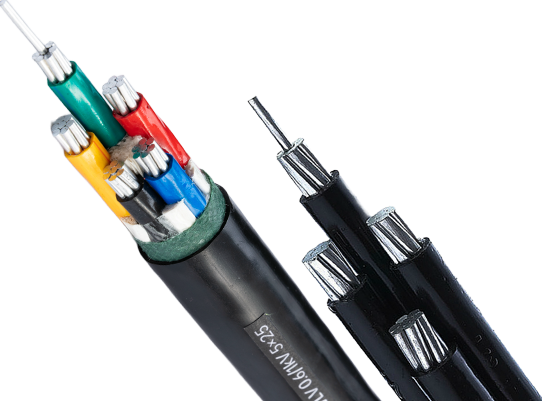
Why Does a Cable Need a Shielding Layer? A Complete Guide
The Core Value of Cable Shielding: Why Shielding Layers Are Essential for Both Industrial and Low-Voltage Systems
Basic Concepts and Practical Significance of Cable Shielding
In power transmission, industrial control, instrumentation, and communication systems, cables serve as the primary medium for transmitting electrical energy and signals, with their shielding layers being critical to ensuring stable operation. Simply put, cable shielding refers to a metallic protective layer surrounding the insulation, forming an essential component of electromagnetic compatibility design. Currently, shielding technology is widely employed in power cables, control cables, communication cables, and specialized industrial cables, with its core value lying in two key aspects: protecting internal signals from external interference and limiting inherent electromagnetic radiation, thereby enhancing signal transmission quality, ensuring electrical safety, and improving the reliability of entire electrical systems.
Many professionals often wonder: Is shielding required for all cables? In fact, shielding is not a standard feature of cables. For simple applications such as low-voltage lighting or residential power supply systems, where electromagnetic interference is minimal and signal transmission accuracy is not critical, shielding is unnecessary. However, in complex industrial environments, high-precision signal transmission scenarios, or high/low-voltage power transmission applications, shielding becomes essential – which is the fundamental reason for the widespread adoption of cable shielding technology.
Definition, Materials, and Structure of Cable Shielding Layers
The fundamental difference between the shielding layer and the insulation layer
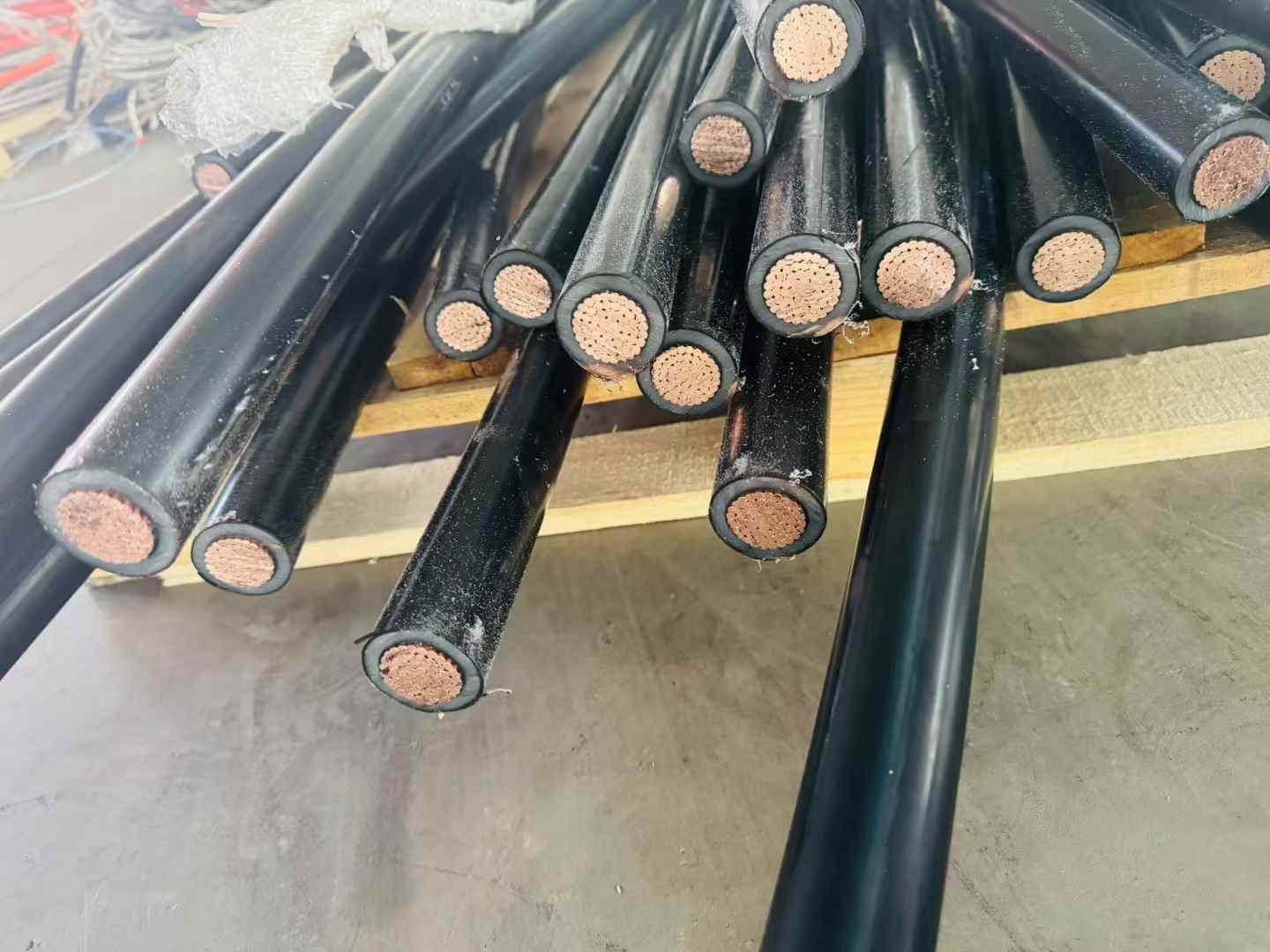
The cable shielding layer is a protective barrier made of metallic material attached to the exterior of the insulation layer, differing fundamentally in function from the internal insulation layer. The insulation layer primarily consists of non-metallic materials such as PVC, XLPE, and PE, serving the core functions of isolating conductors, preventing electrical leakage, and ensuring electrical insulation safety; whereas the shielding layer is constructed from metals like copper and aluminum, does not serve an insulating purpose, and primarily acts as an electromagnetic field barrier. Its working principle involves utilizing the electromagnetic induction properties of metal conductors to intercept external electromagnetic waves, isolate mutual interference between internal and external electromagnetic signals, and physically block the propagation path of electromagnetic interference.
Common shielding materials
In industrial applications, cable shielding materials have evolved through extensive iterations to form several mature and versatile categories tailored to diverse requirements. Key materials include copper strips, copper braided nets, aluminum foil, aluminum-polyester composite tapes, and metal shielding nets, along with composite shielding materials that combine multiple advantages. Copper exhibits excellent conductivity and strong shielding stability, making it the preferred choice for power and control cables; aluminum foil is lightweight and provides outstanding protection against high-frequency interference, thus being widely used in communication cables; composite shielding combines the strengths of foil and braided layers to deliver comprehensive electromagnetic shielding across all frequency bands.
Mainstream Shielding Structure
Based on cable structure and protection requirements, shielding configurations are categorized into several types, including single-conductor shielding, pair shielding, overall shielding, concentric shielding, metal tape shielding, and woven mesh shielding. Single-conductor shielding is primarily used in high-precision instrument cables to individually protect each signal conductor; pair shielding is suitable for twisted-pair signal cables to eliminate interline crosstalk; overall shielding provides comprehensive protection for the entire cable and is widely employed in industrial general-purpose cables. Their distinct structural designs precisely meet various interference protection needs.
The core functions and operating principles of the cable shielding layer
The Seven Core Functions of a Cable Shielding Layer
Suppression of electromagnetic and radio frequency interference
In industrial environments, high-power equipment such as motors, transformers, and frequency converters generate intense electromagnetic fields during operation, which can readily interfere with signal transmission and power delivery in surrounding cables. Unshielded cables become susceptible to external electromagnetic interference, causing signal fluctuations. The shielding layer effectively blocks external electromagnetic interference (EMI) and radio frequency interference (RFI), particularly for high-frequency signal cables used in communications and data transmission, preventing circuit disturbances caused by RF signals and ensuring stable operation of equipment in environments with dense high-power devices.
Eliminate signal distortion and transmission noise
Weak analog signals and high-frequency digital signals are highly sensitive to interference; even minor electromagnetic disturbances can cause issues such as signal noise, data corruption, and communication interruptions. The shielding layer filters out external clutter interference, stabilizes the signal transmission waveform, and prevents measurement deviations or equipment malfunctions caused by interference, serving as a fundamental guarantee for the high-precision operation of instruments and automated control systems.
The electromagnetic radiation emitted by the control cable itself
When energized, cables emit electromagnetic radiation. Unshielded cables radiate these waves outward, interfering with nearby precision equipment and low-voltage circuits, thus failing to meet electromagnetic compatibility (EMC) standards. A shielding layer confines the internal electromagnetic field within the cable structure, reducing electromagnetic leakage, ensuring EMC compliance for the entire electrical system, and preventing mutual interference between devices.
Enhance signal integrity and electrical safety.
In industrial automation, process control, and precision measurement applications, complete and stable signals are essential for accurate equipment operation. The shielding layer maximizes the preservation of original signal parameters, ensuring the integrity of both analog and digital signals. Furthermore, in medium-and high-voltage cables, the metal shielding layer ensures uniform electric field distribution, preventing safety hazards such as insulation breakdown and leakage currents caused by electric field concentration; when combined with proper grounding design, it significantly enhances the safety of high-voltage power transmission.
Enhance the reliability of system operation.
The electromagnetic environment in complex industrial settings is highly intricate with dense interference sources. Unshielded cables are prone to intermittent failures, leading to equipment downtime and communication paralysis. The shielding layer stabilizes signal transmission and isolates interference, significantly reducing the probability of equipment failures, minimizing unplanned shutdowns, and comprehensively enhancing the overall stability and service life of electrical systems.
The working principle of cable shielding and its key influencing factors
The fundamental principle of cable shielding lies in the electromagnetic interception and diversion capabilities of the metal shielding layer. When external electromagnetic waves interact with the cable, the metal shielding layer first absorbs these fields, converting electromagnetic interference into weak currents that are conducted to ground through the grounding system, thereby preventing interference from reaching the internal conductors. Additionally, the electromagnetic fields generated by the cable itself are confined within the shielding layer and cannot propagate outward.
Grounding serves as the fundamental prerequisite for effective shielding performance; the shielding layer must be properly grounded to ensure proper interference dissipation. Poor grounding, incorrect connections, or inadequate grounding can lead to shielding failure and even generate additional interference. The effectiveness of shielding is influenced by six key factors: material conductivity, shielding coverage, interference frequency, grounding method, cable structure, and installation environment. The industry consensus recommends using aluminum foil shielding for high-frequency interference and copper braided shielding for low-frequency interference.
Cable shielding selection, applicable scenarios, and common misconceptions
Main shielding types and their applicable scenarios
Different shielding types exhibit significant characteristic differences, each tailored to specific application scenarios. Copper tape shielding offers excellent conductivity and high flexibility, making it widely used in high-and low-voltage power cables as well as industrial control cables; copper braided mesh shielding demonstrates outstanding mechanical flexibility and bend resistance, ideal for instruments and control cables requiring frequent movement; aluminum foil shielding provides notable lightweight advantages and exceptional high-frequency interference protection, serving as the preferred choice for communication and data cables; combined foil and braiding shielding delivers full-bandwidth protection, suitable for industrial environments with complex interference; metal shielding nets and concentric copper wire shielding focus on electric field control and grounding performance, specifically designed for medium-and high-voltage power cables.
Scenarios where shielded cables must be used
Not all cables require shielding; the following scenarios necessitate shielded cables: medium-and high-voltage power transmission systems, where the shielding layer is essential for maintaining uniform electric fields and ensuring safety; industrial automation control circuits, which must resist electromagnetic crosstalk from power cables; sensor and instrument wiring, requiring precise transmission of weak measurement signals; communication and data transmission lines, needing to prevent signal distortion and data errors; and circuits associated with frequency converters and motors, requiring suppression of strong electromagnetic interference generated by the equipment itself.
Common faults and selection misconceptions associated with systems without a shielding layer
The absence of a shielding layer or improper shielding design in cables can lead to a range of issues, including signal noise, waveform distortion, data transmission errors, unstable control signals, frequent communication interruptions, and in severe cases, equipment malfunctions or shutdowns, while failing to meet industry electromagnetic compatibility compliance requirements. In practical applications, practitioners often fall into common selection pitfalls: indiscriminately applying shielding to all cables, choosing inappropriate shielding materials, achieving insufficient shielding coverage, implementing non-standard grounding practices, or neglecting interference frequencies and installation environments—all of which render the shielding system ineffective.
Conclusion
When selecting cable shielding structures, a comprehensive evaluation should be conducted considering the application scenario, type of interference source, interference frequency, installation conditions, and industry standards. Refer to general specifications such as IEC, UL, and ASTM to determine the appropriate shielding material and configuration. For low-frequency industrial power interference, copper braided or copper tape shielding is recommended; for high-frequency communication interference, aluminum foil composite shielding is preferred; and for complex mixed scenarios, modular shielding systems are advisable.
In summary, the core value of cable shielding lies in blocking electromagnetic interference, ensuring signal integrity, maintaining a uniform electric field, and enhancing system reliability, making it essential for the stable operation of electrical systems. Shielding design should not be implemented indiscriminately; precise matching of application scenarios and standardized installation with proper grounding are required to maximize its effectiveness. For complex engineering projects, it is advisable to consult professional manufacturers and technical engineers regarding site-specific conditions to avoid common selection pitfalls and ensure safe, stable system performance.