What is WDZ Cable?

Jul 16, 2026
With continuous upgrades to building fire safety regulations, electrical safety standards for residential, commercial, and industrial facilities have become increasingly stringent. Traditional PVC insulated cables tend to emit substantial amounts of dense smoke and toxic corrosive gases during fires, significantly impeding evacuation efforts and damaging sensitive equipment, making them inadequate for meeting the safety requirements of high-end buildings and public infrastructure projects. In this context, WDZ low-smoke, halogen-free flame-retardant cables have emerged as the preferred choice for domestic engineering projects and international initiatives due to their exceptional fire resistance and environmental performance.
Many procurement and engineering professionals often wonder: What exactly is a WDZ cable? How does it differ from conventional PVC cables or LSZH cables? In which applications is it suitable, and what key considerations should be taken when selecting it? This article provides a comprehensive analysis of the WDZ cable's definition, structure, performance, advantages and disadvantages, as well as selection guidelines, enabling readers to fully understand this mainstream safety cable.
What is a WDZ cable?
The WDZ cable is a cable model exclusively defined by China national standards, with its full name being Low Smoke, Halogen-Free Flame Retardant Cable. It is a specialized wire and cable developed specifically to enhance building fire safety. Unlike traditional cables, the core characteristics of this cable are primarily reflected in its safety performance under fire conditions, fundamentally eliminating the safety hazards associated with conventional cables.
WDZ cables utilize halogen-free polyolefin insulation sheathing materials that contain no halogen-based components. During combustion, they do not release toxic corrosive gases such as hydrogen chloride and emit extremely low levels of smoke. In the event of a fire, these cables maintain visibility in areas like corridors and equipment rooms, providing critical time for evacuation and rescue operations while preventing smoke from corroding electrical equipment, wiring, or cable trays, thereby significantly reducing secondary fire-related losses. They represent a core material in modern fire safety engineering.
Analysis of the meanings of the WDZ letters
The three letters "WDZ" all derive from Chinese pinyin abbreviations and represent the standard naming convention used in China's cable industry—simple, intuitive, and highly recognizable. Their specific meanings are as follows:
code Chinese Explanation define
W halogen-free The material is free from halogen elements such as fluorine, chlorine, and bromine, and does not emit toxic or corrosive gases during combustion, making it environmentally friendly.
D Low smoke It exhibits minimal smoke emission when exposed to fire, excellent light transmittance, and does not obstruct escape visibility.
Z Flame retardant Possesses self-extinguishing and flame-retardant properties, effectively preventing fire propagation along cables and inhibiting fire escalation.
Internal structural composition of the WDZ cable
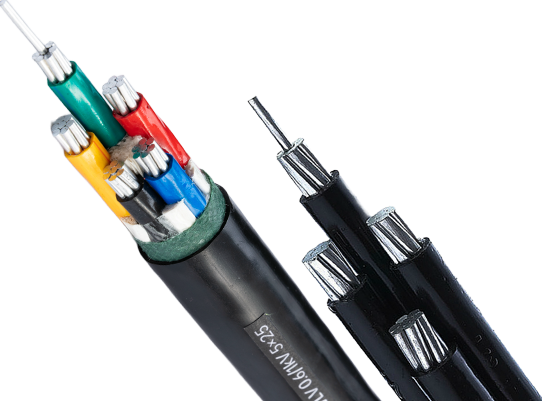
The WDZ cable features a scientifically rigorous structural design, with each layer tailored to specific performance requirements, providing comprehensive protection from interior to exterior while balancing electrical performance, fire resistance, and mechanical stability. The standard configuration consists of five layers, with additional layers customizable as needed.
Electric conductor
As the core conductive component of cables, bare copper is predominantly used; for high-end applications, tin-plated copper may be selected for enhanced oxidation resistance and improved electrical conductivity stability. Conductors are classified into three types: Category 1 solid conductors, Category 2 stranded conductors, and flexible conductors, each suitable for different scenarios such as fixed wiring, conventional engineering installations, and flexible equipment connections.
Insulating course
The insulation layer constitutes the core functional layer of WDZ cables, entirely fabricated from LSZH low-smoke halogen-free polyolefin composite materials or cross-linked modified LSZH materials. These materials exhibit superior insulation performance, high temperature resistance, and excellent aging stability, while fully meeting the essential requirements for low-smoke, halogen-free, and flame-retardant properties—making them the key structural feature that distinguishes WDZ cables from conventional PVC cables.
Fill Layer
Its primary function is to fill the gaps between the conductor and the insulation layer, ensuring the cable maintains a smooth and well-defined shape, enhancing structural stability, preventing deformation or damage during bending or compression, and guaranteeing long-term safety.
Liner Layer and Armoring Layer (Optional)
The lining layer is primarily used in high-standard protective applications to enhance the overall sealing performance and protection of cables. The armor layer is an optional component, available in three types: steel tape armor, steel wire armor, and aluminum wire armor, and is mainly employed for outdoor, underground installation, and industrial heavy-duty scenarios, providing resistance to external forces such as compression, tension, and wear.
Oversheath
The outer sheath is also constructed from LSZH, an eco-friendly flame-retardant material that offers UV resistance and aging resistance, combining multiple properties such as flame retardancy, corrosion resistance, and environmental sustainability, making it suitable for installation in various indoor and outdoor environments.
Key Performance Characteristics of WDZ Cables
Compared to traditional cables, WDZ cables demonstrate exceptional overall performance advantages, which is the primary reason for their widespread use in high-end engineering applications. Their core strengths can be summarized in eight key characteristics: extremely low smoke emission, complete halogen-free composition, superior flame retardancy, low toxicity and environmental friendliness, corrosion resistance under fire conditions, eco-friendly nature, excellent insulation performance, and long service life.
In fire scenarios, conventional PVC cables burn rapidly, releasing large amounts of black smoke and toxic hydrogen chloride gas that not only obstruct escape routes and cause personnel poisoning but also corrode sensitive electrical equipment, resulting in significant property damage. In contrast, WDZ cables burn slowly, produce thin, non-toxic smoke without generating corrosive gases, ensuring safe evacuation of personnel while providing maximum protection for both equipment and building structures.
Comparison between WDZ cables and common cables
WDZ Cable vs. Ordinary PVC Cable
These two types of cables are the most frequently compared in engineering applications, exhibiting significant performance differences and serving entirely distinct scenarios. The specific distinctions are listed in the table below:
performance parameter WDZ cable Standard PVC cable
Smoke emissions Extremely low smoke emission with excellent light transmittance Thick smoke obscures visibility.
Halogen gases Halogen-free and free of toxic gases The combustion releases large amounts of corrosive halogen gases.
Toxicity Level Low toxicity, environmentally friendly, safe and harmless Highly toxic and prone to cause human poisoning
fire protecting performance Self-extinguishing flame-retardant property that prevents fire spread Flammable and promotes combustion, accelerating fire spread.
life length Anti-aging, longer service life Prone to aging, with a relatively short service life
applicable scene Public buildings, high-end residences, infrastructure projects Standard low-rise residential building wiring system
WDZ Cable vs. LSZH Cable
Many practitioners often confuse these two types of cables, although they actually belong to a relationship of inclusion. LSZH is a category of low-smoke, halogen-free general-purpose materials that meets internationally recognized material definitions; whereas WDZ is a cable model named based on China's national standards, specifically referring to finished cables made from LSZH material with flame-retardant properties. Simply put, WDZ cables are LSZH flame-retardant cables compliant with Chinese standards and represent a specialized subcategory of LSZH cables.
WDZ Flame-Retardant Cable vs. Fire-Resistant Cable
Flame retardancy and fire resistance are entirely distinct fire protection properties that should not be confused. The primary function of WDZ flame-retardant cable is to prevent fire spread by being non-combustible itself, thereby avoiding escalation of a fire; in contrast, fire-resistant cables can maintain continuous power supply under high-temperature fire conditions, ensuring uninterrupted operation of emergency lighting and firefighting equipment. Fire emergency systems must employ fire-resistant cables, while ordinary lighting and power wiring should prioritize WDZ flame-retardant cables.
Common Models and Classification of WDZ Cables
Based on their functional applications and structural designs, WDZ cables come in several standard models tailored to various engineering scenarios: WDZ-BYJ is designed for building wiring systems, primarily used in indoor fixed installations; WDZ-YJY serves as a power cable for main circuit power supply; WDZ-RYJ is a flexible cable suitable for movable equipment connections; WDZ-KYJ is an control cable for automated equipment control circuits; while WDZ-RVS and WDZ-RVV are twisted-pair sheathed flexible cables commonly employed for low-voltage signal wiring.
Additionally, there is an upgraded version of the WDZN cable, which builds upon the WDZ's low-smoke, halogen-free flame-retardant properties by incorporating enhanced fire resistance, delivering both flame retardancy and fire resistance – making it ideal for critical fire emergency circuits.

Implementation Standards and Application Scenarios
Core Execution Standards
Domestic WDZ cables strictly comply with national standards such as GB/T 19666, GB/T 12706, and GB/T 5023, with their flame retardancy, low smoke emission, and halogen-free properties all passing national standard tests. Additionally, they meet international standards including IEC 60332 and IEC 60754, fulfilling acceptance requirements for various engineering projects both domestically and internationally.
Common Application Scenarios
With outstanding safety performance, WDZ cables are widely used in high-density environments requiring stringent fire protection standards, including hospitals, schools, hotels, airports, subways, shopping malls, office buildings, high-rise residences, data centers, industrial plants, new energy projects, and various public infrastructure projects, making them the standard cable solution for modern building fire safety.
Advantages and Disadvantages of WDZ Cables, as Well as Selection and Installation Tips
Product Advantages and Disadvantages
Its key advantages include high fire safety rating, environmental friendliness and non-toxicity, robust equipment protection, compliance with modern building codes, and long service life, effectively addressing the safety concerns associated with traditional cables. The only drawbacks are higher raw material costs compared to conventional PVC cables, more stringent installation requirements that necessitate professional installation, and its inability to replace fire-resistant cables in critical emergency fire protection circuits.
Key Considerations for Selection and Installation
When selecting conductors, determine the conductor specifications, whether armor is required, and fire resistance rating based on the project's voltage level, installation environment, and mechanical protection requirements; prioritize armored and flame-retardant models for outdoor or underground installations. During installation, control bending radius to prevent insulation damage, use compatible connectors, store properly in a moisture-proof environment, strictly adhere to local electrical installation codes, and conduct pre-installation inspection and acceptance testing.
Common FAQ Questions and Answers
1. Is WDZ cable waterproof? Conventional WDZ cables offer basic moisture resistance but lack a dedicated waterproof design; for applications requiring prolonged submersion in deep water or underground environments, custom waterproof models should be selected.
2. Can WDZ cables be used outdoors? Yes; the outer sheath inherently provides UV resistance. For outdoor installation, armored versions are recommended to enhance protection.
3. What is the difference between WDZ and WDZN? WDZ is flame-retardant, while WDZN combines flame retardancy with fire resistance; WDZN must be selected for emergency fire protection circuits.
4. Does the WDZ cable contain no PVC? Absolutely not—it is entirely made from halogen-free polyolefin materials without any PVC content, completely eliminating the emission of toxic fumes.
Conclusion
The WDZ low-smoke, halogen-free flame-retardant cable is a new type of environmentally friendly specialty cable compliant with modern fire safety standards. Featuring low smoke emission, halogen-free composition, flame retardancy, low toxicity, and corrosion resistance, it effectively addresses the fire safety hazards associated with traditional PVC cables. With broad applicability, high safety performance, and extended service life, it ensures both personnel evacuation safety and protection of equipment and property. It stands as one of the optimal cable choices for high-rise residential buildings, public facilities, industrial projects, and new energy initiatives. Selecting certified WDZ cables is essential for enhancing fire safety in construction projects and meeting contemporary building acceptance requirements.
 
Email
CopyRight © 1989 Chunbin Cable Co., Ltd.
Technical support :Coverweb
Fill in you have to consult
We will contact you as soon as we receive the inquiry and ensure the security of your information.
Name*
Email*
Phone
Country
Message*