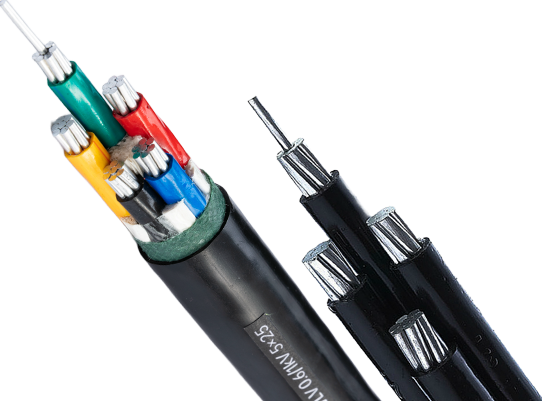
What is URD cable?

Jul 10, 2026
With the ongoing urbanization and power grid upgrades, underground distribution systems have gradually replaced traditional overhead lines as the primary solution for power supply in cities, communities, and industrial parks. Compared to exposed overhead cables, underground distribution offers enhanced safety, superior interference resistance, and improved visual aesthetics, perfectly meeting the core requirements of modern power infrastructure development. URD cables, serving as the backbone of underground distribution systems, are widely adopted in residential communities, commercial complexes, industrial parks, and renewable energy projects due to their stable performance and suitability for direct burial or pipeline installation.
The URD cable, officially designated as Underground Residential Distribution Cable, is a specialized cable designed for underground power transmission and remains the most widely used URD cable in municipal distribution systems and residential power supply applications. This article provides a comprehensive analysis of the URD cable's definition, operating principles, structural composition, classification specifications, advantages and disadvantages, application scenarios, as well as selection and installation guidelines, offering readers a thorough understanding of its key characteristics and serving as a reference for material selection and construction practices in various electrical projects.
What is an URD cable?
The URD cable, or Underground Residential Distribution Cable, is a specialized cable designed for underground power distribution systems. Its primary function is to deliver medium-and low-voltage electricity from substations, pole-mounted transformers, or box-type transformers to end-user applications such as residential homes, commercial buildings, and small industrial facilities. As the core component of underground power distribution networks, the URD cable's most significant feature is its ability to be directly buried or installed within underground pipelines and conduits without requiring complex protective structures, making it suitable for the vast majority of underground power distribution installation scenarios.
Unlike conventional power cables, URD cables are engineered with optimized structures and materials tailored for complex underground environments characterized by humidity, corrosion, and mechanical stress. Their insulation performance, moisture resistance, and mechanical protection have been significantly enhanced, making them the preferred distribution-specific cable for municipal power utilities. Key specifications—including voltage rating, material composition, and installation methods—are clearly defined in the table below.
Feature Item define
full name Underground Residential Distribution Cable
way to install Direct burial installation; Pipeline installation
rated voltage 600 V, 5 kV, 15 kV, 25 kV, 35 kV (depending on the model design)
Conductor Material Aluminum conductor, copper conductor
Insulating Material XLPE: Cross-linked polyethylene; TR-XLPE: Cross-linked polyethylene resistant to tree aging.
Core Application Underground low-and medium-voltage power distribution systems, providing electricity for residential, commercial, and industrial use.
Working Principle of URD Cable
The URD cable utilizes an underground enclosed installation environment and a robust conductor transmission system coupled with insulation protection mechanisms to ensure safe and stable power delivery. Its core operational principle revolves around the flow of electricity within the underground distribution network. The entire power transmission process is well-defined and seamless: high-voltage electricity is first stepped down at urban substations to convert it into medium-and low-voltage power suitable for regional distribution, which is then transmitted via main URD cables to area box-type transformers and ground-mounted transformers.
After being stepped down at the secondary side of the transformer, electrical energy is distributed via URD cables to deliver power precisely to end-user locations such as residential communities, commercial buildings, and industrial facilities, completing the entire power distribution process. Since the cables are fully buried underground with no exposed conductive parts, they remain unaffected by external factors including weather conditions, lightning strikes, snow accumulation, or tree contact. Additionally, the high-performance insulation layer in URD cables effectively contains electric fields, preventing leakage, discharge, and field leakage, thereby ensuring safe power transmission even in complex underground environments—a key advantage that distinguishes them from overhead cables.
URD Cable Structural Design
The URD cable features a multi-layer composite protection structure with sequential safeguards from interior to exterior, designed for stringent underground burial conditions. Its configuration varies slightly across different voltage ratings: medium-voltage models employ a more comprehensive design, while basic low-voltage versions may omit certain protective layers. The core components include conductors, conductor shielding layers, insulation layers, insulating shielding layers, metal shielding layers, and an outer sheath.
Electric conductor
The conductor serves as the core conductive component of URD cables, with mainstream materials categorized into aluminum and copper conductors both employing a compact stranded structure to enhance conductivity density and stability. Aluminum URD cables are lightweight, cost-effective, and exhibit excellent corrosion resistance, making them the preferred choice for residential and municipal power distribution systems. Copper URD cables offer superior conductivity, higher current-carrying capacity, and better high-temperature performance, ideal for demanding applications in industrial and commercial settings, data centers, hospitals, and other high-standard power requirements. In compliance with industry standards, URD cable conductors typically feature Class B stranded structures that provide exceptional flexibility to meet basic bending and pulling demands during installation.
Conductor shielding layer (specific for medium-voltage URD systems)
Medium and high-voltage URD cables are all equipped with a semiconductor conductor shielding layer, which is formed by extruding semiconductor material around the conductor surface. Its primary function is to homogenize the electric field across the conductor surface, eliminate localized electric field concentration caused by conductor twist gaps, prevent partial discharges and insulation breakdown under high-voltage conditions, thereby enhancing the operational stability of medium-voltage cables at the source – making it an essential protective component for these cables.
Insulating course
The insulation layer is the core component ensuring the safe operation of URD cables. The predominant materials currently used in the industry are XLPE (cross-linked polyethylene) and TR-XLPE (anti-tree-aging cross-linked polyethylene). XLPE insulation exhibits exceptional dielectric strength, excellent thermal stability, and moisture resistance, capable of withstanding prolonged operation at 90°C without aging, deformation, or breakdown, making it suitable for underground environments with humid soil conditions. TR-XLPE is an advanced insulation material specifically designed to address water tree and electric tree aging issues in underground cables, offering superior anti-aging and breakdown resistance that significantly extends cable service life; it is widely employed in high-standard, long-term critical power projects. Both materials demonstrate excellent corrosion resistance, effectively resisting erosion from acidic and alkaline substances in soil.
Insulation screen
The insulation shielding layer is also fabricated from semiconductor material and encases the insulating layer externally, further balancing surface voltage stress on the insulation surface, preventing electric field distortion between the insulation and external structures, and reducing the risk of partial discharge. This design significantly enhances overall cable insulation reliability, lowers long-term failure rates, and ensures stable performance under prolonged underground installation conditions.
Metal shielding layer (optional)
The metal shielding layer is an optional core component for medium and high-voltage URD cables, primarily available in two types: copper tape shielding and copper wire shielding. Its primary functions are twofold: first, to provide electromagnetic shielding that suppresses electromagnetic leakage during power transmission and reduces interference with surrounding low-voltage equipment and pipelines; second, to offer ground fault protection by rapidly conducting fault currents when insulation failure or leakage occurs, thereby triggering protective devices to cut off power and prevent safety incidents.
External Sheath (Optional)
The outer sheath serves as the protective layer of an URD cable, typically manufactured from PE (polyethylene), PVC (polyvinyl chloride), or LLDPE (linear low-density polyethylene). It provides comprehensive protection for the cable's internal components against external stresses such as soil compression, abrasive wear from sand and gravel, chemical corrosion, and groundwater exposure. Additionally, it withstands mild ultraviolet radiation and is suitable for applications involving shallow burial or exposed transition sections, significantly extending the cable's overall service life.
URD Cable Type
URD cables are categorized into various types based on voltage rating, core count, and application scenarios, with distinct models offering significantly different operational parameters and application requirements to precisely meet the needs of diverse power distribution systems.
Secondary URD Cable
The secondary URD cable is a dedicated low-voltage distribution cable with a rated voltage of 600 V, representing the most commonly used cable type in residential power distribution systems. It is primarily employed for terminal power distribution in residential communities, building entrance connections, and internal branch power supply within residential complexes, delivering low-voltage electrical energy from transformers to end-users. This cable features low cost, easy installation, and high stability.
Primary URD Cable
Primary URD cables belong to the category of medium-voltage distribution cables, with rated voltages ranging from 5 kV to 35 kV. They are primarily used in municipal public power distribution networks, regional main feeder lines, and high-voltage power distribution systems in industrial parks. Serving as the backbone of regional power distribution networks, these cables are designed for long-distance, large-scale power transmission and require exceptional performance in terms of insulation quality, mechanical strength, and operational stability.
Single-core URD cable
The single-core URD cable features a simple structure, high current-carrying capacity, and excellent compressive strength. It is primarily used in high-power, long-distance power transmission applications such as municipal high-voltage feeders, distribution systems in large industrial complexes, and grid-connected power supply for renewable energy plants, while being well-suited for demanding underground installation environments.
Multi-core URD Cable
The multi-core URD cable integrates multiple sets of conductive cores, eliminating the need for multiple individual cables, thereby enhancing installation efficiency and reducing space requirements. Widely adopted in residential communities, commercial buildings, small business districts, and other medium-to-small-scale power distribution applications, it has become the preferred choice for underground power distribution systems in civilian settings.
General Specification Parameters for URD Cables
URD cables feature highly standardized specifications and parameters, with industry-wide parameters suitable for the vast majority of conventional power distribution projects. The core selection parameters are listed in the table below, serving as the fundamental basis for material selection and design planning.
Parameter Item Standard Selection Range
Conductor Material Aluminum conductor, copper conductor
Insulating Material XLPE、TR-XLPE
rated voltage 600V-35kV
Long-term operating temperature 90℃
way to install Direct burial installation; Pipeline installation
operative norm Industry standards from ICEA, ASTM, AEIC, and UL
URD Cable Industry Standard
To ensure the production quality, construction safety, and operational reliability of URD cables, the industry has established a comprehensive standardization system. The mainstream implementation standards include those from ICEA, ASTM, AEIC, UL, and IEEE. All compliant URD cables must be manufactured and tested in strict compliance with these standards. Among them, ICEA S-94-649 and ICEA S-97-682 serve as core production standards for URD cables, specifying key parameters such as cable structural dimensions, insulation performance, and mechanical strength; ASTM standards strictly regulate conductor materials and manufacturing processes; AEIC standards provide specific specifications for the long-term operational reliability of power cables; while UL standards define cable safety certification requirements. Standardized production fundamentally eliminates potential hazards associated with substandard cables, ensuring the long-term stable operation of power grids.
The Core Advantages of URD Cables
URD cables can fully replace traditional overhead cables and serve as the preferred choice for underground power distribution, thanks to their outstanding advantages in safety, reliability, durability, and operational costs, making them ideal for modern urban power grid development.
First, safety performance has been significantly enhanced. URD cables are installed entirely underground with no exposed conductive parts, completely eliminating risks of electric shock, short circuits, and fires caused by lightning strikes, external impacts, or cable detachment, thereby greatly improving public power safety. Second, operational reliability is markedly improved. Buried cables are unaffected by severe weather conditions such as heavy rain, typhoons, snowstorms, or extreme heat, resulting in an extremely low failure rate and effectively reducing power outages while ensuring uninterrupted power supply. Third, maintenance costs are substantially lower. Unlike overhead lines that require regular clearance of surrounding vegetation and inspection of exposed sections, URD cables demand far fewer inspections, leading to significant reductions in subsequent maintenance workload and financial expenditures.
Fourth, enhanced urban aesthetics: The cables are concealed underground, eliminating cluttered overhead lines and improving the appearance of cities and industrial parks in line with modern urban development plans. Fifth, extended service life: Utilizing high-performance insulating, anti-corrosion, and moisture-resistant materials, they withstand underground conditions characterized by humidity, corrosion, and compression, demonstrating exceptional aging resistance and ensuring stable operation for decades under normal operating conditions. Sixth, superior mechanical protection: Featuring a specialized underground design, they adapt to complex soil conditions and deep burial environments, offering compressive and wear resistance far exceeding that of conventional power cables.
Disadvantages of URD cables
Overall, URD cables exhibit excellent comprehensive performance; however, compared to overhead cables, they still have certain limitations, necessitating a thorough evaluation during project selection. Firstly, their initial installation costs are higher: underground installation requires earth excavation, proper backfilling of soil layers, and protective measures, involving complex construction procedures with significantly greater demands for equipment and labor than overhead lines. Secondly, fault diagnosis and maintenance are challenging—since the cables are buried underground, their condition cannot be visually inspected, fault localization requires specialized testing equipment, and repairs often involve additional ground excavation, resulting in longer repair periods and higher costs. Additionally, installation demands specialized machinery and certified construction teams, imposing stringent requirements on construction techniques; non-standard practices can easily lead to hidden faults such as cable damage or insulation failure.
Main Application Scenarios for URD Cables
With exceptional underground adaptability and stable power supply performance, URD cables find extensive applications across diverse sectors including residential, commercial, industrial, public infrastructure, and new energy fields. Key deployment scenarios encompass newly developed residential communities, urban mixed-use complexes, industrial parks, renewable energy projects (photovoltaic and wind power), municipal power distribution networks, urban street lighting systems, airports, hospitals, and data centers. These environments demand high standards for power supply stability, safety, and urban aesthetics – requirements that align perfectly with URD cable's characteristics, making it the preferred choice for modern underground power distribution systems.
Comparison between URD cables and overhead distribution cables
URD underground cables and traditional overhead cables represent the two primary types of cable solutions in power distribution systems, with significant differences in application scenarios and performance specifications. The detailed comparison is as follows.
Comparison Dimension URD cable an aerial cable
way to install Underground direct burial/pipeline installation Laying of overhead power lines
appearance effect Aesthetically pleasing and unobtrusive, with no messy wiring issues. The cables are exposed on the surface, affecting the city's aesthetic appearance.
Weather Resistance Excellent; unaffected by bad weather. Generally, it is susceptible to erosion by wind, rain, and lightning.
Operation and Maintenance Difficulty Low operational costs and reduced maintenance frequency High operational costs require regular inspections and troubleshooting.
Maintenance Difficulty It is difficult to locate faults, and the repair procedures are complex. The fault is easily identifiable, and repairs can be performed quickly and conveniently.
Initial Cost High construction costs and significant investment requirements Simple construction process with low initial investment.
power distribution reliability High, with an extremely low failure rate Moderate, susceptible to interference from external factors
The difference between URD cables and USE cables
Both URD and USE cables are dedicated underground cables that are often confused, yet they differ significantly in application requirements and parameter compatibility. The key distinctions are summarized in the table below.
Comparison Dimension URD cable USE cable
Core Use Power supply for the main and branch networks of the municipal power distribution system Building access service connections and household wiring installations
Applicable Voltage All voltage levels (low and medium pressure): 600 V to 35 kV Only for 600V low-voltage scenarios
application scenarios Public Power Distribution System Special Service Route for Building Access Systems
Main conductor Aluminum conductors and copper conductors are both commonly used. Primarily composed of aluminum conductors
Key considerations for selecting URD cables
Rational selection of equipment is crucial for ensuring stable operation of power distribution systems, requiring comprehensive evaluation based on engineering context, operating conditions, and electricity demands. First, determine the appropriate voltage level: select 600V low-voltage or 5kV–35kV medium-voltage models depending on application scenarios such as main distribution lines, end-user installations, or industrial high-voltage systems. Second, specify the conductor material: aluminum URD cables are preferred for general residential applications due to their cost-effectiveness, while copper URD cables are recommended for high-precision, high-power, and highly reliable applications.
The cable's current-carrying capacity and wire diameter must be matched with the electrical load to ensure adequate future expansion capacity. Appropriate insulation and sheath materials should be selected based on site soil conditions, humidity levels, and corrosion severity. Strict adherence to municipal and power industry construction standards is required, with appropriate burial or conduit installation methods chosen to guarantee compliance with specifications and suitability for operational conditions.
URD Cable Installation Construction Specifications
The construction quality of URD cables directly determines their service life, necessitating strict adherence to core installation specifications. Direct burial installation must strictly comply with burial depth standards and avoid low-lying waterlogged areas or heavily corroded soil layers; pipeline installation should ensure unobstructed pathways and prevent cable compression or wear. During installation, the minimum bending radius and traction force must be controlled to prevent damage to internal insulation and conductors caused by excessive pulling. Upon completion, proper grounding procedures must be implemented along with sealing of cable joints and terminals to eliminate water infiltration and electrical leakage risks, ensuring long-term stable operation of the system.
URD Cable Maintenance and Inspection Techniques
Daily operation and maintenance require the establishment of a periodic inspection mechanism to ensure stable line operation. Routine maintenance includes insulation performance testing, partial discharge detection (specific to medium-voltage cables), line temperature monitoring, and visual inspections of terminal connections. Regular inspections enable early identification of latent faults such as insulation aging, partial discharges, and connection overheating; through preventive maintenance, sudden power outages can be reduced and cable service life extended. Additionally, comprehensive line records must be maintained to track operational status and achieve refined operation and maintenance management.
The importance of choosing a high-quality URD cable manufacturer
URD cables serve as the fundamental component in power grid distribution systems, where product quality directly determines power supply safety and stability. Therefore, when selecting cables, priority should be given to reputable and reliable manufacturers. High-quality producers utilize high-purity raw materials, strictly adhere to international industry standards such as ICEA and UL, and employ advanced manufacturing processes coupled with comprehensive quality control systems to ensure that cable insulation performance, mechanical strength, and electrical parameters meet required specifications. Additionally, these manufacturers offer customized cable design services, professional technical support, and rapid delivery solutions to address the specific needs of various projects, thereby eliminating potential failure risks associated with substandard cables at the source.
Conclusion
As the core cable for underground residential power distribution systems, URD cables have become the preferred choice for modern urban grid upgrades, new community developments, and industrial/commercial park power distribution due to their safety, reliability, weather resistance, durability, ease of maintenance, and aesthetic appeal. Their multi-layer composite structure, standardized specifications, and comprehensive industry standards ensure stable power transmission even under complex underground conditions. Although URD cables incur higher initial installation costs compared to overhead lines, their exceptionally low failure rate, extended service life, and low long-term maintenance expenses result in significant overall benefits over time.
In practical engineering applications, cable selection must be tailored to the specific voltage level, load requirements, and construction environment, strictly adhering to installation and maintenance specifications. For customized solutions tailored to specific project conditions, it is advisable to consult professional URD cable manufacturers to develop a bespoke cable configuration that ensures safe, stable, and long-term operation of the power distribution system.
 
Email
CopyRight © 1989 Chunbin Cable Co., Ltd.
Technical support :Coverweb
Fill in you have to consult
We will contact you as soon as we receive the inquiry and ensure the security of your information.
Name*
Email*
Phone
Country
Message*