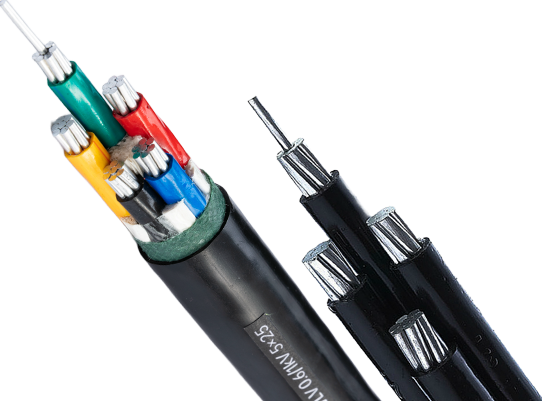
The Difference Between Flame-Retardant Cables And Fire-Resistant Cables
Core Definition & Basic Function
What Are Flame-Retardant Cables?
A flame-retardant cable is a specialized fire-safety electrical cable designed with one core priority: to restrict flame spread and achieve passive self-extinguishment once the external fire source is removed. Unlike general ordinary cables that burn violently and sustain combustion when exposed to open flames, flame-retardant cables are engineered to curb the chain spread of fire along cable laying routes, which is one of the most common causes of large-scale building fire expansion. In practical engineering scenarios, densely laid cable trays, ceiling wiring, and pipeline wiring are high-risk areas for fire propagation, and flame-retardant cables are specifically developed to solve this hidden danger.
It is crucial to clarify that flame-retardant cables do not possess fire-proof or fire-resistance capabilities, meaning they will still catch fire when exposed to continuous open flames and high temperatures. The key anti-fire feature comes from customized flame-retardant additives integrated into the cable’s insulation layer, outer sheath, and internal filling materials during production. These special materials undergo targeted chemical reactions under high-temperature combustion conditions: they release large amounts of inert gas to dilute oxygen concentration around the combustion surface, while forming a dense, tough carbonized isolation layer on the cable surface. This dual effect cuts off the combustion oxygen supply and suppresses flame continuation. Once the external fire source is eliminated, the cable will stop burning automatically within a short time, effectively preventing small local fires from spreading to the entire wiring system and adjacent equipment.
Ultimately, the primary design goal of flame-retardant cables is fire isolation and fire spread control for conventional electrical systems. They focus on limiting fire coverage and reducing fire loss, rather than maintaining stable power and signal transmission during ongoing fire combustion. This core functional positioning determines their applicable scenarios and performance boundaries, distinguishing them fundamentally from fire-resistant cables in engineering applications.
What Are Fire-Resistant Cables?
A fire-resistant cable, widely known as a circuit integrity cable in the international electrical industry, is a high-grade safety cable dedicated to emergency fire scenarios. Its core design standard is to maintain stable normal power supply and signal transmission for a specified duration under direct open flame baking and extreme high-temperature environments, even when the external cable structure is damaged. This type of cable is a key special component to ensure the survival and normal operation of building fire emergency systems, and it complies with strict international and regional fire safety codes such as IEC 60331 and BS 6387.
Completely different from the fire-spread control logic of flame-retardant cables, fire-resistant cables take long-term circuit integrity retention in fire conditions as the core indicator. In standardized industry fire resistance tests, these cables can withstand extreme high temperatures ranging from 750℃ to 1000℃, which simulates the actual high-temperature environment of building fires. Under continuous flame impact, qualified fire-resistant cables can operate stably for 90 minutes, 120 minutes, or even 180 minutes without short circuits, open circuits, or signal interruption. This continuous working capability during fires provides vital time support for personnel evacuation, fire rescue, and emergency disaster relief, earning it the reputation of the "power lifeline" for fire emergency scenarios in modern buildings and industrial facilities.
Working Principle & Structural Differences
The fundamental performance gap between flame-retardant cables and fire-resistant cables originates from their unique material formulations, internal structural designs, and fire-resistance working mechanisms. The difference is not in superficial fire-safety attributes, but in the essential logic of coping with fire hazards. Flame-retardant cables adopt passive fire protection through chemical reaction inhibition, while fire-resistant cables rely on active physical high-temperature resistance and structural protection. These inherent differences directly determine their fire resistance limit, service life in fires, post-fire working state, and final engineering application value.
Flame-Retardant Cable Mechanism
The fire protection technology of flame-retardant cables is based entirely on chemical flame inhibition principles. The outer sheath and internal insulating layer of the cable are made of organic polymer materials added with high-efficiency flame-retardant components, including traditional halogen-based flame-retardant materials and environmentally friendly halogen-free low-smoke flame-retardant materials widely used in modern projects. When exposed to high-temperature heat radiation and open flames, the organic materials trigger a series of endothermic chemical decomposition reactions. On one hand, they release a large amount of non-combustible inert gas to dilute the oxygen and combustible gas concentration around the combustion point; on the other hand, they rapidly form a compact, heat-insulating carbonized layer on the cable surface. This carbon layer isolates external oxygen and heat, blocks the continuous combustion of internal cable materials, and prevents flames from spreading along the cable line. However, this chemical protection mechanism only acts on the cable surface and cannot form effective protection for internal conductive cores. Once the combustion time is prolonged or the temperature exceeds the material limit, the internal insulation structure will fail, leading to circuit damage.
Fire-Resistant Cable Mechanism
Fire-resistant cables adopt a completely different physical heat insulation and high-temperature resistant structural protection system, abandoning the chemical flame-retardant mode of organic materials. The core of its structure is wrapping the cable conductor with high-performance inorganic non-combustible materials, the most common of which is multi-layer high-temperature resistant mica tape wrapping. Some high-grade fire-resistant cables also adopt special ceramic composite insulation layers or seamless copper tube closed protection structures. These inorganic materials have inherent non-combustible characteristics and ultra-high temperature resistance, with a melting point far exceeding the maximum temperature of conventional building fires. In severe fire environments, even if the outer organic sheath of the cable is completely burned and carbonized by flames, the internal inorganic protective structure can still remain intact and stable. It continuously isolates high temperature and flame erosion for the internal conductor, effectively preventing short circuits, open circuits, and insulation breakdown, and stably maintaining the continuity of the power transmission and signal circuit throughout the fire duration.
Key Performance & Industry Standard Differences
To further clarify the essential gap between the two cable types, we summarize their core performance parameters, industry implementation standards, and practical working limits in detail, helping engineers and buyers accurately distinguish and select products that meet project fire code requirements. From professional electrical fire safety test standards, flame-retardant and fire-resistant cables have clear differences in temperature resistance limit, fire endurance, post-fire performance, and material characteristics, which are the key bases for engineering acceptance and safety evaluation.
Core Functional Performance: Flame-retardant cables focus on flame suppression and anti-spreading performance. They can self-extinguish quickly after leaving the fire source and will not cause flame along the line, but they cannot work continuously in fire. Their temperature resistance is limited to low and medium fire temperatures, and long-term high-temperature flame baking will completely damage the internal circuit structure. In contrast, fire-resistant cables take circuit integrity as the core performance index. They can resist 750℃ to 1000℃ extreme fire temperatures and maintain stable circuit operation for 90 to 180 minutes in standard fire test environments, fully meeting the emergency power supply duration required by building fire protection codes.
Material & Structural Performance: Flame-retardant cables are mainly made of modified organic polymer flame-retardant materials. The production process is simple and the material cost is low, which is suitable for large-scale conventional wiring projects. However, organic materials are inherently combustible, so their fire safety upper limit is low. Fire-resistant cables use inorganic high-temperature resistant composite materials as the core insulation structure, with precise multi-layer wrapping and sealing processes. The materials are non-combustible and anti-aging, with extremely high structural stability in high-temperature fire environments, and their overall safety performance is far higher than flame-retardant products.
Post-Fire Working State & Cost Performance: After fire exposure, the outer sheath and insulation of flame-retardant cables will be burned and failed, and the circuit will completely lose power transmission capacity, requiring full replacement. Fire-resistant cables can still maintain intact internal conductors and normal circuit conductivity after fire tests, and some products can even be used normally after fire elimination. In terms of cost, flame-retardant cables have obvious cost advantages and high cost performance, while fire-resistant cables have higher material and process costs, corresponding to higher engineering safety value and compliance standards.
Industry Compliance Standards: Flame-retardant cables comply with general flame retardant grade standards such as IEC 60332-1/2/3, focusing on flame spread test indicators. Fire-resistant cables strictly implement IEC 60331, BS 6387 and other circuit integrity fire resistance standards, with more stringent test conditions and higher industry threshold, which are mandatory certification indicators for high-standard fire emergency engineering projects.
Application Scenarios
In electrical engineering design and cable selection, balancing project safety compliance and construction cost is the core principle. Blindly pursuing high-standard cables will cause cost waste, while reducing standards at will will lead to potential safety hazards and unqualified fire acceptance. The clear scenario division of flame-retardant cables and fire-resistant cables enables precise matching for different wiring systems, realizing scientific and reasonable safety grading protection for building electrical systems.
Flame-Retardant Cable Applications
Flame-retardant cables are the most widely used basic fire-safety cables in civil and general industrial engineering, mainly applicable to conventional power distribution, lighting, and ordinary signal circuits without emergency continuous power supply requirements. Typical application scenarios include ordinary residential building indoor wiring, commercial office building daily lighting circuits, general factory workshop power wiring, shopping mall public area conventional wiring, and other non-key electrical systems. The core application value of flame-retardant cables is to build the first line of fire defense for electrical systems: when a local short circuit or external fire causes cable combustion, it can effectively prevent the fire from spreading along the cable trunk, avoid large-area electrical fire accidents, and minimize personnel and property losses. For densely populated indoor occasions, halogen-free low-smoke flame-retardant cables are usually prioritized, which can avoid releasing a large amount of toxic and harmful smoke during combustion, reducing the risk of smoke poisoning and suffocation in fire accidents.
Fire-Resistant Cable Applications
Fire-resistant cables belong to special safety cables for fire emergency systems, and their use is clearly stipulated as mandatory in national and international building fire codes. They are exclusively used for life safety guarantee systems and key fire emergency equipment circuits that must maintain continuous operation during fires. Classic application scenarios cover all fire-related emergency systems: building fire alarm detection and linkage control circuits, fire emergency lighting and evacuation indicator circuits, fire water pump and spray pump power supply lines, smoke exhaust fan and air supply fan power circuits, fire elevator emergency power supply systems, and fire control room dedicated power and signal lines. In addition, they are also widely used in high-risk industrial scenarios such as petrochemical plants, nuclear power auxiliary facilities, tunnel engineering, and large medical institutions. In these key scenarios, continuous power supply during fires is directly related to personnel evacuation efficiency, fire rescue success rate, and major equipment safety, so low-standard flame-retardant cables are absolutely prohibited from replacing fire-resistant cables.
How to Choose: Flame-Retardant vs Fire-Resistant Cable
In actual engineering construction and bidding projects, the confusion and wrong replacement of these two cables are the most common fire safety problems, which often lead to project fire acceptance failure, rectification delays, and even leave long-term hidden fire dangers for building operation. To help project owners, design engineers, and construction personnel quickly and accurately complete cable selection, we summarize standardized and operable selection rules based on industry codes and engineering practice experience:
- Choose flame-retardant cables: For ordinary power distribution, lighting, and non-critical signal circuits. Prioritize halogen-free low-smoke flame-retardant models for indoor and densely populated areas to reduce toxic smoke release during combustion.
- Choose fire-resistant cables: For all fire emergency circuits, life safety systems, and high-temperature, high-risk industrial environments. Never replace fire-resistant cables with flame-retardant alternatives, as they cannot maintain circuit operation in fire conditions.
Frequently Asked Questions (FAQ)
Q1: Can flame-retardant cables work normally in a fire?
Absolutely not. This is the most common misunderstanding in cable selection. The core function of flame-retardant cables is limited to self-extinguishment and blocking fire spread. Once exposed to continuous open flame and high-temperature baking in a real fire, their internal insulation structure will be rapidly damaged and failed, resulting in circuit short circuit, open circuit and power failure. They cannot maintain any normal power supply or signal transmission function during fires, so they cannot be used for emergency fire systems.
Q2: Are fire-resistant cables also flame-retardant?
Yes, qualified standard fire-resistant cables inherently integrate excellent flame-retardant performance, which is a basic attribute of high-grade fire-safety cables. While relying on inorganic structures to achieve high-temperature fire resistance and circuit integrity, their outer sheath materials also have flame-retardant and self-extinguishing capabilities. Therefore, fire-resistant cables can not only prevent flame spread like ordinary flame-retardant cables but also maintain stable circuit operation in fire environments, with more comprehensive and superior safety performance. It is a progressive upgrade of flame-retardant cable performance.
Q3: Why are fire-resistant cables more expensive?
The price difference stems from raw material cost and production process complexity. Firstly, fire-resistant cables adopt high-purity mica tape, ceramic insulation and other high-cost inorganic high-temperature resistant materials, which are far more expensive than ordinary organic flame-retardant polymers. Secondly, fire-resistant cables require multi-layer precise wrapping, closed sealing and strict high-temperature aging testing processes, with low production efficiency and high qualified rate requirements. In addition, they need to pass authoritative fire resistance certification tests in line with international standards, resulting in higher comprehensive production and inspection costs. Although the cost is higher, its safety value in emergency fire scenarios is irreplaceable.