What is the Purpose of Electrical Wiring in a Building?
As the core of a building's electrical system, electrical wiring functions like the building's “nervous system,” widely applied in residential, commercial, and industrial structures. It constitutes the circuitry that safely introduces external electrical power into a building and precisely distributes it to various electrical terminals. Its core purpose lies in achieving safe power transmission, efficient distribution, and precise control.
In the era of electrification, building electrical wiring is critical to the normal operation of all types of facilities. When abbreviating, retain the core concept, streamline the description, and highlight key content.
In the era of electrification, building electrical wiring is the cornerstone for ensuring building functionality. Whether it's household appliances, commercial equipment, or industrial machinery, all rely on stable electrical wiring. It directly impacts living experiences, commercial efficiency, and production safety. This article will explore the core knowledge of building electrical wiring from multiple perspectives, including its definition, components, and functions.
What is Building Electrical Wiring?
Definition of Building Electrical Wiring
Building electrical wiring refers to the system of wires, cables, and other electrical components integrated within a building project. This system adheres to electrical design codes and technical standards to transmit, distribute electrical energy, and control equipment. This system extends from external power supply interfaces to internal electrical terminals, encompassing the entire process from power source access to equipment operation, constituting a systematic engineering endeavor.
Unlike temporary wiring connections, building electrical wiring requires comprehensive consideration of multiple factors including building structure, power demands, safety standards, and future expansion needs. The scientific rigor of its design and adherence to construction specifications directly determine the stability, safety, and service life of the building's electrical system.
Fundamental Components of Building Wiring Systems
A complete building wiring system comprises four core components working in concert, each fulfilling specific functions to ensure safe power transmission and efficient distribution:
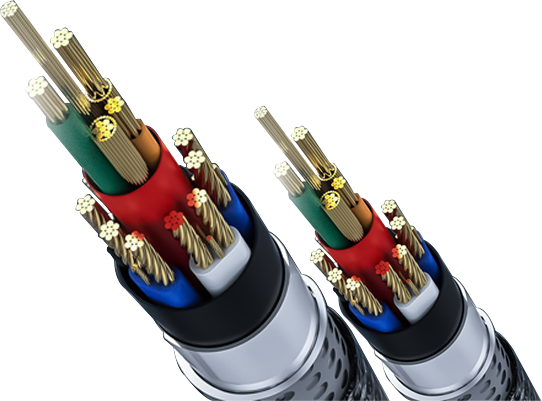
Wires and Cables: The primary conduits for electrical energy transfer. Wires typically consist of single or stranded conductors, while cables are composite structures of multiple insulated wires, offering superior insulation and mechanical strength. Copper conductors are preferred for building wiring due to their superior conductivity and corrosion resistance; aluminum conductors are increasingly less common due to issues like joint oxidation.
Conduits: Acting as the wiring's protective housing, conduits prevent mechanical damage and corrosion while facilitating maintenance. Among common materials, PVC conduits suit dry indoor environments, metal conduits are suitable for commercial, industrial, and damp settings, while flexible conduits are used in complex spaces.
Switches and Outlets: These serve as human-machine interface terminals. Switches control circuit activation and deactivation, available in various types. Outlets provide connection points for devices, categorized by application. Both must meet electrical performance requirements, with installation planned for functionality and safety.
Distribution Boards: Function as the wiring “control hub,” responsible for power distribution and providing overload/short-circuit protection via components like circuit breakers. Internal wiring must be laid out according to standards for manageability.
Differences in Residential, Commercial, and Industrial Wiring
Due to variations in usage scenarios, electrical loads, and functional requirements, the electrical wiring in these three building types exhibits distinct differences in design standards, component selection, and construction requirements:
Residential Wiring: Primarily supports lighting and household appliances with dispersed loads and low-power devices. Adheres to the principles of “safety, economy, and convenience,” utilizing PVC-insulated copper wires with conduits and single-phase 220V power supply (three-phase 380V optional for larger units). Branch circuits are established by functional zones, with outlets and switches strategically placed and smart home interfaces reserved.
Commercial Wiring: Features high, concentrated loads including high-power equipment requiring stable, continuous power supply. Utilizes copper-core cables with metal conduits, employing flame-retardant cables in critical areas. Implements three-phase five-wire distribution with dedicated distribution rooms and emergency power sources. Emphasizes interference resistance and scalability, reinforces lightning protection and grounding, and adapts to evolving business needs.
Industrial Wiring: Operates in harsh environments with high equipment inrush currents and multiple influencing factors. Utilizes armored, flame-retardant/fire-resistant cables with metal conduits. Explosion-proof scenarios require specialized components. Three-phase 380V power supply. Configured with multiple protective devices. Wiring features high-temperature resistance, abrasion resistance, interference resistance, and explosion-proof properties.
Primary Functions of Building Electrical Wiring
Power Distribution
Power distribution is the core function of building electrical wiring. Municipal power supply typically delivers 10kV high-voltage or medium-voltage electricity, which cannot be used directly. Electrical wiring first introduces this power into the building's distribution system, where transformers step down the voltage (220V for residential, 380V for industrial). The power is then distributed via distribution panels to branch circuits and ultimately delivered to end-use terminals.
This process must meet two core requirements:
Stable and Continuous Power Supply: By optimizing circuit paths, selecting appropriate conductors, and minimizing line lengths, voltage loss is controlled within the national standard of 5%, ensuring stable equipment operation.
Adapting to Diverse Loads: Based on equipment characteristics (resistive, inductive, capacitive), conductor cross-sections and protective components are matched to ensure circuits carry rated currents and prevent interference.
For instance, residential kitchens and bathrooms—where high-power appliances (electric water heaters, induction cooktops) are concentrated—require dedicated branch circuits using 4mm² or larger copper-core wiring. Industrial facilities, accounting for heavy machinery with high starting currents, necessitate armored cables with high current-carrying capacity and mechanical strength, paired with circuit breakers offering robust overload protection.
Lighting System Power Supply
Lighting constitutes the most fundamental functional requirement of buildings. Electrical wiring serves as the core safeguard for the normal operation of lighting systems. Whether for indoor daily lighting, emergency lighting, or outdoor courtyard and landscape lighting, a stable power supply via the wiring system is essential to enable lighting activation, deactivation, and brightness adjustment.
Electrical wiring serves three critical functions in lighting systems: First, it ensures safety lighting through standardized design and high-quality insulation protection, preventing electrical leakage, short circuits, and electric shock incidents. Emergency lighting circuits must utilize independent circuits with backup power sources, automatically activating during sudden power outages or fires to support evacuation. Second, functional lighting adaptation: Differentiated lighting effects are achieved based on area requirements. Work zones like offices and study rooms employ multi-point layouts with cool white light (4000K-5000K) for uniform brightness. Rest areas such as bedrooms and living rooms support dimming or smart controls paired with warm white light (3000K-4000K) to create comfortable atmospheres. Third, energy-efficient lighting implementation: Integrated with energy-saving fixtures, it employs smart controls like voice activation, light sensors, motion detectors, and timers to automatically activate/deactivate lighting and adjust brightness, minimizing energy waste. Examples include voice-activated switches in corridors and stairwells, and light-sensitive switches for outdoor landscape lighting.
Electrical Appliance Operation Support
In modern buildings, diverse electrical appliances have become essential for daily life and work, with electrical wiring serving as the “energy conduit” for their proper operation. From residential refrigerators, air conditioners, and smart appliances to commercial central air conditioning systems, elevators, and security equipment, and further to industrial machinery, pumps, and automated control devices—all electrical equipment requires stable, appropriately matched power supply through the wiring system to fulfill their intended functions.
This support manifests in two primary aspects: First, meeting the electrical demands of equipment. Different devices have varying rated voltages, currents, and power factors. The wiring system must select appropriately sized wires, cables, and supporting components (outlets, circuit breakers) based on these parameters to ensure adequate power delivery. This prevents startup failures or reduced operational efficiency due to insufficient supply. For instance, a 1.5-horsepower residential air conditioner requires 2.5mm² copper-core wiring and a dedicated 16A outlet, while high-power units of 3 horsepower or greater necessitate 4mm² copper-core wiring and a dedicated 20A outlet, each with its own branch circuit. Second, ensure stable equipment operation. A high-quality wiring system minimizes voltage fluctuations, harmonic interference, and poor contact issues, preventing equipment failure or damage due to unstable power supply. Proper circuit layout and protective measures (grounding, insulation, lightning protection) mitigate external environmental impacts, extending equipment lifespan. For instance, industrial precision control equipment (PLC controllers, sensors) requires shielded cables with dedicated grounding to prevent electromagnetic interference. Medical devices demand independent circuits equipped with voltage stabilizers and residual current devices (RCDs) to ensure stable and safe power supply.
Furthermore, electrical wiring provides the foundation for building intelligence upgrades. The connectivity and operation of smart home and building devices (smart locks, cameras, building automation systems) rely on the wiring system's scalability, compatibility, and transmission stability. Pre-installed network and control line interfaces directly support the installation and commissioning of future intelligent equipment.
Safety and Protection
Safety is the paramount principle in building electrical wiring. The wiring system must employ scientific design and technical measures to prevent hazards such as electric shock, electrical fires, and equipment damage, comprehensively safeguarding personnel and property:
Preventing Electric Shock Accidents: Achieved through a triple-protection system of “insulation protection + grounding protection + residual current protection.” Insulation protection isolates conductors from the external environment through the outer insulation layer (PVC, XLPE) of wires and cables, preventing leakage currents. Grounding protection connects the metal casings and brackets of equipment to the earth via grounding wires, rapidly diverting leakage currents into the ground to avoid human contact. RCDs instantly cut off power within 0.1 seconds when leakage currents exceeding the set threshold (typically 30mA) occur, providing instantaneous protection.
Preventing Electrical Fires: Primary causes of electrical fires include circuit overloads, short circuits, poor connections, and aged insulation. Wiring systems employ three preventive measures: First, selecting wires and cables with appropriate cross-sections based on load requirements ensures sufficient current-carrying capacity for long-term operation, preventing overheating from overload. Second, installing short-circuit protection devices like circuit breakers and fuses swiftly cuts power during short circuits, preventing arcs from igniting insulation. Third, deploy flame-retardant/fire-resistant cables and conduits in high-occupancy areas (shopping malls, hospitals, high-rise buildings) and critical zones (electrical rooms, kitchens) to slow fire propagation.
Protecting Electrical Equipment: Overload protectors, short-circuit protectors, overvoltage protectors, and surge protectors promptly disconnect power or absorb abnormal voltages/currents during circuit anomalies, preventing equipment damage from abnormal impacts.
Lightning Protection: Utilize roof lightning rods, surge arresters at cable entry points, and grounding systems to divert lightning-induced overvoltages and overcurrents into the earth, safeguarding wiring systems and electrical equipment from lightning damage.
Common Electrical Wiring Types in Buildings
PVC-Insulated Wires
The most widely used wiring type, featuring copper or aluminum conductors encased in polyvinyl chloride (PVC) insulation. Key Features: Excellent insulation, corrosion resistance, moisture resistance, cost-effectiveness, and ease of installation. Drawbacks include moderate heat resistance (maximum operating temperature 70°C), unsuitability for high-temperature environments, relatively low mechanical strength, and emission of toxic gases when burning. Primarily used for indoor lighting circuits, outlet circuits, and small appliance circuits in residential buildings, office buildings, and other civil structures, making it the preferred wiring type for civil construction.
Armored Cables
Features an external metal armor layer (steel tape or steel wire) over the cable insulation. Common types include PVC-insulated armored cables and cross-linked polyethylene (XLPE)-insulated armored cables. Core characteristics: High mechanical strength, resistant to mechanical damage, crushing, and impact; Excellent waterproofing, moisture resistance, and corrosion resistance; Provides some lightning protection and interference resistance, with the metal armor acting as a shield; High safety, as the armor layer offers protection even if the insulation is damaged. Disadvantages include heavier weight, higher installation complexity requiring specialized equipment and expertise, and relatively higher cost. Primarily used in industrial power lines, outdoor building wiring, basements, damp environments (like underground garages), and other locations demanding high mechanical protection.
Flexible Cables
Conductors consist of multiple fine copper strands twisted together, encased in flexible insulation (PVC, rubber, etc.), with some products featuring additional braided layers or jackets. Core characteristics: Exceptional flexibility with a small bending radius, ideal for confined spaces, complex routing, or equipment requiring frequent movement; Excellent conductivity with reduced resistance loss due to stranded copper construction; soft insulation resistant to cracking from bending; some variants offer oil resistance and abrasion resistance. Disadvantages include relatively low mechanical strength, susceptibility to aging when exposed to external environments over time, higher cost compared to standard PVC-insulated wires, and unsuitability for high-temperature, high-voltage, or strong electromagnetic interference environments. Primarily used in connection cables for mobile devices, small appliances, and office equipment (e.g., air conditioner/washing machine power cords, power tool cables, computer/printer cables), as well as lighting fixture connection cables and portable socket cables in buildings.
Low-voltage and Control Wiring
Low-voltage circuits used for transmitting control and monitoring signals, typically operating below AC 50V or DC 120V. Primarily composed of control cables, signal lines, and communication lines. Core characteristics: Low voltage ensures high safety; stable signal transmission with strong interference resistance (partially achieved through shielding); flexible routing allowing separation from power lines to prevent mutual interference; compatible with intelligent control and automation systems. Disadvantages include limited transmission distance, typically used for short-range signal transmission within buildings, and sensitivity to electromagnetic interference requiring shielding or isolation measures. Primary applications include building intelligent systems, automated control equipment, and security systems (e.g., lighting control circuits and curtain control circuits in smart homes; central air conditioning control systems, elevator control systems, and security surveillance signal lines in commercial buildings; automated production line control circuits and equipment monitoring signal lines in industrial buildings).
Conclusion
As the core of building electrical systems, electrical wiring serves the fundamental purpose of safely transmitting, efficiently distributing, and precisely controlling electrical power—functioning as the “lifeline” ensuring building operations. From power distribution and lighting supply to equipment operation support and safety protection, electrical wiring permeates the entire building lifecycle, directly determining residential comfort, commercial operational efficiency, and production safety.