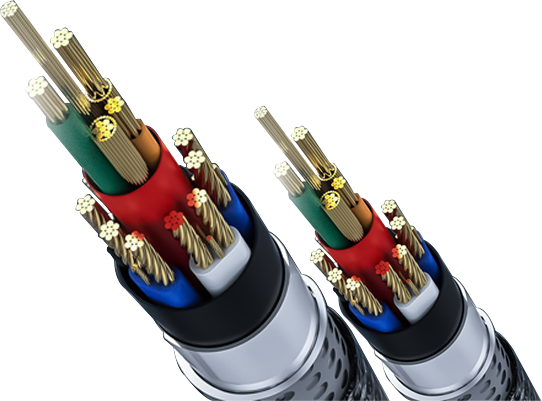
The Rise of Aluminum Alloy Cables Under the Demand for Efficient and Lightweight Power Transmission
With the continuous increase in global energy demand and the rapid development of the new energy industry, the market is increasingly demanding efficient, lightweight, and cost-effective power transmission solutions. Against this backdrop,
aluminum alloy cables, with their unique performance advantages, are gradually replacing traditional copper cables and are widely used in power transmission, distribution, and industrial applications.
Compared to traditional copper cables, aluminum alloy cables demonstrate significant advantages in performance, cost control, and sustainability. This article will comprehensively analyze the core advantages of aluminum alloy cables, providing you with a deeper understanding of why they are becoming the preferred solution for modern power systems.
Advantage One: Lightweight Characteristics, Significantly Reducing Construction and Transportation Costs
The density of aluminum alloy is far lower than that of copper. For the same conductivity, aluminum alloy cables weigh 40% to 50% less than copper cables. This lightweight characteristic brings multiple practical benefits, directly reducing the overall project costs.
In the construction phase, lightweight aluminum alloy cables are easier to handle, pull, and lay, reducing the labor intensity of construction personnel and improving construction efficiency, especially suitable for complex construction scenarios such as high-altitude and long-span projects; in terms of structural support, for overhead lines and cable trays, the lighter weight of aluminum alloy cables reduces the load requirements on supporting structures, reducing related construction costs; in transportation and logistics, for the same quantity of cables, aluminum alloy cables have a lighter transportation weight, reducing transportation costs and energy consumption during transportation.
Typical application scenarios include urban power distribution network renovation and outdoor overhead transmission line construction. In a city's power distribution network upgrade project, using aluminum alloy cables instead of traditional copper cables saved 25% of the relevant costs in the construction and transportation phases alone.
Advantage Two: Excellent Conductivity per Unit Weight, Suitable for Long-Distance Power Transmission
From the perspective of volumetric conductivity, aluminum alloy is indeed lower than copper, but from the perspective of "conductivity-to-weight ratio," the advantages of aluminum alloy are very significant. This characteristic makes aluminum alloy cables often have higher transmission efficiency in long-distance power transmission scenarios.
Specifically, a unit weight of aluminum alloy cable can transmit more electrical energy with lower energy loss. This advantage is particularly prominent in long-span, long-distance transmission lines, effectively reducing energy waste and improving the economic efficiency of power transmission.
Technically, the industry typically uses AA1350 or AA8000 series aluminum alloys to manufacture cable conductors. These specialized aluminum alloys have optimized compositions, significantly improving conductivity and better balancing conductive efficiency with mechanical properties to meet the transmission needs of different scenarios.
Advantage Three: Excellent Corrosion Resistance, Extending Service Life
Aluminum alloys have a unique advantage in corrosion resistance: aluminum naturally forms a dense oxide film in the air. This oxide film adheres firmly to the conductor surface, effectively blocking the erosion of external media such as air and moisture, preventing corrosion and degradation of the conductor.
Thanks to this characteristic, aluminum alloy cables maintain stable performance in harsh outdoor environments and have a longer service life. Compared with cables made of other materials, it reduces the frequency of repairs and replacements caused by corrosion, significantly lowering operation and maintenance costs.
It is particularly suitable for coastal areas with high salt spray, industrial pollution areas, and high-humidity areas. For example, in a coastal wind power project, aluminum alloy cables were used to replace traditional cables. After 5 years of operation, the cable conductors still showed no obvious signs of corrosion and remained in a stable operating state, while some traditional cables in the same period had already shown slight corrosion problems.
Advantage Four: High Cost-Effectiveness, Reducing Initial Project Investment
From a raw material cost perspective, the price per kilogram of aluminum alloy is far lower than that of copper, which makes the initial procurement cost of aluminum alloy cables significantly lower than that of copper cables. This cost advantage is particularly significant for large-scale power projects, effectively reducing the initial capital investment of the project.
Combined with the lightweight characteristics mentioned earlier, aluminum alloy cables can further reduce costs in transportation and construction, creating a cost advantage throughout the entire process. In the current market environment, this high cost-effectiveness makes aluminum alloy cables an ideal choice for large-scale power distribution network projects, new energy power stations, and other large-scale power engineering projects.
For example, in a large-scale photovoltaic power station project, using aluminum alloy cables instead of copper cables saved 30% of the cost in the cable procurement stage alone, and with the savings in transportation and construction costs, the overall project cost was reduced by 22%.
Advantage Five: Excellent Mechanical Strength and Flexibility, Suitable for Multiple Applications
By adding alloying elements such as magnesium and silicon, the tensile strength of aluminum alloy cables is significantly improved compared to pure aluminum, while still retaining good flexibility. This optimized mechanical performance allows aluminum alloy cables to withstand higher mechanical stress.
In outdoor overhead power transmission scenarios, it can withstand mechanical impacts caused by harsh weather conditions such as strong winds and ice accumulation; in areas with large temperature differences, it can adapt to deformations caused by thermal expansion and contraction, preventing conductor damage. In addition, its excellent flexibility makes it easy to bend and lay, adapting to various installation environments such as cable trenches and cable trays.
Common AA1350 + magnesium/silicon alloy cables have mechanical strength that meets the requirements for various applications, including overhead insulated cables (ABC) and power distribution lines, making their application range very wide.
Advantage Six: Green and Sustainable, Aligned with New Energy Development Trends
Aluminum alloy cables have significant environmental advantages, perfectly aligning with the global trend of green energy development. First, aluminum alloy is 100% recyclable, and its original properties are not lost during the recycling process, significantly reducing resource waste; second, the lightweight characteristics of aluminum alloy cables reduce energy consumption and carbon emissions during transportation and construction; finally, its longer service life reduces the frequency of cable replacement and reduces waste generation.
Currently, in new energy fields such as solar photovoltaic power plants, wind farms, and electric vehicle charging infrastructure, the application of aluminum alloy cables is becoming increasingly widespread, becoming an important support for the green development of the new energy industry.
Advantage Seven: Wide Range of Application Scenarios, Adapting to Diverse Power Needs
Thanks to the multiple advantages mentioned above, aluminum alloy cables have a very wide range of application scenarios, covering multiple industries and fields:
• Power transmission and distribution: including urban power distribution networks, rural power grid renovation, long-distance overhead transmission lines, etc.;
• New energy projects: solar photovoltaic power plants, wind farms, energy storage power stations, etc.;
• Industrial field: factory workshop power distribution, power supply for large industrial equipment, etc.;
• Construction field: especially suitable for high-rise buildings, large commercial complexes, and other scenarios with strict requirements on cable weight. Market trends indicate that with the continuous expansion of the new energy industry and the upgrading and transformation of power infrastructure, the market demand for aluminum alloy cables is continuously growing, and their application scope is constantly expanding.
Conclusion: Aluminum Alloy Cables, the Efficient Choice for Modern Power Systems
In summary, aluminum alloy cables combine lightweight design, cost-effectiveness, excellent conductivity, corrosion resistance, mechanical properties, and environmental sustainability, demonstrating irreplaceable advantages in modern power transmission and distribution systems. Whether it's reducing project costs, improving transmission efficiency, or adapting to the needs of new energy development, aluminum alloy cables are the ideal choice.