In electrical installation projects, equipment operation and maintenance, and electronic system construction, wires serve as the core medium for transmitting electrical power and signals. Their performance parameters directly determine the operational stability, safety redundancy, and service life of circuit systems. Among various wire products,
stranded wire (multi-strand conductor wire) and solid wire (single-strand conductor wire) represent the two most widely applied fundamental categories, exhibiting significant differences in structural design and performance characteristics. This article provides a systematic comparative analysis of both types, examining core dimensions such as structural composition, application scenarios, performance advantages, and limitations.
What is Stranded Wire?
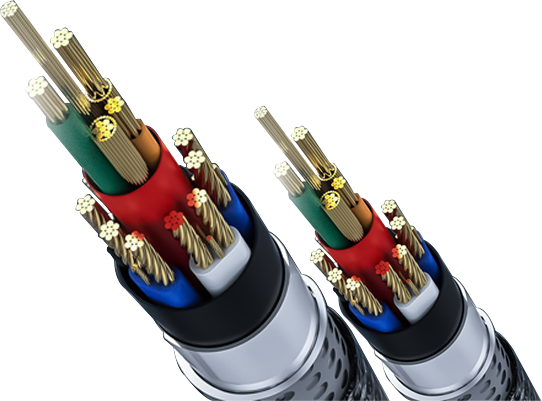
Stranded wire, also known as multi-strand wire, refers to electrical wire formed by twisting multiple fine copper or aluminum wires together as conductors. These fine conductor strands are interwoven according to specific pitch and direction, then encased in an insulating layer to create the complete stranded wire.
Due to its construction from multiple fine conductors, the most prominent feature of stranded wire is its exceptional flexibility. It can withstand repeated bending and twisting without breaking easily, while also exhibiting greater resistance to vibration. It maintains stable electrical conductivity even in vibrating environments. Additionally, stranded wire offers relatively better heat dissipation properties, as the small gaps between the multiple conductors facilitate heat dispersion.
Based on these properties, typical applications for stranded wire include: automotive internal wiring (e.g., engine compartment connections), robotic joint wiring, audio equipment cables, moving component connections in home appliances (e.g., refrigerator door wires, washing machine lid wires), portable electronic charging cables, and electrical equipment wiring requiring frequent movement.
What is Solid Wire (Non-Stranded Wire)?
Solid wire, also known as non-stranded wire, refers to a cable where the conductor consists of a single solid metal rod (typically copper or aluminum) encased in insulation. Its structure is relatively simple, with the conductor formed directly from a single metal strand without any twisting.
The core characteristics of solid wire are its high rigidity, resistance to deformation after forming, and ability to maintain a stable wiring configuration. For the same wire gauge, solid wire offers a more uniform conductor cross-sectional area, resulting in lower resistance and more stable conductivity. Additionally, its simpler manufacturing process makes solid wire more cost-effective and offers better value for money. Furthermore, when connecting solid wire to terminals, it provides a more stable contact area, reducing the likelihood of poor contact and ensuring higher connection reliability.
Common applications of solid wire are primarily in fixed wiring scenarios, such as: wall wiring in residential and commercial buildings (e.g., connection wires for outlets and switches), internal wiring within distribution boxes (electrical panels), fixed equipment wiring in industrial plants, fixed circuits for lighting fixtures, and various electrical installations that do not require frequent movement.
Core Differences Between Stranded Wire and Solid Wire
Structure and Composition: Multi-strand Twisted vs. Single Solid Conductor
The fundamental difference lies in conductor structure. Stranded wire consists of multiple fine metal strands twisted together, ranging from a few to dozens of strands—typically more strands for thicker wire diameters. Solid wire features a single solid metal rod with no strand separation. This structural difference directly determines their mechanical properties: stranded wire exhibits superior mechanical toughness due to its multi-strand interweaving, while solid wire demonstrates greater rigidity owing to its single-strand solid structure.
Flexibility and Durability: Flexible and Vibration-Resistant vs. Rigid and Prone to Breakage
Flexibility is the most obvious difference. Stranded wire can withstand repeated bending and twisting, preventing conductor breakage even in environments with frequent movement or vibration, offering superior durability. Solid wire, however, is highly rigid and difficult to bend significantly. Repeated bending or exposure to vibration can easily cause cracks or even fractures in the conductor, shortening its service life. For example, continuous vibration occurs during automotive engine operation. Single-strand wires may break prematurely due to vibration, whereas stranded wires remain stable and resilient.
Conductivity: Solid wire slightly superior, but context matters
At the same nominal gauge, solid wire offers a more complete conductor cross-sectional area without the minute gaps between strands in stranded wire. Consequently, its resistance is slightly lower than stranded wire, theoretically providing better conductivity and higher current transmission efficiency. However, this difference is typically minor and nearly negligible in short-distance, low-current applications. In long-distance, high-current scenarios, the lower resistance of solid wire becomes more pronounced. Concurrently, stranded wire offers superior heat dissipation; under high-temperature conditions, its conductive stability may actually surpass that of solid wire.
Installation and Operation: Each has its pros and cons, suited for different scenarios
Solid wires are highly rigid, making them easy to shape during routing. They maintain neat cable runs without additional fastening, particularly suitable for fixed installations like walls and ceilings. When connecting, solid wires form a tight bond with screw terminals, resisting loosening and simplifying the process. Stranded wire offers superior flexibility, making it suitable for routing in confined spaces or complex paths (e.g., inside equipment or conduits), where it can easily navigate around obstacles. However, caution is needed during connection: if directly attached to screw terminals, the fine strands may loosen, potentially causing poor contact. Typically, crimping or soldering is required before connection, resulting in relatively more complex steps.
Cost and Availability: Solid wire is more economical, while stranded wire offers broader applications
Cost-wise, solid wire features simpler production processes without stranding steps and higher material utilization. Consequently, it typically costs 10%-20% less than stranded wire of the same gauge, making it more suitable for large-scale fixed wiring projects where cost control is critical. Regarding availability, both are standard wire types readily available at hardware stores and electrical markets. However, specialized specifications—such as ultra-fine stranded wires for electronics or large-gauge solid wires for industrial use—may require custom orders. Stranded wires offer greater specification diversity, catering to more niche applications.
Harsh Environment Adaptability: Stranded Wire is More Durable, Solid Wire is Vulnerable to Vibration
Under harsh conditions like high temperatures, vibration, and corrosion, their performance differs significantly. In high-temperature environments, the gaps between strands in stranded wire facilitate heat dissipation, enabling better high-temperature tolerance. Solid wire has relatively poor heat dissipation, and its insulation layer is prone to aging under prolonged high temperatures. In vibrating environments, the multi-strand structure of stranded wire absorbs vibration energy, preventing conductor breakage. Solid wire, however, is highly susceptible to damage from vibration fatigue. In corrosive environments, corrosion resistance primarily depends on conductor material (e.g., copper is more corrosion-resistant than aluminum) and insulation quality, with structural differences having minimal impact. However, stranded wire may experience localized corrosion if water or dust enters between strands, necessitating proper sealing. In outdoor settings with wind-induced vibration or extreme temperature fluctuations, stranded wire demonstrates superior adaptability. For fixed outdoor installations (e.g., streetlight wiring), solid wire can also provide stable performance when paired with adequate insulation and secure fastening.
Summary Table of Twisted and Solid Wire -Advantages/Disadvantages
Structurally, twisted wire consists of multiple fine strands, while solid wire comprises a single solid conductor. This difference yields distinct performance characteristics:
Flexibility: Twisted wire excels, withstanding repeated bending and twisting, whereas solid wire is rigid and difficult to bend. In durability, stranded wire resists vibration and bending while offering a longer lifespan, whereas solid wire is vulnerable to vibration and repeated bending, making it prone to breakage. Regarding electrical conductivity, solid wire holds an advantage with slightly lower resistance, while stranded wire has slightly higher resistance but still maintains good conductivity. During installation, stranded wire facilitates easier routing in confined spaces but requires crimping or soldering for connections. Solid wire suits fixed installations, offering easier shaping and simpler wiring. Cost-wise, stranded wire is pricier, while solid wire is more economical and offers better value. In harsh environments, stranded wire offers superior vibration resistance and heat dissipation, making it more adaptable overall. Solid wire has poorer vibration resistance and its insulation tends to age faster in high-temperature conditions.
How to Choose the Right Wire?
The core decision between stranded and solid wire hinges on matching the actual application scenario. Consider these 5 critical factors:
Flexibility Requirements: Twisted for mobility, solid for fixed installations
Twisted wire is essential for applications involving frequent movement or bending (e.g., robot cabling, headphone cables, automotive wiring) or installation in confined, complex spaces. Solid wire is the more economical choice for fixed installations (e.g., residential wall wiring, distribution box connections) where movement and bending are unnecessary.
Environmental Conditions: Prioritize stranded wire in harsh environments, solid wire in stable environments.
In harsh conditions like vibration (e.g., factory equipment, engine vicinity) or high temperatures (e.g., oven surroundings, industrial furnace wiring), stranded wire offers superior durability. For stable indoor environments that are dry and vibration-free (e.g., home living rooms, offices), solid wire adequately meets requirements.
Current Load & Distance: Single-strand for high current/long distance; either works otherwise
For high-current applications (e.g., industrial motor power supply) or long-distance scenarios (e.g., factory workshop wiring), single-strand cables' lower resistance offers significant advantages by reducing current loss. For low-current (e.g., lighting, phone charging) or short-distance scenarios (e.g., desktop electronics DIY), the difference is negligible—choose based on other factors.
Budget constraints: Cost-sensitive projects favor single-strand; performance-critical scenarios prioritize stranded wire
For large-scale wiring projects (e.g., new residential/commercial buildings) with limited budgets, single-strand wire's cost advantage significantly reduces total investment. For high-performance applications (e.g., audio systems, precision electronics), stranded wire is recommended even with higher budgets to ensure stability.
Typical Application Scenarios
Residential Renovation: For fixed wiring in wall outlets, switches, and lighting circuits, single-strand wire (e.g., BV wire) is recommended for its cost-effectiveness and ease of installation.
Automotive Maintenance: In vibration-prone areas like engine compartments and door wiring, stranded wire (e.g., AVS wire) should be used due to its vibration resistance and reduced susceptibility to breakage.
DIY Electronics Projects: For low-current applications like Arduino or circuit board wiring, stranded wire offers superior flexibility and ease of handling. Solid wire remains suitable for fixed breadboard wiring.
Industrial Production: For high-current, long-distance applications like workshop motor power supply, solid wires are recommended. For wiring in vibrating areas such as robotic arms or conveyor belts, stranded wires should be chosen.
Conclusion
Stranded and solid wires are not inherently superior or inferior; their differences stem from structural design, which determines their appropriate applications. Simply put: For fixed installations, cost-sensitive projects, or high-current/long-distance applications, prioritize solid wire. For moving/bending components, vibration/high-temperature environments, or complex routing scenarios, prioritize stranded wire.
When making actual selections, comprehensively evaluate factors like flexibility requirements, environmental conditions, current load, and budget. Consult a professional electrical engineer when necessary. Choosing the correct wire type and adhering to proper installation standards ensures circuit stability and safety.

.jpg)