What is the difference between drain wire and ground wire?
In industrial wiring, instrument cable installation, and electrical system construction, drain wire (Drain Wire) and ground wire (Ground Wire) are two frequently confused concepts. Many field engineers, technicians, and even construction workers often refer to them collectively as "ground wires," connecting them haphazardly or substituting one for the other during installation. This can lead to minor issues like signal interference and equipment malfunctions, or more serious consequences such as electrical safety hazards and violations of electrical codes.
In reality, while both the drainage line and grounding wire ultimately connect to the earth and are structurally made of copper conductors, their design objectives, current-carrying capacity, installation locations, wire diameters, and application scenarios are entirely distinct. The primary function of the drainage line is to suppress electromagnetic interference (EMI), whereas the grounding wire's core value lies in safeguarding personal and equipment safety. Only by thoroughly understanding these differences can we ensure signal stability while meeting safety grounding requirements.
This article will comprehensively analyze the differences between drainage lines and grounding lines from perspectives such as definition, structure, function, application, and specifications, to help you avoid mistakes in engineering selection and construction.
What is a discharge line
Definition of discharge line
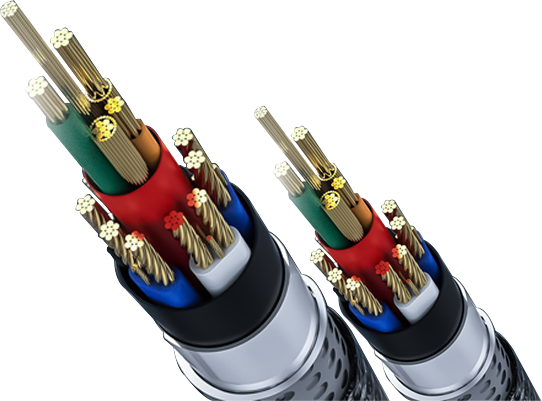
The drainage line, also known as the discharge line or shielding drainage line, is a bare copper or tin-plated copper conductor placed inside the shielded cable and in close contact with the metal shielding layer. Its sole professional function is to provide a low-impedance grounding path for the cable's shielding layer, rapidly dissipating externally induced electromagnetic interference and stray signals into the ground.
In simple terms, the drain line acts as the shield's dedicated grounding wire, exclusively serving signal anti-interference purposes without any electrical safety protection functions.
Position of Drainage Line in Cable
The drainage line is an internal component of the cable and does not appear externally. Common locations include:
.Encased on the inner side of the aluminum/copper foil shielding layer, in close contact with the shielding layer
.parallel laying with braided shielding layer
.longitudinal continuous arrangement along the cable length
It is a built-in structure in shielded cables, while unshielded cables do not have drainage lines.
Core functions of the discharge line
The external electromagnetic field induced by the noise discharge will induce weak voltage and current on the cable shielding layer. The discharge line provides a low-resistance path, allowing the interference signal to be directly grounded without entering the internal signal lines.
.The shielding layer itself is thin and the contact points are scattered, so the direct grounding is unreliable. The discharge line can contact the shielding layer uniformly and improve the grounding effect.
.To ensure stable signal transmission across instrument, control, and communication lines, interference may cause data fluctuations and control failures. The current-carrying line effectively reduces EMI interference at its source.
Typical Application Scenarios of Drainage Lines
The drain line almost only appears in signal-sensitive shielded cables:
.instrument control cable
.industrial communication cable
.servo cable, frequency conversion cable
.DCS and PLC system signal cables
.automated production line control line
It is not used in high-voltage power supply circuits.
What is a grounding wire
Definition of Ground Wire
A grounding wire, also known as a protective earth wire (PE wire), is a conductor specifically designed for electrical safety protection. When equipment experiences insulation damage, leakage, short circuits, or other faults, the fault current is rapidly conducted into the ground through the grounding wire, preventing the equipment casing from becoming live, electric shock to personnel, fire, or equipment damage.
The grounding wire is the last line of defense for electrical safety and is a protective conductor required by national electrical standards.
Core function of grounding wire
To prevent electric shock, when leakage occurs in protective equipment, the current should flow through the grounding wire first rather than passing through the human body, thereby avoiding electric shock accidents.
Under normal conditions, the grounding wire carries no fault current, but it must withstand a significant short-circuit current at fault occurrence to ensure rapid activation of protective devices (circuit breakers, residual current devices).
Compliance with mandatory requirements under the National Electrical Code (NEC), IEC international standards, and domestic low-voltage distribution codes is a mandatory inspection item during acceptance.
Stabilizing the system potential provides a reference zero potential for the entire electrical system, enhancing operational safety.
Application scenarios of grounding wire
Grounding wires are widely used in all high-voltage power distribution and electrical equipment:
.building power distribution system
.Distribution cabinet, distribution box
.Motor, fan, and pump equipment
.Household appliances, industrial equipment casings
.Power cables for factory facilities, three-phase power supply lines
Any high-voltage system involving personal safety must have a dedicated grounding wire.
The Difference of Structure Between Drainage Line and Grounding Line
The drainage wire and grounding wire are distinctly different in appearance, wire diameter, insulation, and position, making them easily distinguishable at a glance.
Different laying positions
.The drainage line is an invisible internal structure of the shielded cable.
.Ground wire: an independent insulated conductor running parallel to the live and neutral wires, constituting a single core in the cable or harness.
.ifferent conductor wire diameters
.The drain line has a very small diameter, which only needs to pass through a weak interference current and does not need to carry fault current.
.Ground wire: With a larger diameter, its specifications must be matched to the main circuit current to prevent melting or overheating during faults.
Insulation differs from appearance
.The drain line: usually bare copper or tinned copper, without insulation layer, directly contacting the shielding layer.
.Ground wire: The national standard specifies a yellow-green insulated wire, serving as the globally recognized safety ground marker.
The operating current is different.
.Drain line: Only microampere to milliampere level interference current passes through.
.Ground wire: normally free of current, but capable of carrying fault currents ranging from tens to thousands of amperes.
The Difference of Function between Drainage Line and Grounding Line
This is the most crucial and essential part of the text, and also the most frequently misapplied aspect in engineering.
Different core objectives
.Flow line = anti-interference, signal preservation
.Ground wire = Ensures safety and prevents electric shock
Different starting points for design
.Drainage line: for Electromagnetic Compatibility (EMC) design
.Ground Wire: Design for Personal Safety and Equipment Protection
Different mandatory standards
.The drain line is not a mandatory safety feature but a shielding cable component, its necessity determined by signal quality.
.Ground wire: A mandatory requirement for all distribution systems, omitting it will result in failure of acceptance inspection.
.ifferent consequences of failure
.If the drain line is incorrectly connected or not connected, the interference will increase, the signal will be unstable, and the equipment will malfunction.
.Incorrect or absent grounding wire: risks of equipment leakage, electric shock, and fire.
Can the drain line be used as a grounding wire?
This is a frequently asked question in the industry, and the answer is unequivocal: absolutely not. Treating drainage lines as safety grounding wires constitutes a severe violation and poses extreme hazards.
Why cannot it be replaced
.The conductor's diameter is too small to handle fault currents. With a cross-sectional area of merely 0.5–1.5mm², it will instantly fuse, burn out, or catch fire during a leakage short circuit, rendering it completely ineffective as a protective device.
.The circuit breaker discharge line is bare wire without insulation protection, which is prone to damage and breakage during installation due to scratches or compression, posing an electric shock risk to personnel.
.The yellow-green dual-color ground wire, which fails to meet electrical safety standards, is a dedicated protective conductor. Any substitute conductor is deemed non-compliant and will not pass safety supervision or acceptance inspection.
.This creates a safety hazard: the equipment may appear grounded but is actually faulty, and when a leakage occurs, the casing becomes live, with potentially catastrophic consequences.
In summary, the drainage line can be grounded, but it is not a safety ground wire.
How to Use Drainage Line and Grounding Line
In many industrial settings, drainage lines and grounding wires coexist, each fulfilling its specific function without interference.
Take the shielded instrument control cable as an example:
.The drainage line inside the cable connects to the metal shielding layer with single-point grounding to suppress interference.
.The yellow-green grounding wire in the cable serves as equipment protection grounding, connecting to the enclosure, rack, and system ground busbar.
Both ultimately connect to the grounding system, yet operate with independent pathways and functions.
.The drain line signal is clean
.Personal safety of grounding wire
The correct construction logic is: shielding layer → drainage line → grounding (anti-interference) equipment casing/metal structure → grounding wire → grounding (safety protection)
Key Points of Installation in Real Project
Precautions for the installation of drain line
.The instrument and signal system should be grounded at a single point to avoid ground loop formation at both ends, which may introduce new interference.
.The drainage line should be connected only to the shielding layer, and must not be mixed with the internal signal ground or power ground of the equipment.
.The shielding layer and the drain line should be connected reliably and with low resistance, and avoid false connection and broken strand.
Precautions for Ground Wire Installation
.A yellow-green dual-color dedicated ground wire must be used, and the substitution with other colors is strictly prohibited.
.The wire diameter must strictly comply with the specifications and cannot be arbitrarily reduced.
.Grounding resistance and continuity must meet NEC, IEC, and domestic standards.
.All conductive metal enclosures, frames, and bases must be reliably grounded.
The most common mistakes in engineering
Many field issues stem from confusing drainage lines with grounding lines.
.Connect the drainage line to the equipment casing as a protective ground wire
.The shielded cable is not connected to the grounding wire, resulting in the shielding layer being left ungrounded and causing severe interference.
.Grounding both ends of the drain line simultaneously forms a ground loop, resulting in poorer signal quality.
.Using a smaller conductor diameter for the grounding wire prevents it from carrying short-circuit current during faults.
.Using yellow and green dual-color ground wire as signal line and neutral line during construction
These errors may affect the service life of equipment or cause safety accidents, which must be avoided in the design and construction stages.
Conclusion
Although both the drainage line and the grounding wire contain the character 'earth', they are two entirely distinct components.
.The drain line is the inner conductor of shielded cable, which is responsible for discharging electromagnetic interference and ensuring signal stability. It has small diameter, no insulation, and only carries weak current.
.The grounding wire, a mandatory safety conductor, prevents electric shock, carries fault currents, and safeguards personnel and equipment. It must be installed with a large diameter and yellow-green dual-color insulation, strictly following the specifications.
The two can be grounded and used at the same time, but they can not be replaced.
For technicians specializing in industrial automation, instrumentation engineering, electrical installation, and cable selection, distinguishing between drainage lines and grounding lines not only enhances system immunity to interference and operational stability, but also ensures compliance with safety regulations, facilitates successful project acceptance, and eliminates potential hazards at the source.