URD Cable: Underground Residential Distribution Cable
URD cables, fully known as Underground Residential Distribution Cables, are specifically designed for underground installation. Their core function is power transmission from transformers to residential and commercial premises. Its widespread adoption stems from meeting modern communities' demands for power supply safety, aesthetic appeal, and long-term reliability. Compared to overhead lines, it avoids weather-related failures, maintains landscape integrity through concealed installation, and aligns with high-end residential and commercial district planning.
Within underground electrical systems, URD cables demonstrate critical importance in three aspects: First, their weather-resistant and corrosion-resistant design reduces failure-related outages by over 60%, ensuring continuous power supply; Second, they withstand complex conditions like soil compression and moisture corrosion. Third, their 30-50 year lifespan controls total lifecycle costs. Currently widely deployed in residential communities, villa complexes, and light commercial complexes, they form the backbone of underground distribution networks.
What is URD Cable? Definition and Core Differentiators
URD cables are specialized cables designed for underground residential and light commercial distribution networks. Their core function is the safe transmission of medium- and low-voltage power, balancing protection requirements for underground environments with the economic efficiency of residential distribution networks. Compared to conventional underground power cables, URD cables prioritize lightweight construction, weather resistance, and cost-effectiveness in their structure and material selection, rather than extreme mechanical protection or high-voltage transmission capabilities.
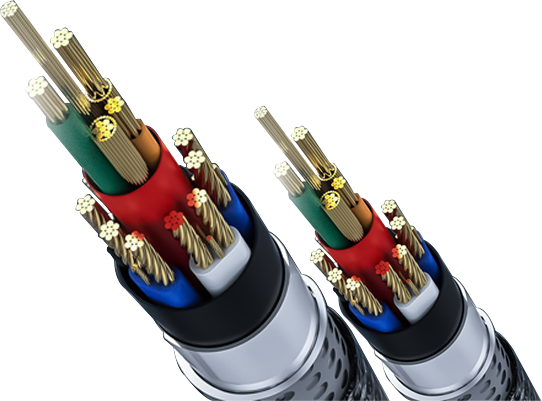
The basic structure of URD cable includes conductors, insulation, neutral conductor (optional), and sheath (optional). Its overall design adheres to the principle of “underground suitability and cost-efficiency”—eliminating the need for heavy armor layers while achieving a balance between protection and cost through optimized insulation and conductor materials. Three core differences distinguish URD cables from standard underground power cables: First, they are highly targeted, specifically designed for low-voltage scenarios in residential distribution networks, with voltage ratings concentrated between 600V and 35kV. Second, their structure is more streamlined, often employing non-armored designs that are lighter in weight and easier to install. Third, they feature optimized material compatibility, with insulation and conductor materials specifically tailored for underground environments characterized by moisture and corrosion.
Structural Composition Analysis of URD Cables
Conductor: Selection Logic Centered on Aluminum Conductors
Aluminum conductors dominate URD cable configurations, available in solid or stranded types. Stranded conductors offer superior flexibility, meeting the bending requirements of underground installation. Aluminum conductors dominate due to three core advantages: cost is only 1/3 to 1/4 that of copper, significantly reducing initial investment; density is just 30% of copper, enabling lightweight handling and installation while saving labor; although conductivity is lower than copper, increasing the cross-sectional area meets residential distribution network current-carrying capacity, offering outstanding cost-effectiveness. Copper conductors are reserved for high-end, high-reliability projects.
Insulation Layer: The Core Advantage of XLPE
URD cable insulation primarily uses cross-linked polyethylene (XLPE). Medium- and high-voltage models may opt for tree-resistant XLPE (TR-XLPE) to enhance reliability. XLPE is the preferred choice due to its superior comprehensive properties: strong moisture resistance prevents insulation breakdown caused by underground water; excellent dielectric properties ensure transmission efficiency; weather and aging resistance adapt to temperature variations from -40°C to 90°C and soil corrosion; mechanical strength withstands minor underground compression and abrasion, eliminating the need for additional reinforcement.
Neutral and Ground Wires: Coaxial Neutral Design
URD cables predominantly employ coaxial or compressed neutral wires, constituting their core structural distinction from conventional cables. The concentric neutral wire features bare copper/aluminum wire spirally wound around the insulated conductor, simultaneously serving as the neutral circuit conductor and grounding protection. This design enables rapid fault current discharge to prevent leakage. The compressed neutral wire offers a compact structure, combining space-saving advantages with enhanced heat dissipation. The neutral wire balances current, stabilizes voltage, and ensures personnel and equipment safety, with its design directly impacting operational stability.
Sheathed and Unsheathed URD Cables
Sheathed URD cables feature an additional PVC or PE sheath over the neutral conductor, offering enhanced protection against highly corrosive soils and humid environments. They are suitable for coastal areas and locations with high groundwater levels. Unsheathed URD cables rely solely on XLPE insulation for protection, featuring a simpler structure and lower cost. They are appropriate for dry, non-corrosive standard soil conditions. Selection should be based on environmental factors such as soil corrosivity and groundwater levels. Sheathed models offer a service life 10-15 years longer than unshielded models.
Voltage Ratings and Core Specifications
The voltage rating and specifications of URD cables must strictly align with distribution network requirements. Key parameters are as follows: Voltage ratings commonly include 600V (low-voltage residential branch circuits), 5kV, 15kV (medium-voltage distribution trunk lines), 25kV, and 35kV (large residential communities and light commercial distribution networks). Among these, 600V and 15kV are the mainstream models for residential applications. Conductor cross-sectional areas range from 10mm² to 240mm². Current-carrying capacity varies with conductor cross-section and material. Aluminum conductor URD cables typically have 20%-30% lower current-carrying capacity than copper conductors of the same cross-section, which can be compensated by increasing the cross-sectional area.
Regarding temperature ratings, XLPE-insulated URD cables have a long-term operating temperature of 90°C and can withstand short-term overloads up to 130°C, making them suitable for high-temperature underground environments. Regarding industry standards, URD cables must comply with international specifications such as ICEA S-94-649 (insulation and construction requirements), ASTM B-230/B-231 (aluminum conductor standards), and AEIC CS 8 (medium-voltage URD cable standards). Domestic projects must simultaneously meet relevant requirements of GB/T 12706 to ensure compliance.
Typical Application Scenarios for URD Cables
URD cables are primarily deployed in residential and light commercial underground distribution networks, covering the entire link from transformers to end users: First, underground residential distribution networks, including main trunk lines and user branch lines for urban communities and villa complexes, ensuring safe power transmission from community transformers to individual household meters; Second, user branch connections—the service drops from distribution trunk lines to residential and commercial premises, suitable for direct burial or conduit installation; Third, utility distribution networks, such as underground power lines for municipal road lighting and community public facilities. Fourth, light commercial installations, including three-phase or single-phase distribution networks for small shopping malls, convenience stores, and office building ancillary facilities, balancing economy and reliability. Additionally, URD cables are preferred for residential distribution networks in photovoltaic distributed power stations due to their strong weather resistance.
Core Advantages of URD Cables
URD cables dominate residential underground distribution networks due to four core advantages: First, superior safety performance—underground installation eliminates electrocution and fall risks associated with overhead lines. XLPE insulation and concentric neutral design effectively prevent leakage currents and short circuits, reducing fire hazards. Second, minimal visual impact—concealed installation preserves community aesthetics and architectural integrity, aligning with modern urban planning requirements. Third, high reliability: unaffected by typhoons, heavy rains, or snow/ice, with failure rates far lower than overhead lines and a service life of 30-50 years. Fourth, cost-effectiveness: aluminum conductors and streamlined structures reduce material and installation costs, while long-term O&M expenses are only one-third of overhead lines, delivering outstanding value over the entire lifecycle.
Differences Between URD Cables and Other Underground Cables
Compared to other underground cables, URD cables offer more precise scenario adaptability:
First, compared to direct-buried cables, URD cables are specifically designed for residential distribution networks, featuring a more streamlined structure and lower cost. General-purpose direct-buried cables prioritize broad-spectrum protection but lack targeted functionality. Second, compared to armored power cables, URD cables lack heavy armor layers, offering lighter weight, easier installation, and 30%-40% lower costs. However, their mechanical protection is weaker, making them unsuitable for high-compression scenarios. Third, compared to medium-voltage XLPE cables, URD cables feature insulation and structure optimized for underground residential environments, with neutral conductor designs better suited to distribution needs. General-purpose medium-voltage XLPE cables prioritize high-voltage transmission and carry higher costs.
Conclusion: Selecting the Right URD Cable Fortifies the Foundation of Underground Distribution Networks
As a specialized cable for residential and light commercial underground distribution networks, URD cable offers an ideal solution balancing safety, reliability, and economy through its core aluminum conductor + XLPE insulation structure, diverse type options, and superior weather resistance. It not only addresses numerous pain points of traditional overhead lines but also provides long-term assurance for modern community distribution networks with its 30-50 year lifespan and low operational maintenance costs.
In selection and application, the core principle is adherence to “scenario adaptation and standard compliance”: choose corresponding types and specifications based on voltage levels, installation environments, and load requirements. Prioritize certified products compliant with standards such as ICEA and ASTM to avoid safety hazards caused by substandard cables or improper installation. Looking ahead, as distribution networks evolve toward higher reliability and intelligence, URD cables will further optimize materials and structures to accommodate higher voltages and more complex scenarios, continuously empowering underground distribution networks.