Introduction: Why Understanding the Limitations of XLPE Cables is Crucial
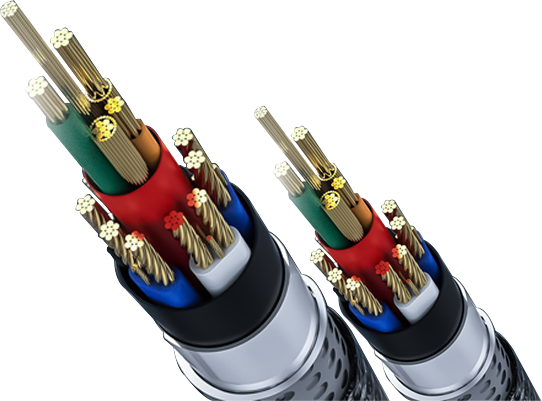
XLPE (cross-linked polyethylene) cables, formed through a cross-linking process, possess a three-dimensional network structure, exhibiting excellent electrical, heat-resistant, and mechanical properties, making them a mainstream product for medium- and high-voltage power transmission.
The industry's perception that "XLPE is superior to PVC in every way" is a misconception. While it has advantages, it is not a panacea, and usage limitations in specific scenarios can affect project safety and economics.
This article aims to dispel the misconception that "XLPE cables are invincible," breaking down its limitations in technology, environment, installation, and cost. This helps purchasers, engineers, and project managers clarify usage boundaries, avoid blind selection and cost waste, and make decisions that align with project needs.
Understanding these limitations helps purchasers avoid over-investment, engineers ensure construction compliance, and project managers optimize cost control. Only by fully understanding its advantages and disadvantages can we avoid safety hazards and increased maintenance costs caused by improper selection later on.
Temperature and Operating Temperature Limitations
XLPE cables have better heat resistance than ordinary PE cables, but their operating temperature is strictly limited, directly determining their service life and stability. Ordinary cross-linked XLPE cables have a rated long-term operating temperature of 90℃. Prolonged exposure to excessive temperatures will cause insulation aging and degradation, leading to loss of insulation performance.
In short-circuit scenarios, its maximum withstand temperature is approximately 250℃, lasting no more than 5 seconds (compliant with GB/T 12706.2 standard). Exceeding this threshold will cause insulation melting, fire, and other faults.
Prolonged exposure to temperatures close to the rated high temperature will accelerate performance degradation. In low-temperature environments below -40℃, flexibility decreases sharply, making it susceptible to damage and less suitable for cold-resistant PVC cables. Furthermore, overload accelerates insulation aging; frequent overloads can shorten the theoretical 30-year lifespan to less than 10 years, significantly increasing the probability of failure.
Installation Restrictions and Handling Requirements
XLPE cable installation and handling require extremely high standards. Its fault tolerance is lower than that of PVC cables, and improper handling can easily lead to operational hazards. Its minimum bending radius is typically 15-20 times the cable's outer diameter; too small a radius can cause conductor damage, insulation cracking, and partial discharge faults.
During installation, the insulation layer is extremely sensitive to mechanical damage. Even minor damage can easily lead to water treeing and electrical treeing, ultimately causing insulation failure. The traction tension must strictly adhere to the product instructions; excessive tension can cause conductor stretching and insulation peeling.
Cables are more prone to brittleness during low-temperature installation, requiring preheating and increasing construction difficulty and cost. Therefore, XLPE cable installation must be performed by a professionally trained team to ensure stable operation later.
Environmental and Chemical Exposure Limitations
XLPE cable insulation has limited environmental resistance. Additional protection is required in certain scenarios; otherwise, its service life will be shortened. It is not resistant to mineral oils, aromatic solvents, and strong acids and alkalis. Special chemical-resistant models must be selected for environments such as chemical plants.
When laid in humid conditions or underwater, improper joint sealing can easily lead to water treeing, aging, and insulation breakdown. Proper sealing protection is necessary. Unsheathed models are prone to aging and cracking due to ultraviolet radiation from prolonged exposure to sunlight. UV-resistant treatment is required for outdoor unprotected environments.
In high-salt spray and corrosive environments, fluoroplastic sheaths or armor are required. These protective measures are mandatory in such scenarios; otherwise, safety accidents may occur.
Electrical Performance and Design Constraints
XLPE cables have limitations in electrical performance under medium- and high-voltage conditions with frequent voltage fluctuations, requiring extremely high manufacturing and design quality. In medium- and high-voltage scenarios of 10kV and above, even minor defects in the insulation layer can easily trigger partial discharge, ultimately leading to insulation breakdown.
Insulation purity and manufacturing processes directly determine the upper limit of electrical performance. Even minor errors in processes such as three-layer co-extrusion can leave safety hazards. Frequent voltage fluctuations accelerate insulation aging, necessitating the selection of specialized models and optimization of the electric field distribution.
Early insulation defects are invisible to the naked eye, making detection difficult. Regular monitoring using professional methods such as partial discharge and dielectric loss detection is required to prevent the escalation of faults.
Fire Safety and Regulatory Restrictions
XLPE insulation itself is not flame-retardant; it is flammable and produces smoke and toxic gases upon combustion. In confined spaces, this can affect personnel evacuation and damage equipment. Direct use is not permitted in scenarios with high fire safety requirements.
XLPE cables must meet standards such as LSZH, IEC, and GB. Ordinary models do not meet the smoke and toxic gas emission requirements for densely populated areas and require special modification to achieve compliance.
For applications such as high-rise buildings and subways, XLPE cables must be selected with flame-retardant, low-smoke halogen-free, or fire-resistant modified versions, which have higher manufacturing costs.
Maintenance, Aging, and Service Life Limitations
XLPE cables have a theoretical lifespan of over 30 years, but in reality, due to aging and maintenance difficulties, this often falls short, and maintenance costs are high. Thermal aging, oxidation, and water treeing are the main factors shortening their lifespan.
Their insulation layer is a thermosetting material, making on-site repair difficult and costly; severe damage necessitates complete replacement. Regular condition monitoring is crucial for extending lifespan but increases maintenance costs; failure to monitor can lead to serious consequences such as large-scale power outages.
Under actual operating conditions, their lifespan is only 60%-80% of the theoretical value, and less than 10 years in harsh environments.
Cost and Project Considerations
XLPE cables are expensive; selection must consider the entire lifespan cost to avoid over-selection. Their manufacturing cost is 30%-50% higher than PVC, with even more significant differences for large-section and high-voltage models.
Installation costs are 20%-30% higher than PVC, and with the added costs of testing and maintenance, the initial investment is significantly higher. Using XLPE cables in low-voltage, short-term operation scenarios is overkill and can easily lead to cost waste.
Selection requires a balance between performance and cost. For long-term, high-safety-requirement projects, XLPE is more reasonable; for short-term projects with limited budgets, alternatives such as PVC can be used.
Typical Application Scenarios Where XLPE Cables May Not Be the Optimal Choice
Based on the above limitations, XLPE cables are not the optimal choice in the following scenarios, and alternative models should be selected:
. Temporary power supply scenarios: Prioritize flexible and low-cost PVC or rubber cables;
. Strict fire-fighting low-voltage wiring: Flame-retardant PVC or LSZH modified PVC cables offer a cost advantage;
. Frequent relocation scenarios: Use flexible cables such as EPR or silicone rubber;
. Small residential projects with limited budgets: PVC cables can meet the requirements and offer better cost-effectiveness;
. Unprotected high-chemical-exposure environments: Prioritize fluoroplastic or dedicated chemical-resistant rubber cables.
How to Select the Right XLPE Cable Under These Constraints
XLPE cables remain the preferred choice for medium- and high-voltage, long-term operation projects. Correct selection can mitigate limitations and maximize advantages:
. Clearly define the project's core requirements, such as temperature, voltage, environment, and budget, and address limitations accordingly;
. Strictly adhere to standards such as IEC 60502 and GB/T 12706. Prioritize LSZH models for densely populated areas;
. Optimize cable structure. Select radiation-crosslinked models for high temperatures and armored sheaths for direct burial to adapt to the specific needs of the application scenario;
. Custom-designed models with cold resistance or chemical resistance can be used for special scenarios to overcome specific limitations;
. Choose experienced manufacturers and suppliers to obtain full-process technical support.
Conclusion: XLPE Cables Offer Superior Performance, But Are Not a Panacea
XLPE cables offer significant advantages in medium- and high-voltage, long-term operation projects, but they are subject to limitations related to temperature, installation, and environment. The core of this article is to dispel the misconception that they are a "panacea" and clarify their application boundaries, rather than denying their advantages.
Selection should adhere to the principle of "scientific selection based on needs," comprehensively weighing project scenarios and budgets to balance performance and cost. Utilizing professional guidance and selecting reliable suppliers is crucial to avoiding limitations, leveraging their advantages, ensuring the safe and stable operation of the project, and achieving cost optimization throughout its entire lifecycle.