How to test XLPE Cable?
XLPE cables are the core of power transmission and distribution, widely used in various scenarios, and are the preferred choice for medium and high voltage applications due to their excellent performance.
Compared to PVC and PE cables, hidden defects in XLPE insulation layers are difficult to detect, requiring rigorous testing; neglecting testing can easily lead to safety accidents, and visual inspection alone cannot mitigate the risks.
This article details the key points of XLPE cable testing, assisting purchasers and engineers in identifying quality and ensuring safe operation.
Understanding XLPE Cable Structure
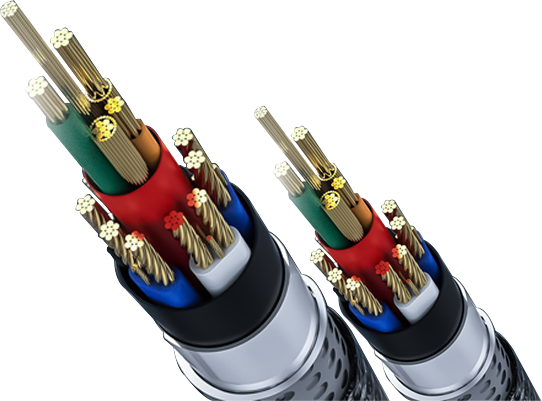
XLPE cables use cross-linked polyethylene (XLPE) as the insulation layer. The typical structure from inside to outside is: conductor (copper/aluminum core) → conductor shielding layer → XLPE insulation layer → insulation shielding layer → metal shielding layer/armoring layer (configured as needed) → outer sheath layer (PVC/PE).
Voltage level classification: Low voltage (LV, ≤1kV), medium voltage (MV, 10~35kV), high voltage (HV, 110kV and above); the cable structure directly determines the testing methods – for example, cables with shielding layers require additional shielding effectiveness testing, and medium and high voltage cables require enhanced partial discharge testing.
Applicable Standards for XLPE Cable Testing
• IEC standards (core reference): IEC 60502 (low/medium voltage XLPE cables), IEC 60840 (high voltage cables up to 150kV), IEC 62067 (high voltage cables above 150kV);
• European and American standards: IEEE 404 (XLPE cable testing guidelines), ICEA S-94-649 (North American standard), UL 1072 (low voltage XLPE cables);
• Domestic standards: GB/T 12706 (extruded insulated cables of 1kV and above), GB/T 2951 (insulation sheath test methods);
• Core principle: The corresponding standard should be selected based on the cable voltage level and application scenario. The testing requirements for medium and high voltage cables are far more stringent than those for low voltage cables.
XLPE Cable Testing Classification
• Routine Testing: Performed on every cable before leaving the factory, including conductor resistance, insulation resistance, voltage withstand test, and appearance and dimensions;
• Sampling Testing: Random sampling from batch production, including mechanical properties and thermal aging tests, to verify the consistency of batch quality;
• Type Testing: Comprehensive testing during new product development and process changes to confirm that the product meets standards;
• Pre-qualification Testing: Exclusive to medium and high-voltage projects, including long-term aging and load cycle testing, to ensure reliability under high-voltage conditions;
• Factory Testing vs. On-site Acceptance: Factory testing focuses on production quality control, while on-site acceptance focuses on the integrity of the cable after installation; both are indispensable.
Appearance and Dimensions Testing
Appearance Inspection
Verify the quality of each structural layer: The XLPE insulation layer should be clean and smooth, without damage, bubbles, or scorch marks; the sheath layer should be flat and free of cracks, with clear markings (model, specifications, voltage level, manufacturer, production date) to ensure traceability; the shielding layer and armor layer should be tightly wrapped, without looseness or broken wires.
Dimensional Measurement
Verify key dimensions according to standards, and the deviation must be within the allowable range: ① Conductor diameter and cross-sectional area (in accordance with GB/T 3956); ② Insulation layer and sheath layer thickness should be uniform, with eccentricity ≤15% and concentricity ≥85%; ③ Cable ovality ≤10%, to meet installation requirements.
Electrical Performance Testing (Core Key Items)
Conductor Resistance Test
Core purpose: To verify the purity of the conductor material and cross-sectional dimensions, and to avoid heating losses. Test method: Measure the DC resistance according to IEC 60228 standard, 20℃ temperature correction is required, and the resistance value should be ≤ the standard upper limit (e.g., 16mm² copper conductor ≤ 1.13Ω/km).
Insulation Resistance Test
Core purpose: To detect the integrity of the insulation layer and eliminate moisture and impurity defects. Test procedure: Apply 500V (low voltage) / 1000V (medium and high voltage) DC voltage for 1 minute, and measure the insulation resistance. XLPE cable insulation resistance is usually ≥1000MΩ·km; the higher the value, the better the insulation performance.
Withstand Voltage Test (AC/VLF)
Core purpose: To verify the insulation layer's resistance to high voltage. AC withstand voltage testing is preferred for low/medium voltage cables (e.g., 28kV/5min applied to 10kV cables); Very Low Frequency (VLF) testing is used for medium voltage cables in the field, replacing traditional AC withstand voltage testing for higher safety; DC testing is not recommended for XLPE cables as it can lead to charge accumulation and misjudgment. No breakdown or flashover indicates a successful test.
Partial Discharge Test (Medium and High Voltage Specific)
Core purpose: To detect tiny defects (bubbles, impurities) within the insulation layer, which accelerate insulation aging. Test method: Apply the specified voltage according to IEC 60270 standard and measure the discharge amount. The discharge amount for medium and high voltage XLPE cables should be ≤5pC, which is a key indicator for long-term reliable operation.
Thermal Performance and Load Cycling Test
Core purpose: To verify the cable's stability under high temperature and load fluctuations, suitable for continuous and peak load operation. Test procedure: Conduct heating cycles under rated current (heating to 90℃, cooling to ambient temperature), and after multiple cycles, monitor that there are no significant changes in insulation resistance and partial discharge amount, and that the insulation layer does not soften or crack. This allows for early detection of thermal aging risks.
Mechanical Performance Testing
Tensile Strength and Elongation at Break Test
Assessing the mechanical durability of the insulation and sheath layers: Tensile test samples to fracture. XLPE insulation layer tensile strength ≥12MPa, elongation at break ≥200%; must still meet standard requirements after thermal aging.
Bending and Flexibility Test
Verifying suitability for installation: Repeated bending at a bending radius of 15-20 times the cable diameter. No cracking of the insulation or sheath layers, no conductor breakage, and normal conductivity.
Impact and Abrasion Resistance Test
Simulating on-site external force scenarios: No damage to the sheath/insulation layer from heavy object impact, and no significant decrease in insulation resistance after abrasion testing, ensuring installation safety.
Aging and Long-Term Performance Testing
• Thermal Aging Test: Accelerated aging at 135℃ to evaluate the long-term heat resistance of the XLPE insulation layer; no degradation in mechanical and electrical properties after aging;
• Electrical Aging Test: Continuous aging under rated voltage to monitor insulation performance stability and prevent failure under long-term electric field stress;
• Water Tree Resistance Test (as needed): For humid environments, testing the insulation layer's resistance to water tree aging to prevent breakdown caused by moisture.
Fire Safety Performance Testing
• Flame Retardancy Test: According to IEC 60332 standard, the flame must self-extinguish within the specified time, with no dripping material igniting combustible materials;
• Smoke Density Test: IEC 61034 standard, low smoke density during combustion, ensuring personnel evacuation and equipment safety;
• Halogen/Acid Gas Test: IEC 60754 standard, low smoke zero halogen (LSZH) cables produce no toxic gases during combustion, suitable for enclosed environments such as power plants and subways;
• Fire Resistance Test (as needed): Maintaining circuit integrity during a fire to ensure emergency power supply.
Environmental Adaptability Testing
• Water Resistance/Moisture Resistance Test: For buried and coastal environments, detecting moisture penetration and ensuring no significant decrease in insulation resistance;
• UV Resistance Test: For outdoor environments, resisting ultraviolet radiation, with no aging or cracking of the insulation and sheath layers;
• Oil/Chemical Corrosion Resistance Test: For chemical environments, resisting oil and acid/alkali corrosion, without swelling or damage;
• Shielding Effectiveness Test (for shielded cables): Testing electromagnetic interference resistance to ensure stable high-voltage operation.
Post-Installation Field Testing
• Insulation Resistance Test: Mandatory before commissioning, to check for insulation damage or moisture ingress during installation;
• VLF Test: Exclusive for medium and high-voltage cables, safely testing insulation integrity;
• On-site Partial Discharge Test: Focusing on joints and terminals to avoid installation process defects;
• Joint/Terminal Test: Verifying crimping quality and sealing performance to prevent excessive contact resistance and moisture ingress.
How to Interpret XLPE Cable Test Reports?
• Focus on core parameters: Key parameters such as conductor resistance, insulation resistance, partial discharge, and tensile strength should be checked, with clear numerical values and pass/fail criteria;
• Verify standard consistency: The testing standards must match the procurement requirements (e.g., GB/T 12706, IEC 60502);
• Beware of invalid reports: Verify the testing institution's qualifications and ensure the report number is traceable, avoiding fake/generic reports issued by unqualified institutions;
• Confirm information matching: The cable model, voltage level, and cross-sectional dimensions in the report must match the purchased product.
Common Testing Misconceptions and Avoidance Methods
• Misconception 1: Using DC testing for XLPE cables – This can easily lead to charge accumulation and misjudgment; AC/VLF testing is preferred for medium and high voltage cables;
• Misconception 2: Neglecting partial discharge testing – This test is crucial for identifying hidden defects in medium and high-voltage cables and cannot be omitted;
• Misconception 3: Skipping on-site acceptance testing – Installation can easily cause insulation damage, and on-site testing is the last line of defense before commissioning;
• Misconception 4: Misinterpreting insulation resistance values – This requires calibration based on ambient temperature and humidity; a single value cannot fully determine quality.
Best Practices for Ensuring Reliable Operation of XLPE Cables
• Choose certified manufacturers: Select manufacturers with production qualifications, ISO certification, and well-equipped laboratories to ensure production control;
• Match testing requirements: Determine testing items based on voltage level and application scenarios; pre-qualification testing should be added for medium and high-voltage cables;
• Full lifecycle testing: Integrate testing into the entire process of production, acceptance, and operation and maintenance, with regular inspections of insulation resistance and partial discharge.
Conclusion: Testing is the Cornerstone of Reliable XLPE Cable Operation
The safe operation of XLPE cables depends on comprehensive, high-standard testing – from routine production testing to on-site acceptance and long-term operation and maintenance inspections. Each step helps prevent hidden defects, ensuring performance, safety, and compliance.
Prioritizing XLPE cable testing not only prevents premature failure and power outages but also extends service life and reduces maintenance costs, building a strong safety barrier for the power transmission and distribution system. When purchasing, use the test report as the core basis, prioritizing technically proficient and reliable manufacturers, and rejecting non-standard and inferior products.