Flame-retardant cable vs fire-resistant cable: What's the difference?
In modern architecture and industrial electrical systems, cables serve as the primary medium for power transmission, with their fire resistance directly impacting life and property safety. However, the industry has long been plagued by confusion between "flame-retardant cables" and "fire-resistant cables." Many projects have misused cables due to such misconceptions during selection, creating serious safety hazards. During a fire, substandard or mismatched cables may accelerate flame spread, release toxic gases, or even disable emergency systems, leading to fire escalation and casualties. This article systematically examines the definitions, working principles, key differences, and applicable scenarios of these two cable types, helping readers accurately distinguish and scientifically select them, thereby eliminating technical knowledge gaps.
What is flame-retardant cable?
Core Definition of Flame Retardant Cable
Flame-retardant cables are designed to limit flame spread and self-extinguish under specified test conditions. Their primary function is to "halt fire progression" rather than prevent fire damage. While these cables cannot actively extinguish fires, they rapidly cool down after the initial flame subsides, preventing flames from spreading along the cable to other areas and buying time for evacuation and early fire suppression.
Working Principle and Key Characteristics of Flame Retardant Cable
The fire resistance mechanism of flame-retardant cables primarily relies on material modification and structural design. By incorporating flame retardants (such as halogen-based or halogen-free types) into the insulation layer and sheath, these additives decompose upon exposure to fire, releasing inert gases like carbon dioxide and water vapor. These gases dilute oxygen and isolate the flame from the cable's base material. Simultaneously, a carbonized layer forms on the cable surface after combustion, effectively blocking heat transfer and achieving self-extinguishing properties.
In terms of core materials, flame-retardant cables typically use PVC (polyvinyl chloride), LSZH (low-smoke halogen-free), and flame-retardant XLPE (cross-linked polyethylene) as base materials. Among these, PVC flame-retardant cables are cost-effective with stable flame-retardant performance, though they release toxic gases like hydrogen chloride when burned. LSZH flame-retardant cables, on the other hand, excel in environmental protection by emitting low smoke density and no toxic gases during combustion, making them ideal for high-rise buildings, subways, hospitals, and other densely populated areas.
Structurally, flame-retardant cables typically employ a "tight sheath + flame-retardant filler" design. Some multi-core cables incorporate flame-retardant oxygen barriers to further prevent flame propagation between conductors. It is crucial to note that flame-retardant cables cannot withstand prolonged fire exposure—when directly exposed to flames for extended periods, their insulation may still rupture, causing conductor short circuits and circuit failure. Moreover, "flame-retardant" and "fireproof" are fundamentally different concepts, with essential distinctions in safety classification.
What is fire-resistant cable?
Core Definition of Fireproof Cable
Fire-resistant cables, also known as "circuit integrity cables" or "fire survival cables," are designed to maintain electrical conductivity under specified fire conditions (e.g., particular temperatures and durations). Their core value lies in "continuous operation during fires," ensuring that emergency systems (such as fire alarms, emergency lighting, and smoke exhaust equipment) function properly during a fire, thereby facilitating safe evacuation and firefighting efforts.
Working Principle and Key Characteristics of Fireproof Cable
The fire-resistant mechanism of fire-resistant cables stems from their specialized insulation and protective structures. The core technology involves using high-temperature resistant, non-combustible insulating materials—most commonly mica tape (e.g., mica tape-wrapped conductors). Mica has a melting point exceeding 1200°C, is non-flammable, and exhibits excellent thermal insulation properties. When exposed to fire, it forms a hard, ceramicized shell that encapsulates the conductor and isolates it from high temperatures. Some high-end products employ materials like ceramicized silicone rubber or magnesium oxide mineral insulation to further enhance their high-temperature resistance.
In fire environments, fire-resistant cables can withstand temperatures of 800°C to 1000°C for set durations (typically 30,60, or 90 minutes) while maintaining conductor insulation, ensuring uninterrupted power and signal transmission. This "circuit integrity preservation" capability is the key distinction from flame-retardant cables: whereas the latter merely limit flame spread, fire-resistant cables actively resist fire damage to sustain critical system operations.
It should be noted that the fire resistance of fire-resistant cables is time-limited. Their performance must be verified through rigorous fire tests, and they typically require coordination with fire-resistant cable trays and fireproof sealing materials to achieve optimal fire protection.
Core Difference of Flame Retardant Cable and Fireproof Cable
Fire prevention objectives: contain spread vs maintain access
The fundamental distinction between the two lies in their fire protection objectives: Flame-retardant cables prioritize "passive defense" by slowing flame propagation, reducing toxic smoke, and minimizing fire escalation risks. However, they gradually lose functionality during fires, failing to maintain circuit integrity. In contrast, fire-resistant cables adopt an "active defense" approach, preserving circuit integrity to ensure emergency systems remain operational and create conditions for rescue and evacuation.
Temperature and Time Performance: Short-term Delay vs Long-term Tolerance
Flame-retardant cables are typically tested at 750℃-850℃, with the primary focus on flame spread distance (as specified in IEC 60332, which requires vertical combustion to not exceed a defined length). These cables only need to meet the "self-extinguishing" requirement, without explicit criteria for continuous working time. In contrast, fire-resistant cables are tested at higher temperatures (typically 950℃-1000℃), with the core evaluation metric being "continuous working time." For instance, IEC 60331 mandates that cables remain energized for over 30 minutes during a fire, while BS 6387 even specifies a 90-minute tolerance rating.
Structure and Materials: Simple Modification vs. Special Design
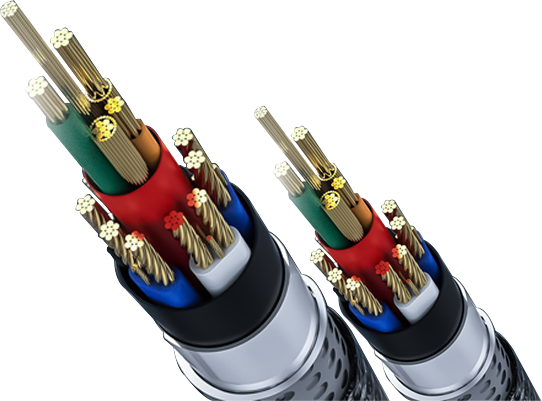
Flame-retardant cables feature a relatively simple structure, typically incorporating flame retardants or optimized sheath materials into conventional cables. Their production costs are relatively low, and their appearance remains largely similar to standard cables. In contrast, fire-resistant cables require complex multi-layer designs, such as "conductor + mica tape insulation + inner sheath + armor + outer sheath." Some models even include fireproof layers, resulting in significantly higher material costs and manufacturing complexity compared to flame-retardant cables. Consequently, their prices are typically 2 to 5 times higher than those of flame-retardant cables.
Regulation and Safety Expectation: Basic Requirements vs Mandatory Standards
Flame-retardant cables serve as the "essential fire protection requirement" for building electrical systems, suitable for most general applications. Their selection must comply with the minimum standards of local fire safety regulations. In contrast, fire-resistant cables are specifically designed for critical emergency systems. Many countries and regions mandate their use in high-rise buildings, including fire elevators, emergency lighting, and fire alarm systems. These systems must employ fire-resistant cables certified with specific fire resistance ratings; otherwise, the project will fail fire safety inspections.
Relevant Standards and Testing Methods
Core Standard of Flame Retardant Cable
The testing of flame-retardant cables primarily follows the IEC 60332 series standards, with IEC 60332-1-2 (Vertical Burning Test for Single Cables) and IEC 60332-3-22 (Vertical Burning Test for Bundled Cables) being the most widely used. These standards evaluate cable flame resistance ratings (e.g., A, B, C, D) by simulating burning scenarios and measuring key parameters such as flame spread length, burning duration, and smoke density. Additionally, China's national standard GB/T 19666 provides detailed specifications for the performance and testing methods of flame-retardant cables.
Core Standard of Fireproof Cable
The testing standards for fire-resistant cables are more stringent, primarily including IEC 60331 (cables' sustained performance under flame conditions), BS 6387 (British Standard specifying comprehensive properties like fire resistance, waterproofing, and mechanical damage resistance), and EN 50200 (European Standard for fire-induced circuit integrity testing). These standards not only require cables to maintain conductivity at high temperatures but also simulate harsh conditions such as fire-induced shocks and vibrations, ensuring their reliability in real-world applications.
The Importance of Standard Compliance
Compliant cables are the fundamental prerequisite for fire safety inspection of projects and serve as the key basis for insurance claims. Using uncertified cables may not only exacerbate losses in the event of a fire but also expose the user to legal liabilities. Therefore, during selection, it is essential to verify the cable's test reports and certification documents to ensure compliance with the technical standards of the project's location.
Typical application scenarios
Scope of application of flame retardant cable
Flame-retardant cables are primarily used in general buildings and industrial facilities, including residential homes, office buildings, shopping malls, and standard factory workshops. Their core function is to prevent cables from becoming pathways for flame propagation during fires. For instance, using flame-retardant cables for lighting and electrical outlets in residences can prevent flames from spreading to other rooms after a fire starts. Similarly, employing these cables for central air conditioning systems and power equipment in shopping malls helps contain fire spread within ceilings and cable trenches.
Scope of application of fire-resistant cable
Fire-resistant cables are primarily designed to ensure the operation of critical systems during fires, with core applications including:
Fire alarm system: ensures continuous communication between fire detectors, alarm controllers, and interlocking devices to promptly issue alerts.
Emergency lighting system: Maintain illumination in evacuation routes and stairwells to guide people to evacuate safely.
Exhaust and ventilation system: Ensure the proper operation of exhaust fans and positive pressure supply fans to remove toxic fumes and create favorable conditions for rescue operations.
Fire safety equipment such as fire elevators, emergency broadcast systems, and sprinkler pumps: Ensure these devices remain operational during fires to support firefighting and rescue efforts.
Power supply lines in the hospital's intensive care unit (ICU) and operating rooms: Ensure uninterrupted power supply for medical equipment to save patients' lives.
Conclusion: Identify differences and select models safely
The fundamental distinction between flame-retardant cables and fire-resistant cables lies in their dual roles: "curbing flame spread" versus "preserving circuit integrity." Flame-retardant cables act as "firefighters" in emergencies, halting the fire's progression, while fire-resistant cables serve as "guardians," ensuring the uninterrupted operation of critical systems. These two types are not mutually exclusive but rather complementary solutions tailored to specific scenarios.
Accurately distinguishing between the concepts and application scenarios of these two terms is crucial in electrical design, construction, and procurement. During technical communication, precise terminology must be used to avoid confusion between "flame-retardant" and "fire-resistant" cables, ensuring all parties share a consistent understanding of design requirements. The core principle of selection should be "safety-driven" rather than "price-driven" — critical systems must use fire-resistant cables that meet standards, while general scenarios should opt for compliant flame-retardant cables. This approach prevents both wasteful upgrades and potential hazards from compromised standards.
If you have any questions about the selection, we recommend consulting a professional cable engineer or manufacturer. By considering the project's specific requirements, local regulations, budget, and other factors, we can develop a customized cable solution to ensure robust fire safety for your electrical system.