Tree Wire: A Reliable Choice for Overhead Distribution Systems
Tree wire, also known as overhead insulated tree wire, is a type of overhead distribution cable specifically designed for areas with dense tree coverage. Its key feature is an insulating layer that protects the conductor from weathering and vegetation contact. Unlike traditional bare wires, tree wire prevents direct contact between the conductor and vegetation through this insulation, effectively reducing short-circuit failures caused by branch overlaps. This makes it widely used in overhead power distribution systems.
Naked conductors, composed solely of metal without insulation, are highly susceptible to single-phase grounding or interphase short circuits when contacting vegetation like trees or vines, potentially causing circuit breaker trips and power outages. In contrast, overhead insulated conductors (including tree lines) employ insulation layers to ensure electrical isolation, making them less prone to faults even during occasional contact with vegetation. These tree lines typically operate at voltage levels of 15kV, 25kV, and 35kV, making them ideal for rural areas, forested regions, and developing zones with dense vegetation or complex terrain. They represent a critical solution for addressing power supply failures caused by vegetation interference.
Application Scenarios of Tree Lines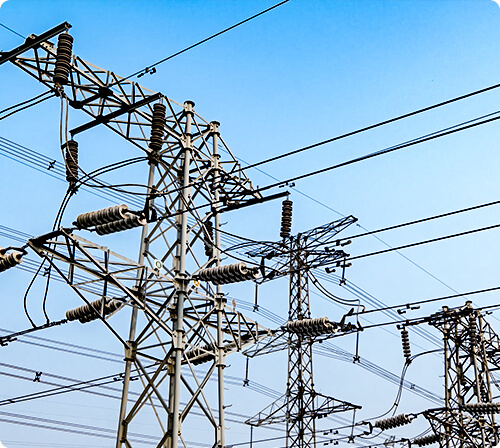
The core application value of tree-line technology lies in addressing overhead power distribution needs in densely vegetated environments, with its primary application scenarios including the following categories:
Overhead Distribution Line in Dense Tree Area
In forested, jungle, and mountainous forested areas, traditional bare conductors frequently experience faults due to branch overlaps and vine entanglements, resulting in prohibitively high maintenance costs. Tree lines, however, effectively mitigate electrical hazards caused by vegetation contact through their insulating protective layer, making them the preferred distribution cable for such environments. For instance, in mountainous forest farms, tree lines can reduce vegetation-related power outages by over 90%.
Rural electrification project
Rural areas often feature complex topography, high vegetation coverage, and extensive distribution line spans, which pose significant maintenance challenges. The application of tree-line technology not only reduces faults caused by crops, fruit trees, and miscellaneous trees but also decreases the frequency of line inspections and tree felling, substantially lowering the operational and maintenance costs of rural power grids and contributing to their stable operation.
Special areas prone to vegetation contact
In addition to conventional densely wooded areas, certain regions are also high-risk zones for vegetation contact due to seasonal variations (e.g., rapid branch growth in spring) and extreme weather events such as typhoons and heavy rainfall, which can cause branch breakage and line crossing. The application of tree-line technology in these areas can significantly enhance power supply reliability, particularly in storm-prone regions, effectively reducing the frequency of line failures and ensuring continuous power supply.
Distribution lines with high reliability requirements
Critical infrastructure such as municipal utilities, remote residential areas, and key agricultural production zones require uninterrupted power supply. The Tree Line initiative reduces unplanned outages, ensuring stable electricity supply for these high-demand scenarios while minimizing economic losses and social disruptions caused by power failures.
Working Principle of Tree Line
The working principle of tree line is based on "insulation isolation + vegetation contact resistance design", with the core function of blocking current leakage paths through insulation layers. The dedicated insulation material (such as cross-linked polyethylene) on the conductor's exterior provides excellent electrical insulation properties. Even when branches, vines or other vegetation come into contact with the cable, it prevents the formation of conductive circuits, thereby avoiding short-circuit faults.
Unlike bare conductors, tree lines do not completely eliminate vegetation contact but allow "occasional contact." Through the protective function of the insulation layer, the risk of faults caused by contact is minimized. This design not only reduces the frequency of line tripping but also decreases the workload of maintenance personnel, thereby enhancing the safety and reliability of the entire power distribution system.
Structural Composition of Tree Lines
Conductor section
Tree line conductors typically use aluminum, with hard aluminum conductors (AAC) and high-strength aluminum alloy conductors (AAAC) being the most common types. Aluminum conductors offer key advantages including lightweight design, excellent conductivity, cost-effectiveness, and superior corrosion resistance, making them ideal for outdoor overhead applications. The multi-strand twisted structure enhances cable flexibility for easier installation while strengthening mechanical durability to withstand external forces like wind and ice loads. For complex terrain or long-span lines, high-strength aluminum alloy conductors can be selected to further improve tensile strength and fatigue resistance.
Insulation section
The insulation layer is the core component of tree-line cables, directly determining their resistance to vegetation contact and service life. The insulation materials primarily consist of cross-linked polyethylene (XLPE) or tree-erosion-resistant cross-linked polyethylene (TR-XLPE). XLPE exhibits excellent electrical insulation properties, weather resistance, and mechanical strength, effectively resisting ultraviolet radiation, extreme temperature fluctuations, and rain erosion. TR-XLPE, developed by adding specialized additives to XLPE, further enhances tree-erosion resistance, effectively resisting friction, compression, and puncture from tree branches, thereby extending the cable's lifespan in densely vegetated environments. Additionally, the insulation layer possesses superior flame retardancy, ensuring that even localized damage is unlikely to trigger fire spread.
Typical structure
The standard configuration of a tree line is a "single-core overhead insulated cable", consisting of a stranded aluminum conductor and a thick insulating layer without additional sheathing or armor. This streamlined design ensures both insulation performance and mechanical strength while reducing cable weight and cost, facilitating overhead installation. The insulating layer thickness is determined by voltage level, with higher voltages requiring thicker insulation to meet electrical insulation requirements.
Comparison of Tree Lines with Other Cables
Tree line vs bare wire
Bare conductors, the primary cable type in traditional overhead power distribution systems, consist of pure metal conductors without insulation. The key differences between bare conductors and insulated conductors lie in insulation performance and application scenarios: Bare conductors are cost-effective and offer excellent heat dissipation, but are prone to faults caused by vegetation contact or foreign object interference, making them suitable for areas with sparse vegetation and low population density. In contrast, insulated conductors, though more expensive, effectively prevent vegetation-related faults through insulation, making them ideal for densely wooded areas with high maintenance demands. In terms of reliability, insulated conductors have a fault rate approximately one-tenth that of bare conductors, significantly reducing operational costs. However, insulated conductors perform slightly worse in heat dissipation, requiring a slightly larger conductor cross-section under the same current-carrying capacity requirements.
Tree line vs ABC cable
ABC cable (Aerial Bundled Cable), also known as overhead bundled cable, consists of multiple insulated conductors twisted together, typically including phase lines, neutral lines, and sometimes grounding wires. The key differences between tree lines and ABC cables lie in their structure, voltage ratings, and application scenarios: Structurally, tree lines are single-core insulated cables, while ABC cables are multi-core bundled cables. In terms of voltage ratings, tree lines operate at higher levels (15kV and above), whereas ABC cables are primarily used in medium and low-voltage distribution networks (10kV and below). For installation environments, tree lines are better suited for densely wooded mountainous or forested areas, while ABC cables are more suitable for suburban towns, rural residential areas, and other scenarios requiring centralized installation. Regarding cost, ABC cables are more expensive due to their multi-core structure, but they offer higher installation efficiency and reduce the need for power poles.
Voltage Level and Technical Parameters of Tree Lines
Common voltage levels
The voltage levels of tree-line power lines are primarily concentrated in medium-voltage distribution networks, with common specifications including 15kV, 25kV, and 35kV. Among these, 15kV and 25kV are the most widely used, suitable for rural distribution networks and forest area power lines, while 35kV is mainly employed for medium-voltage main distribution lines with complex terrain and large spans.
Key technical parameters
Regarding insulation thickness, higher voltage levels require thicker insulation layers: 15kV tree lines typically have 4.5-5.0mm insulation, 25kV lines 6.0-7.0mm, and 35kV lines 8.0-9.0mm to ensure adequate electrical insulation strength. For conductor specifications, tree lines generally use 25mm²-400mm² cross-sections (equivalent to AWG 4/0-2AWG), allowing selection of appropriate cross-sections based on line current-carrying capacity requirements to meet power supply demands across various load scenarios.
Relevant Standards and Specifications for Tree Lines
The production and application of tree wires must adhere to stringent industry standards to ensure product quality and operational safety. Internationally recognized standards include ASTM specifications (e.g., ASTM B230 "Standard for Hard Drawn Aluminum Wires" and ASTM B231 "Standard for High-Strength Hard Drawn Aluminum Wires"), ICEA (Insulated Cable Engineers Association) standards, and NEMA (National Electrical Manufacturers Association) standards. These standards specify detailed requirements for tree wires, covering conductor materials, insulation performance, mechanical strength, and weather resistance.
Furthermore, power companies across different countries and regions may have their own corporate standards and technical requirements, particularly for export projects that require customized production according to the specific specifications of target markets. For instance, rural electrification projects in some African countries may require tree lines to have higher heat and moisture resistance, while projects in Latin America might have special requirements for the UV resistance of insulation layers.
Advantages and Limitations of Tree Lines
Core advantage
The tree line's insulation layer effectively isolates conductors from vegetation, significantly reducing vegetation-related faults. This reduces the probability of short-circuit tripping and enhances power supply reliability. In densely wooded areas, the failure rate can be reduced by over 80%.
Reducing O&M costs: The Tree Line system eliminates the need for frequent tree removal in transmission corridors, reducing inspection frequency and labor costs while minimizing economic losses from power outages.
Enhanced safety performance: The insulation layer prevents conductor exposure, reducing the risk of electric shock from accidental contact by personnel or animals, while also minimizing fire hazards caused by line faults, ensuring public safety and operational safety for maintenance personnel.
Long service life: Made of XLPE or TR-XLPE insulation materials, it offers excellent weather resistance, corrosion resistance, and tree-erosion resistance, with a service life of 25-30 years—significantly longer than conventional bare conductors.
Adapt to complex terrain: Tree line is light and flexible, which is convenient for laying in mountainous area, woodland and other complex terrain, and can adapt to different setting conditions.
Boundedness
The cost is higher than bare wire: The insulation layer of tree line increases production costs, and its price is usually 2-3 times that of bare wire, with a higher initial investment.
Insulation layer is not resistant to continuous mechanical wear: Tree lines can only withstand occasional contact with vegetation. If they are subjected to prolonged friction, compression from branches, or puncture by sharp objects, the insulation layer may still be damaged. Therefore, maintaining a certain clearance in the line path is still necessary.
The thermal performance is slightly inferior: The insulation layer may impair the conductor's heat dissipation efficiency. Under high-temperature conditions or high-current operating conditions, it is essential to select an appropriate conductor cross-section to prevent overheating.
Installation and Construction Precautions for Tree Lines
Tension Control and Bending Radius
When installing tree lines, it is crucial to strictly control the tension during wire laying to prevent excessive tension from causing conductor stretching deformation or insulation layer damage. Typically, the wire laying tension should not exceed 40% of the conductor's rated tensile strength. Additionally, ensure the cable's bending radius meets the specified minimum value, generally 20-30 times the cable's outer diameter, to avoid insulation layer cracking due to excessive bending.
Insulation layer protection
During construction, avoid contact between cables and sharp objects. Strictly prohibit dragging or rolling cables. Use dedicated cable reels and pulleys for laying to minimize insulation layer wear. If insulation damage is detected, promptly repair or replace it to ensure the cable's insulation performance.
Hardware compatibility
The connection and fixation of tree lines must employ specialized insulated hardware, such as insulated tension clamps and insulated suspension clamps, to prevent damage to the insulation layer caused by bare wire hardware. Additionally, the hardware specifications must match the conductor cross-section and insulation thickness of the cable to ensure secure connections and reliable electrical performance.
Conclusion
As an overhead distribution cable specifically designed for densely vegetated areas, tree lines have become the ideal solution for addressing power supply failures in tree-related environments. With their excellent insulation performance, reliable operational stability, and low long-term maintenance costs, they play a vital role in rural electrification projects, forest area power distribution lines, and power supply security in storm-prone regions, providing strong support for the safe and stable operation of distribution systems.
For power companies and engineering contractors, selecting appropriate overhead line products not only reduces failure rates and lowers O&M costs, but also enhances power supply service quality, providing users with more reliable electricity security. In the future, as rural power grids are upgraded and electrification accelerates in remote areas, the application scenarios of overhead lines will continue to expand, with market demand steadily increasing. This makes them an indispensable component in overhead distribution systems.