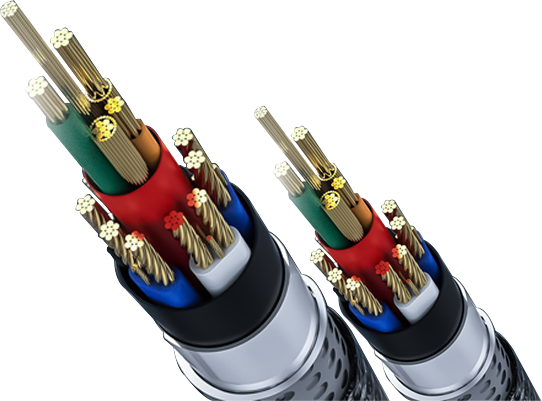
What is RVS cable?
In the field of low-voltage electrical wiring and signal transmission, RVS cable is a frequently encountered term, but it may seem somewhat unfamiliar to international buyers or industry newcomers. In fact, RVS cable is a naming convention unique to the China market, and globally, it is more commonly referred to as "twisted wire" (twisted pair cable). As a flexible polyvinyl chloride insulated copper-core stranded cable, RVS cable is widely used in low-voltage and weak signal transmission scenarios such as fire alarm systems, intercom communications, and control circuits due to its simple structure, excellent flexibility, and cost advantages, making it an indispensable basic component in electrical systems. This article will comprehensively analyze the core information of RVS cable from multiple dimensions including definition, structure, principles, and applications, helping readers quickly grasp the key knowledge of this commonly used cable.
.jpg)
What is an RVS cable? Definition and naming logic
Core Definition
The full name of RVS cable is "Copper Core Polyvinyl Chloride Insulated Twisted Pair Connection Flexible Wire". According to China mechanical industry standard JB/T8734.3-2016, it is a sheathless flexible cable formed by twisting two insulated copper core wires at a certain twist pitch, mainly used for low-voltage, low-power signal transmission or auxiliary power supply scenarios. Its core characteristics can be summarized as: flexible conductor, PVC insulation, and double-core twisting, which are also the key basis for its naming.
Named Logic Resolution
The letter combinations in RVS derive from Chinese cable model naming conventions, with each letter representing specific technical attributes.
- R: stands for "Flexible conductor", indicating that the conductor is composed of multiple thin copper wires twisted together rather than a single solid copper rod, which provides the cable with excellent flexibility.
- V: Refers to "polyvinyl chloride (PVC) insulation," where the insulation layer is made of PVC material, featuring wear resistance, corrosion resistance, and low cost.
- S: stands for "Stranded pair", referring specifically to the structure where two insulated core wires are twisted together, which is the fundamental reason for its designation as "twisted pair".
Key Clarification: Corresponding Names for International Markets
It should be particularly emphasized that RVS is not a globally universal standard name; it is only widely used in the cable industry in China and some Chinese-speaking regions. For international business scenarios such as product exports and cross-border project procurement, directly using "RVS cable" may lead to cognitive confusion. It is recommended to prioritize general terms such as "PVC insulated twisted wire" or "low-voltage signal twisted pair cable" to ensure accurate and efficient communication.
Structural Composition of RVS Cable
Conductor: Selection of Flexible Copper Core
The conductor core of RVS cables is constructed from bare copper or tin-plated copper materials, formed by twisting multiple strands of fine copper wires (compliant with Type 6 flexible copper conductor requirements specified in GB/T3956-2008). This structural design significantly enhances cable flexibility, enabling seamless adaptation to complex installation scenarios such as bending and conduit penetration. It also reduces conductor resistance to minimize signal transmission losses. Compared to bare copper, tin-plated copper conductors demonstrate superior oxidation resistance and corrosion resistance, making them ideal for high-humidity environments or areas with mild corrosive conditions.
Insulation layer: PVC material with color marking
The conductor is externally wrapped with a polyvinyl chloride (PVC) composite insulation layer. This material offers excellent electrical insulation properties, mechanical strength, and processing convenience, effectively isolating the two core wires to prevent short circuits or electrical leakage risks. To facilitate wire sequence identification during installation, RVS cables typically employ color-coded insulation for the two core wires, with red and blue being the most common combination. Some products also feature red-white or black-and-white color schemes. Red-blue core wires are particularly widely used in fire alarm systems. According to standard requirements, the insulation layer thickness must match the conductor's cross-sectional area to ensure compliance with insulation performance specifications.
Twisted structure: Design of uniform pitch
The core structural feature of RVS cables lies in their twisted configuration of two insulated conductors, where the twist pitch (i.e., the length per twist cycle) must remain consistently uniform. This design is not merely physical winding but rather the result of precise engineering calculations: an optimal twist pitch enables the two conductors to generate symmetrical electromagnetic fields, effectively suppressing external electromagnetic interference (EMI) while minimizing signal radiation loss. This configuration ensures stable transmission of low-frequency signals.
Working Principle of RVS Cable (Twisted Pair)
The core working principle of RVS cables stems from the "electromagnetic interference suppression effect of stranded structures." During low-frequency and low-voltage signal transmission, surrounding equipment such as motors, frequency converters, and high-voltage power lines generate electromagnetic radiation. If these interference signals directly affect cables, they can cause signal distortion and transmission instability. The dual-core stranded design of RVS cables enables two conductors to form currents in opposite directions during signal transmission, creating mutually canceling electromagnetic fields that significantly reduce the impact of external electromagnetic interference.
Furthermore, the stranded structure effectively reduces signal crosstalk—interference between signals from different conductors. Compared to parallel double-core cables, the stranded design maintains consistent spacing between conductors, ensuring more uniform signal coupling and significantly lowering crosstalk risks. It's important to note that RVS cables primarily suppress low-frequency interference (such as 50Hz power line interference and low-frequency electromagnetic radiation), while offering limited effectiveness against high-frequency signals like high-speed data transmission. This characteristic determines their primary application in low-rate signal transmission scenarios.
Core Technical Parameters of RVS Cable
Rated voltage
According to the JB/T8734.3-2016 standard, RVS cables are available in two rated voltage specifications: 300/300V and 300/500V.
- 300/300V: The most commonly used, suitable for most low-voltage signal transmission applications
- 300/500V: Designed for auxiliary power supply lines requiring slightly higher insulation performance
The notation "300/300V" indicates that both the cable's rated voltage and ground voltage are 300V. These specifications must be strictly matched to the specific voltage requirements of the application environment and are strictly prohibited for use in high-voltage settings.
Conductor cross-sectional area (common specifications)
The conductor nominal cross-sectional area of RVS cables ranges from 0.5mm² to 6mm², with the most commonly used specifications and their applications:
- 0.5mm² and 0.75mm²: Suitable for signal transmission in small-scale instruments and sensors;
- 1.0mm² and 1.5mm²: Widely used in fire alarm systems, intercom systems, and control circuits;
- 2.5mm²: Suitable for auxiliary power supply of low-power devices or long-distance signal transmission (consider voltage drop).
Cables with different cross-sectional areas have varying current-carrying capacities, resistance values, and application scenarios. Selection should be based on actual load current calculations.
Working temperature
The long-term permissible operating temperature for RVS cables is 70°C, determined by the thermal stability of PVC insulation materials. In practical applications, cables should be avoided in high-temperature environments (such as proximity to heat sources like radiators, lighting ballasts, or motors), as this may accelerate insulation aging, reduce service life, and even pose safety hazards. For small-gauge cables with cross-sectional areas of 0.5mm² and 0.75mm², standards stipulate that low-temperature impact testing is not required. Therefore, it is also not recommended to use these cables exposed in low-temperature environments (below -15°C).
Core Advantages and Limitations of RVS Cable
Key advantages
- High flexibility and easy installation: The multi-strand fine copper wire conductor combined with a double-core stranded structure enables RVS cables to bend and pass through conduits effortlessly, meeting wiring requirements in confined spaces and complex pathways. It is particularly suitable for concealed installation projects such as ceiling and interior wall applications.
- Outstanding cost-effectiveness: Featuring a simple structure (no sheath or shielding layer) and low raw material costs, it offers more competitive pricing compared to products like shielded twisted pair (STP) and Ethernet cables, making it ideal for large-scale cabling applications.
- Superior anti-interference performance compared to parallel conductors: The stranded structure effectively suppresses low-frequency electromagnetic interference, delivering enhanced signal transmission stability over parallel double-core wires, thus meeting most weak signal transmission requirements for interference resistance.
- Comprehensive specifications with broad compatibility: Available in various sizes from 0.5mm² to 6mm², these solutions meet transmission requirements for different power levels and distances, covering multiple applications including fire protection, telecommunications, control systems, and household low-voltage systems.
Boundedness
- Not suitable for high-voltage or high-power applications: The maximum rated voltage is only 500V, with limited current-carrying capacity, making it unsuitable for household 220V main power lines or power equipment supply (e.g., air conditioners, water heaters). Overloading may cause insulation layer heating and aging.
- Lack of shielding layer results in limited anti-interference capability: The RVS cable features a non-shielded design, offering poor suppression against high-frequency electromagnetic interference and strong electromagnetic radiation. It is therefore unsuitable for industrial environments with intense interference or high-frequency signal transmission applications.
- Not suitable for long-distance high-speed data transmission: Due to the lack of shielding layer and a stranded-pitch design optimized for low-frequency signals, RVS cables cannot meet the demands of high-speed data transmission such as Ethernet and network communications. For such scenarios, dedicated Ethernet cables like CAT5e or CAT6 should be selected.
- Insulation layer protection is inadequate: The weather resistance and corrosion resistance of PVC insulation layers are limited. Exposure to outdoor environments, damp areas (such as under bathroom sinks or kitchen sinks), or corrosive gases is strictly prohibited.
Typical Application Scenarios of RVS Cable
Fire alarm system
RVS cables, known as "dedicated lines" or "fire protection lines" in fire protection systems, are widely used for signal transmission between automatic fire alarm controllers and detectors (such as smoke detectors and temperature sensors), manual alarm buttons, and audiovisual alarms. Their red and blue dual-core wires facilitate polarity identification, while the stranded structure ensures signal stability in complex electromagnetic environments at fire scenes, thereby guaranteeing reliable operation of fire linkage systems.
Intercom and Communication Systems
In low-voltage communication scenarios such as building intercom systems in residential complexes, hotel room communications, and factory internal dispatching, RVS cables are commonly used for transmitting audio signals or control signals. For instance, 1.0mm² or 1.5mm² RVS cables are frequently employed to connect the door unit with indoor units in building intercom systems, as well as for signal lines in audio equipment (amplifiers and speakers). Their flexibility facilitates wiring within walls and ceilings, while cost advantages make them ideal for large-scale residential complexes or hotel projects.
Control circuit
RVS cables are extensively utilized in industrial applications such as control circuits for equipment and signal connections in automated instrumentation systems. Critical applications include wiring between PLC controllers and sensors, solenoid valves, indicator lights, as well as start-stop control circuits for machine tools. These scenarios require cables with exceptional flexibility and interference resistance, where RVS cables' structural design and performance characteristics perfectly meet these requirements, ensuring precise transmission of control signals.
Household low-voltage wiring
In home renovation projects, RVS cables can be utilized for low-voltage auxiliary circuits, including lamp heads for small fixtures like table lamps and wall lights (with dual white cores), audio signal lines for home theaters (red and black cores), as well as power and signal composite circuits for surveillance cameras. It is crucial to note that RVS cables must never be used as main power lines or grounding wires in residential settings. Grounding wires require dedicated yellow-green dual-color cables.
Comparison of RVS Cable with Other Cable Types
RVS vs RV cable
RV cables are "copper-core polyvinyl chloride insulated flexible wires," differing from RVS cables primarily in structure:
- RV cables: Single-core flexible wires, mainly used for internal equipment wiring and power lines in household appliances, suitable for single-core power supply or signal transmission.
- RVS cables: Twin-strand twisted flexible wires, specialize in symmetric dual-core signal transmission, such as differential signals and positive/negative polarity power supply scenarios.
Simply put, "RV consists of a single flexible wire, while RVS comprises two twisted flexible wires."
RVS vs Shielded Twisted Pair (STP)
Shielded Twisted Pair (STP) cables enhance the dual-core twisted structure by incorporating an additional metallic shielding layer (such as aluminum foil or woven mesh), with the primary advantage being superior electromagnetic interference resistance. Key differences:
- RVS: Without shielding layer, low cost, suitable for low-frequency scenarios with minimal interference;
- STP: Featuring a shielding layer and strong anti-interference capability, it is suitable for industrial environments with high interference levels and high-frequency signal transmission. However, it comes at a higher cost and offers slightly reduced flexibility.
The key distinction between the two lies in environmental interference levels: RVS is recommended for general buildings and residential settings, while STP is preferred for industrial facilities and areas with high electrical current density.
RVS vs Ethernet Cable (CAT5e/CAT6)
Ethernet cables (e.g., CAT5e, CAT6) also employ a dual-core twisted pair structure, but they feature "four-pair twisting" (dividing 8 cores into 4 pairs) with more precise twist pitch. Some models even include shielding layers specifically designed for high-speed data transmission (e.g., 100Mbps, 1000Mbps networks). Key differences:
- RVS: 2-core stranded cable without shielding (except for certain models), designed for low-frequency signals with limited transmission speed.
- Ethernet cable: 4-pair twisted pair design with enhanced shielding and precision twisting technology, suitable for high-speed data transmission but at a higher cost.
These two options are irreplaceable: Ethernet cables are used for network communication, while RVS cables are selected for low-voltage signal transmission.
International Equivalent Products and Export Considerations for RVS Cables
Internationally Equivalent Product
Currently, there are no global international standards (such as IEC or UL standards) that provide a one-to-one correspondence with RVS cables. The core equivalent products are basic twisted pair cables and low-voltage signal cables. For instance:
- UL standard system: Similar products can be referenced as "UL 2547 Multi-Core Flexible Cable"
- IEC standard: The equivalent product corresponds to the dual-core twisted pair model in "IEC 60227 Polyvinyl Chloride Insulated Flexible Cable"
Note: There are differences in technical parameters (such as voltage levels and conductor structures) between international equivalent products and RVS cables, which need to be paid attention to.
Key Considerations for Export
For cable export companies or multinational buyers, the following two key points require special attention:
- Name specification: Avoid using the China-specific term "RVS cable" alone. Instead, adopt internationally recognized terms such as "PVC insulated twisted wire" (PVC insulated twisted pair) or "2-core flexible twisted pair cable" (flexible double-core twisted pair) to ensure overseas customers accurately understand the product type.
- Standard compliance: Export products must be adapted to meet the regulatory requirements of target markets. For instance, European markets require compliance with CE certification standards, while North American markets mandate UL certification, ensuring parameters such as voltage rating, insulation performance, and fire rating conform to local specifications.
How to properly select RVS cables?
Select conductor cross-sectional area based on current-carrying capacity
Select an appropriate cross-sectional area based on the actual current in the usage scenario to prevent overload:
- For signal transmission scenarios (e.g., fire alarms, intercom systems), a cross-sectional area of 0.5-1.0 mm² is sufficient to meet requirements.
- Low-power power supply scenarios (e.g., surveillance cameras, small lighting fixtures): 1.5-2.5 mm² cross-sectional area, with consideration for line voltage drop (larger cross-sectional area recommended for long-distance transmission);
The calculation formula is as follows: Cross-sectional area S (mm²) = current I (A) × distance L (m) ÷ (allowable voltage drop × conductor conductivity), or refer to the cable current-carrying capacity reference table.
Select materials and protective measures based on installation environment
- For drying indoor environments, bare copper conductor RVS cables are sufficient.
- In humid and mildly corrosive environments: prioritize tin-plated copper conductors to enhance oxidation resistance.
- Cable routing or concealed works: No additional protection is required, as their flexibility advantage can be utilized;
- In proximity to heat sources or environments with strong interference: The use of RVS cables is not recommended. Replace them with high-temperature resistant cables or shielded twisted pair cables.
Confirm flexibility and construction requirements
If the installation path involves significant bending or confined spaces (e.g., conduit installation within ceilings or internal wiring connections of equipment), products with superior flexibility should be selected—typically, the higher the number of conductor strands, the better the flexibility. Additionally, during wiring, ensure that the bending radius is no less than six times the cable diameter to avoid rigid right-angle bends that may cause conductor fracture or insulation layer damage.
Verify voltage level compliance with standards
The selected RVS cable voltage rating must exceed the actual voltage level of the application scenario. For instance, 300/300V specifications are recommended for household low-voltage applications (≤220V), while 300/500V specifications are suitable for industrial control scenarios (≤380V). Additionally, ensure compliance with relevant standards such as JB/T8734.3-2016, and require suppliers to provide inspection reports to verify that insulation resistance, voltage withstand capability, and other performance metrics meet specifications.
Frequently Asked Questions (FAQ)
Q1: What do the letters in RVS stand for?
A1: R stands for Flexible conductor, V for PVC insulation, and S for Stranded pair, collectively referred to as Copper-core PVC-insulated stranded flexible wire for connection applications.
Q2: Are RVS cables and twisted pair cables the same product?
A2: It can be understood as the relationship between "China name and international common name". RVS cable is a specific model in the China market, with its core structure being a double-core twisted pair cable, which is commonly referred to as "twisted wire" or "twisted pair cable" in the international market. Essentially, these are different names for the same product.
Q3: Can RVS cables be used for power transmission?
A3: Not recommended for high-power electrical transmission. The rated voltage of RVS cables is up to 500V with limited current-carrying capacity, primarily designed for low-voltage and weak-signal transmission applications (e.g., fire alarms, intercom systems). Using them for power transmission in high-power equipment such as air conditioners or water heaters may cause insulation layer overheating and aging due to overload, potentially leading to short-circuit fire hazards.
Q4: Is RVS cable a shielded cable?
A4: No. Conventional RVS cables are designed without shielding, relying solely on a dual-core twisted structure to suppress low-frequency interference, and lack a metal shielding layer. For enhanced interference resistance, it is necessary to select shielded twisted pair cables (e.g., STP) or implement protective measures such as routing through metal conduits or maintaining distance from high-voltage power lines during installation.
Conclusion
When selecting and using RVS cables, the key lies in clearly defining application-specific requirements such as voltage, current, and interference levels, while matching corresponding cross-sectional areas, materials, and protective measures. Strict adherence to wiring standards—including avoiding high-voltage applications, ensuring proper joint insulation, and maintaining distance from heat sources—is essential to fully leverage their performance advantages. Whether for fire protection systems, two-way communication, industrial control applications, or household low-voltage wiring, RVS cables offer outstanding cost-effectiveness. However, their inherent limitations mean they cannot replace specialized cables like shielded cables or Ethernet cables.