What is ASCC?

Apr 16, 2026

What is ASCC?

Introduction: Transmission Challenges and Solutions in Modern Power Grids

With the large-scale integration of renewable energy into grids, surging demand for long-distance power transmission, and aging existing grid infrastructure, traditional overhead conductors are increasingly exposed to bottlenecks such as insufficient capacity, high energy losses, and excessive thermal sag. The intermittent nature of renewable energy sources like wind and solar power requires conductors with enhanced load regulation capabilities, while cross-basin and cross-mountain transmission projects impose stricter mechanical performance requirements. Against this industry backdrop, the JLRX/GBF (ASCC/TW) conductor emerges as an innovative solution that combines the strengths of traditional conductors. Designed to overcome the performance limitations of ACSR (aluminum stranded steel core) and ACCC (carbon fiber composite core conductors), it provides reliable support for modern grid upgrades.

What is the JLRX/GBF (ASCC/TW) cable?

The JLRX/GBF (ASCC/TW) conductor is a trapezoidal aluminum conductor with steel-clad carbon fiber composite core specifically designed for high-voltage overhead transmission lines. Its naming convention reflects key structural features: JLRX denotes the trapezoidal conductor design that utilizes trapezoidal cross-section aluminum wires to enhance electrical conductivity; GBF indicates the steel-clad carbon fiber composite core, which strengthens mechanical properties through a carbon fiber and stainless steel cladding structure; ASCC/TW stands for Aluminum Conductor Steel-Clad Composite Core / Trapezoidal Wire, succinctly illustrating the core construction of "steel-clad composite core + trapezoidal aluminum wire."
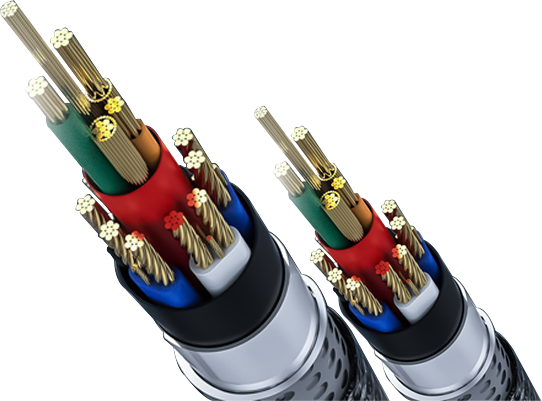
Structure diagram (SEO optimization visualization):
According to the energy industry standard NB/T 11023-2022 "Stranded Carbon Fiber Composite Core Overhead Conductors", this type of conductor belongs to the new generation of special overhead conductors, suitable for various high-voltage and ultra-high-voltage transmission projects, particularly for power grid upgrading and transformation initiatives.

Research Background of ASCC Wires: Iteration and Innovation in Conductor Technology

The development of overhead conductor technology has consistently focused on three core objectives: "increasing capacity, reducing losses, and optimizing mechanical performance." The widely used ACSR conductors in early applications leveraged the high strength of their steel cores, serving the power industry for decades. However, they exhibited inherent limitations such as excessive weight, pronounced high-temperature sagging, and limited conductive capacity, making them inadequate for meeting the high-load demands of modern power grids.
The subsequently introduced ACCC conductor achieved breakthroughs in lightweight design and high capacity through its carbon fiber composite core. Its current-carrying capacity exceeds that of ACSR by over 80%, with significantly optimized sag performance. However, it also revealed drawbacks such as low core modulus, poor bending resistance, and complex installation processescarbon fiber core rods are prone to damage during construction and require specialized hardware and professional teams, thereby increasing project costs and risks.
The core challenges in the market primarily include: arc sag instability under high-temperature conditions, capacity limitations in existing line upgrades, insufficient installation reliability of composite core conductors, and mechanical strength requirements for long-span transmission systems. The development of ASCC conductors aims to integrate the high strength and easy installation advantages of ACSR with the high capacity and low arc sag characteristics of ACCC, while addressing their respective shortcomings. This approach ultimately delivers a next-generation conductor solution that offers "uncompromised performance and barrier-free application."

Structure and Materials of ASCC Wires: Core Advantages of Innovative Design

Composite Core Design: Structural Breakthrough of Carbon Fiber in Steel Batches

The core innovation of ASCC conductors lies in their stranded steel-reinforced carbon fiber composite core, which differs from the solid core rod structure of ACCC. This design employs a "carbon fiber core + stainless steel cladding + stranded manufacturing process." The structural configuration delivers three key advantages: an elastic modulus of 140GPa, significantly exceeding that of ACCC composite cores, ensuring low sag even at high temperatures; enhanced bending resistance with a bending radius reduced to within 20D of the cable's outer diameter, substantially minimizing core damage risks during installation; and superior radial compressive strength to effectively withstand mechanical stresses during stranding, thereby extending service life.

Trapezoidal Aluminum Wire: Optimization and Upgrade of Conductive Efficiency

The conductor employs trapezoidal cross-section soft aluminum wire with a compact structure formed through concentric twisting. Compared to traditional circular aluminum wires, the trapezoidal design achieves higher filling coefficients, enabling a 30% increase in aluminum conductor cross-sectional area while maintaining the same outer diameter. Its conductivity exceeds 63% IACS (International Annealed Copper Standard). This innovative design significantly reduces DC resistance, demonstrating 25%-30% lower resistance values than equivalent ACSR conductors according to GB/T 3048.4 testing standards. These improvements substantially enhance current-carrying capacity and energy transmission efficiency.

Core Features and Advantages: Redefining the Standard for High-Performance Conductors

Ultra-high current-carrying capacity: 2-3 times capacity enhancement

Leveraging the high filling coefficient of trapezoidal aluminum wires and the high-temperature resistance of composite cores (operating at 180-200°C long-term and reaching short-circuit temperatures up to 250°C), ASCC conductors achieve 2-3 times the current-carrying capacity of traditional ACSR conductors. For instance, an ASCC conductor with a 450mm² cross-section can handle 1200A at 150°C, while its ACSR counterpart of the same specification delivers only 400-500A. This performance gap fully meets the high-power output demands of renewable energy plants and accommodates growing grid load requirements.

Ultra-low sag performance: Breakthrough in stability at high temperatures

The low thermal expansion coefficient of the steel ladle carbon fiber composite core endows it with exceptional high-temperature sag control capabilities. Even after surpassing the 80°C inflection point typical of conventional conductors, the sag growth rate of ASCC conductors remains stable. At 180°C, the sag amount is merely one-third that of ACSR conductors and half that of ACCC conductors. This critical feature proves indispensable in long-span power transmission and high-temperature applications, effectively preventing safety hazards caused by excessive conductor sag.

High-strength lightweight: An ideal choice for long-span applications

The ASCC conductor exhibits a tensile strength-to-weight ratio (tensile strength divided by unit length weight) exceeding 1.5 times that of ACSR, achieving lightweight design while maintaining high strength. Taking a conductor with a cross-section of 450/50mm² as an example, its unit length weight is approximately 6.8kg/m, which is 20% lighter than equivalent ACSR conductors. The tensile strength can reach 2100MPa (Strength Class 1) or 2400MPa (Strength Class 2), making it suitable for long-span transmission scenarios such as river crossings, valleys, and highways. This design reduces the number of tower foundations and lowers engineering costs.

Easy installation characteristics: Practicality compatible with traditional techniques

Unlike ACCC conductors with complex installation requirements, ASCC conductors follow a process largely consistent with traditional ACSR systems, eliminating the need for specialized hardware or training. Construction teams can utilize existing stringing equipment and operational protocols, with only minor precautions required to prevent conductor surface scratches. This significantly reduces construction complexity and timelines for power grid upgrade projects. According to IEEE 524 installation standards, ASCC conductors demonstrate over 40% higher construction efficiency compared to ACCC conductors.

ASCC vs ACSR vs ACCC: A Comprehensive Comparison of Three Types of Conductors

performance index ACSR (Aluminum Conductor with Steel Core) ACCC (Carbon Fiber Composite Core Wire) ASCC (Tundish Composite Core Trapezoidal Conductor)
tensile strength High (1200-1500 MPa) Medium (1800-2000 MPa) High (2100-2400 MPa)
High-temperature arc length (150°C) Large (approximately 2.5m/100m span) Low (approximately 1.2 m/100 m span) Extremely low (approximately 0.8m/100m span)
current-carrying capacity enhancement benchmark (100%) 180% 250%-300%
Installation difficulty Easy (traditional technique) Complex (specialized hardware + professional team) Easy (compatible with ACSR process)
life length 20-30 years 30 years or more 30 years + (superior corrosion resistance)
Total Life Cycle Cost Intermediate to high (high wear + frequent maintenance) High (high initial cost) Low (low loss + low maintenance)
(Note: Data compiled from NB/T 11023-2022 standard, manufacturer technical manuals, and third-party testing reports)

Technical Performance Highlights: Key Parameters and Application Assurance

The core technical parameters of ASCC conductors fully comply with the industry standard NB/T 11023-2022 "Twisted Carbon Fiber Composite Core Overhead Conductors". Key specifications include: elastic modulus of 140 GPa, thermal expansion coefficient 1.5×10⁻⁶/, radial compressive strength 30 MPa, and DC resistance 0.06 Ω/km (450mm² cross-section). Current-carrying capacity demonstrates the following temperature-dependent performance: approximately 800A at 70°C, 1000A at 100°C, 1200A at 150°C, and 1300A at 180°C, ensuring reliable power transmission across diverse operational scenarios.
Furthermore, the wire has passed rigorous tests including the GB/T 40819 micro-vibration fatigue test and GB/T 22077 creep test, maintaining stable performance across a wide temperature range from-40°C to 180°C. It is suitable for complex climatic environments such as extreme cold, high temperatures, and high humidity.

Typical application scenarios: Covering the entire industrial chain demand of power grids

Power Grid Upgrading and Renovation Project

ASCC conductors can directly replace existing ACSR conductors without modifying tower foundation structures, enabling efficient upgrades with the "line replacement without tower replacement" approach. For instance, in a 110kV aging line renovation project, the adoption of ASCC conductors increased line capacity from 800A to 1200A, meeting regional load growth demands while reducing engineering costs by 60% compared to new line construction.

Renewable Energy Transmission Project

Wind and solar power plants exhibit significant output fluctuations, requiring high load regulation capabilities in conductors. ASCC conductors, with their high current-carrying capacity and low power loss characteristics, effectively accommodate intermittent renewable energy output, thereby reducing wind and solar curtailment. In a 500MW photovoltaic power station's transmission lines, the adoption of ASCC conductors resulted in a 30% reduction in annual transmission losses and a 2-3 year shortening of the investment payback period.

Long-span and Overpass Engineering

In long-span power transmission scenarios spanning rivers, valleys, and highways, ASCC conductors demonstrate exceptional advantages in high strength and low sag. For instance, a river-crossing transmission project with an 800-meter span achieved sag control within 3 meters using ASCC conductors, meeting safety clearance requirements without tower height increases and saving over 10 million yuan in engineering costs.

Energy-saving project for loss reduction

For high-load transmission lines, the low-resistance characteristics of ASCC conductors can significantly reduce power loss. According to the life cycle cost (LCC) model, a 200-km 220kV line using ASCC conductors can save up to 12 million kWh of electricity annually, equivalent to reducing carbon emissions by 9,600 tons, fully meeting the requirements for green grid construction under the "dual carbon" goals.

Installation and Accessories: Standard Operating Procedures and Supporting Measures

Supporting hardware and accessories

The installation of ASCC conductors requires specialized hardware components, including wedge-type wire clamps, hydraulic tension clamps, and splice tubes, all of which must comply with power hardware standards such as DL/T 757 and DL/T 758. The hardware design must be adapted to the structural characteristics of composite cores to ensure reliable connections and good conductivity, while preventing excessive contact resistance that could lead to localized overheating.

Installation Key Points

The installation procedure mirrors that of ACSR conductors, requiring compliance with IEEE 524 installation guidelines and manufacturer specifications: the conductor installation temperature must not be lower than-15°C, with bending radius no less than 20D (for single-core) or 15D (for three-core) of the outer diameter. During wire laying, avoid friction between conductors and ground or sharp objects to prevent aluminum layer scratches and core damage. Tightening tension should be controlled within 40% of the rated tensile strength to avoid excessive stretching that may compromise performance.

Environmental and Economic Benefits: Sustainable Options for Green Power Grids

Environmental benefits: Supporting carbon reduction targets

The low-loss characteristics of ASCC conductors significantly reduce energy waste during power transmission. Conductors with a cross-sectional area of 450mm² per kilometer can save approximately 60,000 kWh of electricity annually, equivalent to reducing 56 tons of carbon dioxide emissions. Additionally, these conductors boast a service life exceeding 30 years and high material recyclability, meeting the carbon footprint and recycling requirements specified in green procurement policies.

Economic benefits: Optimal life cycle cost

Although ASCC conductors have a higher initial procurement cost than ACSR, they demonstrate greater advantages in total life cycle cost (LCC). According to the LCC calculation model for central state-owned enterprises, initial costs account for only 40%-50% of total expenses, while operational losses and maintenance costs constitute 45%-55%. The low-loss and low-maintenance characteristics of ASCC conductors result in a 20% to 30% reduction in total costs over a 20-year operational period compared to ACSR, with an investment return period of merely 3-5 years.

How to Select Appropriate ASCC Wires: Selection Guidelines and Recommendations

When selecting ASCC conductors, the following factors should be prioritized based on project requirements: Rated current-carrying capacity determine conductor cross-sectional area according to transmission power and line length to ensure maximum load capacity; Span length for long-span projects, prioritize tensile strength and sag performance by selecting high-strength grade (Class 2) products; Mechanical loads evaluate conductor tensile and vibration resistance requirements considering meteorological conditions such as wind speed and ice thickness; Existing tower foundation constraints upgrade projects must verify tower foundation load-bearing capacity to select appropriate conductor weight and cross-sectional dimensions.
Key selection criteria recommendations: Aluminum conductor area ratio (ratio of aluminum cross-sectional area to total cross-sectional area) 85% to ensure electrical conductivity efficiency; tensile strength ratio 300N/g to meet long-span and high-tension requirements; composite core temperature rating should be selected based on operating environment: Grade B (160°C) for conventional scenarios, Grade A (120°C) for high-temperature environments, or customized higher-temperature-grade products.

Conclusion: Future Trends of High-Performance Conductors

The JLRX/GBF (ASCC/TW) conductor achieves comprehensive breakthroughs in capacity, sag performance, strength, and installation convenience through its innovative design featuring "steel-clad carbon fiber composite core + trapezoidal aluminum wire." This solution effectively addresses modern power grid challenges such as high load capacity, long-distance transmission, and low-loss power delivery. With its "line replacement without tower replacement" upgrade model, cost advantages throughout the entire lifecycle, and support for green and low-carbon goals, it emerges as an ideal choice for grid upgrades, renewable energy transmission, and long-span engineering projects.
If you are planning grid upgrades, transmission lines for renewable energy plants, or long-span power transmission projects, ASCC conductors offer a future-ready solution featuring "doubled capacity, halved losses, easy installation, and cost control." We recommend collaborating with manufacturers certified to the NB/T 11023-2022 standard to obtain customized technical solutions and professional support, ensuring more efficient, reliable, and sustainable power transmission projects.
 
Email
CopyRight © 1989 Chunbin Cable Co., Ltd.
Technical support :Coverweb
Fill in you have to consult
We will contact you as soon as we receive the inquiry and ensure the security of your information.
Name*
Email*
Phone
Country
Message*