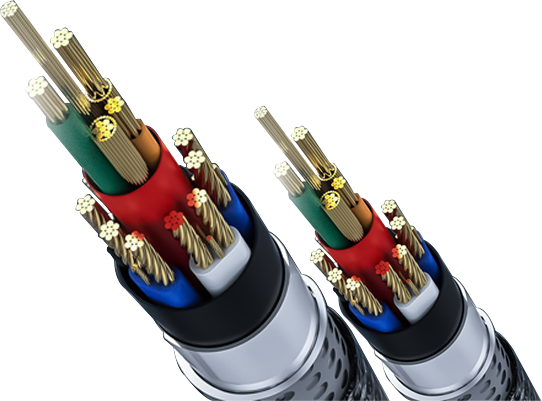
What is Building wire
Introduction: Building Wire—The “Lifeline” of Modern Building Electrical Systems
With the acceleration of urbanization, the number of buildings—including residential homes, commercial complexes, and industrial facilities—continues to grow, and the applications of building wiring are becoming increasingly widespread. From lighting and outlet wiring in ordinary residential homes, to power supply for high-power equipment such as central air conditioning and elevators in commercial buildings, to wiring for control cabinets and machinery in industrial facilities, building wiring runs through the entire lifecycle of a building, making it an indispensable core material in modern construction.
This article will comprehensively analyze the definition, structure, types, standards, and selection methods of building wires, helping industry professionals, engineers, and general users gain a thorough understanding of building wires, avoid common pitfalls in selection and use, and ensure electrical safety.
.jpg)
What Are Building Wires? Core Definitions and Functions
Core Functions of Building Wires
The core function of building wires is to ensure the safe and efficient distribution of electricity within buildings, which is manifested in three aspects: First, power transmission—stably delivering electricity from the distribution system to power consumption terminals such as lighting, outlets, and mechanical equipment to ensure normal operation of the equipment; Second, safety protection—preventing current leakage and short circuits through insulation layers and outer sheaths to avoid electric shock to personnel and damage to equipment; Third, installation adaptability: based on building layout and power requirements, it enables flexible wiring to accommodate various installation scenarios (such as conduit installation, exposed installation, and concealed installation).
Differences Between Building Wires, Power Cables, and Control Cables
Many people tend to confuse building wires with power cables and control cables. Although all three are used for power transmission, they differ fundamentally in application scenarios, structural design, and functional positioning. The specific distinctions are as follows:
- Building Wires: Primarily used for low-voltage power distribution within buildings (300V–600V). They have a relatively simple structure (mostly single-core or multi-core insulated conductors, some with an outer sheath) and prioritize ease of installation and indoor safety protection. They are suitable for end-use scenarios such as lighting and outlets, e.g., THHN wire and NM cable.
- Power cables: Primarily used for long-distance, high-voltage power transmission outdoors (1 kV and above). They have a complex structure (typically multi-core with a metal shield and outer sheath) and prioritize weather resistance, mechanical strength, and insulation performance. They are suitable for applications such as substations and outdoor power lines, e.g., YJV power cables.
- Control cables: Primarily used for signal transmission and control in industrial equipment and control systems, with lower voltage ratings (typically 450/750V) and a higher number of conductors. They prioritize signal transmission stability and are suitable for applications such as industrial control cabinets and automated equipment, e.g., KVV control cables.
Core Components of Building Wires
Conductor: The Core Medium for Power Transmission
The conductor is the heart of building wiring, responsible for transmitting electrical energy. Its material and structure directly impact the wire’s electrical conductivity, mechanical strength, and service life. Building wiring conductors primarily come in two material options and are categorized into solid and stranded structures.
Material Selection: Copper Conductors vs. Aluminum Conductors
- Copper Conductors: The mainstream choice for building wiring, copper conductors offer excellent electrical conductivity, thermal conductivity, and mechanical strength. They feature low resistance, minimal energy loss, and resistance to oxidation, ensuring a long service life. Suitable for a wide range of building applications, they are particularly well-suited for commercial, industrial, and residential buildings with high electrical performance requirements. Although copper conductors are more expensive than aluminum conductors, they offer better value over their entire lifecycle, making them the preferred material for building wiring.
- Aluminum Conductors: Lower in cost and lighter in weight, they are suitable for long-distance installations. However, their electrical conductivity and mechanical strength are inferior to those of copper conductors. They are prone to oxidation, and connection points are susceptible to issues such as poor contact and overheating. They are primarily used in cost-sensitive, simple buildings or temporary wiring scenarios with low electrical loads. In China, selected aluminum alloy conductors must meet the requirements of relevant standards such as GB/T 30552, “Aluminum Alloy Wires for Cable Conductors.”
Structural Types: Solid Conductors vs. Stranded Conductors
- Solid Conductors: Made from a single metal wire, they are highly rigid and easy to install, making them suitable for short-distance, fixed wiring applications, such as concealed installation in residential walls and outlet wiring. They are commonly found in small-gauge wires (1.5 mm², 2.5 mm²).
- Stranded Conductor: Made by twisting multiple fine metal wires together, it offers high flexibility and excellent tensile strength and fracture resistance. It is suitable for long-distance installation, complex routing, and applications requiring bending, such as wiring in commercial building ceilings and internal wiring of industrial equipment. It is commonly found in large-cross-section wires (4 mm² and above).
Insulation Layer: The Core Barrier for Safety Protection
The insulation layer surrounds the conductor and serves as the core safeguard for the safety of building wires. Its primary function is to isolate the conductor from the external environment, preventing current leakage and short circuits, thereby avoiding electric shock to personnel and equipment damage. It also protects the conductor from environmental corrosion, extending the service life of the wire.
There are two main materials commonly used for the insulation layer of building wires, each with its own advantages and suited for different scenarios:
- PVC (Polyvinyl Chloride): The most commonly used insulation material, offering good insulation properties, wear resistance, low cost, and ease of processing. It is suitable for most indoor, dry environments, such as lighting and outlet wiring in residential and office settings. However, PVC insulation has average heat resistance (maximum continuous operating temperature of 70°C) and emits toxic gases when burned, making it unsuitable for high-temperature, humid environments, or scenarios with strict environmental requirements.
- XLPE (Cross-linked Polyethylene): A high-end insulation material with excellent heat resistance (long-term operating temperature of 90°C), high insulation resistance, low dielectric loss, and resistance to aging and corrosion. It does not produce toxic gases when burned and is environmentally friendly. It is suitable for high-temperature, humid environments, high-power equipment, and scenarios with strict environmental requirements, such as wiring in commercial buildings, industrial plants, and central air conditioning systems. Long-life building wires often use irradiated cross-linked XLPE insulation, which complies with standards such as JG/T441, “Halogen-free, Low-smoke, Flame-retardant Wires with Double-layer Co-extruded Insulation and Irradiated Cross-linking for Rated Voltages of 450/750V and Below.”
Outer Sheath (if applicable): Enhanced Protection
Not all building wires feature an outer sheath; only models requiring additional protection (such as NM and UF cables) include an outer sheath over the insulation layer. Its primary function is to enhance the wire’s mechanical protection, moisture resistance, abrasion resistance, and chemical corrosion resistance, making it suitable for more complex installation environments.
Common materials for building wire outer jackets include PE (polyethylene), PVC, or LSZH (low-smoke, halogen-free, flame-retardant). Specifically: PE jackets offer excellent moisture resistance and abrasion resistance, making them suitable for damp and outdoor environments; PVC jackets are cost-effective and abrasion-resistant, making them suitable for indoor environments; LSZH sheaths are environmentally friendly and flame-retardant, emitting no toxic gases when burned, making them suitable for high-rise buildings, hospitals, schools, and other settings with stringent environmental and fire safety requirements.
Common Types and Characteristics of Building Wires
THHN / THWN Wire
THHN/THWN wire is one of the most commonly used building wires in the North American market and is also widely used globally. It is a thermoplastic-insulated nylon-sheathed wire characterized by a PVC insulation layer and an outer nylon (PA) sheath, offering both heat resistance and abrasion resistance.
- THHN: Suitable for dry environments, with a continuous operating temperature of 90°C and a short-term overload temperature of 130°C. It offers excellent insulation performance and is suitable for conduit installation. It is widely used for conduit wiring in commercial buildings and industrial facilities and is suitable for powering high-power equipment.
- THWN Type: Building on the THHN design, this type adds moisture resistance, making it suitable for damp environments. It has a continuous operating temperature of 75°C and is ideal for damp areas such as bathrooms and basements. Currently, most mainstream products feature dual-rating certification (THHN/THWN-2), catering to both dry, high-temperature and damp environments, offering greater versatility and significantly simplifying the selection process.
NM Cable (Non-Metallic Sheathed Cable)
NM cable, also known as Romex cable, is the preferred choice for residential wiring. It is a non-metallic sheathed cable consisting of multiple insulated conductors (typically 2–4 cores) enclosed in a PVC outer sheath, eliminating the need for additional conduit and allowing for easy installation.
The core advantages of NM cable are its simple installation and lower cost. Its integrated insulation and sheath design eliminates the need for separate conduit, making it suitable for concealed wall and ceiling wiring in residential settings, as well as for powering lighting, outlets, and household appliances. Common specifications include 2-conductor plus ground and 3-conductor plus ground, which meet residential low-voltage power distribution needs. However, it is only suitable for dry indoor environments and cannot be used in damp or outdoor settings.
XHHW Cable
XHHW cable is a high-end building cable model featuring XLPE (cross-linked polyethylene) insulation. It offers excellent heat resistance, moisture resistance, and aging resistance, with a continuous operating temperature of 90°C and a short-term overload temperature of 130°C. It also features high insulation resistance, low dielectric loss, and is environmentally friendly.
Compared to THHN wire, XHHW wire offers superior heat resistance and moisture resistance. It lacks a nylon jacket and features a thicker insulation layer, making it suitable for high-temperature, humid environments, high-power equipment, and scenarios with stringent environmental requirements—such as central air conditioning systems in commercial buildings, control cabinet wiring in industrial facilities, and high-security locations like high-rise buildings and hospitals.
H07V-U / H07V-R (IEC Standard Cables)
H07V-U and H07V-R are building cables compliant with IEC (International Electrotechnical Commission) standards. They are primarily used in the European market and conform to European building electrical codes. Their key features include PVC insulation and a voltage rating of 450/750V, making them suitable for a variety of indoor and outdoor applications.
- H07V-U: Single-core rigid conductor, suitable for fixed wiring, such as concealed wall installation and control cabinet wiring;
- H07V-R: Single-core flexible conductor, highly flexible, suitable for complex routing and wiring scenarios requiring bending, such as internal equipment wiring.
Both offer excellent insulation and abrasion resistance, comply with European environmental and safety standards, and are the mainstream building wire models for European residential and commercial buildings. Building wire standards vary by region; the European market emphasizes IEC standards, while the North American market primarily follows NEC and UL standards. Selection must be made in accordance with regional regulations.
Classification Methods for Building Wires
To facilitate selection and application, building wires can be classified based on various criteria. There are four common classification methods covering core dimensions such as conductor type, insulation, voltage, and installation, helping users quickly match their application requirements.
Classification by Conductor Type: Solid Conductor vs. Stranded Conductor
As mentioned earlier, based on conductor structure, building wires can be divided into solid conductors and stranded conductors:
- Solid conductors are rigid and easy to install, making them suitable for short-distance fixed wiring;
- Stranded conductors are highly flexible and resistant to tension, making them suitable for long-distance wiring and complex routing.
The core difference between the two lies in their mechanical properties and installation scenarios; selection should be based on the wiring distance and path.
Classification by Insulation Type: PVC, XLPE, LSZH, etc.
Based on insulation material, cables can be classified into PVC-insulated, XLPE-insulated, LSZH-insulated, and others:
- PVC insulation is cost-effective and suitable for dry indoor environments;
- XLPE insulation is heat-resistant, moisture-proof, and environmentally friendly, making it suitable for high-temperature, humid, and high-power applications;
- LSZH insulation is flame-retardant and emits no toxic gases, making it suitable for high-rise buildings, hospitals, schools, and other environments with strict fire safety and environmental requirements.
Additionally, there are special materials such as rubber insulation, which are suitable for specific applications requiring high-temperature resistance and abrasion resistance
Classification by Voltage Rating: 300V–600V (Mainstream)
Building wires are primarily used for low-voltage power distribution, with voltage ratings concentrated in the 300V–600V range. Common specifications include 300/500V and 450/750V, which are suitable for low-voltage power needs such as interior lighting, outlets, and mechanical equipment. Specifically, 300/500V is primarily used for small-scale lighting and outlet wiring, while 450/750V is used for high-power equipment, industrial control cabinets, and similar applications. Chinese standards require that plastic-insulated wires installed indoors have a voltage rating of no less than 0.45kV/0.75kV to ensure insulation performance meets electrical safety requirements.