What Is MV ABC Cable? Structure, Specification & Applications Guide
Introduction
As the core infrastructure for power transmission, overhead power distribution lines play a critical role in connecting substations and delivering medium-voltage electricity to end users, making them an essential component of urban and rural power grids. Traditional overhead distribution systems have long relied on bare conductors (such as AAC and ACSR) for installation. Although these systems are relatively low-cost, they present numerous challenges: exposed bare conductors are susceptible to contact with trees, climbing animals, and damage from wind, rain, and snow, which can lead to short circuits, circuit breaker trips, and other faults, resulting in low power supply reliability; In complex environments such as urban areas, forested regions, and mountainous areas, safety hazards are prominent, maintenance is difficult, and the line corridors occupy significant space, resulting in poor compatibility with urban landscapes and the ecological environment.
With the advancement of grid modernization and intelligent upgrades, as well as the continuous growth of electricity demand in both urban and rural areas, insulated overhead cables are gradually replacing traditional bare conductors, becoming the mainstream trend in distribution network retrofits and new construction. Among these, **Medium-Voltage Overhead Bundled Cable (MV ABC Cable)**, leveraging the design advantages of insulation and bundling, has completely resolved the application challenges of traditional bare conductors and has gained widespread adoption in medium-voltage distribution systems worldwide. MV ABC cable is an insulated bundled cable specifically designed for 6kV–35kV medium-voltage overhead applications. It compactly bundles multiple insulated conductors, combining the convenience of overhead installation with the safety of insulation protection. It perfectly meets the core requirements of modern power grids for high reliability, high safety, and low O&M costs, making it the product of choice for urban and rural medium-voltage distribution, rural grid upgrades, and power supply in complex environments.
What Is an MV ABC Cable? Core Definition and Key Advantages
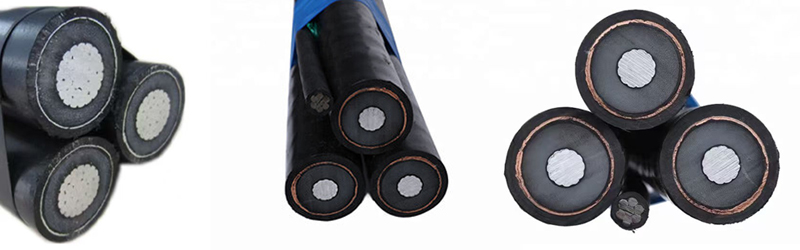
MV ABC cable, short for **Medium Voltage Aerial Bundled Cable**, is an overhead insulated distribution cable suitable for the 6kV–35kV voltage range. It features a multi-core insulated conductor bundle structure, distinguishing it from traditional dispersed bare conductors and enabling the insulation and compact installation of medium-voltage overhead lines. As a core category of overhead insulated cables, MV ABC cables precisely fill the technical gap in medium-voltage overhead distribution, balancing the cost-effectiveness of overhead installation with the safety of insulation protection.
Core Voltage Range
The standard voltage ratings for MV ABC cables cover **6kV–35kV**. Mainstream specifications include 6/10kV, 8.7/15kV, 12/20kV, and 18/30kV, fully matching the voltage requirements of medium-voltage distribution systems. These cables can be directly connected to substation feeders and distribution branches, meeting the transmission requirements of distribution networks of various scales.
Key Differences Between MV ABC and LV ABC
Low-voltage overhead bundled cables (LV ABC) are primarily used in 0.6/1kV low-voltage distribution scenarios. They are designed solely to meet end-users’ low-voltage power supply needs, featuring a simple structure without a shielding layer; In contrast, MV ABC cables are optimized for medium-voltage electrical environments. They feature complete conductor shielding, insulation shielding, and a metallic shielding layer, offering superior electrical insulation performance and the ability to withstand higher voltages and electrical field stresses. Their application scope covers medium-voltage trunk lines and feeder lines, serving as a critical link between high-voltage and low-voltage grids. The two types differ fundamentally in voltage rating, structural design, electrical performance, and application scenarios.
Core Advantages Over Traditional Overhead Conductors
Compared to traditional bare conductors such as AAC and ACSR, MV ABC cables offer revolutionary advantages: they completely eliminate short-circuit faults caused by trees, animals, and foreign objects, significantly enhancing power supply reliability; The fully insulated design reduces the risk of electric shock, significantly improving safety for both personnel and equipment; it is weather-resistant, corrosion-resistant, and anti-aging, making it suitable for extreme weather conditions; bundled installation reduces the space occupied by transmission corridors, making it suitable for complex environments such as urban areas and forested regions; long-term operation and maintenance costs are significantly reduced, and the cost-effectiveness over the entire lifecycle far exceeds that of bare conductors.
Structural Composition and Functional Analysis of MV ABC Cables
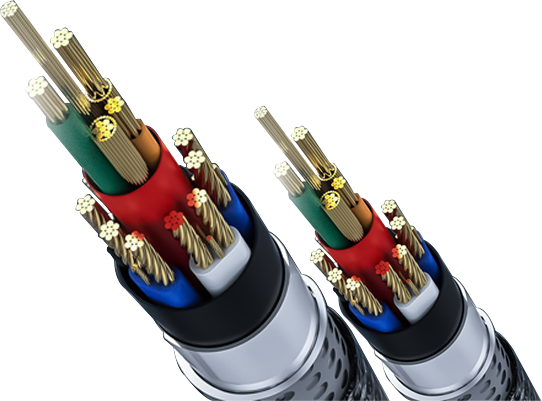
MV ABC cables feature a multi-layer composite structure, with each layer tailored to the electrical, mechanical, and environmental demands of medium-voltage overhead applications to ensure long-term stable operation. The core structure, from the inside out, consists of the conductor, conductor shield, insulation layer, insulation shield, metal shield, and outer sheath; some models include additional load-bearing stranding.
Conductor: The Core of Electrical Conductivity, Efficient and Energy-Saving
The conductor of MV ABC cables is primarily made of **electrical-grade aluminum or aluminum alloy** and features a compact stranded structure. Compared to conventional stranded conductors, this compact structure reduces the conductor’s outer diameter and minimizes voids, thereby improving electrical conductivity while enhancing mechanical strength to prevent deformation and strand breakage during installation. Aluminum conductors combine lightweight construction with excellent conductivity at a lower cost than copper conductors, making them ideal for long-distance overhead installations and aligning with the economic principles of power distribution lines. Some high-end models offer the option of copper conductors to meet higher conductivity and heat resistance requirements.
Conductor Shielding: The First Layer of Protection for Electric Field Uniformity
The conductor shielding is a **semi-conductive layer** tightly extruded onto the conductor surface and is an indispensable structural layer in medium-voltage cables. Due to the high electric field strength in medium-voltage systems, burrs and gaps on the conductor surface can easily cause electric field concentration, leading to insulation aging and breakdown. The semiconductive conductor shielding layer smooths out surface irregularities, ensuring uniform electric field distribution, eliminating the risk of partial discharge, protecting the insulation from electric field stress damage, and extending the cable’s service life.
Insulation Layer: The Core Barrier for Electrical Safety
The insulation layer of MV ABC cables uses **cross-linked polyethylene (XLPE)**, the preferred insulation material for medium-voltage cables, which offers excellent electrical insulation and heat resistance. XLPE insulation can withstand the continuous voltage of medium-voltage systems. It features high insulation resistance and low dielectric loss, effectively preventing leakage and breakdown. It has a long-term allowable operating temperature of 90°C and a short-term overload temperature of up to 130°C, making it suitable for conditions such as high summer temperatures and line overloads. Additionally, it is resistant to low temperatures and aging, meeting the requirements for long-term outdoor use.
Insulation Shield: A Second Layer of Protection for Electric Field Uniformity
The insulation shield is also a semiconductive layer, extruded over the outer surface of the XLPE insulation. Working in conjunction with the conductor shield, it further equalizes the electric field on both sides of the insulation layer, preventing electric field distortion on the insulation surface and eliminating partial discharge and corona phenomena, thereby ensuring stable insulation performance in medium-voltage electric fields. This structure is the key distinction between medium-voltage and low-voltage cables, ensuring the cable’s long-term safe operation under high voltage.
Metal Shielding: Fault Protection and Grounding Path
The metal shield consists of a **copper wire or copper tape** winding/extrusion structure and serves two primary functions: First, it provides a stable discharge path for fault currents. In the event of insulation breakdown or leakage faults, the fault current is rapidly conducted to ground through the metal shield, preventing the fault from escalating. Second, it further shields the electric field, reduces electromagnetic interference, ensures stable line operation, and enhances the cable’s mechanical protection. The metal shield must be reliably grounded to fully fulfill its safety protection function.
Outer Sheath: Outdoor Weather-Resistant Protective Layer
The outer sheath is made of **PE, HDPE, or XLPE** and serves as the cable’s outermost protective layer, offering excellent resistance to UV radiation, weathering, abrasion, and chemical corrosion. In outdoor overhead applications, cables are subjected to prolonged exposure to direct sunlight, wind and rain erosion, and acid-alkali contamination. The outer sheath prevents moisture, UV rays, and harmful substances from penetrating the internal structure, protecting the insulation and shielding layers from damage and ensuring long-term, stable cable operation in harsh outdoor environments. Among these, the HDPE sheath offers superior weather resistance and mechanical strength, making it the mainstream choice for MV ABC cables.
Load-bearing Strand: The Mechanical Support Core
Some long-span, large-cross-section MV ABC cables incorporate load-bearing strands made of galvanized steel wire or high-strength aluminum alloy. These serve as mechanical support structures for overhead installations, bearing the cable’s own weight as well as mechanical loads from wind, ice, and snow. This prevents cable sagging and breakage, meets the requirements of long-span overhead installations, and enhances the mechanical stability of the line.
Voltage Ratings, Specifications, and Performance Parameters
Common Voltage Ratings
MV ABC cables strictly adhere to international standards, with voltage ratings denoted as Uo/U (phase voltage/line voltage). Mainstream specifications include:
- 6/10 kV: Suitable for 10 kV medium-voltage distribution feeder lines, residential areas in urban and rural settings, and small-scale industrial and commercial power supply
- 8.7/15 kV: Suitable for 15 kV distribution systems, medium-sized industrial parks, and urban trunk lines
- 12/20 kV: Suitable for 20 kV distribution networks, large industrial complexes, and regional power supply trunk lines
- 18/30kV: Suitable for 30kV medium-voltage long-distance transmission, remote areas, and major power grid hubs
Temperature and Performance Parameters
The insulation material is 90°C XLPE, with a long-term allowable operating temperature of 90°C and a maximum short-circuit temperature of 250°C (duration ≤ 5 seconds). Conductor cross-sections range from 16 mm² to 300 mm², allowing for flexible selection based on load current and line length. The minimum bending radius is no less than 15 times the cable’s outer diameter, meeting the bending requirements for overhead pole installation, and offering excellent mechanical flexibility.
Conclusion
MV ABC cables (medium-voltage overhead bundled cables) are a core upgrade product for modern medium-voltage power distribution networks. As the preferred solution for 6kV–35kV overhead lines, they combine the cost-effectiveness of overhead installation with the safety of insulated lines. With high reliability, low O&M costs, and strong environmental adaptability, they thoroughly resolve the application challenges associated with traditional bare conductors.