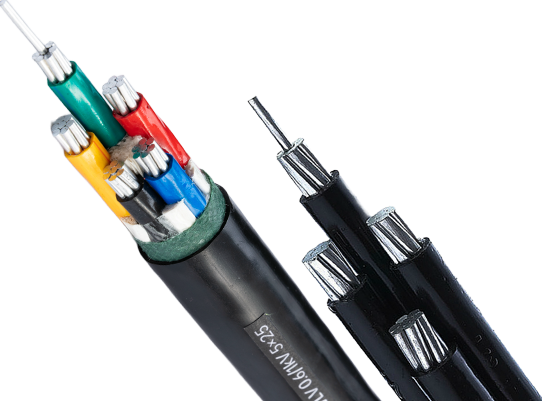
What is NA2XSY Cable?
In medium-voltage power distribution systems, industrial infrastructure projects, and renewable energy initiatives, the NA2XSY cable serves as a globally recognized core power transmission conductor, extensively deployed across power infrastructure projects in Europe, the Middle East, Africa, and other regions. As an aluminum-core cross-linked polyethylene insulated medium-voltage cable compliant with VDE and IEC international standards, it combines cost-effectiveness with electrical stability, making it suitable for various applications including underground installation, substations, and factory power supply systems—a highly cost-efficient solution for medium-voltage power transmission. This article provides a comprehensive analysis of the NA2XSY cable's naming rationale, structural design, technical specifications, and application advantages, while comparing its differences with similar cables to offer professional guidance for selection and installation.
Meaning of NA2XSY Cable Model Naming
The NA2XSY cable adheres to the German VDE standardized naming system, where each alphanumeric character corresponds to specific structural and material attributes. This clear breakdown of model meanings enables rapid understanding of the cable's core specifications, as detailed below:
N: Denotes a standardized power cable compliant with the German VDE standard, conforming to internationally recognized electrical installation specifications; A: Indicates a conductor made of aluminum alloy, distinguishing it from copper-core cables and highlighting its advantages of lightweight design and cost-effectiveness; 2X: Refers to the cross-linked polyethylene (XLPE) insulation layer, which serves as the core high-performance insulation for medium-voltage cables; S: Representing the copper wire shielding layer, it provides electromagnetic shielding and grounding protection; Y: Refers to the PVC outer sheath, offering fundamental mechanical and environmental protection for the cable.
This naming system serves as the universal specification for European power cables and is the key reason why NA2XSY cables can be widely adopted in international engineering projects. The aluminum core significantly reduces cable weight and procurement costs, while XLPE insulation ensures stable performance at high temperatures. The copper wire shielding enhances power transmission safety, and the PVC sheath accommodates most conventional installation environments. Together, these components form a standardized and highly adaptable medium-voltage cable system.
Layered Structure Construction of NA2XSY Cable
The NA2XSY cable features a multi-layer composite structure, with each layer providing distinct protective functions from the interior to the exterior. Strictly compliant with IEC and VDE manufacturing standards, it offers robust structural integrity and superior electrical performance. The core layered configuration is as follows:
Aluminum conductor layer
The cable's core conductor is a Category 2 stranded compression aluminum conductor, fully compliant with IEC and VDE standard specifications. Compared to traditional copper conductors, aluminum conductors offer the primary advantages of lightweight construction and lower raw material costs, significantly reducing material and transportation expenses for long-distance power distribution projects. Additionally, their stable electrical conductivity fully meets the requirements for medium-voltage power transmission over extended distances, making them the preferred choice for large-scale infrastructure and grid modernization projects.
Conductor shielding layer
The outer layer of the conductor is coated with a semiconductive shielding layer, which effectively eliminates electric field stress concentration on the conductor surface, balances the local electric field distribution, and prevents faults such as partial discharge and leakage current during high-voltage operation. This enhances cable operational stability at its source and extends the service life of the insulation layer.
XLPE cross-linked polyethylene insulation layer
As the core insulation structure of cables, XLPE insulation exhibits exceptional heat resistance and insulation performance, with a conventional operating temperature of up to 90°C and a short-circuit instantaneous temperature tolerance of up to 250°C. It also possesses outstanding dielectric properties, featuring low insulation loss and high voltage withstand capability, enabling long-term stable performance under medium-voltage transmission conditions without susceptibility to aging or breakdown. This makes XLPE insulation a critical layer for ensuring safe power transmission.
Insulating shielding layer
A semi-conductive insulating shielding layer is applied on the outer side of the insulation layer, further optimizing the uniform distribution of the overall electric field and preventing electric field distortion under high-voltage conditions. This ensures an balanced electric field across the cable, significantly reducing the probability of faults during high-voltage operation and making it suitable for long-term continuous power supply applications.
Copper wire shielding layer
The copper wire shielding layer serves as the safety core structure of medium-voltage cables, fulfilling three primary functions: First, it establishes a fault current path to rapidly conduct fault currents during grid short circuits or leakage faults, triggering protective device activation; second, it provides electromagnetic shielding to minimize electromagnetic radiation interference during power transmission, ensuring stable operation of surrounding electrical equipment; third, it ensures reliable grounding, enhancing the overall safety of the power system.
PVC outer sheath
The outermost PVC sheath provides comprehensive physical protection for the cable, featuring excellent mechanical compression and wear resistance, as well as resistance to moisture and common chemical corrosion. It withstands minor erosion from soil and atmospheric conditions, making it suitable for conventional applications such as direct underground burial and cable trench installation, ensuring the cable's integrity during long-term outdoor and underground operation.
Core Technical Parameters of NA2XSY Cable
The NA2XSY cable features highly standardized parameters, compatible with mainstream medium-voltage power distribution systems, and strictly adheres to three major international standards: VDE 0276, IEC 60502-2, and HD 620. Its core technical specifications are as follows:
Rated voltage level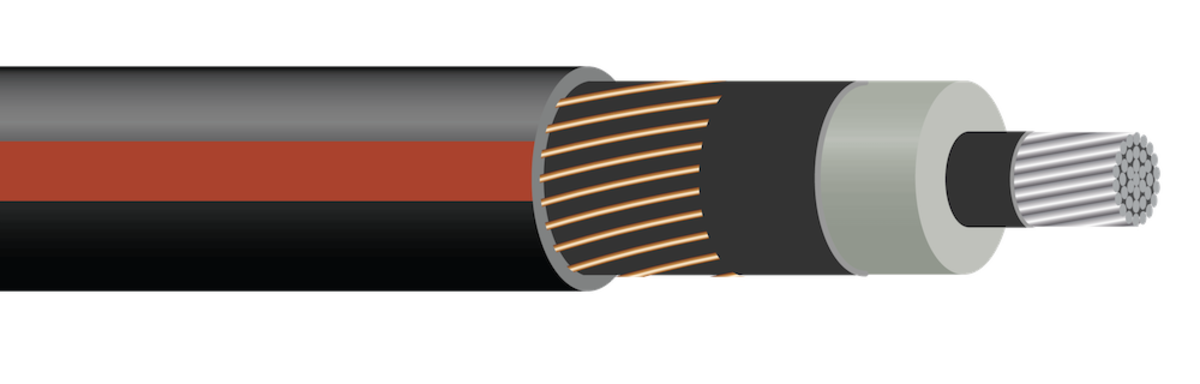
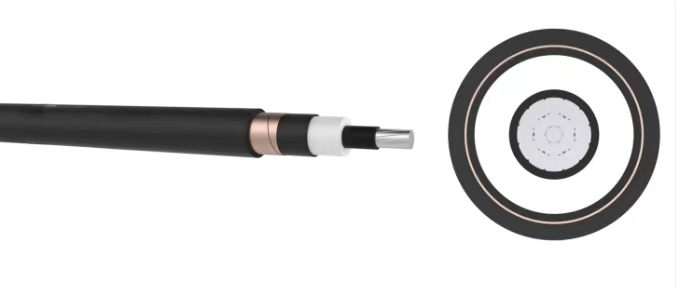 Designed for mainstream medium-voltage power transmission applications, it supports common voltage specifications including 6/10 kV, 12/20 kV, 18/30 kV, and 19/33 kV, comprehensively meeting the medium-voltage power supply requirements of urban distribution networks, industrial facilities, and renewable energy power stations.
Conductor specifications and dimensions
The conductor cross-sectional area covers a full range of specifications from 35 mm² to 630 mm², including 35 mm², 50 mm², 70 mm², 95 mm², 120 mm², 150 mm², 185 mm², 240 mm², 300 mm², 400 mm², and 630 mm², allowing flexible selection based on different transmission loads and distances.
Temperature operating parameters
The maximum continuous operating temperature under normal conditions is 90°C, enabling long-term full-load operation; under short-circuit conditions, it can withstand instantaneous temperatures up to 250°C without experiencing insulation damage or conductor melting within a short period, demonstrating excellent overload resistance.
Suitable installation scenarios
It supports various installation methods including underground burial, cable pipeline laying, substation wiring, and industrial power grid deployment, making it highly adaptable to conventional indoor and outdoor electrical construction scenarios with exceptional versatility.
Main Application Scenarios of NA2XSY Cable
With its reliable electrical performance, cost-effective advantages, and flexible installation adaptability, the NA2XSY cable is widely used in various medium-voltage power infrastructure projects, primarily serving five key application areas.
Medium-voltage power distribution network
As the core conductor in urban and rural main distribution networks, it is designed for medium-voltage power transmission and grid expansion/reconstruction, enabling long-distance, large-scale civilian power delivery while offering stability and cost-effectiveness tailored to municipal infrastructure requirements.
Power supply for industrial sites
Designed for internal power supply systems in various manufacturing plants and heavy industrial facilities, this solution withstands continuous industrial loads, minor mechanical compression, and complex environmental disturbances, ensuring uninterrupted and stable electricity supply for industrial operations.
New Energy Engineering Project
Widely used in new energy projects such as photovoltaic power stations and wind farms, it facilitates medium-voltage power transmission from generation sites to step-up substations. Its lightweight design simplifies field installation, while its durable structure withstands complex outdoor operating conditions.
Power Infrastructure
The cabling projects for core power facilities such as adaptation substations and urban grid hubs feature standardized parameters compatible with various electrical equipment, ensuring the safety and stability of power transmission and distribution at these hubs.
Underground Power Cabling Project
The PVC sheath's moisture-resistant and corrosion-resistant properties, combined with its stable insulation structure, make it fully suitable for direct underground burial installation, establishing it as the preferred choice for urban underground power network upgrades.
Core Advantages of NA2XSY Cable
The NA2XSY cable has become an internationally recognized medium-voltage cable primarily due to its balanced combination of three core advantages: cost-effectiveness, performance, and durability, making it suitable for the vast majority of medium-voltage power distribution applications.
Outstanding cost-effectiveness with controllable expenses
By replacing traditional copper conductors with aluminum ones, the raw material procurement costs are significantly reduced. The lightweight structure also lowers labor expenses for transportation, hoisting, and construction, making this solution particularly suitable for large-scale, long-distance power infrastructure projects with notable economic benefits.
Stable and reliable electrical performance
The multi-layer shielding and XLPE insulation structure work synergistically, ensuring uniform electric field distribution and low insulation losses. During high-voltage power transmission, there are no local discharge or leakage issues, enabling long-term stable medium-voltage power transmission with an extremely low failure rate.
High heat resistance and excellent overload capacity
The XLPE insulation material exhibits outstanding high-temperature resistance, showing no aging or deformation even after prolonged operation at 90°C. It demonstrates strong instantaneous short-circuit temperature tolerance, enabling effective performance under grid load fluctuations and brief overload conditions while adapting to complex power supply environments.
Easy to install and highly adaptable
With its lightweight design, the cable offers easy handling and installation, excellent bending performance, and suitability for confined construction spaces and complex wiring scenarios. Its installation efficiency far surpasses that of heavy-duty copper-core cables with equivalent specifications.
Long service life and excellent protective performance
The insulation layer exhibits excellent resistance to aging and breakdown, while the PVC outer sheath withstands moisture, mild corrosion, and mechanical wear. With its robust overall structure, the system ensures long-term stable performance under standard installation and operational conditions, significantly reducing subsequent maintenance and replacement costs.
Comparison of Similar Cables: Accurate Differentiation of Selection Differences
Comparison between NA2XSY and N2XSY cables
The two cables share identical structures, insulation, and sheathing; the primary difference lies in the conductor material. The NA2XSY employs an aluminum conductor, offering lower cost and lighter weight, making it suitable for infrastructure projects with cost sensitivity and conventional power transmission requirements. In contrast, the N2XSY uses a copper conductor, delivering superior electrical conductivity and overload performance, though at a higher cost and greater weight—making it ideal for core power applications demanding high precision, high load capacity, and exceptional stability.
Comparison of NA2XSY and NA2XS2Y Cables
The core difference lies in the outer sheath material. The NA2XSY employs a PVC sheath, offering balanced protective performance suitable for conventional indoor and underground applications; whereas the NA2XS2Y features a PE sheath with enhanced UV resistance, moisture resistance, and aging resistance, making it suitable for harsh outdoor environments such as direct sunlight exposure and high humidity conditions, thereby providing a higher protection rating.
Key Points for NA2XSY Cable Selection and Installation
Core Principles for Model Selection
During selection, prioritize matching the project's voltage level to comply with grid transmission standards; choose the appropriate conductor cross-sectional area based on the transmission load to ensure adequate current-carrying capacity; select the sheath type according to the installation environment—use standard models for conventional scenarios and upgrade protective configurations for harsh outdoor conditions; simultaneously, strictly adhere to short-circuit withstand requirements and local power industry standards.
Installation Key Specifications
During construction, the minimum bending radius must be strictly controlled to prevent excessive bending from damaging the insulation layer. Storage should avoid humid or direct sunlight exposure to prevent sheath aging. The copper wire shielding layer must be properly grounded to ensure effective shielding and protective functions. The laying traction tension should be regulated to avoid damage to conductors and structures. For direct underground burial, the standard installation depth must be met, with adequate soil protection measures implemented.
Frequently Asked Questions
Does the NA2XSY cable support direct underground installation?
Support. This cable is specifically designed for underground installation scenarios, with its PVC outer sheath offering excellent moisture resistance, soil corrosion protection, and mechanical protection capabilities, making it the mainstream direct-burial cable for municipal and industrial underground power distribution systems.
What is the key difference between XLPE insulation and PVC insulation?
XLPE insulation exhibits significantly superior thermal resistance, insulation performance, and aging resistance compared to PVC. It can withstand prolonged exposure to temperatures up to 90°C, demonstrates lower dielectric loss, and offers enhanced high-voltage stability, making it the dedicated insulating material for medium-voltage cables; in contrast, PVC insulation is only suitable for low-voltage applications at ambient temperatures and fails to meet the requirements of medium-voltage power transmission systems.
Why is the aluminum-core NA2XSY cable the preferred choice?
While meeting conventional medium-voltage power transmission requirements, aluminum-core cables significantly reduce project costs, are lighter in weight, and easier to install. For large-scale infrastructure and long-distance power distribution projects, their overall cost-effectiveness far surpasses that of copper-core cables.
Can the NA2XSY cable be used outdoors?
This cable is suitable for conventional outdoor applications, but its standard PVC sheath offers limited UV resistance and tends to degrade under prolonged exposure to direct sunlight. For extended use in harsh outdoor conditions, the NA2XS2Y cable with PE sheath is recommended.
Which industry standards does this cable comply with?
The core complies with three major international standards: VDE 0276, IEC 60502-2, and HD 620, ensuring strong regulatory adherence and meeting construction requirements for overseas projects in Europe, the Middle East, Africa, as well as domestic infrastructure projects involving international partners.
Conclusion
The NA2XSY cable is a standardized, highly adaptable, and cost-effective aluminum-core XLPE-insulated medium-voltage power cable. Featuring a multi-layer stable structure and outstanding electrical and thermal performance, it is perfectly suited for various medium-voltage transmission applications such as municipal power distribution, industrial facilities, renewable energy systems, and substations. Compared to copper-core N2XSY cables, it offers significant economic advantages; relative to other conventional medium-voltage cables, it boasts higher standardization, broader applicability, and a longer service life. In global power infrastructure projects, the NA2XSY cable has become an indispensable core conductor in medium-voltage distribution systems due to its balanced overall performance, making it one of the optimal choices for cost-sensitive power engineering applications.