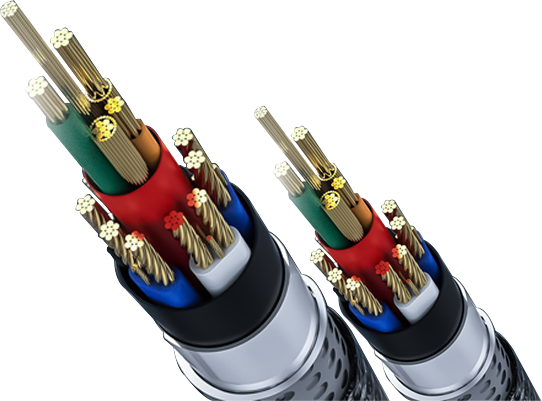
The Purpose of Screening in Medium Voltage Cables.
Introduction: The Critical Importance of Shielding Structures in Medium-Voltage Cable Systems
In modern power transmission and distribution systems, medium-voltage (MV, 3.6 kV–35 kV) cables serve as the core infrastructure for industrial power distribution, urban power grids, renewable energy grid integration, and substation interconnections. Compared to low-voltage (LV) cables, medium-voltage cables operate long-term in environments characterized by high electric fields and high stress. The stability of the insulation system directly determines the safety margin and service life of the entire power distribution network. Insulation coordination is the core principle of medium-voltage cable design. If the electric field distribution is imbalanced or insulation stress is concentrated, it can easily lead to severe faults such as partial discharge, insulation aging, and breakdown short circuits, resulting in widespread power outages and equipment damage.
Many industry professionals hold a misconception: they believe that the cable insulation layer is the core protective element, while the shielding layer is merely a secondary component. In fact, the shielding layer is the defining core structure that distinguishes medium-voltage cables from low-voltage cables. Low-voltage cables have low electric field strengths and minimal insulation stress, so shielding structures can often be omitted in most scenarios; however, medium-voltage cables rated at 3.6 kV and above must be equipped with a complete three-layer shielding system, otherwise they cannot meet long-term safe operation standards. Based on IEC, this article will systematically analyze the structural classification, core functions, material properties, grounding methods, common faults, and selection trends of medium-voltage cable shielding layers, comprehensively addressing the industry’s core question: “What is the purpose of a screen in MV cables?”
What Is a Medium-Voltage Cable Screen? Core Definitions and Classification Differences
The medium-voltage cable screen (Cable Screen/Shield) is a functional structural layer wrapped around the cable conductor and insulation. It is divided into two main systems: semiconductive screens and metallic screens. It serves as a core component specifically designed to equalize electric fields, isolate interference, and dissipate fault currents, and is an indispensable part of the medium-voltage cable insulation system. Its core function is not merely protection, but rather to optimize electric field conditions, ensure insulation longevity, and provide a safety net against faults.
The shielding system of medium-voltage cables is divided into three categories, each with distinct structural locations, materials, and functions, all of which are indispensable:
Conductor Shield: This inner semiconductive shield is positioned directly against the outer surface of the stranded conductor. It serves as the first stress-optimizing structure in the insulation system and is primarily used to correct electric field defects on the conductor surface.
Insulation Shielding Layer: This outer semiconductive shielding layer is wrapped around the outer side of the main insulation, connecting the insulation layer to the metal shielding layer. It serves to close the loop and balance the overall electric field distribution.
Metal Shielding Layer: As the outer conductive metal structure, it acts as the ultimate safety barrier for medium-voltage cables, fulfilling three core functions: grounding, fault current dissipation, and electromagnetic shielding.
This is the core difference between high- and low-voltage cables: Low-voltage cables pose no risk of strong electric field distortion and do not require precise electric field control, so the shielding layer can be omitted; whereas in medium-voltage cables, high voltage generates intense non-uniform electric fields. Without a shielding structure, the insulation layer would remain under prolonged localized high stress, leading to aging and breakdown within 3–5 years—far short of the cable’s 30-year design service life.
Comprehensive Structural Analysis of Standard Medium-Voltage Cables
Medium-voltage cables compliant with the IEC 60502-2 standard follow a standardized structure from the inside out: “conductor—inner shield—insulation—outer shield—metal shield—sheath.” Each layer works in concert to form a complete system for power transmission and safety protection.
Conductor
Tightly compacted stranded copper or aluminum conductors compliant with IEC 60228 are used. The multi-strand structure enhances flexibility and electrical conductivity stability. However, the surface of stranded conductors contains minute burrs and gaps, making it impossible to achieve absolute smoothness. This is the primary cause of electric field concentration and the fundamental reason for the necessity of a conductor shielding layer.
Conductor Screen
Extruded from cross-linkable semiconductive polymer, the conductor screen is seamlessly bonded to the conductor and insulation layers through a three-layer co-extrusion process, eliminating all air gaps. The material possesses stable semiconductive properties and maintains the same potential as the conductor, effectively smoothing out microscopic defects on the conductor’s surface and achieving preliminary electric field homogenization.
Insulation Layer
Primarily made of XLPE (cross-linked polyethylene) or EPR (ethylene propylene rubber), this layer offers excellent dielectric properties, heat resistance, and aging resistance. It serves as the core medium for isolating high-voltage currents and withstanding the system’s rated voltage, with its thickness increasing as the voltage rating rises.
Insulation Screen
This is also an extruded semiconductive composite layer, available in both peelable and non-peelable types. Peelable types are commonly used in medium-voltage cables rated at 35 kV and below to facilitate on-site termination work. This layer is at the same potential as the grounding system and, together with the conductor screen, forms a closed-loop electric field system that confines the electric field.
Metallic Screen
Constructed using copper tape wrapping, loosely wound copper wire, or a composite aluminum foil structure, this is the sole conductive shielding layer. It is responsible for carrying capacitive current and short-circuit fault currents while blocking electromagnetic interference, serving as the final barrier for the safe operation of medium-voltage cables.
Outer Sheath
Made of materials such as PE, HDPE, LSZH, or PVC, the outer sheath resists outdoor corrosion, UV radiation, and mechanical abrasion, protecting the internal shielding and insulation structures from damage caused by the external environment.
Five Core Functions of the Shielding Layer in Medium-Voltage Cables
Electric Field Control and Uniform Insulation Stress
This is the most fundamental and core function of the shielding layer. When medium-voltage cables are in operation, a radial electric field is generated around the conductor. If burrs exist on the conductor surface or air gaps are present between layers, localized electric field distortions will form, causing local field strengths to far exceed the insulation’s endurance limit. A double-layer semiconductive shielding structure creates a uniform, orderly electric field, ensuring consistent stress distribution across the entire insulation layer. This eliminates localized stress concentration and optimizes insulation performance at its source.
Suppression of Partial Discharge and Delay of Insulation Aging
The dielectric constant of air is significantly lower than that of XLPE insulation. Under high voltage, air gaps between layers are highly prone to ionization, leading to partial discharge. Prolonged partial discharge continuously erodes the insulation layer, forming electrical and water tree defects, which ultimately result in cable breakdown. The shielding layer, created through a tight co-extrusion process that eliminates air gaps and ensures smooth interfaces, significantly reduces the probability of partial discharge, making it key to extending cable lifespan.
Enhancing Insulation Reliability and Extending Equipment Lifespan
In medium-voltage cables without shielding or with inadequate shielding, the insulation is constantly exposed to an unstable electric field, causing the aging rate to accelerate exponentially. A complete shielding system stabilizes the dielectric properties of the insulation, reduces dielectric loss and operational temperature rise, ensures stable long-term operating conditions, and guarantees a design service life of over 30 years.
Providing a Fault Current Discharge Path
During normal operation, the metal shield continuously carries the cable’s capacitive current. In the event of a single-phase-to-ground fault or insulation breakdown, the metal shield rapidly carries the short-circuit fault current, diverting the fault energy to the grounding system. This triggers the tripping of protective devices, preventing fault propagation and cable burnout, thereby ensuring the safety of equipment and personnel.
Electromagnetic Shielding to Reduce EMI Interference
Medium-voltage cables generate alternating electromagnetic fields during power transmission. Without a metal shield, electromagnetic radiation can interfere with surrounding control cables, communication equipment, and precision instruments. The metal shield provides electromagnetic isolation between the interior and exterior, preventing internal electric fields from leaking outward while blocking external electromagnetic interference, thereby enhancing the compatibility and stability of the entire power distribution system.
Key Differences Between Conductor Shielding and Insulation Shielding
These two types of semiconductive shielding share similar materials and complementary functions, but their roles are entirely distinct; they are the two core components for establishing a closed-loop electric field:
Position Differences: Conductor shielding is located between the conductor and the main insulation; insulation shielding is located between the main insulation and the metal shield.
Material Differences: Both are carbon black-filled semiconductive polymers with controllable resistivity, neither conducting to cause short circuits nor insulating to create barriers, making them suitable for optimizing electric fields.
Core Functional Differences: Conductor shielding focuses on “smoothing the conductor surface and eliminating microscopic electric field defects”; insulation shielding focuses on “closing the loop to lock the electric field and unifying the potential on the outer surface of the insulation.” Together, they achieve complete uniformity of the electric field within the insulation layer.
Detailed Analysis of the Metal Shielding Layer
The metal shield is the safety core of medium-voltage cables. There are three mainstream structures, each suited for different operating conditions:
Copper tape shielding: Utilizes thin copper tape wound in a spiral pattern with an overlap rate of no less than 12.5%. It offers good shielding continuity and excellent electromagnetic shielding performance, making it suitable for three-core medium-voltage cables installed in conventional tunnels, indoors, or in direct burial.
Copper Wire Shielding: Consists of multiple strands of fine copper wire wound in a concentric, loose pattern. It offers superior flexibility and high resistance to bending, with outstanding fault current carrying capacity. It is suitable for single-core cables, long-distance installations, and rail transit and bridge applications involving frequent bending.
Aluminum foil composite shielding: Lightweight and cost-effective with good shielding performance, but with weak short-circuit current carrying capacity and low mechanical strength. It is only suitable for light-duty, low-fault-current applications and is rarely used in industrial main power distribution systems.
Additionally, the shielding grounding logic differs between single-core and three-core cables: single-core cables require strict control of grounding methods to prevent loop current heating; in three-core cables, magnetic fields can cancel each other out, resulting in more stable shielding performance.
Main Application Scenarios for Shielded Medium-Voltage Cables
Medium-voltage cables with a complete shielding structure are standard equipment in all core power engineering projects. They are widely used in critical scenarios such as municipal distribution networks, power systems in large industrial complexes, grid-connected renewable energy projects (including solar and wind power), power distribution in underground utility tunnels and tunnels, substation feeders, rail transit, and power supply and distribution in high-rise buildings, ensuring the long-term stable operation of power systems.
Future Development Trends in Medium-Voltage Shielding Technology
With the intelligent upgrading of power grids, medium-voltage shielding technology continues to evolve: new low-loss semiconductive materials significantly reduce electric field stress and dielectric loss; smart monitoring shielded cables can monitor interlayer conditions and partial discharge risks in real time; fire-resistant integrated shielding structures enhance safety under extreme conditions; and lightweight, flexible shielding materials, suitable for complex installation scenarios, have become the mainstream in industry development.
Conclusion
The shielding layer is not merely an accessory to medium-voltage cables; rather, it serves as the core framework for ensuring insulation safety, balancing electric fields, resisting faults, and isolating interference. Conductor shielding optimizes micro-electric fields, insulation shielding provides closed-loop voltage stabilization, and metal shielding ensures ultimate safety. The synergy of these three layers comprehensively resolves various operational hazards caused by medium- and high-voltage electric fields. Compared to low-voltage cables, the safe operation of medium-voltage cables relies entirely on a comprehensive shielding system; the quality of installation, material standards, and grounding techniques directly determine grid stability and equipment lifespan. When selecting cables for power engineering projects, it is essential to strictly adopt standardized, fully shielded, and properly grounded medium-voltage cables, avoiding substandard products with simplified or no shielding, thereby laying a solid foundation for the long-term, safe, and stable operation of the power system.