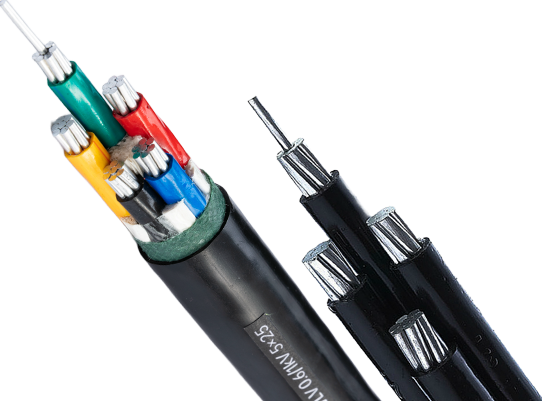
Armoured Cables – The Complete Guide
Introduction: Why Armored Cables Are an Essential Requirement for Engineering Power Distribution
In power transmission and electrical wiring projects, the service life and operational stability of cables depend not only on the performance of the conductors and insulation but also on their ability to withstand external mechanical forces and harsh environments. Ordinary non-armored cables rely solely on an outer sheath for protection and have extremely low mechanical strength. In scenarios such as direct underground burial, construction sites, heavy industrial loads, and tunnel installations, they are highly susceptible to compression, crushing, abrasion, and damage from rodents and insects, which can lead to insulation failure, electrical leakage, short circuits, and even fires.
As a high-strength specialty cable in power systems, armored cable (Armoured Cable) provides rigid mechanical protection through the addition of a metal armor layer. It is the core product of choice for industrial power distribution, municipal pipeline networks, new energy projects, rail transit, and underground power grids. Compared to standard cables, the greatest value of armored cables lies in their “vandal resistance, environmental resilience, maintenance-free operation, and long service life.” They are capable of withstanding the vast majority of complex, high-risk, and unattended installation environments, serving as the fundamental guarantee for the safe and stable operation of modern power engineering. This article will provide a comprehensive analysis of the complete knowledge system of armored cables from various dimensions, including structural classification, performance differences, core advantages, industry standards, installation specifications, common issues, and future trends.
What Is Armored Cable? Definition and Basic Characteristics
Armored cable refers to a special type of power cable that incorporates an additional layer of metal protective armor between the inner sheath and the outer sheath. Simply put, it is a standard insulated cable enhanced with a layer of metallic “protective armor” specifically designed to withstand external mechanical impacts, compression, abrasion, tension, and other forms of physical damage. The armor layer does not participate in power transmission and does not alter the cable’s electrical performance; its core function is physical protection and structural reinforcement.
The most fundamental difference between armored and non-armored cables is the presence of an independent metal protective structure. Non-armored cables rely solely on polymer sheathing for protection and are suitable only for indoor applications such as cable trays, conduits, and fixed indoor wiring where there is no risk of external forces; in contrast, armored cables can withstand harsh conditions such as direct burial, outdoor environments, construction sites, chemical plants, and tunnels.
Comprehensive Analysis of Armored Cable Structure
Standard armored cables consist of a five-layer core structure, arranged from the inside out as follows: conductor, insulation layer, inner cushioning layer, armor layer, and outer sheath. Each layer performs a specific function, collectively forming a cable system characterized by high strength, high safety, and long service life.
Conductor
The mainstream conductors for armored cables are divided into two major categories: copper conductors and aluminum conductors, which can be further classified as solid conductors and stranded conductors. Copper conductors offer excellent electrical conductivity, oxidation resistance, and high stability, and are commonly used in precision engineering and critical power supply circuits; aluminum conductors offer high cost-effectiveness and are lightweight, making them suitable for long-distance, high-current municipal power distribution projects. Multi-strand stranded conductors offer superior flexibility, making them well-suited for applications involving bending and installation, and they are the mainstream choice for industrial armored cables.
Insulation Layer
The insulation layer is central to the electrical safety of a cable, with the three mainstream materials being PVC, XLPE, and EPR. XLPE (cross-linked polyethylene) insulation is heat-resistant, offers excellent dielectric properties, and is resistant to aging; it is the standard material for both high- and low-voltage armored cables. EPR (ethylene propylene rubber) insulation is highly flexible, resistant to low temperatures, and resistant to aging, making it suitable for outdoor and mobile applications. PVC insulation is cost-effective and is commonly used in standard low-voltage residential armored cables. The choice of insulation material directly determines the cable’s voltage rating, temperature rating, and service life.
Inner Sheath / Bedding
The inner sheath is located between the insulation layer and the armor layer. It is typically formed by an extruded PVC or PE layer and serves primarily as an isolating and cushioning layer. On one hand, it prevents the rigid metal armor from directly rubbing against or compressing and damaging the insulation layer; on the other hand, it fills structural gaps to prevent the armor from loosening or shifting. Additionally, it provides auxiliary functions such as moisture protection, cushioning, and thermal insulation, making it a critical transition layer that ensures the integrity of the insulation structure.
Armour Layer
The armour layer is the defining structural feature of armoured cables. Composed of metallic materials such as steel tape, steel wire, aluminum tape, and aluminum wire, it serves as the core of the cable’s mechanical protection. It withstands external heavy pressure, impact, abrasion, and puncture, preventing damage to the cable caused by construction compaction, ground subsidence, and foreign object impact, while also providing additional protection against rodent bites, termites, and corrosion. Armour layers made of different materials are suited for completely different installation scenarios and voltage levels.
Outer Sheath
The outermost protective layer, typically made of PVC, PE, HDPE, or LSZH. The outer sheath primarily serves to protect against environmental degradation, providing moisture resistance, waterproofing, UV protection, and resistance to acids, alkalis, and corrosion. Among these, the LSZH (Low Smoke Zero Halogen) sheath is environmentally friendly and flame-retardant, burning without producing toxic fumes or smoke, making it suitable for enclosed, high-occupancy environments such as subways, tunnels, hospitals, and high-rise buildings; the PE sheath offers excellent weather resistance and is suitable for direct burial in outdoor installations.
Main Types of Armored Cables and Their Applications
SWA Steel Wire Armored Cable (Steel Wire Armored)
SWA steel wire armored cable is the most widely used and versatile type of armored cable in engineering applications. Constructed by wrapping multiple galvanized steel wires around the conductor, it offers extremely high mechanical strength and excellent resistance to crushing, settlement, and impact. Primarily used in three-core and multi-core cables, it is suitable for direct underground burial, road installation, deep burial in open fields, and long-distance underground power distribution. It is the preferred armored type for municipal power grids, residential area power distribution, and factory external networks.
STA Steel Tape Armored Cable (Steel Tape Armoured)
STA steel tape armoring employs a double-layer steel tape wrapping structure, offering strong radial compression resistance but relatively weak axial tensile strength. Its advantages include a compact structure, small outer diameter, and lower cost. It is primarily suitable for indoor cable trays, cable trenches, tunnels, and fixed industrial equipment wiring. It is not recommended for long-distance direct burial or vertical installation scenarios with significant elevation changes.
AWA Aluminum Wire Armored Cable (Aluminum Wire Armored)
The key feature of AWA aluminum wire armored cable is its non-magnetic nature and absence of eddy current losses, making it specifically suited for single-core medium- and high-voltage cables. When a single-core cable is energized, it generates an alternating magnetic field. Steel armor induces eddy currents that cause heating, resulting in high losses and accelerated aging. In contrast, the non-magnetic properties of aluminum armor completely eliminate eddy current issues, making it the sole standard solution for high-voltage single-core armored cables. It is widely used in photovoltaic, wind power, and high-voltage transmission projects.
Six Core Advantages of Armored Cables
Superior Mechanical Protection
The metal armor layer withstands various mechanical stresses, including heavy pressure, crushing, impact, puncture, and friction. It prevents cable damage caused by construction activities, ground subsidence, and vehicle, significantly reducing line failure rates.
Excellent Moisture Resistance and Environmental Durability
The multi-layer composite structure provides strong sealing, resisting moisture, rain, soil corrosion, acid and alkali erosion, and UV aging. It ensures long-term stable operation in highly corrosive environments such as outdoors, underground, chemical plants, and coastal areas.
Enhanced Overall Electrical Safety
The armor layer can be grounded for protection. In the event of cable insulation failure, fault currents can be rapidly dissipated through the armor layer, triggering protective trip mechanisms. This prevents accidents such as leakage, electric shock, and fire, significantly enhancing the safety level of the power distribution system.
Exceptionally Long Service Life
Non-armored underground cables are highly prone to premature failure, whereas armored cables feature a stable structure and resistance to aging and damage. With a design service life of over 30 years, they significantly reduce long-term maintenance and replacement costs.
Natural Protection Against Rodent and Termite Damage
The high hardness of the metal armor layer effectively prevents damage from rodents and termites gnawing, addressing the most common cause of biological damage in underground cables.
Flexible Installation Methods
It supports installation in various scenarios, including direct burial, cable trays, conduits, tunnels, and outdoor overhead lines, without requiring additional steel pipe protection. This simplifies the construction process and reduces material consumption.
Mainstream Applications of Armored Cables
Thanks to their high protection and reliability, armored cables are widely used in all critical power engineering projects: municipal underground distribution networks, industrial plant power systems, photovoltaic and wind power renewable energy projects, temporary and permanent power supply for construction sites, marine and offshore engineering, tunnels and rail transit, high-rise buildings, high-risk petrochemical and chemical plant areas, and underground power supply for mines. Armored cables must be used in any scenario where there is a risk of external force, harsh environmental conditions, or where frequent maintenance is not feasible.
Scientific Selection Guide for Armored Cables
Project selection requires a comprehensive evaluation across six key dimensions: Match the cable’s voltage rating to the system’s voltage level; select SWA for direct burial, STA for indoor use, or AWA for high-voltage single-core applications based on the installation environment; Select steel wire or steel tape structures based on the intensity of external forces; choose flame-retardant, fire-resistant, or LSZH eco-friendly sheaths according to fire safety requirements; select copper or aluminum conductors based on budget and service life requirements; strictly comply with local electrical standards to eliminate non-standard or substandard armored cables.
Future Trends in Armored Cable Technology
As safety standards for power engineering are upgraded, armored cables are evolving toward lighter weight, greater environmental friendliness, smarter functionality, and improved fire resistance: new lightweight alloy armor reduces the cable’s own weight; the full range of LSZH protective sheaths is becoming widespread; fire-resistant armored cables are being adapted for fire emergency circuits; Smart monitoring armored cables can monitor temperature, faults, and insulation status in real time, making them a key development direction for smart grids.
Frequently Asked Questions (FAQ)
Can armored cables be buried directly? Yes, SWA steel wire armored cables are standard direct-burial cables that do not require conduit protection.
What is the difference between SWA and STA? SWA steel wire armor provides tensile strength and resistance to settlement, making it suitable for direct burial; STA steel tape armored cables are compact and cost-effective, making them suitable for fixed indoor installations.
Are armored cables waterproof? They possess excellent moisture and water resistance. Combined with the sealing properties of the outer sheath, they can withstand damp underground environments.
Why is AWA aluminum armor used for single-core cables? Steel armor generates eddy current losses and heat, whereas aluminum armor is non-magnetic, eliminating eddy current issues.
Conclusion
Armored cables are core cable products in power systems that ensure line safety, resist external damage, and adapt to harsh operating conditions. Through a multi-layer composite structure comprising conductors, insulation, inner sheath, metal armor, and outer sheath, they deliver multiple benefits including mechanical protection, environmental protection, electrical safety, and fault protection. Different types of armored cables—including SWA, STA, AWA, and flexible armored cables—each serve distinct purposes, covering all application scenarios from residential and industrial to new energy, municipal, and marine sectors. In engineering applications, only by precisely selecting the appropriate cable type based on operating conditions, ensuring proper installation and compliant grounding, and using officially certified armored cables can we truly achieve 30 years of stable operation for power lines, thereby laying a solid foundation for the safe and reliable operation of the power system.