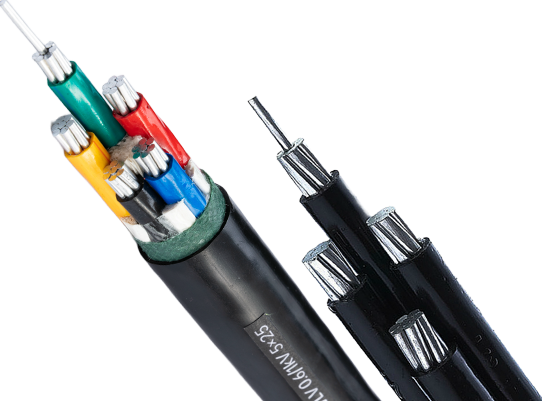
What is NA2XS2Y Cable?
Introduction
In the process of upgrading urban power grids, expanding industrial infrastructure, and implementing new energy projects, medium-voltage underground power cables serve as the core component of distribution systems, where their stability, safety, and cost-effectiveness directly determine power transmission quality. As modern power supply systems increasingly demand higher reliability, environmental adaptability, and cost control, traditional cables have become inadequate for complex underground installation scenarios and long-term operational requirements. The NA2XS2Y cable, a cross-linked polyethylene-insulated aluminum-core medium-voltage power cable compliant with European standards, has emerged as the preferred choice for power engineers and construction contractors due to its mature structural design, excellent electrical performance, and high cost-effectiveness. It is widely used in municipal power distribution, industrial facilities, and new energy generation applications. This cable is compatible with various medium-voltage operating conditions and features water resistance, anti-aging properties, and mechanical damage tolerance, making it the essential cable solution for underground deployment in modern medium-voltage distribution networks.
Meaning of NA2XS2Y Cable Models and Relevant Standards
Interpretation of Model Code Breakdown
Each symbol in the NA2XS2Y cable model corresponds to a specific structural and material definition, strictly adhering to European cable naming standards with clearly defined meanings for each code. The "N" denotes design and production compliance with German VDE standards, serving as the core identifier for European-standard power cables; "A" indicates aluminum alloy stranded conductor material, distinguishing it from copper-core cables; "2X" represents cross-linked polyethylene (XLPE) insulation that ensures optimal electrical insulation performance; "S" signifies copper wire shielding layer responsible for electric field balance and electromagnetic protection; while "2Y" denotes polyethylene (PE) outer sheath providing all-weather mechanical and environmental protection. The complete code system comprehensively summarizes the five core components of the cable: standard specifications, conductor, insulation, shielding, and sheath.
Core Implementation Standards
The production, testing, and application of this cable strictly adhere to multiple international and German industry standards. Key specifications include the VDE 0276 General Standard for Power Cables and the IEC 60502-2 International Standard for Medium-Voltage Power Cables, while also complying with DIN/VDE material and manufacturing requirements. Furthermore, regional power utility companies establish tailored grid connection specifications based on local grid conditions, ensuring the NA2XS2Y cable meets the requirements of diverse distribution systems and guarantees product versatility and compatibility.
Detailed Explanation of the Layered Structure of NA2XS2Y Cable
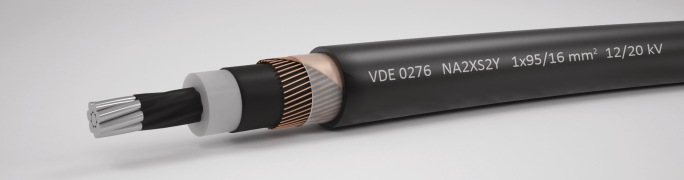
Aluminum conductor
The cable's core conductor employs Category 2 stranded aluminum conductors, compliant with internationally recognized conductor manufacturing standards, featuring a compact stranded structure and uniform conductivity. Compared to traditional copper conductors, aluminum conductors offer the primary advantages of lightweight design and superior cost-effectiveness, significantly reducing cable weight—thereby simplifying transportation, handling, and installation processes while substantially lowering overall project procurement costs. Additionally, high-quality aluminum conductors deliver stable electrical performance, meeting current-carrying requirements for medium-voltage power distribution applications and being compatible with conventional power frequency transmission systems.
Conductor Shielding Layer
The conductor is encased in a semi-conductive shielding layer, a critical component of medium-voltage cables. Its primary function is to homogenize the electric field across the conductor surface, eliminate electric field distortion caused by gaps in the conductor strands, and prevent localized electric field concentration from damaging the insulation layer. By optimizing the electric field distribution, this design significantly enhances the operational stability of the insulation layer, extends the overall service life of the cable, and mitigates potential risks such as insulation aging and leakage currents during prolonged operation.
XLPE insulation layer
The cross-linked polyethylene insulation layer serves as the fundamental guarantee for a cable's electrical performance and is the key factor distinguishing it from conventional PVC-insulated cables. XLPE material exhibits exceptional thermal stability, supports higher long-term operating temperatures, and demonstrates outstanding resistance to high-temperature aging; its electrical insulation loss is extremely low, ensuring reliable isolation of high-voltage currents and eliminating risks of leakage or breakdown. Additionally, this material offers superior moisture and corrosion resistance, remaining unaffected by underground humid environments or mild acidic/alkaline conditions, making it perfectly suited for long-term underground installation applications.
Insulating Shield Layer
A semi-conductive insulating shielding layer is positioned outside the insulation layer, forming a bidirectional electric field balance structure with the inner conductor shielding layer. This design further disperses voltage stress and reduces the risk of localized pressure on the insulation layer. The structure significantly enhances cable dielectric reliability by preventing local overheating and accelerated aging of the insulation under high-voltage conditions, ensuring stable performance across various operating scenarios including rated voltage and short-term overload conditions.
Copper wire shielding layer
The copper wire shielding layer serves as the core safety protection structure of cables, fulfilling three primary functions. First, it can withstand fault short-circuit currents, rapidly diverting current during sudden grid failures to protect the cable's main structure. Second, it provides efficient electromagnetic shielding, suppressing electromagnetic radiation generated during cable operation and preventing interference with surrounding electrical equipment. Third, it works in conjunction with the grounding system to deliver grounding protection, thereby enhancing the overall safety of the power distribution system.
PE outer sheath
The outer polyethylene sheath provides comprehensive physical and environmental protection for the cable, featuring exceptional mechanical toughness that withstands compression, friction, and impact during underground installation. It also exhibits outstanding UV resistance, moisture resistance, and chemical corrosion resistance, making it suitable for various applications including outdoor exposure, direct underground burial, and pipeline installation. The sheath effectively protects against rainwater, moist soil, and industrial corrosive agents, with a service life significantly longer than that of conventional PVC sheaths.
 Core Technical Parameters and Product Specifications
Rated voltage level
The NA2XS2Y is a medium-voltage dedicated cable designed for mainstream medium-voltage distribution voltage levels. Its common specifications include 6/10 kV, 12/20 kV, 18/30 kV, and 19/33 kV, enabling comprehensive compatibility with various voltage conditions such as urban and rural municipal power distribution, industrial plant power supply, and transmission for renewable energy power stations, demonstrating exceptional versatility.
Temperature Tolerance Parameters
This cable exhibits excellent temperature performance, maintaining stable operating temperatures within the rated range under normal conditions over extended periods with strong thermal stability. It can withstand short-term high-temperature impacts during short-circuit scenarios without experiencing insulation melting or damage. Its installation temperature is compatible with conventional outdoor and indoor environments, meeting construction requirements in most regions throughout all seasons. The cable demonstrates low susceptibility to brittleness in low-temperature conditions and offers a high tolerance for installation errors.
Conductor Cross-Section and Core Count Configuration
The cable conductors offer a comprehensive range of cross-sectional specifications, covering all commonly used sizes from 35 mm² to 630 mm²—including 35,50,70,95,120,150,185,240,300,400,500, and 630 mm²—making them suitable for various applications ranging from low-load power distribution to high-current power transmission. Featuring a single-core design, these conductors can be flexibly installed in three-phase power distribution systems and represent the mainstream configuration for medium-voltage three-phase power supply networks.
Core Advantages of the Product
Stable and reliable electrical performance
Thanks to its double-layer shielding structure and high-quality XLPE insulation material, the cable exhibits uniform electric field distribution, extremely low dielectric loss, sufficient current-carrying capacity, and stable operation. Under prolonged high-voltage conditions, it shows no significant insulation degradation and demonstrates strong resistance to partial discharge, effectively preventing power faults such as leakage current, short circuits, and breakdowns, thereby ensuring continuous and stable operation of the power distribution system.
Lightweight and high cost-effectiveness
The aluminum core significantly reduces the overall weight of the cable. Compared to the N2XSY copper-core cable of the same specification, it greatly simplifies transportation, handling, and installation, effectively lowering labor and equipment costs. Additionally, aluminum has lower procurement costs, substantially reducing total project expenses while maintaining essential power transmission performance—making it ideal for large-scale grid construction projects.
Exemplary environmental adaptability
The PE outer sheath combined with an XLPE insulation layer offers excellent moisture resistance, waterproofing, anti-aging properties, and corrosion resistance, making it suitable for various complex environments including humid underground conditions, outdoor areas, industrial corrosive settings, and sandy climates. It remains unaffected by soil acidity/alkalinity, rain erosion, or ultraviolet radiation, demonstrating significantly superior environmental adaptability compared to conventional medium-voltage cables.
Long service life and low operation and maintenance costs
The entire structure exhibits outstanding anti-aging and thermal stability properties, with minimal risk of material degradation, cracking, or damage during prolonged operation. Under normal installation and usage conditions, its service life can extend for decades. The product demonstrates an extremely low failure rate, eliminating the need for frequent maintenance or replacement, thereby significantly reducing subsequent operational and maintenance costs for power grids and industrial equipment while meeting long-term stable power supply requirements.
Mainstream Application Scenarios
Municipal Power Distribution Network
As the backbone cable for medium-voltage power distribution in urban and rural areas, it is widely used for upgrading urban power grids, renovating aging lines, providing residential area power distribution, and laying street utility networks. It supports various installation methods such as direct underground burial and cable conduits, ensuring stable power supply for both urban residents and commercial zones.
Power Supply for Industrial Infrastructure
This medium-voltage power supply system is designed for various factories, petrochemical plants, and mining projects. It withstands industrial dust, corrosive gases, and complex geological conditions, meeting the high-power and continuous power transmission requirements of industrial equipment while operating under stringent industrial environments.
New Energy Power Generation Projects
Widely used in photovoltaic power stations and wind farms, these medium-voltage transmission lines connect power generation equipment to step-up substations and grid connection cabinets. They are suitable for outdoor open-air and underground installation scenarios, featuring strong weather resistance that meets the long-term operational requirements of renewable energy projects in outdoor environments.
Comparison of Cable Selection Between NA2XS2Y and N2XSY
Comparison of Core Differences
The two cables share nearly identical cable structures, insulation materials, and sheath materials; the primary distinction lies in their conductor materials. The NA2XS2Y employs an aluminum conductor, offering lighter weight, lower manufacturing cost, and greater ease of installation, whereas the N2XSY uses a copper conductor with superior electrical conductivity and enhanced mechanical toughness, though at higher weight and increased procurement and installation costs. In terms of current-carrying capacity and tensile strength, the copper-core N2XSY demonstrates advantages, while the aluminum-core NA2XS2Y excels in cost-effectiveness and installation efficiency.
Recommendations for Model Selection and Compatibility
For projects with limited budgets, large-scale pipeline network construction, and conventional power distribution conditions, the NA2XS2Y cable is the preferred choice due to its balance between performance and cost. When the project demands exceptionally high current-carrying capacity, mechanical strength, and service life while having sufficient budget, the N2XSY copper-core cable can be selected. Additionally, the choice should consider the installation environment: aluminum-core cables are suitable for underground conventional environments, whereas copper-core cables are recommended for scenarios involving high mechanical stress or precise power transmission requirements.
Key Points for Standardized Installation and Maintenance
Installation Construction Specifications
During underground direct burial installation, a fine sand cushion layer must be laid to prevent the cable from direct contact with hard gravel or sharp soil particles. Post-installation, mechanical protection for the surface layer should be implemented to avoid damage caused by backfill soil compression. Strict adherence to the minimum bending radius requirements is mandatory, as excessive bending may compromise the insulation and shielding layers, posing potential safety hazards.
Joint and Terminal Processing
Cable terminals and intermediate connectors must be paired with specialized accessories and installed by qualified professionals to ensure proper insulation, shielding, and sealing performance. This prevents leakage current, moisture ingress, and breakdown faults—key factors for the long-term stable operation of cables.
Storage and Daily Protection
During cable storage and transportation, cable reels must be protected to prevent dragging or impact damage to the sheaths. The storage environment should be kept dry and well-ventilated, with adequate moisture-proof measures implemented to avoid moisture-induced aging that could compromise subsequent performance.
Conclusion
The NA2XS2Y, a European-standard high-quality aluminum-core XLPE insulated medium-voltage cable, stands out as the preferred solution for modern underground medium-voltage power distribution systems. Its four core advantages—including a scientifically layered structural design, stable electrical performance, lightweight and cost-effective construction, and strong environmental adaptability—make it ideal for diverse applications such as municipal grids, industrial facilities, and renewable energy installations, balancing reliability with project economics. Amid the ongoing trends of grid intelligence and large-scale infrastructure development, the NA2XS2Y cable continues to dominate the mainstream medium-voltage cable market due to its durability, low maintenance requirements, and high adaptability. When selecting this cable, careful consideration of operating conditions, budget constraints, and regulatory specifications ensures optimal performance and safeguards the safe and stable operation of power systems.