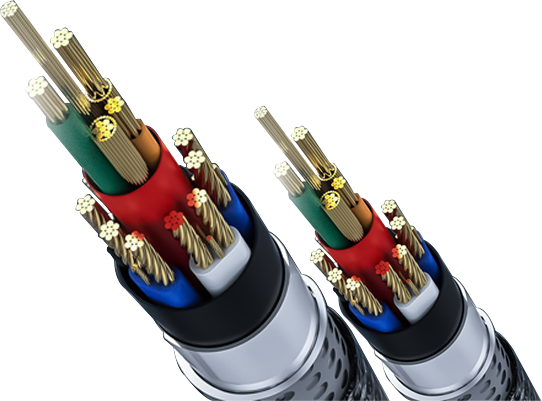
In the technological evolution of power cables, innovations in conductor materials have consistently been the driving force. From early pure copper to traditional aluminum alloys, each material upgrade has brought significant leaps in transmission efficiency and safety performance. Today, a high-performance aluminum alloy called Al8000 is rapidly gaining prominence, becoming the new darling in fields like building wiring and power transmission. Both electricians on construction sites and project procurement engineers are increasingly hearing this term. So, what exactly is Al8000? What gives it the edge in the fiercely competitive cable market? Today, we'll decode this "new material star in the cable industry" from every angle.
First Encounter with Al8000: More Than Just Ordinary Aluminum Alloy
When discussing
aluminum alloy cables, many recall the early 1350 series aluminum alloys' shortcomings—loose joints, inadequate tensile strength, and accelerated aging with prolonged use. Al8000 emerged precisely to address these challenges. As part of the 8000 series aluminum alloys, this category is officially classified as "high-strength conductive aluminum alloy," specifically engineered for electrical conductor applications.
From a chemical composition perspective, Al8000 is based on high-purity aluminum (≥99.5% purity) with scientifically formulated alloy elements including iron (0.5%-2.5%), silicon (0.1%-0.8%), and copper (0.05%-0.2%). Premium variants may also incorporate trace rare earth elements for performance optimization. This precision formulation transcends basic material blending, leveraging synergistic effects of alloy elements to significantly enhance both electrical conductivity and mechanical strength while maintaining chemical stability. Unlike conventional 1350 aluminum alloys, Al8000 fundamentally differs as it is not merely a "modified pure aluminum variant," but rather a "specialized alloy" specifically engineered for electrical transmission applications.
Core Performance: Three Key Advantages of Al8000
In cable applications, material properties directly determine transmission safety and operational costs. The rapid adoption of Al8000 is driven by its comprehensive breakthroughs in mechanical, electrical, and safety performance, perfectly meeting the stringent requirements of modern power transmission.
Mechanical properties: a "power player" with both rigidity and flexibility
During transportation, installation, and prolonged use, cables are subjected to various mechanical stresses including tension, bending, and vibration. The conventional 1350 aluminum alloy has a tensile strength of merely 80-120MPa, making it prone to core breakage in complex construction environments. In contrast, the Al8000 series boasts a tensile strength of 150-200MPa, 1.5-2 times higher than the 1350 series. This enhanced strength enables cables to withstand harsh conditions during aerial installation or underground conduit penetration, significantly reducing construction losses.
What makes Al8000 truly exceptional is its remarkable flexibility while maintaining high strength. Through a specialized annealing process that eliminates internal stresses, the material achieves an elongation rate exceeding 30%, resisting cracks even after 18 repeated bending cycles. This is particularly vital for architectural cabling—where flexible cables can effortlessly navigate tight spaces like wall cavities and pipe corners, dramatically improving construction efficiency. Moreover, Al8000 demonstrates outstanding creep resistance, resisting permanent deformation under prolonged loads and high-temperature conditions, effectively preventing contact failures caused by conductor loosening.
Electrical performance: stable and efficient "power transmission"
For conductive materials, conductivity is the key metric. While Al8000's volume resistivity is slightly higher than copper, it significantly outperforms traditional 1350 aluminum alloys. The reduced resistance directly lowers energy loss by 10%-20%, delivering substantial annual savings in electricity costs for users in high-consumption environments like large residential complexes and industrial parks.
The Al8000 alloy's conductive stability is particularly noteworthy. Unlike traditional aluminum alloys that exhibit significant conductivity fluctuations during temperature changes, Al8000 achieves performance stability across a wide temperature range through controlled alloy composition. Even during summer peak electricity demand when conductor temperatures exceed 70°C, its conductive performance remains remarkably stable, ensuring uninterrupted power transmission. This exceptional thermal stability enables the material to operate reliably in high-temperature and high-load industrial environments.
Security performance: a "guardian" that prevents problems before they happen
Electrical safety remains paramount, with cable hazards primarily occurring at conductor joints. Traditional aluminum alloys are prone to oxidation, where oxide films at joints increase contact resistance, causing localized overheating that may lead to fires. Al8000 addresses this issue through dual mechanisms: First, its surface oxide film forms a denser structure that effectively prevents further oxidation. Second, its thermal expansion coefficient closely matches copper's, ensuring stable connections without loosening gaps when interfacing with connectors, thereby eliminating the risk of poor contact at its source.
Long-term test data shows that the joint temperature of Al8000 conductor is 15-20℃ lower than that of 1350 aluminum alloy under the same load, with a service life extending to over 30 years—far exceeding the 15-20 years of traditional aluminum alloy cables. This outstanding safety performance has earned it multiple international certifications including UL and IEC, making it the preferred material for critical sectors like construction and transportation.
Horizontal comparison: Why can Al8000 replace traditional materials?
To understand the market value of Al8000, the most intuitive way is to compare it with the current mainstream 1350 aluminum alloy and copper, and see its competitiveness in different scenarios.
Al8000 vs 1350 aluminum alloy: a fully upgraded alternative
As an upgraded version of traditional aluminum alloy, Al8000 outperforms in all key performance metrics. Beyond its enhanced tensile strength and conductivity mentioned earlier, it also demonstrates significantly improved installation adaptability. The 1350 aluminum alloy cable is prone to "memory effect" during bending – meaning it struggles to return to its original shape, complicating installation. In contrast, Al8000 exhibits superior flexibility with low rebound rate after bending, making it better suited for complex wiring environments. Regarding connection stability, the 1350 aluminum alloy joint shows a 20% loosening rate after five years of use, while Al8000 maintains a loosening rate below 3%, substantially reducing long-term maintenance costs.
Al8000 vs Copper: A Cost-Effective Challenger
Copper, a traditional conductive material, boasts excellent electrical conductivity but faces significant drawbacks: high costs and heavy weight. Aluminum 8000 (Al8000), priced at just 1/2-1/3 of copper and with a density of 2.71g/cm³ (compared to copper's 8.96g/cm³), weighs less than one-third as much for the same cable length. This translates to substantial savings: For large commercial complex projects, using Al8000 cables can reduce material procurement costs by over 40%, cut transportation and installation expenses by more than 60%, and save substantial funds during the initial investment phase.
In terms of corrosion resistance, Al8000 even outperforms copper. In humid and corrosive environments like coastal areas or chemical industrial parks, copper is prone to electrochemical corrosion, while the dense oxide film on Al8000's surface provides effective protection, extending its service life by 20%-30% compared to copper cables. Of course, Al8000 isn't a perfect replacement for copper. In ultra-high voltage and ultra-compact power transmission scenarios, copper's superior conductivity remains dominant. However, in most applications such as medium-low voltage power distribution and building wiring, Al8000 has fully met the requirements, emerging as a more cost-effective choice.
Application scenarios: Where can the Al8000 be used?
With its balanced performance and excellent cost-performance ratio, the Al8000 has been widely used in various cable fields and has become the preferred material in different scenarios.
In building cabling applications, Al8000 serves as the core conductor material for widely used architectural wires such as THHN/THWN-2 and XHHW-2. Its flexibility and ease of conduit installation make it ideal for wall cabling in residential and office buildings, while its stable connectivity meets the stringent safety standards of building electrical systems. Currently, premium residential projects in multiple first-tier Chinese cities have fully adopted Al8000 architectural wires, replacing traditional copper-core wires and 1350 aluminum alloy wires.
In the power transmission sector, Al8000 is extensively used in low-voltage power cables and ABC overhead bundled cables. For outdoor overhead lines, its lightweight design significantly reduces the load-bearing requirements of poles and supports, lowering construction costs. Its exceptional creep resistance and weather resistance ensure long-term stable operation in harsh environments like wind, rain, and high temperatures. In rural grid upgrades and urban distribution network modernization projects, Al8000 cables have become the go-to choice.
The Al8000 cable demonstrates exceptional performance in specialized applications. Serving as a service entrance cable (SEU/SER), it meets dual requirements for outdoor weather resistance and indoor safety, with its weather resistance and connection stability perfectly aligned. For industrial cables that must withstand high currents and extreme temperatures, the Al8000's thermal stability and mechanical strength provide reliable protection. Furthermore, in high-reliability power supply sectors like rail transit and data centers, the Al8000 is progressively replacing traditional materials.
Shopping Guide: How to Avoid Scams and Buy Authentic Al8000?
With the growing market demand for Al8000, some unscrupulous vendors have started passing off 1350 aluminum alloy as genuine Al8000, selling inferior products as premium ones. For buyers and contractors, it's crucial to learn how to identify authentic products. Otherwise, this could not only compromise project quality but also create safety hazards.
First, examine the markings. Genuine Al8000 cables will clearly display the conductor material (e.g., "AA8030" or "8000 series"), cable type (e.g., YJHLV indicating cross-linked polyethylene-insulated aluminum alloy power cable), specifications, compliance standard (commonly GB/T31840-2015 in China), and CCC certification. If the sheath only shows "aluminum alloy" without the 8000 series designation, be cautious.
Next, examine the exterior. The genuine Al8000 conductor features a silvery-white luster with no oxidation marks like blackening or yellowing. Its wire core employs a tight-pressing process, ensuring a perfectly round cross-section without gaps and a tightly packed structure. When bent 180 degrees repeatedly, it shows no cracks or fractures. In contrast, the 1350 aluminum alloy conductor appears darker in color and may develop noticeable creases after just 3-5 bends.
Finally, request the required documentation. A reputable manufacturer will provide an Al8000 conductor's composition analysis report (ensuring aluminum purity and alloy element content meet standards), mechanical property test reports (with tensile strength and elongation meeting specifications), and international certifications such as UL and ASTM. If the seller cannot provide these documents or the content does not match the product, avoid purchasing.
When selecting suppliers, prioritize manufacturers with comprehensive quality control systems. These companies implement rigorous quality management throughout the entire production process—from raw material procurement to wire drawing, annealing, stranding, and insulation—ensuring consistent product performance. Avoid products priced significantly below market average, as such items are often counterfeit 1350 aluminum alloys that pose serious safety hazards.
A Rational Perspective: Limitations and Precautions of Al8000
While Al8000 is a viable material, it has specific limitations and usage guidelines. First, although its conductivity surpasses conventional aluminum alloys, it remains approximately 15%-20% lower than copper. Therefore, copper remains the preferred choice for ultra-high voltage (above 110kV) and ultra-compact transmission systems. Second, Al8000's slightly higher thermal expansion coefficient requires adequate expansion allowance in long-distance wiring or high-temperature environments to prevent mechanical damage from thermal expansion and contraction.
Furthermore, Al8000 requires specialized connectors. Due to its distinct oxidation characteristics and thermal expansion coefficient compared to copper, conventional copper connectors cannot achieve optimal compatibility, often resulting in poor contact. Currently, the market offers dedicated copper-aluminum transition connectors specifically designed for Al8000. These connectors utilize specialized surface treatment technologies to effectively suppress oxidation, ensuring stable connections. When installing, it is essential to use compatible products.
Al8000 leads the cable industry into a new era
From material properties to market applications, Al8000 has demonstrated its core value in the power cable industry through proven performance. It not only addresses safety concerns in traditional aluminum alloys but also overcomes the drawbacks of copper materials like high cost and heavy weight, offering highly cost-effective solutions for medium and low-voltage power distribution and building wiring. With the accelerated global energy transition, the demands on material performance in power transmission are growing. As a representative of high-performance aluminum alloy conductors, Al8000 is poised to achieve breakthroughs in more fields.
For construction teams, adopting Al8000 delivers higher operational efficiency and reduced maintenance costs. For procurement departments, it ensures better cost control and enhanced safety assurance. For the industry, it signifies the advancement of cable material technology. It is expected that Al8000 will soon become the mainstream choice for power cable conductors, making greater contributions to global power transmission.