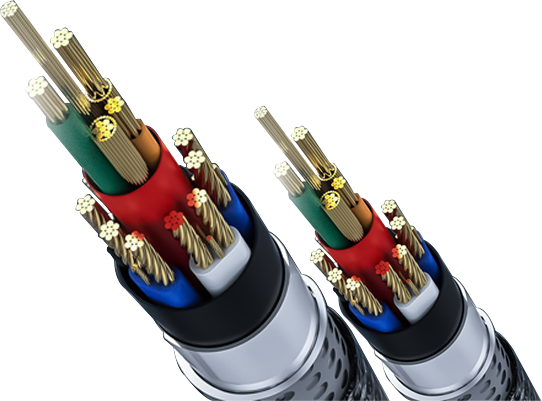
Within the power system chain of“generation-transmission-distribution-consumption,” the transmission and distribution segments serve as the critical link connecting load centers to end users. With global urbanization rates exceeding 56%, dense high-rise clusters and surging populations in urban cores have rendered traditional overhead lines increasingly incompatible with modern planning due to space consumption, visual pollution, and susceptibility to environmental interference. Driven by Industry 4.0, industrial parks demand enhanced stability and interference resistance in power transmission, while complex environments like high temperatures and oil contamination further expose the limitations of overhead lines. Against this backdrop, underground cables—offering concealment, high reliability, and robust protection—have seen an average annual demand growth of 8.5%. They have become the core support for urban distribution network upgrades, industrial construction, and new energy deployment. In densely populated areas, high-demand industrial settings, and ecologically sensitive zones, underground cables have evolved from an “option” to a “necessity.”
Definition and Structure of Underground Cables
Definition
Underground cables are specially engineered products designed for subterranean installation (direct burial in soil, cable trenches, conduits, etc.) to transmit electrical power or communication signals. Compared to overhead lines, their entire structure must adapt to complex underground conditions: resisting soil corrosion, withstanding mechanical stress, and addressing heat dissipation challenges. Their insulation, protection, and shielding designs are highly targeted, making them composite carriers integrating electrical, mechanical, and environmental adaptability.
Structure
Underground cables employ a “concentric layered protection” design where each layer complements the others:
Conductor: The core transmission channel, primarily made of high-purity copper (resistivity 1.72×10⁻⁸ Ω・m, resistant to oxidation, excellent flexibility) or electrical aluminum (resistivity 2.83×10⁻⁸ Ω・m, costing only one-third of copper and weighing one-third as much). Cross-sectional area selected based on current, temperature, and voltage drop (10–2400 mm²). Smaller sizes serve residential distribution, while larger sizes accommodate industrial high-load applications.
Conductor Shield Layer: Mandatory for medium-voltage cables above 1kV. Made of semiconductive polyolefin (0.5–1 mm thick), it addresses electric field concentration caused by conductor surface irregularities, eliminates partial discharge hazards, and protects the insulation layer. Insulation Layer: The critical barrier for current isolation, categorized into three types:
XLPE (Cross-linked Polyethylene, temperature resistance 90-125°C, insulation resistance ≥10¹⁴Ω・cm, over 70% market share, suitable for 1-500kV); EPR (Ethylene Propylene Rubber, weather-resistant and low-temperature tolerant, suitable for -40-120°C, ideal for cold and vibrating environments, poor oil resistance); PVC (Polyvinyl Chloride, low cost, acid/alkali resistant, temperature resistance 60-70°C, exclusively used for 0.6/1kV low voltage, releases toxic gases when burning).
Insulating Shield Layer: Semiconductive material (0.3-0.8mm thick) that evens electric fields, conducts fault currents, and isolates impurities/moisture to ensure insulation stability.
Metal shielding layer: Core for grounding and fault protection. Includes copper tape (0.1-0.3mm thick, overlap rate ≥15%, used in medium/low voltage for EMI shielding) and copper wire (0.1-0.3mm fine copper strands twisted together, used in high voltage and bending scenarios to carry fault currents).
Interlayer: PVC tape, non-woven fabric, etc. (1-2mm thick), buffers pressure, protects the metal shielding layer, and prevents water and impurity ingress.
Armor Layer (Optional): Resists mechanical damage. Steel wire armor (tensile strength ≥1000MPa, impact-resistant, for direct burial and underwater applications) Steel tape armor (crush-resistant, 30% lower cost, for cable trenches/tunnels); Aluminum wire armor (non-magnetic, for single-core high-voltage cables, prevents hysteresis losses).
Outer Sheath: Outer protective layer. PVC (low cost, for simple soil conditions); PE (weather-resistant, waterproof, preferred for direct burial/humid areas); LSZH (Low Smoke Zero Halogen, minimal non-toxic smoke emission, for enclosed areas with high personnel density).
Water-blocking Materials: Essential for medium/high-voltage cables. Includes water-blocking yarn (fills conductor gaps), water-blocking tape (wrapped around insulation layer), and water-blocking compound (seals joints) to prevent water ingress-induced failures.
Types of Underground Cables
By Voltage Level
Low Voltage (LV): 0.6/1kV, accounting for over 60% of the market. Typically 2-5 cores with PVC/XLPE insulation. Direct-buried products feature steel tape armoring. Used for residential, commercial, and small industrial low-voltage power supply.
Medium Voltage (MV): 3.6-35kV, with 10kV specifications accounting for 70%. Features a shielding layer, primarily XLPE insulation, and direct burial with armoring. Serves as the core of urban distribution networks, connecting high-voltage transmission to low-voltage distribution.
High Voltage (HV): 66-132kV, double-layer shielding, copper conductors, tunnel/duct installation, used for regional grid interconnection and large-scale industrial power supply.
Extra High Voltage (EHV): 220kV and above, complex multi-layer structure, special insulation treatment, tunnel/submarine installation, enabling cross-regional high-capacity transmission.
By Structure
Armored / Non-armored: Armored cables resist mechanical damage and suit complex environments; non-armored cables feature simpler construction and 15%-20% lower costs, suitable for well-protected scenarios.
Single-core / Multi-core: Single-core cables offer superior heat dissipation and 15%-20% higher current-carrying capacity, used in medium-to-high voltage applications; multi-core cables provide compact structure and 30% labor savings in installation, used in medium-to-low voltage multi-circuit scenarios. (3) By Insulation Material
XLPE (covers all voltages, mainstream); PVC (low-voltage, low-cost, restricted in densely populated areas); EPR (weather-resistant and flexible, suitable for cold and vibration-prone environments).
Advantages of Underground Cables
Reliable and Stable Operation
Enclosed underground environments shield cables from harsh weather and external interference. Their mean time between failures (MTBF) reaches 15-20 years, far exceeding overhead lines' 5-8 years. In coastal typhoon zones, one city recorded 20-30 monthly overhead line failures during typhoon season versus only 1-2 for underground cables, ensuring stable power supply.
Low Maintenance Requirements
Multi-layered protective structures enhance damage resistance, requiring only 1-2 annual inspections of cable wells and joints. Annual maintenance costs for 10 kilometers of underground cable average ¥50,000-80,000, approximately one-third of overhead lines, making long-term operation more economical.
No Visual Pollution
Underground cables remain concealed beneath the surface, making them ideal for areas with stringent aesthetic requirements. Sites like the Forbidden City in Beijing and West Lake in Hangzhou utilize underground cables to achieve “wireless aerialization,” enhancing regional visual appeal.
Reduced Electrical Failures from External Factors
Buried protection significantly lowers the risk of external damage to underground cables. External factors account for only 5%-10% of their failures, far below the 40%-50% rate for overhead lines. The shielding layer also reduces electromagnetic interference, ensuring stable power transmission.
Enhanced Safety for Power and Communication Networks
Multi-layer insulation and shielding prevent leakage, safeguarding public safety in densely populated areas. When co-trenching with communication fiber optic cables, the shielding layer isolates interference, enabling stable, coordinated operation of power supply and communication systems in metro networks.
Application Scenarios for Underground Cables
Urban Distribution Networks
Underground cables form the backbone of urban distribution networks, widely deployed in central business districts and historic cultural zones. Commercial hubs like Shanghai's Huangpu District and Beijing's Wangfujing achieve “wireless skies” through underground cabling, balancing power supply with urban aesthetics. New urban areas such as Xiong'an New Area and Shenzhen's Qianhai New District leverage underground cables to build modern distribution systems, supporting sustainable urban development.
Substations and Transformer Networks
As power hubs, substations and their surrounding areas demand exceptionally high cable reliability. For 220kV substation main transformer feeders and 110kV distribution lines, XLPE-insulated armored cables are predominantly used for direct burial or tunnel installation. Low-voltage distribution systems within substations employ PVC or XLPE-insulated cables to ensure stable operation.
Industrial Parks and Factories
Industrial parks and factories present complex environments where underground cables offer distinct advantages. Steel-armored XLPE cables are deployed in automotive welding shops and steel rolling mills to withstand mechanical impacts and high temperatures. Chemical industrial parks utilize fluoroplastic-insulated, PE-sheathed cables to endure highly corrosive soils.
Airports, Railways, Tunnels, and Highways
In transportation, underground cables safeguard critical infrastructure power supply:
Airports: Waterproof cables for terminal distribution, runway lighting, and apron power.
Railways and Subways: EPR-insulated flexible cables for signaling, communications, and traction power systems.
Highways: Direct burial or conduit-laid cables at toll stations and service areas enhance disaster resilience.
Renewable Energy Projects
Underground cables are indispensable for renewable energy projects in remote areas:
Photovoltaic Power Plants: XLPE cables connect arrays in ground-mounted plants; flame-retardant cables are used for rooftop installations.
Wind Farms: Armored cables withstand harsh weather for onshore wind farms; seawater-resistant cables are submerged for offshore installations.
Residential & Commercial Buildings
In civil applications, underground cables balance safety and aesthetics:
Residential Areas: Armored cables for distribution trunk lines; concealed installation for service drop cables.
Commercial Buildings: Low-smoke, zero-halogen cables for shopping malls and office towers; low-loss copper-core cables for data centers
Conclusion
Underground cables form the backbone of modern power transmission, adapting to diverse scenarios. Despite higher costs and maintenance challenges, their long-term benefits are substantial. Selecting certified, high-quality cables ensures safe and efficient power system operation, supporting sustainable urban and industrial development. This represents a critical direction for future power infrastructure construction.