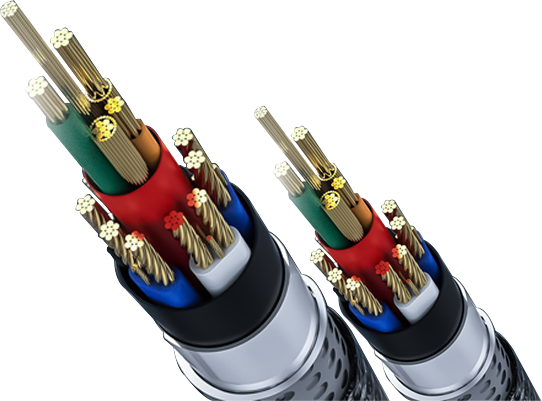
In cable procurement and project construction, most people focus on core parameters such as conductor material and wire diameter, believing that “good copper quality and sufficient cross-section” equals high-quality cable. However, they often overlook the cable's outermost “guardian” – the sheath. The
cable sheath, a protective outer layer wrapped around the insulation and conductor, may seem like just a layer of “plastic skin,” but it is actually the cable's “first line of defense” against external damage.
This misconception of “emphasizing the conductor and neglecting the sheath” often creates significant hidden dangers for projects: outdoor cables age and crack due to insufficient UV resistance of the sheath; in industrial settings, cables swell and fail due to poor chemical resistance of the sheath; and even fires can occur due to substandard flame retardancy of the sheath. In fact, the quality of the cable sheath directly determines the cable's safety level, service life, maintenance costs, and, more importantly, the stability of the entire power transmission system.
This article will comprehensively analyze the importance of cable sheaths from the perspectives of technical principles, core value, material selection, and practical cases, helping you avoid selection pitfalls and ensuring cables truly meet your application needs.
What is a Cable Sheath? More Than Just a "Protective Layer"
A cable sheath is the outermost component of the cable structure, primarily made of high-molecular polymers, wrapping around the insulation layer to form "double protection" for both the internal conductors and the insulation. It differs fundamentally from the insulation layer: the core function of the insulation layer is to isolate current between conductors and prevent leakage; while the core function of the sheath is to resist external physical, chemical, and environmental damage, while also helping to improve electrical safety performance.
From a material classification perspective, the mainstream cable sheath materials on the market can be divided into six categories, each with different performance characteristics and suitable for different scenarios:
PVC (Polyvinyl Chloride): The most common basic material, easy to process and low in cost
XLPE (Cross-linked Polyethylene): A high-performance material that improves heat resistance and mechanical strength through cross-linking process
PE (Polyethylene): Possesses excellent water resistance and insulation, and strong outdoor adaptability
LSZH (Low Smoke Halogen-free): Produces low smoke and releases no toxic halogens during combustion, with an extremely high safety level
Rubber Compounds: Such as EPR (Ethylene Propylene Rubber) and Chloroprene Rubber, with outstanding flexibility and weather resistance
TPU/TPE (Thermoplastic Elastomer): Combines the flexibility of rubber with the processability of plastics, belonging to high-end materials
Why is Cable Sheathing Crucial? Four Core Values Determine Project Value
Mechanical Protection: A Physical Barrier Protecting the "Internal Health" of Cables
Cables face mechanical damage risks throughout the entire process from production and transportation to installation and operation: bumps and collisions during transportation, dragging and pulling during installation, squeezing and trampling during construction, and external impacts that may be encountered during operation. High-quality cable sheaths resist these damages through excellent abrasion resistance, impact and compressive strength, and reasonable tensile strength and flexibility.
For example, in building wiring construction, cables need to pass through wall holes and cable tray corners; the abrasion resistance of the sheath prevents the insulation layer from being scratched by sharp edges. In industrial workshops, accidental crushing by heavy equipment, if encountering a high-strength sheath, can effectively prevent conductor exposure and avoid short circuits. Conversely, inferior sheaths may crack during the installation stage, directly leading to premature cable failure.
Environmental Protection: An "Adaptive Armor" for Complex Scenarios
Cable operating environments vary widely, from humid underground pipe networks and sun-exposed outdoor towers to salt-sprayed coastal areas and chemically corroded factory workshops. The sheath must possess targeted environmental resistance capabilities.
In outdoor environments, the UV resistance of the sheath directly determines the cable's lifespan—ordinary sheaths will become brittle and crack within 1-2 years under direct sunlight, while specialized UV-resistant sheaths can maintain stable performance for over 25 years. In underground or humid environments, the sheath's waterproof and moisture-proof properties prevent moisture penetration and avoid conductor corrosion. In coastal or chemical environments, the sheath's resistance to salt spray and chemical corrosion prevents material swelling and failure. In short, the sheath's environmental adaptability directly determines whether the cable can "adapt to local conditions."
Electrical Safety: The "Last Line of Defense" Against Risks
The electrical safety of cables depends not only on the insulation layer but also on the sheath, which plays a crucial role. First, the flame-retardant properties of the sheath can prevent the spread of flames in the early stages of a fire, reducing the risk of fire escalation. Second, in public spaces or enclosed environments (such as subways and tunnels), LSZH sheaths release very little smoke when burning and produce no toxic halogen gases, buying valuable time for people to escape. Furthermore, when the insulation layer is accidentally damaged, an intact sheath can temporarily block external conductive media, preventing short circuits or leakage accidents.
An investigation into a fire accident in an industrial park in 2023 revealed that the cause of the fire was the substandard flame-retardant properties of the inferior cable sheath, which allowed flames to spread rapidly along the cable tray, causing significant property damage. This case fully demonstrates that the electrical safety performance of the sheath is not an "add-on," but a "must-have."
Lifespan and Performance: The "Hidden Steward" Determining the Total Life Cycle Cost of a Project
The lifespan and maintenance costs of cables are largely determined by the quality of the sheath. In long-term projects such as photovoltaic power plants and power grid engineering, high-quality sheaths allow cables to match the project's design lifespan (25-30 years), eliminating the need for frequent replacements. Inferior sheaths, however, may age and fail within 3-5 years, requiring significant replacement costs and causing indirect losses due to downtime.
For example, a large photovoltaic power plant initially used ordinary sheathed cables to save costs. After three years, the outdoor cables experienced widespread aging and cracking, resulting in replacement costs exceeding ten million yuan and a one-month downtime leading to a loss of nearly five million yuan in power generation revenue. If dedicated UV-resistant sheathed cables had been used initially, although the procurement cost would have increased by 15%, the huge losses later could have been avoided, and the total life-cycle cost would have been reduced by more than 60%.
Different Sheath Materials and Optimal Application Scenarios: Choosing the Right Sheath is Key to a "Good Sheath"
PVC Sheath: Economical and Practical "Indoor First Choice"
Core Advantages: Low cost, easy processing, good flame retardant properties, easy to color, and clear labeling. Limitations: Poor UV resistance, prone to aging in long-term outdoor use; narrow temperature range (generally -15℃ to +70℃), prone to embrittlement at low temperatures. Optimal Application Scenarios: Indoor wiring in buildings, household cables, fixed cable installations in offices, and other scenarios without outdoor exposure to direct sunlight or extreme temperatures.
XLPE Sheath: High-Strength, Temperature-Resistant "Industrial Mainstay"
Core Advantages: Significantly improved temperature resistance (from -40℃ to +90℃) after cross-linking treatment; excellent mechanical strength; aging resistance and chemical resistance far exceed PVC. Limitations: Higher cost than PVC; complex processing. Optimal Application Scenarios: Industrial equipment power cables, underground power cables, power cables in high-temperature environments, and other scenarios requiring high strength and temperature resistance.
PE Sheath: Waterproof and Weather-Resistant "Outdoor Expert"
Core Advantages: Extremely strong waterproof and moisture-proof properties; excellent UV aging resistance; good chemical stability; resistant to acid and alkali corrosion. Limitations: Relatively weak flame retardant properties; requires special treatment to improve flame retardant rating. Optimal Application Scenarios: Outdoor communication cables, underground pipeline cables, power cables in coastal areas, DC cables for photovoltaic power stations, and other humid or outdoor scenarios.
LSZH Sheath: Safety-First "Standard for Public Spaces"
Core Advantages: Low smoke, halogen-free, and non-toxic during combustion, meeting the highest safety standards, and possessing certain weather resistance and mechanical strength.
Limitations: Higher cost, slightly lower low-temperature flexibility.
Optimal Application Scenarios: Enclosed or densely populated public spaces such as subways, tunnels, airports, hospitals, and data centers. Some countries and regions have mandated the use of LSZH sheathed cables in these scenarios.
Rubber and Elastomer Sheath: Flexible and Durable "Specialty Pioneer"
Core Advantages: Extremely flexible, can be repeatedly bent without cracking, outstanding resistance to high and low temperatures, oil, and chemical corrosion. Some rubber materials also possess wear resistance and impact resistance.
Limitations: High cost, some rubber materials have moderate aging resistance.
Optimal Application Scenarios: Specialty cables requiring frequent movement or use in harsh environments, such as mining machinery cables, welding cables, portable power cables, and engineering machinery drag chain cables.
How to Choose the Right Cable Sheath? Five-Step Selection Method to Avoid Common Pitfalls
The core logic of choosing the right sheath is "scenario matching." The following five steps can help accurately match your needs:
Determine the installation environment: First, determine whether it's indoor, outdoor, or underground. Outdoor installations require focus on UV resistance, underground installations require focus on waterproofing and moisture resistance, and indoor installations require consideration of whether the space is enclosed to determine if LSZH (Laminated Sealing Heat Sheath) is needed.
Analyze exposure conditions: Confirm whether there are special conditions such as high temperature, low temperature, chemical corrosion (oil, acid, alkali), salt spray, or frequent friction. Select materials with targeted temperature resistance, chemical resistance, and abrasion resistance.
Define safety requirements: LSZH sheaths must be used in public spaces and enclosed environments; for industrial scenarios, confirm the flame retardant rating requirements (e.g., UL94 V-0); for high-voltage scenarios, pay attention to the insulation auxiliary performance of the sheath.
Assess installation requirements: Cables that require frequent bending or movement (e.g., robotic arm cables) require rubber or TPU elastomer sheaths; for fixed installations, materials with slightly higher rigidity such as PVC or XLPE can be used. 5. Verify Compliance Standards: For export projects, confirm the standards of the target region (e.g., EU CE, US UL); for domestic projects, comply with GB/T standards, such as GB/T 12706 for power cables.
Why Manufacturers Must Prioritize Sheath Quality? Core Support for Brand and Compliance
For cable manufacturers, sheath quality is not merely a "prestige project," but a core element affecting corporate competitiveness:
Foundation for Certification and Compliance: International certifications such as UL, IEC, and CE have clear requirements for the flame retardancy, temperature resistance, and environmental friendliness of sheaths. Inferior sheaths cannot pass certification, directly disqualifying them from international market access.
Guarantee of Brand Reputation: In cable failure cases, over 70% are related to sheath quality. Frequent quality problems directly destroy brand trust; while the stable performance provided by high-quality sheaths builds a "durable and reliable" brand image.
Reduced After-Sales Costs: High-quality cable sheaths can reduce product failure rates by over 90%, significantly reducing after-sales repair and claims costs and improving corporate profitability.
Advantages in Export Competition: Markets in Europe, America, and the Middle East have stringent safety and environmental protection requirements for cable sheaths. Manufacturers with advanced cable sheath technology can stand out in export competition and obtain higher premiums.
Conclusion
Choosing the Right Sheath is Choosing the Right "Long-Term Guarantee" for Your Project. Cable sheaths are not merely "dispensable protective layers," but rather core components that determine cable safety, lifespan, and performance, and are a key factor affecting the total life-cycle cost of a project. From indoor wiring to outdoor engineering, from industrial settings to public spaces, only by accurately matching sheath materials to the specific needs of each scenario can the goal of "safety, reliability, and optimal cost" be achieved.