In the wire and cable industry, conductors serve as the core medium for power transmission. The choice of conductor material directly determines a cable's electrical conductivity, service life, installation costs, and suitable applications. Currently, copper and aluminum are the two most widely used conductor materials in power systems. Each possesses unique physical and chemical properties, securing irreplaceable positions in different scenarios. This article comprehensively analyzes the differences between copper and aluminum conductors from dimensions including material properties, performance comparisons, application scenarios, and cost-effectiveness, providing professional guidance for material selection in power engineering.
Fundamental Understanding of Conductors
Definition and Core Function of Conductors
In electrical engineering, a conductor refers to a material capable of freely conducting electric charge. Its core function is to enable efficient transmission of electrical energy within power systems. The performance of cable conductors is primarily determined by four key indicators: electrical conductivity, mechanical strength, corrosion resistance, and thermal stability. Electrical conductivity dictates the level of energy loss during transmission; mechanical strength impacts cable installation and damage resistance; corrosion resistance affects service life in harsh environments; and thermal stability determines operational reliability under high-temperature conditions.
Overview of Common Conductor Materials
Beyond copper and aluminum, precious metals like silver and gold also exhibit excellent conductivity. However, their high cost limits their use to precision electronics. Metals such as iron and steel have poor conductivity and are used solely for armoring or shielding layers. In industrial and civil power systems, copper and aluminum dominate as conductor materials due to their optimal “performance-cost” balance, collectively accounting for over 95% of the conductor market.
Copper Conductors: The “Gold Standard” for Power Transmission
Copper, one of humanity's earliest conductive metals, is regarded as the “gold standard” for power transmission due to its exceptional comprehensive properties.
Core Characteristics of Copper Conductors
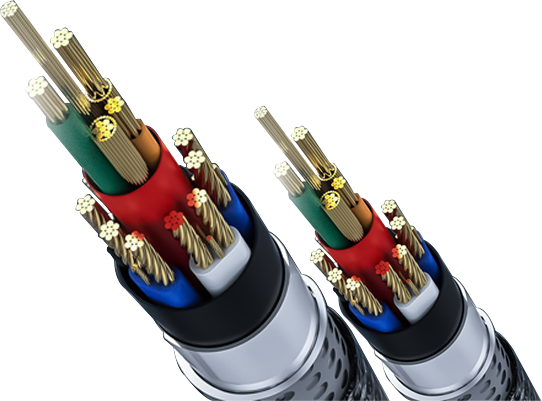
High Electrical Conductivity: With an electrical resistivity of only 1.72×10⁻⁸ Ω・m, copper is the second most conductive industrial metal after silver, minimizing energy losses during transmission.Superior Mechanical Strength: Copper exhibits tensile strength of 200-240 MPa and elongation ≥30%, offering excellent flexibility. Its bending radius can reach as low as 6 times the conductor's outer diameter, making it resistant to breakage during installation or vibration.High thermal stability: With a melting point of 1083°C, copper maintains structural integrity at sustained operating temperatures of 90-150°C. It resists softening and deformation under overload or high-temperature conditions.Exceptional Corrosion Resistance: Copper readily forms a dense oxide layer in air and soil, effectively resisting corrosion from acids, alkalis, salt fog, and other corrosive agents. It performs outstandingly in harsh environments like humid or coastal areas.
Advantages of Copper Conductors
Low Loss Energy Efficiency: High electrical conductivity means copper conductors exhibit significantly lower resistance losses than aluminum conductors at the same current. Data indicates that when transmitting the same power, copper conductors incur only 60% of the losses of aluminum conductors, significantly reducing long-term electricity costs. High Long-Term Reliability: Copper conductors exhibit strong chemical stability and low susceptibility to oxidation. Their joints maintain low and stable contact resistance, with a failure rate over decades of service life that is only one-fifth that of aluminum conductors. This makes them ideal for long-term installations demanding high reliability.Suitable for High-Load Applications: In high-load, high-temperature applications such as industrial heavy-duty motors, data centers, and high-rise buildings, copper conductors demonstrate superior thermal stability and current-carrying capacity, meeting peak power demands of equipment.
Disadvantages of Copper Conductors
Higher Cost: Copper's market price is approximately 3-4 times that of aluminum, resulting in significantly higher material costs for copper-core cables compared to aluminum-core cables. This substantially increases initial investment in large-scale wiring projects. Heavier Weight: Copper has a density of 8.96 g/cm³, 3.3 times that of aluminum. Large-cross-section copper cables are substantial in weight, requiring sturdier supports and more labor during installation, thereby increasing both installation and transportation costs.Difficult to Bend at Large Sizes: Copper conductors exceeding 150mm² cross-sectional area are typically solid-core, reducing flexibility. Specialized tools are required for bending, making installation challenging in confined spaces.
Aluminum Conductors: The Cost-Effective “Lightweight Pioneer”
As one of the most abundant metallic elements in the Earth's crust, aluminum leverages its lightweight and low-cost advantages to become the preferred material for high-voltage transmission and overhead lines.
Core Characteristics of Aluminum Conductors
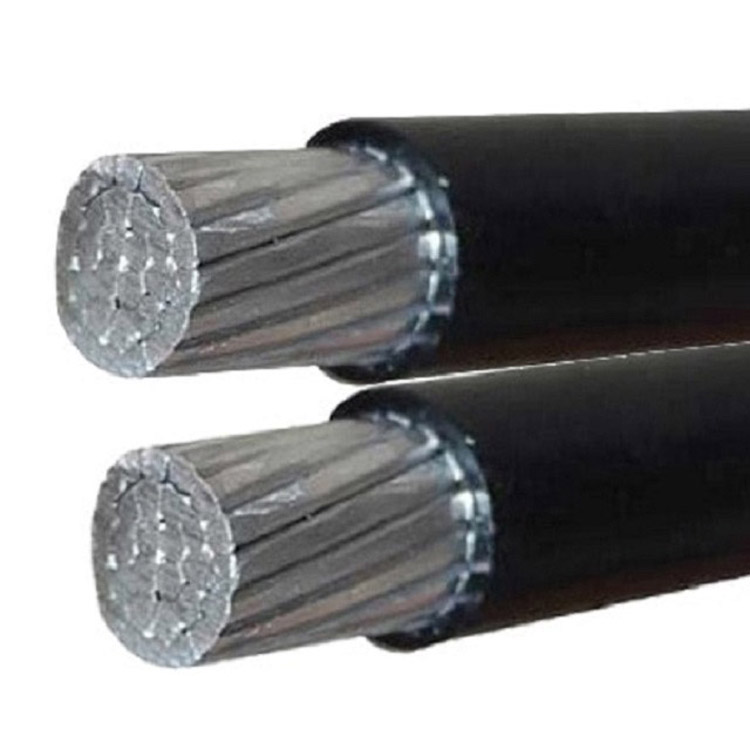
Excellent Conductivity: Aluminum's resistivity is 2.82×10⁻⁸ Ω・m, approximately 61% of copper's value. While its conductivity falls short of copper, this gap can be compensated for in large-cross-section, long-distance transmission by increasing the conductor's cross-sectional area.Ultra-lightweight: With a density of only 2.7 g/cm³, one-third that of copper, aluminum conductors weigh just 27% as much as copper conductors of the same cross-sectional area. This significantly reduces labor and equipment costs for transportation and installation.Lower Mechanical Strength: Aluminum's tensile strength ranges from 100-120 MPa, approximately half that of copper. Its low elongation rate (≤15%) makes it prone to fracture during bending or stretching, necessitating additional reinforcement.Prone to oxidation: Aluminum readily forms a dense aluminum oxide film in air. While this protects the underlying metal, aluminum oxide has extremely high electrical resistivity, leading to increased contact resistance at joints and impaired conductivity.
Advantages of Aluminum Conductors
Significant Cost Advantage: Aluminum's low raw material cost and lightweight cables reduce transportation and installation expenses to just 50% of copper equivalents. This delivers substantial overall cost savings in large-scale overhead lines and long-distance distribution projects.Ease of Construction: The lightweight nature of aluminum conductors simplifies handling and installation, particularly in high-altitude overhead lines and bridge crossings. This allows for reduced support structure load-bearing design and lower construction complexity. Suitable for Long-Distance Transmission: The lightweight advantage of aluminum conductors is particularly pronounced in high-voltage overhead transmission lines. It effectively reduces the load and number of towers required, lowering overall line construction costs and making it an ideal choice for long-distance power transmission.
Disadvantages of Aluminum Conductors
Higher losses: To achieve the same current-carrying capacity as copper conductors, aluminum conductors require 1.5–2 times the cross-sectional area. This not only increases cable bulk but also elevates transmission losses, resulting in higher long-term operational energy consumption.Oxidation and joint issues: The oxide layer on aluminum conductors increases contact resistance at joints. Improper handling can lead to overheating, arcing, and other failures, necessitating specialized anti-oxidants and connection terminals.Insufficient Mechanical Properties: Aluminum exhibits poor fatigue resistance, making it prone to fracture under vibration or frequent bending. Its thermal expansion coefficient (23.1×10⁻⁶/℃) is 40% higher than copper's (16.5×10⁻⁶/℃), increasing the likelihood of joint loosening during temperature fluctuations.
Typical Application Scenarios for Copper and Aluminum Conductors
Core Applications of Copper Conductors
Low-voltage building wiring: Indoor wiring in residential buildings, office towers, shopping malls, and other civil structures prioritizes copper conductors. Their low loss and high reliability ensure household electrical safety while supporting high-power appliances like air conditioners and water heaters.Industrial High-Power Equipment: In high-load scenarios like large motors and smelting equipment in steel mills and chemical plants, copper conductors' thermal stability and current-carrying capacity meet continuous operational demands.Underground Power Cables: For urban underground distribution networks and submarine cables, copper conductors' corrosion resistance and low-loss advantages are significant, adapting well to humid, corrosive underground environments.Safety-critical sectors: In high-security environments like hospitals, subways, and nuclear power plants, copper conductors' low failure risk makes them the preferred choice, preventing accidents caused by conductor malfunctions.Marine and aerospace: For vessels and aircraft, copper conductors' corrosion resistance and vibration tolerance withstand harsh operating conditions, ensuring stable power supply to equipment.
Core Applications of Aluminum Conductors
High-Voltage Overhead Transmission Lines: In State Grid's high-voltage and ultra-high-voltage overhead lines (e.g., ACSR steel-core aluminum stranded conductors, AAAC all-aluminum alloy conductors), aluminum's lightweight advantage significantly reduces tower construction costs.Long-Distance Distribution Networks: For rural grids and remote areas' extended distribution lines, aluminum's low cost and lightweight properties effectively control total project investment.Large Commercial Feeder Lines: External power supply lines for shopping malls and industrial parks. With relatively stable loads, aluminum conductors can meet power demands by increasing cross-sectional area while offering clear cost advantages.Solar Photovoltaic Projects: Collection lines for PV power stations. The lightweight nature of aluminum conductors facilitates installation between solar panels. Since most PV projects are outdoor installations, overhead routing avoids corrosion issues associated with aluminum conductors.Service Feeder Lines: For residential and commercial premises with lower loads, aluminum conductors meet basic power requirements while reducing initial building wiring costs.
Environmental Impact and Sustainability
Environmental Costs of Mining and Refining
Copper mining often causes soil heavy metal contamination, and copper ore grades are declining annually. Refining 1 ton of copper consumes approximately 1,500 kWh of electricity. Aluminum refining relies on the electrolytic process, consuming about 13,000 kWh per ton of aluminum produced, resulting in higher carbon emissions. However, bauxite reserves are abundant, and mining causes relatively less environmental damage.
Recyclability
Both copper and aluminum exhibit exceptionally high recyclability rates. Recycling copper consumes only 5% of the energy required for primary ore extraction, while aluminum recycling uses just 3% of the energy needed for primary production. Currently, global recycling rates reach 80% for copper conductors and 90% for aluminum conductors, classifying both as highly recyclable green materials.
Conclusion
Copper and aluminum conductors are not inherently “superior or inferior,” but rather “differently suited”: Copper conductors, with their high conductivity and reliability, are the optimal choice for low-voltage, high-load, and safety-critical applications. Though initially more costly, they offer greater energy efficiency and stability over the long term. Aluminum conductors offer lightweight construction and low cost as core advantages, making them a cost-effective choice for high-voltage overhead lines, long-distance transmission, and large-scale wiring projects. Proper installation can effectively mitigate performance limitations.In practical engineering, conductor materials should be scientifically selected based on the project's application scenario, load requirements, budget, and operational capabilities. When necessary, a “copper-aluminum hybrid solution” can be adopted—such as using aluminum conductors for main lines to reduce costs while employing copper conductors for branch lines and critical equipment to ensure performance, achieving the optimal balance between performance and cost.