In industrial manufacturing, construction engineering, and communication transmission, the choice of conductor material directly impacts project costs and long-term stability. With the market demand for "high-performance, cost-effective" conductors continuing to rise, copper-clad aluminum (CCA) cables and pure copper cables have become core options in procurement decisions. A thorough comparison of their cost structures, performance differences, and applicable scenarios can help cable purchasers and engineering designers avoid selection pitfalls and maximize project value. This article will analyze this from multiple dimensions, including definition, cost, performance, and compliance, providing clear guidance for users with different needs.
What is Copper-Clad Aluminum (CCA) Cable?
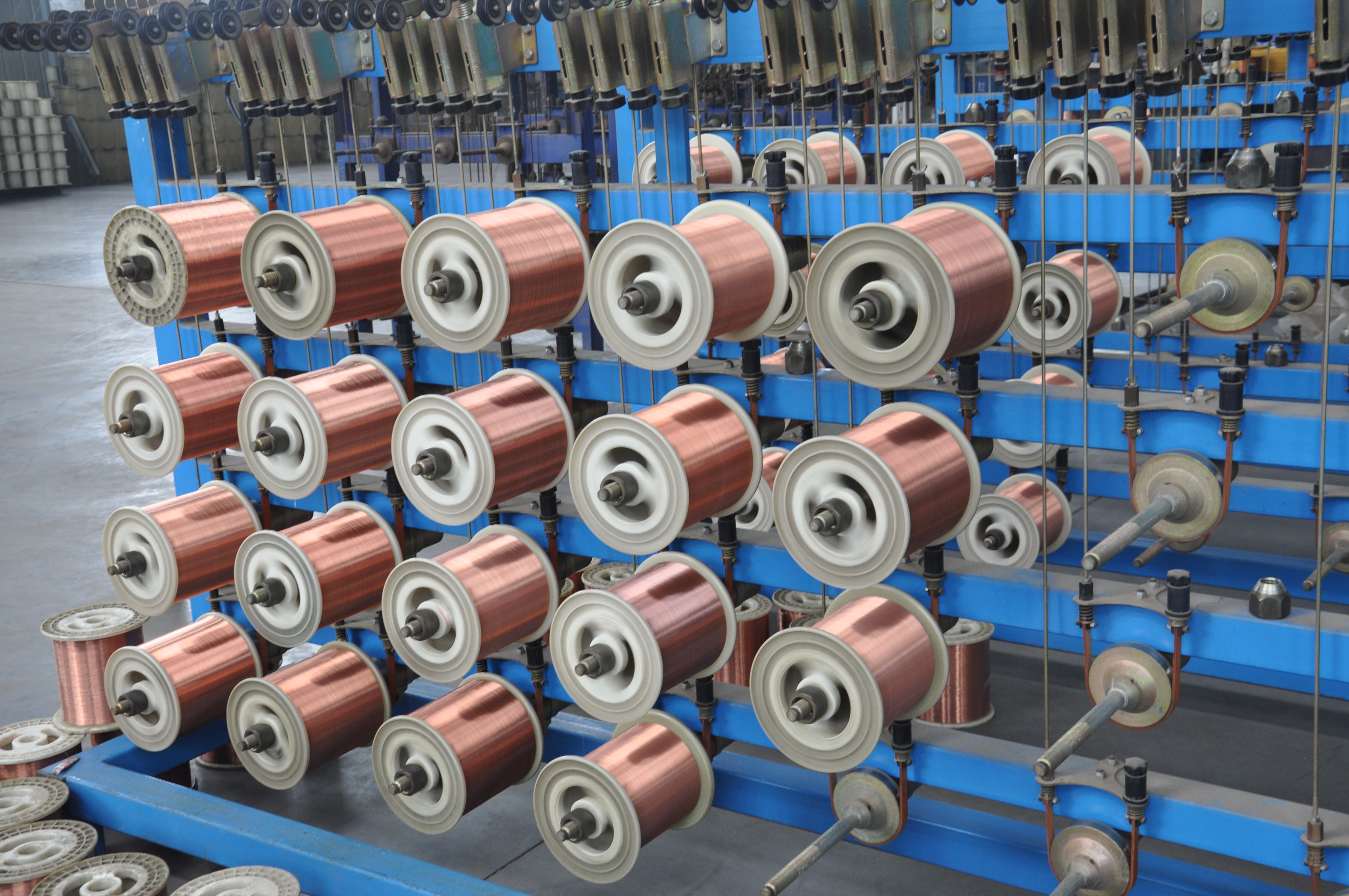
Copper-clad aluminum (CCA) cable is a composite conductor cable with a core structure of "aluminum core + tightly bonded copper layer." The copper layer is firmly bonded to the aluminum core through a metallurgical bonding process, retaining the lightweight advantage of aluminum while leveraging the conductivity of copper to compensate for the shortcomings of aluminum.
The core of its manufacturing lies in controlling the thickness of the copper layer and the bonding process. Typically, the copper layer accounts for 10%–15% of the total conductor cross-sectional area, ensuring conductivity and mechanical stability. The production process must comply with international standards such as UL 4703, ASTM B566, and IEC 60228 to ensure product consistency and safety.
Typical applications include: audio equipment cabling, communication base station transmission lines, building low-voltage systems, general power distribution lines, and automotive low-voltage wiring—scenarios with moderate load requirements and cost-sensitive needs.
What is Pure Copper Cable?
Pure copper cable uses high-purity electrolytic copper (ETP Cu, copper content ≥99.9%) as the conductor core, containing no other metal substrates. Electrolytic copper undergoes a special processing to remove impurities, possessing excellent electrical and thermal conductivity, making it a benchmark for traditional conductor materials.
Its core performance indicators must meet the requirements of standards such as IEC 60228, ASTM B174, and BS 6360, with clear specifications for conductivity, mechanical strength, and corrosion resistance.
Common applications are concentrated in: industrial high-power equipment power supply, core power distribution systems in high-rise buildings, long-distance power transmission lines, dedicated lines for medical equipment, and high-density cabling in data centers—scenarios with stringent performance requirements.
Cost Comparison: CCA Cables Offer Greater Economic Advantages
Raw Material Cost Differences
Global copper prices have consistently been higher than aluminum prices, and copper prices fluctuate more significantly. This is the core source of the cost advantage of CCA cables. Aluminum reserves in the Earth's crust are dozens of times greater than copper, resulting in significantly lower raw material procurement costs. This allows CCA cables to save 20%–40% on raw material costs compared to pure copper cables.
This cost difference is particularly pronounced in large-section, large-volume procurement scenarios, such as large-scale campus cabling and long-distance transmission projects. The raw material cost advantage of CCA directly translates into a substantial reduction in the total project budget.
Total Installation Costs
CCA cables have a density only about 60% that of pure copper cables, making them lighter for the same specifications. This means that more can be loaded during transportation, reducing unit transportation costs. During on-site construction, their lightweight nature reduces the intensity of manual handling, shortens installation time, and indirectly saves labor costs.
Pure copper cables, due to their greater weight, not only incur higher transportation costs but may also require additional hoisting equipment or more construction personnel, increasing hidden costs in the installation process.
Long-Term Maintenance Costs
Pure copper cables exhibit slow conductivity degradation and stronger corrosion resistance, with a normal service life of 20-30 years requiring almost no additional maintenance.
The aluminum core of CCA cables is susceptible to oxidation. Damage to the copper layer can lead to decreased conductivity. Regular checks of the copper layer's integrity are necessary during long-term use, resulting in slightly higher maintenance costs than pure copper cables. However, the overall maintenance difficulty is lower, and the cost increase is limited.
Performance Comparison: Pure Copper Cables Hold the Performance Advantage
Electrical Conductivity
Conductivity is the most crucial performance difference between the two: pure copper cables achieve a conductivity of 97%-100% IACS, while CCA cables only reach 63%-68% IACS.
Higher conductivity means lower voltage drop and higher power transmission efficiency for pure copper cables, especially in long-distance transmission or high-load scenarios, reducing power loss and lowering operating costs. Due to its lower conductivity, CCA cables require a larger cross-section to achieve comparable transmission performance to pure copper cables under the same load.
Mechanical Strength
Pure copper cables have higher tensile strength and greater toughness, and are less prone to breakage after repeated bending, making them suitable for scenarios requiring frequent movement or flexible installation, such as equipment connection cables and mobile cabling systems.
CCA cables have a rigid aluminum core, but their tensile strength is slightly lower than pure copper, and their bending performance is poorer. They are more suitable for fixed installations, such as wall embedding and conduit wiring. Excessive bending should be avoided during installation.
Thermal Performance
Pure copper has a much higher thermal conductivity than aluminum, resulting in superior heat dissipation performance. Pure copper cables allow for higher continuous operating temperatures (typically 90℃) and stronger current carrying capacity, making them suitable for high-temperature environments or high current density applications.
CCA cables have weaker heat dissipation performance, with relatively lower continuous operating temperatures (typically 75℃). They are prone to overheating in high-temperature or high-current scenarios, requiring more space for heat dissipation.
Corrosion and Oxidation Resistance
A dense copper oxide film forms on the surface of pure copper, preventing further corrosion of the internal metal and exhibiting excellent stability in harsh environments such as humidity and acid/alkali conditions.
CCA cables rely on their surface copper layer for corrosion resistance. If the copper layer is scratched or damaged, the internal aluminum core will quickly oxidize, forming aluminum oxide, leading to decreased conductivity or even conductor failure. Therefore, additional protective measures are required in harsh environments.
Safety and Compliance
Fire Safety
Both types of cables meet international fire safety standards. Pure copper cables, due to their superior high-temperature resistance, can maintain power supply for a longer period in fire scenarios, making them suitable for critical circuits such as fire protection power supplies and emergency systems.
CCA cables also meet the fire resistance requirements for general scenarios, but their performance is slightly inferior to pure copper cables in environments with prolonged high temperatures.
Standard Compliance Differences
Pure copper cables have application standards covering all scenarios. Global standards such as UL, IEC, and ASTM clearly recognize them, with no usage restrictions.
CCA cables face compliance restrictions in some scenarios. For example, some countries mandate the use of pure copper cables for core building power distribution and emergency power supply lines. In communication and audio scenarios, CCA cables fully comply with standards and can be used normally.
Application Scenarios: Choosing the Right Thing for Greater Efficiency
Optimal Application Scenarios for CCA Cables
Large-scale projects with limited budgets, such as overall cabling for industrial parks, power distribution in ordinary residences, and temporary power supply lines.
Audio, video, and communication signal transmission, such as audio equipment cables, network patch cords, and base station feeders.
Low-to-medium load power distribution, such as lighting circuits, power supply for small equipment, and cabling in non-critical areas.
Optimal Application Scenarios for Pure Copper Cables
Critical power supply, such as power supply for hospital emergency equipment, core power distribution for data centers, and power supply for industrial production lines.
High-current or long-distance transmission, such as substation outgoing lines, cross-regional power transmission, and power supply for central air conditioning in large shopping malls.
High-requirement environments, such as high-temperature workshops, humid factories, chemical industrial parks, and core lines in high-rise buildings.
Summary of Advantages and Disadvantages
Conductivity
Copper-clad aluminum (CCA) cables have relatively low conductivity, only 63–68% IACS; while pure copper cables have excellent conductivity, reaching 97–100% IACS. This is the most significant performance difference between the two.
Cost
Copper-clad aluminum (CCA) cables have a significant cost advantage, with lower raw material and installation costs, saving 20-40% compared to pure copper cables. Pure copper cables are more expensive, placing a greater burden on project budgets.
Weight
Copper-clad aluminum (CCA) cables are lightweight, approximately 60% the weight of pure copper cables. This lightweight characteristic makes them easier to install. Pure copper cables are relatively heavy, increasing transportation costs and the difficulty of handling during installation.
Mechanical Strength
Copper-clad aluminum (CCA) cables have moderate mechanical strength, with moderate tensile strength and poor bending performance, making them more suitable for fixed installations. Pure copper cables, on the other hand, have stronger tensile strength and toughness, are less prone to breakage after repeated bending, and are suitable for flexible installations and frequent relocation. 5. Thermal Performance: Copper-clad aluminum (CCA) cables generally have poor heat dissipation performance, with a relatively low upper limit for continuous operating temperature, typically around 75°C. Sufficient heat dissipation space is required in high-temperature or high-current environments. Pure copper cables, on the other hand, have excellent heat dissipation performance, a higher upper limit for continuous operating temperature (up to 90°C), and stronger current carrying capacity, making them suitable for high-temperature and high-current-density applications.
Corrosion Resistance
The corrosion resistance of CCA cables relies on the surface copper layer. If the copper layer is scratched or damaged, the internal aluminum core is prone to oxidation, leading to a decrease in conductivity. Pure copper cables have stronger oxidation resistance, forming a dense copper oxide film on the surface, maintaining stable performance even in harsh environments such as humid, acidic, and alkaline conditions.
Service Life
The service life of CCA cables is relatively short, approximately 15–20 years, requiring regular inspection and maintenance during long-term use. Pure copper cables have a longer service life, reaching 20–30 years, with almost no additional maintenance required during this period, resulting in lower maintenance costs.
Typical Applications
Copper-clad aluminum (CCA) cables are suitable for audio, communication, general power distribution, and budget-sensitive projects; pure copper cables are better suited for critical power supply, high current transmission, long-distance transmission, and various demanding applications.
How to Choose the Right Cable for Your Project?
Define your budget limit: If your project budget is tight and your load requirements are moderate, CCA cables offer the best value; if your budget is sufficient and you prioritize long-term stability, pure copper cables are the preferred choice.
Assess the load and transmission distance: Pure copper cables are essential for high-current, long-distance transmission scenarios; CCA cables can be considered for medium-to-low loads and short-distance transmission.
Verify local compliance requirements: Confirm the industry regulations in the project's location. Core power distribution and emergency lines may require pure copper cables.
Consider the operating environment: Pure copper cables are preferred for harsh environments such as humid, high-temperature, and acid/alkali environments; CCA cables can be used in dry, normal-temperature environments.
Conclusion
Copper-clad aluminum (CCA) cables and pure copper cables are not mutually exclusive competitors, but rather complementary options for different needs. CCA cables, with their significant cost advantage, are ideal for budget-sensitive, low-to-medium load scenarios; pure copper cables, on the other hand, are irreplaceable in critical power supply and demanding environments due to their superior conductivity, mechanical strength, and long-term reliability.
The core of cable selection is balancing cost input with performance requirements, rather than simply pursuing the lowest price or the highest quality. It is recommended that purchasers make a comprehensive decision based on the project's load, transmission distance, environmental conditions, compliance requirements, and budget.