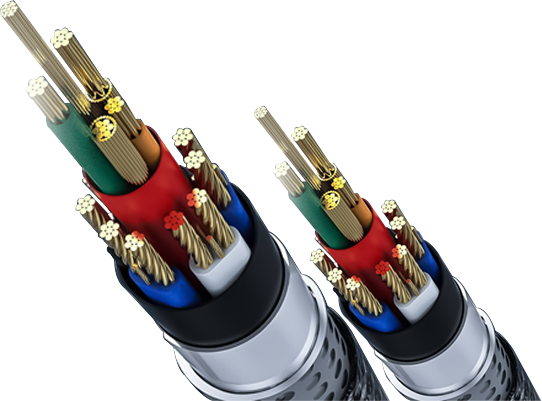
What is AGRP High-Temperature Cable?

Oct 16, 2026

1. Why High-Temperature Cables Matter

Heat is arguably the most destructive enemy of electrical insulation. Every insulation material has a ceiling: once the operating temperature climbs past it, the polymer softens, deforms, loses dielectric strength, and eventually fails short — often with expensive downtime or fire damage in the middle of a production line. Ordinary PVC-insulated wire, the default choice for general building and appliance wiring, is rated for continuous service around 70 °C, with special grades stretching to 90–105 °C. That is perfectly adequate for a switchboard or a lamp socket, but hopeless inside an industrial oven, a motor winding compartment, or a heat-sealing machine.
This is where silicone rubber cables enter the picture. Silicone insulation carries a continuous rating of up to 180 °C — roughly double what standard PVC can tolerate — while staying flexible down to −60 °C. Among the many silicone-based products traded globally, one designation stands out in the Chinese and Asian wire industry: AGRP. This article explains exactly what AGRP cable is, how it is built, where it should be used, and how to specify it correctly for export, OEM, or maintenance procurement.

2. What Does "AGRP" Mean?

AGRP is a long-established designation in the Chinese wire and cable industry for a silicone-rubber-insulated, glass-fiber-braided flexible wire. The four letters are a compact technical description:
  • A — installation (assembled) wire for equipment internal wiring;
  • G — silicone rubber insulation ;
  • R — flexible, finely stranded conductor;
  • P — braided protective covering.
Read as a whole, AGRP describes a cable intended for internal wiring of electrical equipment rated up to 500 V, where the environment is hot enough to defeat PVC but where a plain silicone wire would need extra mechanical armor. The "P" layer is the key differentiator: a woven fiberglass braid that shields the soft silicone insulation from abrasion, cuts, and crushing.

3. Anatomy: Three Layers, Three Jobs

A typical AGRP cable is a simple three-layer construction, and each layer exists for a reason.
Conductor. The core is tinned, finely stranded copper. Fine stranding (typically Class 5 flexibility per IEC 60228) keeps the wire supple so it can be routed into tight spaces inside equipment and survive vibration without work-hardening and cracking. Tinning is not cosmetic: at high operating temperatures bare copper oxidizes quickly, raising contact resistance and compromising long-term reliability, while the tin coating preserves conductivity, corrosion resistance, and solderability at terminations.
Insulation. Around the conductor is a seamless wall of silicone rubber. Silicone's backbone is a silicon–oxygen chain, not the carbon chain of ordinary plastics, which explains its extraordinary thermal stability: it neither melts nor becomes brittle across a −60 °C to +180 °C window, and short peaks toward 200 °C are survivable. Silicone also keeps its electrical properties remarkably stable when hot, and its hydrophobic surface shrugs off moisture. It is generally considered halogen-free, so even in fire conditions it does not release the corrosive halogen gases associated with PVC.
Outer protection. Finally, fiberglass yarns are braided tightly over the insulation. Silicone rubber's one weakness is modest mechanical strength — it cuts, abrades, and tears more easily than neoprene or EPDM. The glass braid solves that: it is non-combustible, hard-wearing, and gives the cable a tough, grippable jacket. Most manufacturers additionally impregnate the braid with silicone varnish, which binds the yarns together, smooths the surface, and improves moisture and oil resistance — an important detail worth confirming when ordering.
  1. Key Specifications
Parameter Typical Value
Rated voltage 300/500 V AC (300 V to earth, 500 V between phases)
Continuous operating temperature −60 °C to +180 °C (short peaks to ~200 °C)
Conductor Tinned copper, Class 5 flexible stranding
Insulation Silicone rubber
Outer covering Fiberglass braid, often silicone-varnish impregnated
Routine test voltage 2 KV AC withstand (per IEC 60245 practice for 300/500 V)
Flexibility High — suitable for tight internal routing
Flame behavior Silicone inherently flame-resistant; fiberglass non-combustible
These figures cover the mainstream commercial product. Because AGRP is an industry designation rather than a single international standard, always verify the actual data sheet of the lot you purchase — particularly the temperature class and braid construction.

5. Where You Will Find AGRP

AGRP cables earn their keep wherever heat would destroy PVC and where mechanical abuse is part of the job:
  • Motor lead wires — internal connections for electric motors, pumps, and compressors, especially where windings operate under Class F/H insulation systems (155–180 °C);
  • Heating appliances — electric ovens, toasters, heat-sealing machines, soldering irons, and industrial heating elements;
  • Lighting — high-bay luminaires, stage and spot lights, and lamp-holder wiring where lamp heat accumulates;
  • Household appliances — irons, cookers, and microwave ovens (internal wiring);
  • Industrial equipment — ceramic kilns, glass-processing lines, plastic and rubber machinery, and other machines with hot, confined wiring compartments.
In short: if the equipment gets too hot to touch and the wiring must still flex, AGRP is a natural fit.

6. AGR vs AGRP — and a Common Confusion

One of the most frequent ordering mistakes is confusing AGR with AGRP, and AGRP braid types with each other.
AGR is the plain version: silicone insulation with no braid. It is lighter and cheaper, and fine for protected, low-abrasion spots. AGRP adds the fiberglass braid for mechanical protection.
The trap is the letter "P". Some manufacturers use "P" to mean a copper braided shield rather than a glass braid — a shielded AGRP variant intended for signal and control lines where electromagnetic interference matters. The two products look similar at a glance but behave very differently and cost differently.
Variant Braid Primary Role Typical Use
AGR None Basic heat-resistant wiring Benign, hot internal spaces
AGRP (glass braid) Fiberglass Mechanical protection Heaters, motors, ovens
AGRP (copper shield) Tinned copper EMI shielding Signal / control circuits

Before quoting or ordering, always confirm: glass braid or copper braid, protection or shielding? One phone call saves a costly mismatch.

7. Standards, Testing, and Export Considerations

AGRP originated as a Chinese industry designation, and domestic product is typically evaluated against GB/T 5013, which is technically equivalent to IEC 60245 for rubber-insulated cables. Key factory tests include conductor resistance, insulation resistance, high-voltage withstand (commonly 2 KV AC for a 300/500 V rating), air-oven aging, and tensile/elongation checks on the insulation.
For export, this matters a great deal: a cable sold into the EU or US market usually must carry recognized marks. Many AGRP producers can manufacture and test versions to UL 758 / UL 62 (Appliance Wiring Material), VDE documents, or the CE Low Voltage Directive on request. If your end customer or OEM demands a specific certification, state it in the inquiry — do not assume the stock product carries it. Reliable suppliers will quote only what they can actually certify.

8. How to Select the Right AGRP Cable

Choosing correctly is a six-step exercise:
  1. Voltage. The 300/500 V class covers nearly all internal equipment wiring. Move up a class only if your circuit rating demands it.
  2. Conductor size. Size by load current and acceptable voltage drop using the supplier's ampacity table. Remember that high ambient temperature requires derating — the same conductor carries less current at 150 °C than at 25 °C.
  3. Temperature. Match the cable's continuous rating to your worst-case steady temperature, not the occasional peak. If peaks above 200 °C recur, ask for a higher-temperature grade.
  4. Environment. Moisture, oil, solvents, and UV all affect silicone. For damp or oily spots, specify varnish-impregnated braid and check chemical compatibility with the supplier.
  5. Flexibility and routing. Class 5 stranding gives good flexibility, but respect the manufacturer's minimum bending radius — as a rule of thumb, allow several times the outer diameter in fixed installation, and avoid tight kinks at terminations.
  6. Certification and marking. Define UL/VDE/CE requirements up front, plus color coding and printed legends for phase identification and traceability.

9. Installation and Handling Tips

Even a heat-resistant cable fails if it is installed badly:
  • Cut braid with sharp tools; a frayed glass braid wicks moisture and loses its protective function. Seal cut ends cleanly.
  • Avoid repeated flexing at a single point — use strain relief where the cable exits a moving part.
  • Use proper crimp ferrules or lugs, and keep soldering heat away from the silicone insulation near terminations.
  • Store spools in a cool, dry place away from direct UV and ozone, and respect the manufacturer's recommended shelf life.

10. Conclusion

AGRP is a proven workhorse for hot, demanding environments: silicone rubber delivers the thermal endurance, the fiberglass braid delivers the mechanical toughness, and the two together cover a range that ordinary PVC simply cannot. The practical takeaways are simple — know the difference between AGR and AGRP, confirm whether the braid is glass or copper, verify the temperature and voltage ratings against your actual duty, and specify the certifications your market requires. Do that, and AGRP will quietly do its job for years inside the hottest parts of your equipment.

 
Email
CopyRight © 1989 Chunbin Cable Co., Ltd.
Technical support :Coverweb
Fill in you have to consult
We will contact you as soon as we receive the inquiry and ensure the security of your information.
Name*
Email*
Phone
Country
Message*