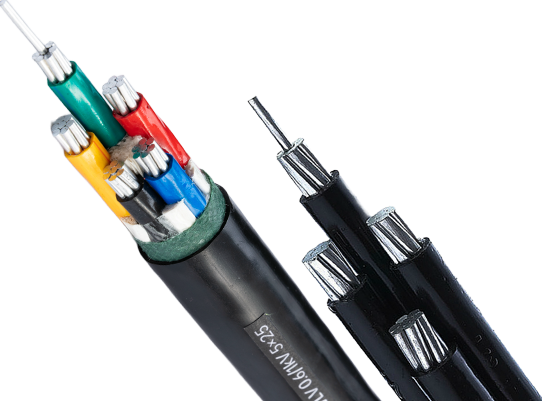
What Are Annealed Conductors?
Introduction: Conductor Performance Determines the Overall Value of a Cable
As the core conductor in wires and cables, the conductor plays a central role in transmitting electrical energy and conducting signals, making it an irreplaceable fundamental component of a cable’s structure. The flexibility, electrical conductivity, ductility, and fatigue resistance of a cable’s conductor directly determine the difficulty of cable installation, long-term power transmission efficiency, service life under bending, and the stability of terminal connections. In all wiring applications—including municipal power distribution, industrial automation, new energy, automotive and marine systems, and commercial buildings—conductors are divided into two major categories: cold-drawn hard conductors and heat-treated annealed conductors. These two types differ significantly in performance, cost, and suitable operating conditions.
The vast majority of residential wiring, industrial flexible cables, and high- and low-voltage power distribution cables on the market use annealed conductors rather than virgin cold-drawn hard conductors. Currently, in the global cable manufacturing industry, the annealing process is a standard step in conductor processing and an essential process for the mass production of compliant cables. For cable purchasers, electrical engineers, construction contractors, and cable manufacturers, clarifying the definition of annealed conductors, the heat treatment process, performance advantages and disadvantages, selection criteria, and industry standards enables them to accurately distinguish high-quality flexible conductors from inferior rigid conductors. This helps avoid common engineering issues such as cable breakage during installation, high electrical conduction losses, excessive heat generation at connection points, and failure due to repeated bending. Based on international cable standards from the IEC, ASTM, and BS, this article provides a comprehensive analysis of the principles behind the annealed conductor process, changes in performance, comparisons of different types, selection criteria, and industry applications, offering an in-depth answer to the core industry question: “What are annealed conductors?”
What Are Annealed Conductors? Definition, Process Principles, and Base Materials
Technical Definition of Annealed Conductors
An annealed conductor refers to a modified conductive material produced by subjecting metal wire—after drawing and stranding—to a complete annealing process consisting of controlled high-temperature heat treatment, uniform isothermal holding, and gradient-controlled slow cooling. This process eliminates internal lattice stresses caused by cold working during wire drawing, restores the metal’s crystal structure, and improves its physical and electrical properties. The industry collectively refers to this as a soft-state annealed conductor. Unlike hard-drawn conductors, which are drawn directly without heat treatment, annealed conductors are modified and optimized conductive materials and serve as the standard conductors for globally compliant power cables.
The Logic Behind Modifying Metal Conductors Through the Annealing Process
During high-speed wire drawing and stranding processes, copper and aluminum wires experience internal lattice dislocations, compression, and the accumulation of dislocations, leading to work hardening: the material becomes harder and more brittle, the conductive lattice is impeded, and the wire is highly prone to fracture when bent. The annealing process reshapes the arrangement of metal grains through thermal restructuring, releases internal residual stresses, reduces metal hardness, and simultaneously optimizes lattice conductivity efficiency. This improves the conductor’s overall performance from both physical and electrical perspectives, making it suitable for the entire manufacturing process—including cable stranding, insulation extrusion, and bending during installation.
Mainstream Raw Materials for Annealed Cable Conductors
Annealed copper conductors: The industry’s most widely used primary material, based on electrolytically refined high-purity oxygen-free copper. They are categorized into soft-drawn annealed copper wire and stranded annealed copper conductors. These materials offer excellent electrical conductivity, resistance to bending, and ease of crimping terminals, making them suitable for cables across all voltage ratings.
Annealed aluminum conductors: A lightweight and cost-effective primary material, formed by low-temperature annealing after drawing pure aluminum rods. They feature low self-weight, low production costs, and moderate tensile strength, and are commonly used in long-distance power distribution networks and outdoor low-voltage overhead cables.
Four Major Steps in the Standard Annealing Process for Cable Conductors
The cable industry employs a continuous in-line bright annealing process, which is fully sealed with inert gas to prevent oxidation and avoid blackening of the conductor surface. The four major processes are completed in a closed-loop system to achieve the required modifications, making it suitable for high-volume cable production.
Heating
Temperature is precisely controlled according to the metal material: the annealing temperature for copper conductors is maintained between 400°C and 550°C, while that for aluminum conductors is maintained between 280°C and 360°C. The overall temperature of the wire is raised at a constant rate to break down the solidified, distorted crystal lattice formed after wire drawing. Temperature deviations are strictly controlled within ±5°C to prevent overheating, melting, and degradation of material properties.
Soaking
After reaching the rated temperature, the material is held at a constant temperature. The soaking time is 20–60 seconds for fine-diameter single wires and 2–5 minutes for coarse-diameter stranded conductors. This ensures uniform temperature throughout the wire, allowing metal grains to fully reorganize and internal stresses to be completely released, thereby eliminating issues such as uneven hardness between the interior and exterior of the conductor and excessive localized brittleness.
Controlled Gradient Cooling
Rapid water cooling is prohibited; instead, a controlled gradient cooling process using nitrogen or hot air is employed to cool the conductor uniformly to room temperature. Rapid cooling can induce secondary lattice stress, causing the conductor to revert to a hard state; controlled, gradual cooling is the core process that ensures the conductor remains flexible, meets ductility standards, and maintains stable electrical conductivity.
The Necessity of Post-Drawing Annealing
Metal wire drawing is a cold working process that inevitably results in work hardening: increased conductor hardness, a sharp drop in elongation, higher electrical resistance, and a tendency to crack or break when bent. Annealing completely eliminates work hardening, restores the metal’s inherent ductility, and optimizes electrical conductivity. It is an indispensable core process in cable stranding and flexible cable production; all cable conductors, whether compliant with national or international standards, must undergo annealing after wire drawing.
Changes in the Four Core Properties of Conductors Due to the Annealing Process
Significantly Enhanced Flexibility
After annealing, the conductor’s hardness is significantly reduced, and its springback upon bending is minimized. This makes it suitable for multi-angle bending during construction, such as at cable tray corners, pipe bends, and equipment connections. The conductor is less prone to brittle fracture when pulled during installation, thereby reducing the scrap rate during on-site installation. Highly flexible annealed conductors can withstand repeated bending at small radii, making them suitable for dynamic cabling applications in mobile devices.
Optimized Metal Ductility
The elongation of annealed conductors increases by 60%–120%, making them less prone to strand breakage or unraveling during stranding. This suits multi-strand fine-wire stranding processes, facilitates high-speed cable manufacturing and insulation extrusion at the factory, improves mass production yield rates, and supports the production of Class 5 and Class 6 high-flexibility stranded conductors.
Improved Electrical Conductivity
Cold-drawn hard conductors have a disordered crystal lattice, resulting in high electrical resistance and significant heat loss; annealing reorganizes the crystal lattice, reducing internal resistance and enhancing current-carrying capacity. For the same cross-sectional area, annealed conductors offer higher power transmission efficiency than cold-drawn conductors, exhibit lower temperature rise during long-term operation, and reduce energy consumption in circuits as well as the risk of overheating at connection points.
Reducing Material Brittleness and Extending Service Life
Hard-drawn conductors are highly brittle and are prone to cracking and core breakage after prolonged vibration or thermal deformation; annealed conductors possess balanced toughness and stronger resistance to vibration and thermal deformation, making them suitable for vibration-prone environments such as automotive, marine, and wind turbine applications. They maintain higher conductor integrity during long-term operation and result in lower line failure rates.
Two Main Categories of Annealed Conductors and Their Applications
Annealed Copper Conductors
Made from high-purity electrolytic copper, these are categorized into solid annealed copper wire and stranded soft-drawn annealed copper wire, and fully comply with ASTM B3 and IEC 60228 standards. Features: Conductivity up to 100% IACS, oxidation resistance, secure terminal crimping, corrosion resistance, and compatibility with all voltage levels from low to high. Applications: Building and home wiring, automation and instrumentation cables, photovoltaic cables, fire-resistant power cables, and special-purpose automotive and marine cables; these are general-purpose conductors suitable for all scenarios.
Annealed Aluminum Conductors
Low-temperature annealed, modified soft aluminum conductors made from primary aluminum rods. They are lightweight, have low raw material costs, offer better corrosion resistance than hard aluminum conductors, and possess moderate tensile strength. Applications: Municipal low-voltage overhead power distribution, external power cables for industrial sites, and long-distance main power distribution lines. They are primarily used in large-scale power distribution projects involving fixed installation, without frequent bending, and with budget constraints.
Seven Core Engineering Advantages of Annealed Conductors
Simplified On-Site Wiring Installation
Soft and malleable, these conductors can fit into narrow conduit, irregularly shaped cable trays, and tight equipment terminal compartments. They significantly improve the efficiency of manual pulling and corner routing, reduce rework caused by broken strands during installation, effectively shorten on-site wiring schedules, and are well-suited for high-end interior finishing and precision mechatronics construction.
Suitable for Full-Process Mass Production of Cables
Annealed conductors are resistant to strand breakage and strand separation, making them suitable for automated production lines featuring high-speed stranding, dual-layer co-extruded insulation, and extruded sheathing. Terminal crimping and stripping result in smooth, burr-free finishes, enabling automated cable termination and reducing production losses in the factory.
Enhanced Long-Term Operational Reliability of Wiring
Internal stresses are eliminated, preventing conductor cracking or strand separation caused by thermal expansion and contraction due to temperature differences. Terminal connections distribute stress evenly, preventing overheating and arcing at connection points. This significantly reduces the probability of short circuits and power outages in power distribution circuits, making it suitable for critical circuits requiring uninterrupted power supply.
Suitable for Dynamic, Flexible, and Recurring Wiring
For cables that undergo daily repeated bending—such as those used in robotic arms, mobile devices, charging stations, and in-vehicle wiring—annealed conductors exhibit far superior resistance to bending fatigue compared to hard conductors. This extends service life by 3 to 5 times and prevents core wire breakage and scrapping resulting from long-term dynamic use.
High Compatibility with Terminal Connections
Soft in texture and with a high level of conformability, it ensures a tight crimp on wire terminals, copper lugs, and terminal blocks, resulting in low contact resistance and minimizing the risk of loose connections and overheating. It is compatible with all GB-standard wiring accessories available on the market and supports standardized wiring operations on construction sites.
Lower Power Transmission Losses
The crystal lattice ensures smooth electrical conduction and lower internal resistance, resulting in a higher current-carrying capacity for the same cross-sectional area and lower voltage drop over long distances. This reduces power distribution energy consumption and makes the cable suitable for long-distance power transmission lines in renewable energy applications such as solar and wind power.
Suitable for Use in Diverse Environmental Conditions
The conductor structure is stabilized through annealing and modification, providing enhanced resistance to deformation caused by high and low temperatures. It is suitable for complex operating conditions such as outdoor temperature fluctuations, underground humidity, and workshop vibrations.
Key Reasons Why Annealed Copper Conductors Have Become the Mainstream Material for Cables
First, high-purity annealed copper meets the IACS international standard for electrical conductivity, ensuring controllable power transmission losses; second, it offers an optimal balance of softness and hardness, meeting the threefold flexibility requirements for processing, installation, and use; third, it facilitates easy stripping and crimping, making it suitable for standardized cable termination; fourth, all categories of cables compliant with IEC, UL, and national standards are required to use annealed copper cores; Fifth, it offers stable oxidation resistance, preventing corrosion and conductor breakage during long-term underground and outdoor use; Sixth, it can be processed into conductors of all grades from Class 1 to Class 6, covering all wiring needs—including fixed, flexible, and ultra-flexible applications.
Future Industry Technology Trends for Annealed Conductors
First, the widespread adoption of high-purity oxygen-free annealed copper: to enhance electrical conductivity and further reduce power transmission losses in new energy lines; Second, intelligent closed-loop annealing processes: Precise temperature control reduces oxidation defects and improves conductor consistency; Third, lightweight, high-strength annealed aluminum alloy conductors: Replacing some copper-aluminum cables to support lightweight retrofits in rail transit; Fourth, low-temperature, eco-friendly annealing processes: Reducing energy consumption to support mass production of green cables; Fifth, creep-resistant modified annealed conductors: Suitable for long-term operation in high-temperature photovoltaic and energy storage specialty cables.
Frequently Asked Questions (FAQs)
Q1: What does “annealed” mean in the context of cables?
It refers to conductors that have undergone heat treatment to soften and modify them through annealing, resulting in a soft-state conductive conductor—distinct from virgin cold-drawn hard conductors.
Q2: Why must power copper wires undergo annealing?
To eliminate drawing stresses, enhance flexibility, facilitate installation, improve electrical conductivity, and meet the usage requirements of national cable standards.
Q3: Do annealed conductors have better bending performance?
Yes, their flexibility and resistance to bending fatigue are far superior to those of hard-drawn conductors, making them suitable for all scenarios requiring bent wiring.
Q4: What is the key difference between annealed copper conductors and hard-drawn copper conductors?
Annealed copper is soft and easy to install, with excellent conductivity and high toughness; hard-drawn copper is hard, has high tensile strength, is prone to breaking, and is difficult to install.
Q5: Can aluminum conductors undergo annealing?
Yes, annealed aluminum conductors are widely used in municipal low-voltage outdoor power distribution networks and offer significant cost-effectiveness.
Q6: Do all power cables use annealed conductors?
Globally compliant high- and low-voltage power cables all come standard with annealed, modified conductors; only non-standard, substandard cables use unannealed hard conductors.
Conclusion
Annealed conductors are standardized, modified conductors produced through industrial cable manufacturing. Relying on a complete annealing process involving heating, constant temperature maintenance, and slow cooling, they address the common issue of hardening in metal wire drawing, achieving comprehensive upgrades in flexibility, ductility, conductivity, and fatigue resistance. Compared to hard-drawn conductors, annealed conductors offer convenient installation, strong cable compatibility, long-term operational stability, and safe, reliable connections. They are divided into two major categories—annealed copper and annealed aluminum—and are graded to suit all wiring scenarios, including fixed installations, flexible mobile applications, and environments with special vibration conditions.
From residential wiring and industrial automation cables to new energy, automotive and marine applications, and power grid trunk cables, annealed conductors have become an essential conductive material in modern power systems. During engineering procurement and installation selection, it is essential to identify compliant annealed conductors and avoid hard conductors and substandard “pseudo-annealed” wires. Selection should be based on four key dimensions—current-carrying capacity, flexibility, environmental conditions, and standards—to ensure safe power transmission, convenient wiring, and a service life that meets specifications, thereby solidifying the operational stability of the entire electrical system.