What Is a Neutral Wire? Function, Color Codes, and Wiring Guide

Jun 11, 2026
This article provides a detailed explanation of the neutral wire—covering its definition, circuit operating principles, and standard color coding—while distinguishing the key differences between neutral, live, and ground wires. It serves as a comprehensive resource for both homeowners and electricians regarding neutral wire knowledge and practical application.
What Is a Neutral Wire?
The neutral wire is a core conductor in AC electrical systems; its primary function is to carry current back to the power source, thereby completing the circuit. When electrical appliances or lighting fixtures are powered on, current flows back to the source via the neutral wire, ensuring the equipment operates correctly.
The vast majority of residential and commercial electrical circuits cannot function without a neutral wire; it is an indispensable component of modern electrical wiring systems.
How the Neutral Wire Works
A standard AC power circuit consists of three core wires: the live wire (phase wire), the neutral wire, and the ground wire. Each has a distinct role and works in coordination with the others.
The live wire delivers electrical energy from the power source to loads such as lights, motors, and home appliances. After the energy drives the equipment to perform work, the remaining current returns to the source through the neutral wire, forming a closed-loop circuit.
Simplified Current Flow
Power Source → Live Wire → Electrical Equipment → Neutral Wire → Power Source
The neutral wire connects to the grounding system at the main distribution box. Under normal operating conditions, its voltage remains close to zero volts, serving as the foundation for stable circuit operation.
Key Functions of the Neutral Wire
The neutral wire performs several critical functions in an electrical system, directly impacting electrical safety and equipment stability:
Completing the Circuit Loop
This is the neutral wire's most fundamental function. Current requires a complete closed loop to maintain power delivery; the neutral wire provides a dedicated return path for current after it has performed work, making it a prerequisite for the operation of most electrical equipment.
Maintaining Voltage Stability
The neutral wire helps balance voltage deviations in single-phase and three-phase power systems. By stabilizing line voltage and preventing fluctuations, it protects home appliances from damage caused by abnormal voltage levels. 3. Enhancing Electrical Safety
Proper installation and secure connection of the neutral wire ensure that electrical protection devices—such as residual current devices (RCDs) and circuit breakers—trigger correctly, effectively reducing safety risks like circuit faults, leakage, and overloads.
Compatibility with Various Power Supply Systems
Neutral wires are widely used in residential single-phase and industrial/commercial three-phase power systems, serving as a fundamental component of power distribution networks in homes, shopping malls, factories, and other settings.
Standard Color Coding for Neutral Wires (by Region)
The insulation color of the neutral wire varies significantly across countries and electrical standards. Always check local electrical codes before wiring installation and maintenance to ensure compliance and safety.
Region / Standard Neutral Wire Color
IEC Standard (Europe, Asia, Africa) Blue
United States (NEC) White / Gray
Canada White
Australia & New Zealand Blue
United Kingdom Blue
Difference Between Neutral Wire and Live Wire
Live wires and neutral wires are the core working conductors of electrical circuits. They differ greatly in function, voltage level, and safety risk. The detailed comparison is as follows:
Feature Neutral Wire Live Wire
Core Function Returns current to the power source and completes the circuit Delivers full supply voltage to electrical loads
Operating Voltage Near 0V Full rated supply voltage
IEC Standard Color Blue Brown
Safety Risk Low risk High risk, easy to cause electric shock
Difference Between Neutral Wire and Ground Wire
Neutral wires are often confused with ground wires, but they have completely different operating principles and purposes. Mixing up or misconnecting the two will cause serious electrical hazards.
Feature Neutral Wire Ground Wire
Current Carrying (Normal Operation) Yes, carries continuous operating current No, no current under normal conditions
Circuit Role Essential for normal circuit operation Only for safety protection during faults
Grounding Method Grounded only at the main electrical panel Directly grounded at multiple points
Core Purpose Current return path, circuit completion, voltage stabilization Discharge fault current to prevent electric shock
Do All Circuits Have a Neutral Wire?
Not all circuits are equipped with a neutral wire. In some older residential buildings, switch circuits consist only of a live wire, a switched live wire, and a ground wire; the absence of a neutral wire in the switch box is a common characteristic of older wiring.
However, modern smart switches, smart dimmers, and whole-home smart devices all require a neutral wire for continuous power to maintain standby mode and operate correctly; older circuits lacking a neutral wire are incompatible with these smart home devices.
Methods for Identifying the Neutral Wire
Visual Identification
Identify based on local electrical color-coding standards: blue in regions following IEC standards; white or gray in North America.
Identification via Multimeter (Professional Operation)
Certified electricians may perform compliant testing after cutting off the power; voltage characteristics are as follows:
• Voltage between live wire and neutral wire = Rated supply voltage
• Voltage between neutral wire and ground wire ≈ 0V
⚠️ The main power supply must be cut off before testing any circuits. Strictly adhere to electrical safety protocols; operation by non-professionals is prohibited.
Common Applications of the Neutral Wire
The neutral wire is widely used in various power supply and distribution scenarios and serves as a fundamental component of modern electrical systems:
• Whole-home residential electrical wiring
• Commercial building power distribution systems
• Industrial plant power supply equipment
• Lighting circuits and wall outlet circuits
• Power supply for HVAC equipment
• Residential distribution boxes and power control cabinets
• Smart home system wiring and installation
Hazards of a Missing or Loose Neutral Wire
A detached, poorly connected, or missing neutral wire constitutes a high-risk electrical fault, leading to various safety hazards and equipment issues:
• Frequent flickering or unstable brightness of lights
• Abnormal operation or frequent failure of home appliances and electrical equipment
• Circuit voltage imbalance, resulting in abnormal high or low voltage
• Serious risk of electric shock
• Burnout of internal appliance components and permanent equipment damage
• Circuit overheating due to overload, creating a fire risk
Wiring, maintenance, and replacement of the neutral wire must be performed by certified professional electricians; unauthorized modification by non-professionals is strictly prohibited.
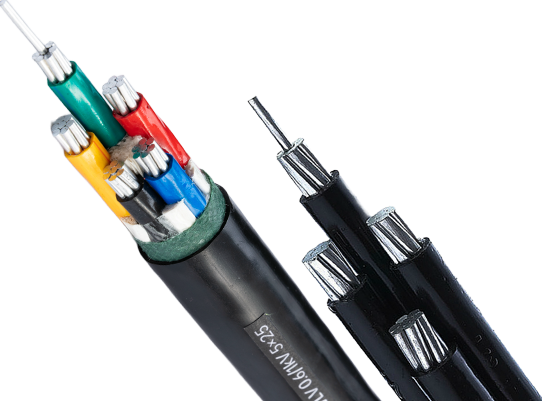
Detailed Overview of the Neutral Wire in ABC Cables
ABC cables—fully known as Aerial Bundled Cables—are commonly used for outdoor low-voltage overhead power distribution. They are widely utilized in the renovation of urban and rural power grids, residential distribution networks, and the installation of outdoor power supply trunk lines. Standard ABC cables feature a three-phase, four-wire configuration comprising three phase conductors (A, B, and C) and a dedicated neutral conductor (N-wire); some specifications include an additional ground wire to meet specific distribution requirements. The neutral wire is the critical conductor that ensures the stability of the three-phase power supply and accommodates single-phase loads.
Core Definition of the ABC Cable Neutral Wire
The neutral wire in an ABC cable is a conductor originating from the star-connected neutral point of the transformer. It is bundled together with the A, B, and C phase conductors within a single insulated cable assembly and functions as the working neutral in a low-voltage distribution system. Distinct from the neutral wire in a single-phase circuit, it primarily serves scenarios involving unbalanced three-phase loads and is an indispensable component of three-phase, four-wire overhead distribution systems.
Working Principle and Operational Characteristics
In an ABC cable three-phase power system, when the loads on phases A, B, and C are perfectly balanced, the vector sum of the three-phase currents is zero; consequently, virtually no current flows through the neutral wire, leaving it in a no-load state. However, when a mix of residential and commercial loads causes phase asymmetry, an unbalanced current is generated. This current flows back to the transformer's neutral point via the ABC cable's neutral wire, thereby balancing the three-phase voltages, preventing issues such as excessively high or low single-phase voltages, and ensuring the stable operation of end-use electrical equipment.
Unlike standard indoor wiring neutral wires, the neutral wire in an ABC cable is designed for outdoor overhead conditions. Its insulation layer is resistant to aging, wind, rain, and sun exposure; it is capable of continuously carrying unbalanced three-phase currents over the long term, making it suitable for complex outdoor power supply environments.
Conductor Size and Color Coding Specifications
Color coding adheres to domestic electrical standards: Phase A is yellow, Phase B is green, Phase C is red, and the neutral wire is uniformly blue. This color scheme allows for the rapid distinction between phase conductors and the neutral wire, facilitating installation and maintenance. Regarding conductor size, the neutral conductor of an ABC cable is sized at no less than half the cross-sectional area of ​​the phase conductors. However, in areas characterized by significant load fluctuations and a high density of single-phase equipment, a neutral conductor with the same cross-section as the phase conductors is used; this prevents issues such as line overheating and voltage imbalance caused by an undersized neutral conductor or insufficient current-carrying capacity.
Core Functions
- Balancing three-phase voltage: Neutralizes the potential difference resulting from three-phase load imbalance, stabilizes voltage across the overhead distribution line, and prevents voltage anomalies at the user end from damaging household appliances;
- Carrying unbalanced current: Continuously conducts the differential current arising from three-phase load imbalances, ensuring the normal operation of the three-phase power supply system;
- Providing single-phase supply circuits: In outdoor distribution, single-phase 220V power is drawn using a single phase conductor and the neutral conductor of the ABC cable, serving as the fundamental circuit for residential power supply;
- Ensuring safe system operation: Effectively mitigates safety hazards—such as line overloads, equipment burnout, and voltage drift—caused by three-phase imbalance.
Installation and Maintenance Considerations
It is strictly prohibited for the neutral conductor of an ABC cable to suffer from broken connections, loose contacts, or incorrect wiring; furthermore, the installation of switches or fuses on the neutral conductor is forbidden. If the neutral conductor breaks, unbalanced three-phase currents cannot return, causing a sudden surge in user-end voltage that can instantly destroy all electrical appliances in a household. Additionally, for outdoor overhead installations, proper insulation and secure fastening of the neutral conductor are essential to prevent damage from wind, rain, or external forces; regularly inspecting the integrity of connections is a key priority in the operation and maintenance of outdoor distribution systems.
FAQ
Can the neutral wire be touched directly?
No. Although the potential of the neutral wire is close to that of the ground wire, the neutral wire continuously carries current during operation. It can become live in the event of circuit abnormalities or loose connections, posing a risk of electric shock; therefore, touching it indiscriminately is prohibited.
Does current flow through the neutral wire?
Yes. During normal circuit operation, current flows out from the live wire and returns via the neutral wire; the neutral wire continuously carries the operating current throughout the process.
Why do smart switches require a neutral wire?
Smart switches contain control chips and sensing modules that require a continuous, low-level power supply to maintain standby, network connectivity, and sensing functions. The neutral wire provides a stable return path for this power; without it, the smart switch cannot function.
Can a circuit operate without a neutral wire?
While a few specialized circuits can operate without a neutral wire, the vast majority of standard residential circuits—including those for lighting, outlets, and appliances—rely on the neutral wire to complete the circuit and ensure proper power delivery.
Summary
The neutral wire is a fundamental component of electrical systems. Its primary role is to provide a return path for current and complete the circuit, while also stabilizing system voltage and ensuring electrical safety. A clear understanding of the neutral wire's operating principles, color-coding standards, identification methods, and key differences from live and ground wires is essential for residential electrical safety, electrical installation, circuit maintenance, and smart home wiring.
Whether for routine home wiring, troubleshooting circuit faults, or selecting materials for electrical projects, an accurate understanding of the neutral wire's functions and characteristics is key to ensuring the safe, stable, and efficient operation of electrical systems.
 
Email
CopyRight © 1989 Chunbin Cable Co., Ltd.
Technical support :Coverweb
Fill in you have to consult
We will contact you as soon as we receive the inquiry and ensure the security of your information.
Name*
Email*
Phone
Country
Message*