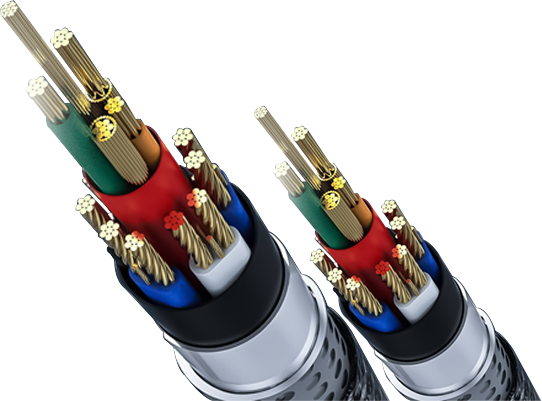
What is TPS Cable?
TPS Cable Explained | Twin and Earth Flat Cable for South American Residential Wiring
For those working on overseas residential electrical projects, we all know there are three key points to evaluate house wiring: ease of installation, stable electrical performance, and controllable overall cost. Meeting these practical construction needs, TPS cable is now widely adopted across South America, Oceania and parts of Southeast Asia. It has become the go-to fixed wiring cable for residential buildings.
International buyers, field electricians and project contractors normally pick TPS cable for residential lighting circuits, socket power distribution and indoor fixed wiring. Compared with traditional round flexible cables, BV and BLV single-core building wires, its unique flat twin-and-earth structure delivers great practical advantages for wall embedding, conduit pulling and tidy indoor layout.
TPS stands for Twin Parallel Sheathed Cable. In the industry, people simply call it Twin and Earth Flat Cable. This cable is specially designed for low-voltage household applications. It consists of two parallel insulated conductors for live and neutral, plus a bare or insulated earth conductor. All of these components are integrated within one flat outer sheath.
Thanks to its neat flat profile, reliable voltage resistance and competitive price, TPS cable fully meets simple residential construction standards in Brazil, Argentina, Chile, Peru and other South American nations. It has replaced traditional round multi-core cables and messy separate single-core wiring solutions, becoming the preferred wire for residential electrical projects in this region.
Below I will walk you through its structure and materials, technical parameters, product strengths, application scenarios, comparisons with competing wires and installation rules. This overview helps purchasers and engineering customers select the right cable for their projects.
1. Structure & Material Composition of TPS Cable
TPS is engineered specifically for indoor fixed residential wiring. Its compact flat shape removes the extra empty space found in round cables. This saves routing space and speeds up construction. The cable mainly has three parts: power conductors, earth conductor and outer sheath. We use premium PVC insulation and sheath materials complying with IEC standards, so the cable maintains a long service life in indoor environments.
First, the main power conductors. Two parallel conductors carry live and neutral current respectively. They are made of high-purity electrolytic copper, available in solid single wire or stranded fine copper options. Solid copper has stable resistance and strong compression resistance, ideal for fixed wiring without frequent bending. Stranded copper offers better flexibility, which works well for corners and complex routing. Common sizes are 1.5mm², 2.5mm², 4mm² and 6mm². These sizes cover lighting, regular wall sockets, air conditioners, water heaters and other household loads.
Next, the earth conductor. Unlike insulated earth wires used in regular multi-core cables, most TPS cables adopt bare copper earth. This bare conductor sits between the two main conductors and bonds tightly with the outer sheath. This design enables fast earthing response to discharge static and leakage current, greatly boosting household electrical safety. For high-spec custom orders, we can add separate insulation on the earth conductor to improve anti-interference performance.
The outermost layer is an integrated flat PVC sheath, extruded in one piece with uniform thickness and tight coverage. PVC features good wear resistance, anti-ageing properties and insulation. It shields internal conductors from cement, metal conduits and humid air to prevent insulation damage and leakage. When concealed inside walls, the flat cable lies flush in the chase without bulging like round cables. Wall plastering and finishing become much easier, lowering rework rates.
2. Technical Specifications & Practical Performance
As a standardized low-voltage building wire for South American homes, TPS cable follows IEC standards plus local South American wiring codes. Its rated voltage is 450/750V, compatible with the 110V–240V civil power systems widely used across South America.
Electrically, high-purity copper conductors keep conductor resistance low, minimizing voltage drop over long runs. You won’t face insufficient power supply at the far end of household circuits. PVC insulation maintains stable insulation resistance under normal temperature and humid indoor conditions, protecting against leakage and short circuits. Every finished cable passes factory high voltage withstand testing to avoid breakdown during long-term operation.
For mechanical and temperature performance, the maximum continuous operating temperature is 70°C, sufficient for continuous household power loads. The custom PVC sheath handles indoor temperature fluctuations in South America. It won’t turn brittle and crack in cold conditions, nor rapidly degrade under normal room temperature. The flat integrated structure also outperforms ordinary flexible cables in tensile and compression strength. It can withstand cement pressure and minor mechanical stress when buried in walls.
Important note: TPS is a fixed-installation cable, NOT a flexible cord for moving equipment. It is only for indoor concealed wiring, conduit routing and trunking. Do not use it for frequently dragged or repeatedly bent mobile devices. Improper use may break conductors and damage insulation, creating safety risks.
3. Core Advantages of TPS Flat Cable vs Traditional Wires
TPS dominates the South American residential market simply because it solves many common headaches in conventional wiring. It shows clear edges in construction speed, finishing quality, safety and project cost compared with BV single-core wires and round multi-core cables.
First, it drastically raises installation efficiency. Traditional wiring requires pulling separate live, neutral and earth wires. This process is slow and prone to misconnection. TPS combines all three conductors into one single flat cable. Electricians can run the cable in one go without sorting different wires. This shortens project timelines and cuts wiring errors. For large housing developments, the labor savings can be substantial.
Second, it works perfectly for concealed indoor installation. Round cables leave bulges and gaps inside wall chases, requiring plenty of cement filling and sanding, which often leads to cracked or uneven walls. TPS lies flat inside the chase with no extra voids. Plastering and decoration work are straightforward, improving final wall quality and reducing rework.
Third, the unified outer sheath improves overall circuit safety. It blocks moisture, dust and corrosive contaminants. It prevents isolated insulation damage on individual wires and reduces leakage and short circuit risks. The embedded bare earth quickly diverts leakage current to ground, providing reliable protection and lowering electric shock hazards.
Fourth, TPS delivers excellent cost performance. Buying one integrated TPS cable costs less than purchasing three separate single-core wires. Packaging and transportation are simpler too, which reduces total project procurement costs. For price-sensitive residential construction markets in South America and Africa, stable cost and high value are biggest competitive strengths.
4. Main Application Scenarios & Market Positioning
TPS cable is positioned for low-voltage fixed wiring in residential buildings, mainly for home lighting, socket distribution and small indoor appliances. It fits new residential builds, electrical retrofits for old houses, villa internal wiring and lighting for small commercial spaces. It is the most popular household wire in Brazil, Chile, Argentina and Colombia, and also widely used in Australia and New Zealand.
Size selection guidelines for residential projects:
- 1.5mm² TPS: mostly for indoor lighting circuits, suitable for all kinds of lamps
- 2.5mm² TPS: the most versatile option for regular wall sockets, TVs, computers and daily electronics
- 4mm² & 6mm² TPS: for high-power loads such as air conditioners, water heaters and kitchen circuits to prevent overload
Beyond houses, TPS can be used for simple indoor wiring in small shops, offices and dormitories. However, it is NOT suitable for heavy industrial machinery, open-air outdoor wiring, fire emergency circuits in high-rises or damp underground environments. Outdoor applications require UV-resistant, waterproof specialty cables. Heavy industrial circuits need YJV power cables. Fire-rated projects should use mineral insulated fire-resistant cables.
5. TPS Cable vs Other Common Building Wires
Many overseas buyers mix up TPS cable with BV single-core wire and regular round flexible cables. Clear differentiation helps you avoid wrong selection and project mismatches.
Compare with BV / BLV single-core building wires: BV is single-core with only insulation, no outer sheath and no built-in earth. Installers need to run live, neutral and earth separately, which slows down construction and creates messy wiring. TPS integrates three conductors inside a flat sheath with built-in earth, bringing faster installation and better circuit safety. Still, BV offers more flexibility for heavy industrial wiring, while TPS is optimized for domestic residential use.
Compare with round multi-core flexible cables: Most round multi-core cables are designed for movable equipment. They use soft stranded conductors and have poor compression resistance. TPS features a rigid flat structure with strong crush resistance, better suited for concealed fixed wall wiring. Round cables are easy to get damaged under compression when buried, while TPS flat cables maintain better structural stability.
6. Installation Guidelines & Precautions
To guarantee reliable long-term operation, install TPS cable following standard practices.
- TPS is only for indoor fixed laying. Direct sunlight and open-air outdoor installation are forbidden. Long-term UV exposure will age PVC sheath and cause cracking and peeling.
- Route the cable inside conduits or trunking whenever possible. Avoid direct contact with cement and sharp metal edges to prevent scratches on insulation and sheath.
- Match TPS cross-section to circuit load. Overloading will heat up the conductor and accelerate insulation ageing.
- Avoid sharp bends or folding during installation, which may snap internal conductors.
- After wiring completion, test insulation resistance and circuit continuity to rule out hidden short or leakage risks.
7. Conclusion
TPS flat twin-and-earth cable is a purpose-built building wire for indoor fixed residential wiring. Its integrated flat profile, built-in earth design, stable electrical performance and strong cost-effectiveness make it irreplaceable in South America’s residential electrical market. Unlike universal single-core wires and flexible cords, TPS addresses the pain points of slow installation, messy wiring and insufficient safety in home electrical work. It is the preferred wiring solution for mid-to-entry housing construction and old-house renovation.
For global importers and contractors handling residential projects in South America, choosing standardized, high-quality TPS cable helps cut project costs, speed up construction, and secure long-term safe and stable household power supply. As rural electrification and residential construction keep expanding in emerging markets, TPS cable will sustain steady demand and remain one of the most cost-effective low-voltage building wires in the global civil electrical industry.