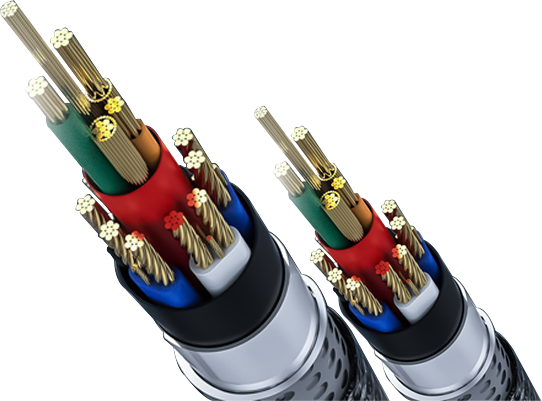
Introduction: Core Value and Application Scenarios of THHN Cable
THHN cable is a versatile thermoplastic heat-resistant nylon-jacketed wire, fully designated as Thermoplastic Heat and Water Resistant Nylon Jacket Cable. It is primarily suited for electrical wiring in dry, high-temperature environments. Its widespread adoption stems from its balanced performance, cost-effectiveness, and versatility—capable of withstanding elevated operating temperatures while offering robust mechanical protection. Its affordable pricing and comprehensive range of specifications make it adaptable to diverse wiring requirements.
Understanding THHN cable's core specifications is critical for electrical installation safety: selecting improperly rated cables can lead to overheating, short circuits, and other hazards, potentially violating electrical codes (such as NEC or UL standards) and causing project failure during inspection. Currently, THHN cable is extensively used in residential wiring, commercial building electrical systems, industrial equipment connections, conduit installations, and other scenarios, serving as an indispensable foundational wire in electrical installations.
What Does THHN Mean? Abbreviation Breakdown and Grade Correlation
THHN is an abbreviation for cable types, with each letter denoting specific performance indicators that precisely define the cable's applicable scenarios. The breakdown is as follows:
T: Thermoplastic, indicating the cable insulation uses thermoplastic material (PVC), which softens and becomes malleable when heated, facilitating processing and installation; H: Heat resistant, indicating a long-term allowable operating temperature of 75°C; HH: High heat resistant, upgraded to a long-term allowable operating temperature of 90°C, suitable for higher-temperature environments; N: Nylon jacket, signifying a nylon protective layer on the cable's outer layer, enhancing mechanical protection and corrosion resistance.
Key distinctions between THHN and THWN grades: THWN adds “W” (Water resistant) to THHN, suitable for damp environments with a 75°C long-term operating temperature; THWN-2 is an upgraded version with a heat resistance of 90°C and superior water resistance. Today, most THHN cables on the market feature dual-rating certification (THHN/THWN-2), making them suitable for both dry high-temperature scenarios and damp environments. This versatility significantly simplifies selection.
Structural Composition of THHN Cable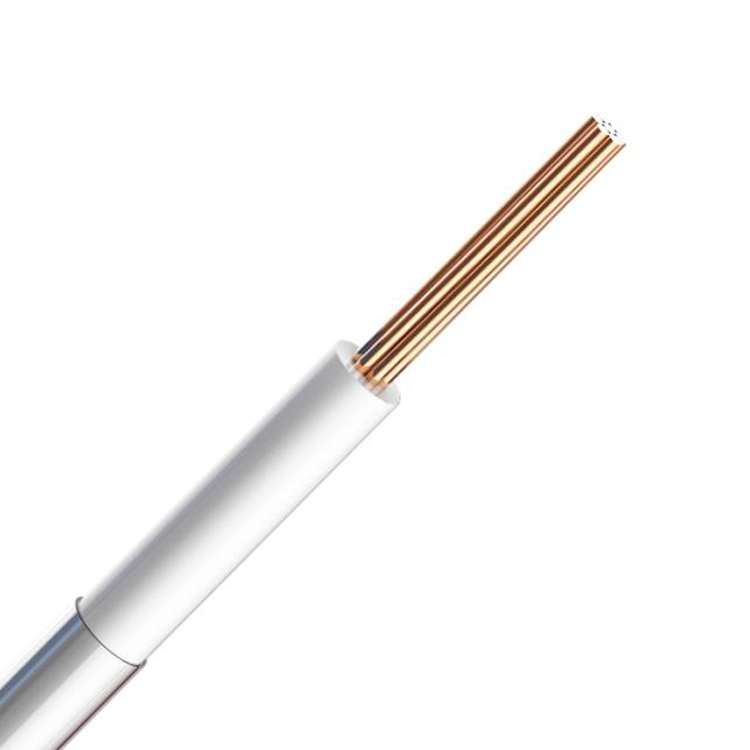 Conductor: Primarily Copper, Comprehensive Specifications
THHN cable conductors are primarily copper, available in solid and stranded types: Solid copper conductors offer high rigidity and ease of installation, suitable for short-distance, fixed wiring applications (e.g., residential wall wiring). Stranded copper conductors provide superior flexibility, excellent tensile strength, and resistance to breakage, making them ideal for long-distance runs, complex routing, and applications requiring bending (e.g., internal equipment wiring).
Conductor sizes follow the AWG (American Wire Gauge) standard, with common dimensions ranging from 18 AWG (fine gauge for low-voltage applications) to 4/0 AWG (heavy gauge for high-power equipment). Certain high-power scenarios may utilize kcmil (kilocubic millimeters) specifications (e.g., 250 kcmil, 500 kcmil), allowing flexible selection based on load current requirements.
Insulation Layer: PVC Material, Core Heat Resistance
THHN cable insulation utilizes polyvinyl chloride (PVC) material, forming the core of its heat resistance. PVC insulation offers excellent thermal endurance, supporting a continuous operating temperature of 90°C (HH rating) and short-term overload temperatures up to 130°C. This enables adaptation to high-temperature environments during electrical equipment operation, preventing insulation aging and breakdown.
Additionally, PVC insulation delivers superior electrical insulation properties with high insulation resistance and low dielectric loss, effectively preventing current leakage and ensuring electrical safety. Its low processing cost contributes to THHN cable's high cost-effectiveness, making it the preferred choice for general-purpose wiring.
Nylon Outer Sheath: Enhanced Protection and Durability
The outer layer of THHN cable is wrapped in a nylon (PA) sheath, a core feature distinguishing it from standard PVC wires. The nylon sheath serves three primary functions: First, mechanical protection against friction, compression, and abrasion during installation and use, preventing insulation damage. Second, chemical resistance to oils, acids, alkalis, and other corrosive substances, making it suitable for industrial environments. Third, moisture resistance blocks minor humidity intrusion, safeguarding insulation and extending cable lifespan.
Core Differences Between THHN, THWN, and THWN-2
All three are thermoplastic wires, with core differences centered on temperature ratings and environmental adaptability. Specific distinctions are as follows:
Temperature Rating
THHN (HH-rated) has a continuous operating temperature of 90°C in dry environments;
THWN has a continuous operating temperature of 75°C in dry/wet environments;
THWN-2 has a continuous operating temperature of 90°C in dry/wet environments, offering the best heat resistance.
Environmental Suitability
THHN is suitable only for dry environments (e.g., indoor wall and ceiling wiring); THWN can be used in damp environments (e.g., bathrooms, basements) but has average heat resistance; THWN-2 accommodates both high temperatures and dampness, offering the broadest applicability (e.g., outdoor damp areas, industrial damp workshops).
Today, most manufacturers produce dual-rated THHN cables (THHN/THWN-2), meeting both the 90°C heat resistance requirement for dry, high-temperature scenarios and the waterproof performance needed in damp environments. This single cable type accommodates multiple scenarios, reducing selection and procurement costs.
Electrical Parameters and Core Specifications
THHN cable electrical parameters strictly adhere to UL 83 (U.S. standard) and NEC (National Electrical Code). Domestic projects must also comply with GB/T 5023 standards. Core specifications are as follows:
Voltage Rating: Typically 600V, suitable for low-voltage electrical systems (residential, commercial, industrial low-voltage wiring), meeting voltage requirements for most electrical equipment; Temperature Rating: 90°C (HH) in dry environments; 90°C (THWN-2) in damp environments (dual-rated models). Current Carrying Capacity: Varies with conductor gauge. For example, 12 AWG copper conductors carry approx. 20A, while 10 AWG carries approx. 30A. Higher gauges support greater current. Match conductors to load currents to prevent overloading.
Additionally, THHN cable color coding follows industry standards: black (hot wire), white/gray (neutral wire), green/green-yellow (ground wire). This facilitates wiring identification and reduces the risk of connection errors.
Typical Application Scenarios for THHN Cable
Due to its versatility and stable performance, THHN cable is widely used across residential, commercial, and industrial settings. Core applications include:
Residential Wiring: Used for interior wall, ceiling, and distribution panel connections, supporting lighting, outlets, air conditioners, and other household appliances as the mainstream wiring for home renovations;
Commercial Electrical Systems: Lighting systems and distribution panel wiring in office buildings, shopping malls, and hotels, supporting high-power commercial equipment (e.g., central air conditioning, elevators);
Industrial Panel Wiring: Internal wiring for factory workshop distribution cabinets and control panels, suitable for high-temperature and mildly corrosive environments;
Conduit Installation: The nylon sheath's abrasion resistance makes it ideal for PVC or steel conduit installation, suitable for concealed wiring scenarios (e.g., wall or floor conduits);
Machine Tool Equipment Wiring: Internal circuit connections for industrial machine tools and automated equipment, balancing heat resistance and flexibility requirements.
Core Advantages of THHN Cable
THHN cable's status as the preferred general-purpose wiring solution stems from five core advantages:
High heat resistance with a 90°C continuous operating temperature, suitable for high-temperature environments and preventing insulation aging;
Durable nylon sheathing provides robust mechanical protection, resisting abrasion and corrosion to extend service life;
Cost-effectiveness: PVC insulation + nylon jacket combination offers lower cost than premium heat-resistant cables, ideal for large-scale installations;
Easy installation: Stranded conductors provide excellent flexibility, simplifying conduit routing and boosting construction efficiency;
High standardization: Comprehensive specifications, clear color coding, compliance with UL, NEC, and other international standards, facilitating procurement and acceptance.
Limitations of THHN Cable
Clearly define THHN cable's application boundaries to prevent misuse and safety hazards:
Not suitable for direct burial. Without armor protection, direct burial risks soil compression and corrosion; conduit installation is required for underground applications.
Limited UV resistance: Standard THHN lacks UV-resistant modification, accelerating aging in outdoor exposure. Use UV-rated variants instead.
Pipe installation dependency: Requires conduit in most scenarios; cannot be surface-mounted (except short runs in dry indoor environments).
Moisture-resistant variants required: Standard THHN (non-THWN-2) is unsuitable for damp conditions, risking insulation failure.
How to Select the Right THHN Cable?
Scientific selection requires considering three key factors: load, environment, and compliance. Core considerations are as follows:
Match conductor gauge (AWG): Select based on load current—e.g., 14 AWG for residential lighting, 12 AWG for outlets, 10 AWG for high-power equipment (like air conditioners)—to prevent conductor undersizing causing overloading and overheating; Confirm temperature and environment: Select THHN (90°C) for dry, high-temperature settings; choose dual-rated THHN/THWN-2 for damp/outdoor applications;
Adhere to current-carrying capacity requirements: Adjust capacity based on installation method (conduit/surface-mounted) and ambient temperature correction. For example, reduce capacity by 10%-20% for conduit installations;
Compliance verification: Select products certified to UL 83, NEC, and domestic GB standards to ensure project acceptance compliance.
Installation Guidelines and Best Practices
THHN cable installation must adhere to specifications, with core points as follows:
Conduit Selection: Choose matching PVC or steel conduit based on cable specifications to ensure smooth insertion without crushing;
Bend Radius: Maintain a minimum bend radius of 6-8 times the cable diameter to prevent excessive bending that damages insulation and nylon sheath;
Termination: Use terminals compatible with copper conductors, ensuring secure crimping to prevent overheating from excessive contact resistance. Seal terminations in damp environments;
Color Coding: Strictly follow color-coded wiring: live wire (black/red), neutral wire (white/gray), ground wire (green/green-yellow). Mixing colors is prohibited.
Conduit Filling: Total cross-sectional area of cables in a single conduit must not exceed 40% of the conduit's cross-sectional area to prevent cable compression and ensure adequate heat dissipation.
Frequently Asked Questions (FAQ)
Is THHN suitable for outdoor use? Standard THHN is unsuitable due to lack of UV resistance and susceptibility to aging. Use THHN/THWN-2 dual-rated cable with UV-modified compound and always install within conduit.
Can THHN be used for underground installation? Direct burial is prohibited. Always install within conduit (PVC/steel pipe) underground with moisture and corrosion protection.
What is the service life of THHN cable? In dry indoor environments with proper installation, it lasts 25-30 years; in humid/industrial settings, service life is approximately 15-20 years.
Is THHN copper-core or aluminum-core? Standard THHN is copper-core. Aluminum-core THHN is uncommon, used only in specific low-cost scenarios. Copper offers superior conductivity and stability.
Conclusion: Selecting the Right THHN Cable Fortifies Electrical Safety Foundations
As a standardized, versatile heat-resistant wire, THHN cable has become a core choice for residential, commercial, and industrial electrical installations due to its high heat resistance, durability, and cost-effectiveness. Its core value lies in its adaptability to diverse scenarios while complying with international and domestic electrical codes, effectively ensuring wiring safety and stable system operation.