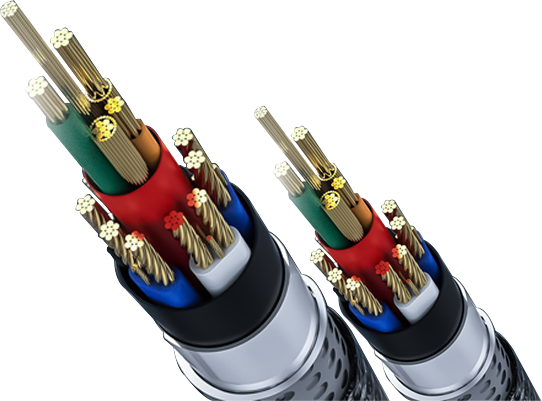
ACSR FOX Cable Overview
ACSR FOX cables are steel-cored aluminum stranded wires conforming to the BS 215 standard. They are commonly used conductors in medium-voltage overhead lines, and due to their balanced conductivity, mechanical strength, and cost advantages, they have become the mainstream choice for distribution networks and secondary transmission systems.
In the global overhead transmission field, ACSR FOX is a highly recognizable specification, widely used in 11kV–132kV distribution and secondary transmission lines, especially prevalent in British Standard markets such as the UK, Africa, the Middle East, and Southeast Asia. For engineers and procurement personnel, FOX is a standardized designation clearly defining dimensions, structure, and performance, enabling rapid matching of project design, construction, and material procurement needs. It is a core conductor model frequently used in the power industry.
ACSR Basics
ACSR Full Name and Structure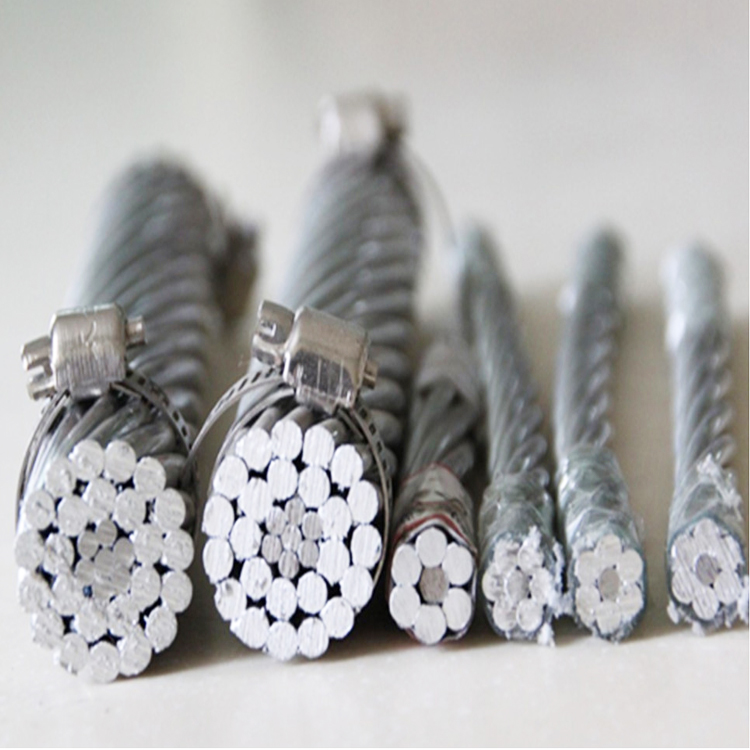 ACSR
ACSR stands for Aluminum Steel Cored Wire, a composite conductor structure consisting of an outer layer of aluminum wire and a central galvanized steel core, concentrically twisted together. It balances conductivity and load-bearing capacity.
The aluminum wires conduct electricity using high-conductivity hard aluminum; the steel core provides mechanical support and is hot-dip galvanized for corrosion protection. The two layers are concentrically twisted to form a stable mechanical and electrical structure.
The Necessity of Steel Core Reinforcement
Improves mechanical strength, withstands line tension, wind loads, and ice loads.
Supports long-span installations, reducing the number of poles and towers, and lowering line construction costs.
Optimizes sag control, preventing excessive conductor sag under heavy loads and high temperatures.
Extends line lifespan and adapts to complex terrain and harsh climates.
The Meaning of FOX Designations
Animal Designation Naming System
ACSR designations such as FOX, DOG, and RABBIT are animal designations in the British Standard System (BS 215), commonly used for fixed specifications under the BS 215 standard, facilitating quick identification and selection within the industry.
This naming convention originated in the British power industry and was later adopted by the British Standard System (BBS) in Africa, Asia, the Middle East, and other regions, becoming a common language for international power engineering. Different animal codes correspond to fixed cross-sections, structural, and performance parameters.
Standards Implemented: ACSR FOX strictly adheres to the British standard BS 215 Part 2. Some manufacturers may also produce according to international standards such as IEC 61089 and ASTM B232, ensuring global compatibility.
Typical Structure: The standard ACSR FOX uses a 6-wire aluminum + 1-core steel structure. Each wire has a uniform diameter, with an overall outer diameter of approximately 8.37mm. The nominal aluminum cross-section is 36.7mm², and the total cross-section is approximately 42.8mm². The steel core has a reasonable proportion, balancing conductivity and load-bearing capacity.
ACSR FOX Core Technical Parameters
Electrical Performance
20℃ DC Resistance: Approx. 0.815Ω/km
Current Carrying Capacity: Meets the rated transmission requirements of medium-voltage distribution networks
Applicable Voltage: 11kV–132kV overhead distribution and secondary transmission systems
Conductivity: Meets British Standard hard aluminum conductor requirements, with low transmission loss
Mechanical Performance
Nominal Outer Diameter: Approx. 8.37mm
Unit Weight: Approx. 30.8kg/km
Rated Tensile Strength: Meets the requirements for large-span installations.
Modulus of Elasticity: Adaptable to conventional overhead line tension calculations.
Thermal Performance
Long-term Operating Temperature: Maximum 75℃.
Short-circuit Withstand Temperature: Instantaneous 250℃.
Thermal Stability: Meets the requirements for grid faults and heavy load conditions.
Manufacturing Standards and Quality Control of ACSR FOX
After understanding the technical specifications of ACSR FOX, it is equally important to examine how the conductor is manufactured and tested. The long-term reliability of overhead transmission lines depends heavily on strict quality control during production.
Raw Material Requirements
High-quality ACSR FOX conductors are produced using EC-grade aluminum (typically 1350-H19), which ensures excellent conductivity and mechanical stability. The aluminum purity directly affects electrical resistance and current carrying capacity.
The steel core must be made of high tensile galvanized steel wire. The zinc coating class (Class A or Class B) determines corrosion resistance, especially in coastal or high-humidity environments. Poor galvanization significantly reduces service life.
Production Process Overview
The manufacturing process includes:
Aluminum rod drawing into precise diameter wires.
Galvanized steel wire preparation.
Concentric stranding process where aluminum strands are helically wrapped around the steel core.
Strict control of lay ratio and strand positioning.
Advanced factories use online diameter monitoring systems to ensure dimensional consistency throughout production. Proper central positioning of the steel core is critical to maintaining mechanical balance and tensile strength.
Testing Procedures
Reputable manufacturers conduct comprehensive testing in accordance with international standards such as:BS 215,ASTM B232,IEC 61089,Typical tests include:
DC resistance test at 20°C,Ultimate tensile strength (UTS) test,Zinc coating thickness verification,Lay ratio and dimensional inspection.Buyers should always request mill test reports (MTR) to confirm compliance before shipment.
Strict adherence to these standards ensures that ACSR FOX conductors maintain stable electrical performance and mechanical strength throughout their service life.
Application Scenarios
ACSR FOX Focusing on medium-voltage overhead power transmission, core application scenarios cover:
Urban and rural medium-voltage distribution lines, adaptable to conventional loads and terrain.Rural power grid upgrades and village-to-village electrification projects, with large spans reducing tower costs.Urban distribution network secondary transmission lines, supporting grid expansion and load growth.Overseas British Standard market projects, including Africa, the Middle East, Southeast Asia, Australia, and other regions
Product Advantages
Excellent Mechanical Properties: Steel core provides high tensile strength, strong wind and icing resistance
Outstanding Cost-Effectiveness: Aluminum conductor + steel load-bearing, cost far lower than all-aluminum or all-copper conductors
Large Span Adaptability: Excellent sag characteristics, enabling spans of over 50 meters
Strong Environmental Adaptability: Galvanized steel core for corrosion protection, suitable for inland, coastal, and plateau climates
Stable Operation: Mature structure, designed service life of 30–40 years
Convenient Construction: Moderate weight, universal parts, low stringing and maintenance costs
Comparison with Similar Conductors
ACSR FOX vs DOG
DOG is a larger specification British Standard ACSR, with higher cross-section, current carrying capacity, and mechanical strength than... FOX is suitable for lines with higher loads and longer spans; FOX is more suitable for small and medium-sized distribution networks, offering lower costs and more flexible construction.
ACSR FOX vs RABBIT
RABBIT is a smaller specification, with a smaller cross-section and current carrying capacity than FOX, primarily used for low-voltage, short-span branch lines; FOX covers medium-voltage main lines, has a wider range of applications, and is the mainstream model for distribution networks.
ACSR FOX vs AAAC All-Aluminum Stranded Wire
Corrosion Resistance: AAAC's all-aluminum structure is more resistant to coastal corrosion.
Strength: ACSR FOX has a steel core support, resulting in higher tensile strength.
Span: FOX supports larger spans and is suitable for a wider range of terrains.
Cost: FOX is cheaper and offers better value for money.
Installation and Construction Points
Sagging and Tension Calculation: Accurate calculations based on altitude, temperature, wind speed, and icing thickness are necessary. Strict adherence to design values is required to avoid excessive sag or tension leading to line failures.
Corrosion Protection: Can be used directly in inland environments; high-zinc steel cores are recommended for coastal areas and chemical industrial zones to reduce corrosion risk.
Connectors and Fittings
Use compression connectors, suspension clamps, tension clamps, and other British standard accessories to ensure reliable connections and stable electrical contact.
Procurement Selection Guide
When procuring ACSR conductors, it is essential to follow a structured supplier selection and verification process. First, confirm that the product complies with the required standard, such as BS 215 Part 2 or an equivalent international specification. Carefully verify the steel core grade and the quality of zinc galvanization to ensure mechanical strength and corrosion resistance. Request complete raw material test reports and production process documentation to guarantee traceability. In addition, obtain the manufacturer’s factory inspection report, raw material quality certificates, model/type test reports, and third-party quality inspection certificates—especially for export or government-funded projects where independent verification is mandatory. Finally, clarify commercial details including minimum order quantity (MOQ), production lead time, packaging standards, transportation arrangements, and export customs requirements to ensure smooth procurement and on-time delivery.
Frequently Asked Questions
What is the standard cross-section of ACSR FOX?
Aluminum cross-section 36.7mm², total cross-section approximately 42.8mm², conforming to BS 215 standard.
Can it be used in coastal areas?
Yes, it is recommended to choose the high-zinc steel core version to improve corrosion resistance life.
Applicable voltage rating?
Mainstream applications include 11kV–33kV distribution networks, and it can also be used in 132kV secondary transmission lines.
What is its service life?
Under normal operation and maintenance, it can last 30–40 years.
Conclusion
In summary, ACSR FOX cables are standardized steel-cored aluminum stranded wires under the British Standard system. With balanced conductivity, mechanical strength, and cost advantages, they have become the core choice for medium-voltage overhead distribution networks and secondary transmission systems worldwide. They have a mature structure, are easy to install, and are highly adaptable, meeting the needs of urban and rural power grid construction as well as overseas British Standard market projects. They are a conductor product with outstanding cost-effectiveness in the power industry.
Before purchasing and using, it is recommended to verify technical documents such as standards, structure, and test reports, and accurately select the type based on line voltage, span, and environmental conditions. If necessary, coordinate with the manufacturer's technical team to ensure safe, stable, and long-term operation of the line.