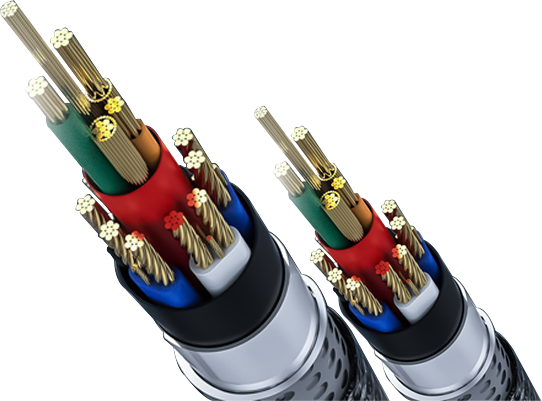
Is XLPE insulation sunlight resistant?
Introduction: Why Sun Resistance is Crucial for Cable Insulation
With the rapid development of the power industry, the outdoor application scenarios for cables are becoming increasingly widespread, especially with surging demand in three major areas: outdoor power distribution systems, solar and renewable energy projects, and industrial facilities exposed to harsh weather. In these scenarios, cables are exposed to sunlight for extended periods or frequently. Therefore, "Can XLPE cables be used under direct sunlight?" has become a core question frequently asked by purchasers and industry professionals.
The core purpose of this article is to clarify the true performance of XLPE insulation's sun resistance, define the specific meaning of "sun resistance," differentiate the suitability of XLPE in different scenarios, and inform readers under what conditions XLPE insulation can stably perform and under what conditions additional protection is needed, thus assisting in accurate selection and mitigating risks in outdoor applications.
Understanding the Impact of Sunlight on Cable Insulation: 3 Key Factors Accelerating Aging
The damage caused by sunlight to cable insulation is not simply a matter of "exposed exposure," but rather the result of multiple factors working together.
The core influencing factors are threefold:
Ultraviolet (UV) Radiation: Ultraviolet rays in sunlight are the main culprit in damaging insulation materials. They destroy the molecular structure of the insulation, leading to aging, brittleness, and ultimately, loss of insulation performance.
Heat Accumulation: Direct sunlight significantly increases the surface temperature of the cable, especially in summer or tropical regions. High temperatures accelerate the thermal aging of the insulation, reducing its mechanical strength and insulation stability.
Oxygen and Ozone Reactions: In outdoor environments, sunlight accelerates the chemical reactions of oxygen and ozone with the insulation, further exacerbating material degradation and shortening the cable's lifespan.
When XLPE insulation is exposed to sunlight and ages, obvious characteristics appear: surface cracking, color fading (e.g., changing from black to grayish-white), and decreased mechanical strength (easily broken, brittle). These are all warning signs of insulation failure. Compared to indoor environments, outdoor sunlight significantly accelerates the aging of cable insulation, making sunlight resistance a key indicator for selecting outdoor cables.
Understanding XLPE Insulation: The Mainstream Choice for Outdoor Cables
XLPE (cross-linked polyethylene) is currently the most widely used insulation material in the power cable industry. It is a material whose performance is significantly improved by chemically or physically cross-linking polyethylene molecules to form a three-dimensional network structure.
Its core advantages are prominent and are the key reasons why it is the preferred choice for outdoor cables:
High dielectric strength: It can withstand medium and high voltages, has stable insulation performance, and effectively prevents current leakage;
Excellent heat resistance: Long-term operating temperature can reach 90℃, and it can withstand temperatures up to 130℃ during short circuits, adapting to the heat accumulation in high-temperature outdoor environments;
Long service life: It has strong anti-aging and cracking resistance, and with proper protection, its service life can reach more than 40 years.
XLPE is commonly used in medium- and high-voltage power transmission, including underground and indoor cables. It is also a core insulation material for outdoor medium- and high-voltage cables and renewable energy projects (such as photovoltaic cables)—but this doesn't mean it's inherently resistant to sunlight.
Core Question: Is XLPE insulation inherently sun-resistant?
The answer is clear: Standard XLPE insulation does not inherently possess long-term sun-resistance.
From a basic material perspective, XLPE has good thermal stability and can withstand high outdoor temperatures, but its inherent UV resistance is relatively weak—the formulation of standard XLPE is primarily designed for underground and indoor environments without direct sunlight, and does not primarily consider the effects of long-term UV exposure.
Here's a key distinction to clarify to avoid misunderstanding:
Short-term sun exposure (e.g., temporary exposure during installation): XLPE insulation can withstand short periods of direct sunlight without immediate aging or damage, with minimal impact on performance.
Long-term continuous sun exposure (e.g., outdoor overhead installations, open-air installations in photovoltaic power stations): Ordinary XLPE insulation exposed to sunlight for extended periods will rapidly undergo UV degradation, manifesting as surface cracking, decreased mechanical strength, and ultimately insulation failure, posing safety hazards.
In short, standard XLPE insulation is not designed for long-term direct sunlight exposure. Long-term outdoor applications require additional design improvements to enhance its sun resistance.
Comparison of XLPE with Other Insulation Materials in Sun-Exposed Scenarios
While XLPE is not the only option in outdoor sun-exposed scenarios, its overall performance advantages make it the preferred choice. We compare two common insulation materials to gain a clearer understanding of XLPE's suitability:
XLPE vs PVC: A Trade-off Between Insulation Performance and Sun Resistance
PVC insulation has slightly better inherent UV resistance than ordinary XLPE, but there is a significant difference in core electrical properties: XLPE has much higher dielectric strength, heat resistance, and service life than PVC, and is more suitable for medium and high voltage applications. Therefore, for outdoor medium and high voltage cables, even if additional sun resistance is required, XLPE insulation (with a protective sheath) is still the preferred choice; for low-voltage outdoor applications, PVC can be chosen based on cost requirements, but long-term sun exposure still requires enhanced protection.
XLPE vs Rubber Insulation: A Comparison of Flexibility and Aging Resistance
Rubber insulation (such as EPDM) has better flexibility, suitable for outdoor applications with frequent bending, but its aging resistance and sun resistance are weaker, making it prone to cracking and aging under long-term sun exposure; while XLPE insulation is slightly less flexible, its heat resistance and aging resistance (after optimization) are superior, and its service life is longer. Therefore, for cables installed outdoors in fixed locations for extended periods, XLPE insulation is more advantageous.
In summary, even though XLPE itself has a weakness in UV resistance, this deficiency can be compensated for through simple optimization (additives, outer sheath), and its core electrical performance far surpasses that of other materials. Therefore, it remains the preferred insulation material for outdoor cables.
Sun Resistance Standards: Key Criteria for Procurement
When purchasing outdoor XLPE cables, determining their sun resistance requires referring to authoritative international and domestic standards to avoid being misled by marketing hype.
Relevant core standards include:
IEC (International Electrotechnical Commission): Clearly defines the UV resistance requirements for outdoor cable insulation and sheathing. Only products that pass the UV aging test can be labeled "sun-resistant."
IEEE (Institute of Electrical and Electronics Engineers): Develops weather resistance testing standards for medium and high voltage outdoor cables, focusing on assessing mechanical strength and insulation performance after sun exposure.
UL (Underwriters Laboratories): Has clear requirements for "sun resistance/UV protection" labeling. Only cables that pass the UL UV aging test can be labeled with this mark and are qualified for long-term outdoor use.
It's important to note that the definition of "sunlight resistance" in the standard refers to the material's ability to maintain stable core performance under prolonged sun exposure, not complete non-aging. When purchasing, it's crucial to proactively verify whether the product has passed relevant tests to avoid blindly selecting a product based solely on "sunlight resistance" claims.
Application Scenarios: The Compatibility Boundaries of XLPE Cables in Sunlit Environments
Not all sun-exposed scenarios are suitable for XLPE cables. The suitability and caution required should be determined based on the scenario type:
Suitable Scenarios
Outdoor cables with UV-resistant outer sheaths: Such as medium- and high-voltage overhead cables and photovoltaic cables with black PE/XLPE sheaths. Optimized XLPE insulation + protective sheath can withstand long-term sun exposure.
Temporary sun exposure during installation: For example, during underground cable laying, short-term exposure to sunlight requires no additional protection and will not affect subsequent use.
Outdoor scenarios with shade: Such as under industrial plant roofs or street light lines, where direct sunlight exposure is short-lived, ordinary XLPE cables (without additional optimization) can also be used stably.
Scenarios Requiring Caution:
Long-term overhead installation without sheath protection: Ordinary XLPE cables are directly overhead without any sheath protection, leading to rapid aging under prolonged sun exposure and a high risk of insulation failure.
High-altitude and tropical environments: Higher ultraviolet radiation at high altitudes and the combined effects of high temperatures and strong sunlight in tropical regions accelerate XLPE aging. High-grade weather-resistant formulations (such as those with high carbon black content and specialized weather-resistant sheaths) are required.
Coastal and salt spray environments: Sunlight and salt spray corrosion will doubly damage XLPE insulation. Composite sheathed cables with both corrosion resistance and sun resistance are necessary.
Common Misconceptions Among Purchasers: Four Misunderstandings about XLPE Sun Resistance
When purchasing outdoor XLPE cables, many purchasers easily fall into misconceptions, leading to incorrect selection and subsequent malfunctions.
There are four common misconceptions:
Misconception 1: All XLPE cables are sun-resistant—The truth is, only XLPE cables with added UV stabilizers and weather-resistant sheaths possess long-term sun resistance. Standard XLPE cables are not resistant to prolonged sun exposure.
Misconception 2: Ignoring sheath material specifications—Focusing only on XLPE insulation and ignoring the outer sheath material is ineffective. The sheath is the core component for sun protection; inferior sheaths age rapidly, affecting the insulation layer.
Misconception 3: Ignoring local climate—VUV intensity and temperature vary greatly across regions. High-altitude and tropical areas require higher-grade weather-resistant XLPE cables; otherwise, their lifespan will be shortened.
Myth 4: Confusing Insulation Performance with Weather Resistance – Believing that good insulation performance of XLPE necessarily means it is resistant to sunlight. In reality, insulation performance and sunlight resistance are two independent indicators and must be assessed separately.
How do manufacturers ensure the sunlight resistance of XLPE cables?
High-quality, sun-resistant XLPE cables rely on strict production control and quality testing. Manufacturers primarily ensure performance through three aspects:
Material Selection and Formula Control: Using high-purity XLPE base material, adding sufficient amounts of carbon black, UV absorbers, and other additives, and optimizing the composite material formula to ensure basic sunlight resistance;
Rigorous Aging Testing: During production, UV aging tests are conducted on XLPE materials and finished cables to simulate long-term sunlight exposure, testing the mechanical strength and insulation performance after aging. Unqualified products are strictly prohibited from leaving the factory;
Production Process Control: During the extrusion of the insulation layer and sheath, temperature and pressure are strictly controlled to ensure material uniformity and avoid defects such as bubbles and breakage, improving the overall weather resistance of the cable; at the same time, cross-linking process control is strengthened to ensure sufficient cross-linking of XLPE molecules, improving material stability.
Conclusion: Is XLPE insulation truly resistant to sunlight?
The answer is clear: Standard XLPE insulation itself is not resistant to long-term sunlight exposure. However, through scientific optimization (adding UV stabilizers and combining it with a weather-resistant outer sheath), it can achieve excellent sunlight resistance.
Key takeaway: The core advantages of XLPE are its insulation performance, heat resistance, and service life. Sunlight resistance is not an inherent property, but through simple formulation and structural optimization, it can be adapted to most outdoor sunlight exposure scenarios. This is the key reason why it has become the preferred insulation material for outdoor medium and high voltage cables and renewable energy projects.
Final advice for purchasers: When determining whether XLPE cables are suitable for outdoor sunlight exposure, do not only look at the insulation layer, but also pay attention to the overall design—insulation layer + outer sheath + formulation optimization. Combine this with the local climate and application scenario, and verify whether the product has passed relevant weather resistance standard tests to ensure long-term stable operation of the cable and avoid increased maintenance costs later.