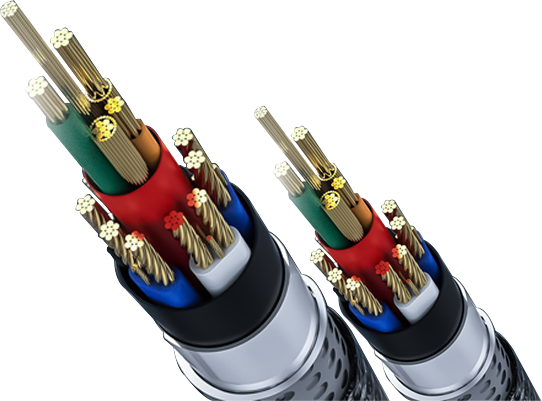
What is Rabbit cable?
Rabbit Cable Overview
Rabbit cable is one of the most widely used ACSR specifications in the international overhead power line field. Belonging to the steel-cored aluminum stranded wire standard series, it has become the main choice for global distribution networks and secondary transmission systems due to its balanced electrical performance, mechanical strength, and cost advantages. In the BS 215 animal code naming system, Rabbit corresponds to a nominal cross-section of 50mm², and together with Fox and Dog, it constitutes the three most commonly used core models of outdoor bare conductors, covering diverse scenarios such as urban and rural power grids, new energy grid connection, and industrial and mining power supply.
The naming of this model as "Rabbit" originates from the traditional rule in the British Standard system of using animal body shapes to correspond to conductor cross-sections; the smaller the animal, the smaller the cross-section, making it easier for engineers to quickly identify specifications and match scenarios. Within the ACSR family, Rabbit occupies a core position in low- and medium-voltage distribution networks, balancing conductivity and installation safety. It is compatible with mainstream voltage levels from 11kV to 33kV, making it an irreplaceable foundational product in power design, construction, and procurement.
ACSR and Animal Code Naming System
What is ACSR?
ACSR stands for Aluminum Steel Cored Stranded Wire. It is composed of an outer layer of conductive aluminum stranded wire and a central load-bearing steel core, and is the main conductor type for overhead transmission lines worldwide. The aluminum layer provides excellent conductivity, while the steel core ensures tensile strength, enabling long-span installations while maintaining lightweight and economical design, perfectly suited for outdoor overhead scenarios.
Animal Code Naming Rules The internationally accepted animal code naming system for overhead conductors uses animal body shapes to visually correspond to conductor cross-sections, allowing for quick differentiation of specifications without the need to memorize complex parameters:
Fox: 35mm², commonly used in small distribution network branches
Rabbit: 50mm², mainstay for medium and low voltage main lines
Dog: 100mm², for distribution networks and secondary transmission lines with higher loads
This naming system is widely used in the UK, Africa, the Middle East, Southeast Asia, and other British Standard markets. It is the common language for international engineering bidding, technical communication, and cross-border procurement. Mastering Rabbit model parameters is a fundamental skill for connecting with international power grid projects.
Rabbit Cable Core Technical Parameters
Structural Composition
Rabbit cables adopt a 6/1 standard structure (6 aluminum stranded wires + 1 steel core), the most classic and stable structure of ACSR. The nominal aluminum cross-section is 50mm², the steel core cross-section is approximately 6.7mm², the overall outer diameter is approximately 9.0mm, and the unit weight is approximately 195kg/km, balancing conductivity and load-bearing capacity.
Electrical Performance
20℃ DC Resistance: ≤0.598Ω/km, meeting the low-loss requirements of medium and low voltage lines
Rated Current Carrying Capacity: Approximately 165A (ambient temperature 40℃), suitable for conventional urban and rural loads
Applicable Voltage: 11kV–33kV, extendable to 66kV secondary transmission scenarios
Long-term Operating Temperature: ≤75℃, meeting the heat resistance standards for outdoor overhead lines
Mechanical Performance
Rated Tensile Strength: ≥7.5kN, resisting the effects of wind loads, icing, and other external forces
Calculated Breaking Force: Approximately 11.6kN, meeting the needs of mountainous areas and long-span installations
Maximum Allowable Tension: ≤3.75kN, ensuring safe line operation
Applicable Span: 50–150m, suitable for various terrains such as plains and hills
Typical Application Scenarios of Rabbit Cables
Medium and Low Voltage Distribution Lines
As the main line type for urban and rural distribution networks, Rabbit cables are widely used in 11kV/22kV/33kV... Main and branch power distribution lines, covering urban residential areas, industrial parks, and rural power grids, are core products for ensuring electricity supply for residential and industrial use, and are particularly widely used in rural electrification projects.
Secondary transmission lines can be used in 66kV and below secondary transmission systems, connecting substations and distribution networks. They are suitable for medium-distance, medium-load power transmission and demonstrate stable performance in small and medium-sized power plant grid connection and regional power grid interconnection projects, offering better cost-effectiveness than large-section conductors.
International Mainstream Markets
Rabbit cables are a globally recognized model based on the British Standard system. Core application markets include:
Africa: Rural power grid upgrades, power supply for industrial and mining enterprises
Middle East: Outdoor overhead lines in desert areas
Southeast Asia: Distribution network construction in tropical climates
UK and Commonwealth countries: Main choice for traditional distribution networks
Rabbit Cable Core Advantages
Balanced Performance: Perfect balance between conductivity and mechanical strength, suitable for most medium and low voltage scenarios
Optimal Cost: Lower cost compared to all-aluminum alloy conductors (AAAC), controllable procurement and construction costs
Strong Environmental Adaptability: UV resistant, high temperature resistant, corrosion resistant, suitable for harsh environments such as deserts, tropical regions, and coastal areas
High Versatility: International standard model, mature accessories and construction processes, convenient maintenance
Long Lifespan: Under normal operating conditions, service life can reach 30–40 years, reducing line replacement costs
Rabbit Cable Comparison with Similar Conductors
Rabbit vs Fox
Cross-section Difference: Rabbit (50mm²) > Fox (35mm²)
Current Carrying Capacity: Rabbit is more than 20% higher, suitable for larger loads
Mechanical Strength: Rabbit Superior tensile strength, suitable for longer spans
Application Positioning: Fox for branch lines, Rabbit for trunk lines
Rabbit vs Dog
Cross-section Difference: Rabbit (50mm²) < Dog (100mm²)
Application Scenarios: Rabbit is suitable for medium and low voltage distribution networks, Dog is used for high-load distribution networks and secondary transmissions
Cost Control: Rabbit is cheaper, lightweight and easier to construct
Selection Logic: Choose Rabbit for smaller loads, choose Dog for larger loads
Rabbit vs AAAC
Structure: Rabbit is steel-cored aluminum stranded wire, AAAC is all-aluminum alloy stranded wire
Strength: Rabbit has a steel core for load bearing, resulting in higher tensile strength
Corrosion Resistance: AAAC has better corrosion resistance than Rabbit, suitable for coastal high-salt-spray environments
Cost: Rabbit offers better cost performance, AAAC has a higher unit price
Manufacturing and Quality Control
Raw Material Requirements
Aluminum Wire: EC grade electrical aluminum, conductivity ≥61% IACS ensures conductivity.
Steel core: High-tensile galvanized steel with a uniform and thick zinc layer, extending corrosion resistance.
Zinc plating grade: Meets BS 215 standards, resisting outdoor oxidation and corrosion.
Production process: Core processes include aluminum/steel wire drawing, layered stranding, compaction, and online testing. Diameter, pitch, and tension parameters are monitored throughout to ensure structural stability, resistance compliance, and the absence of defects such as broken wires, missing strands, and uneven stranding.
Execution Standards
International Mainstream: BS 215 (British Standard), ASTM B232 (American Standard)
Testing Items: DC resistance, tensile strength, zinc coating thickness, and full structural dimension testing
Quality Requirements: Type test reports must be provided for products leaving the factory, conforming to international power grid access standards
Installation and Construction Key Points
Sagging and Tension: Strictly calculate according to design values to avoid excessive tension causing breakage or excessive sag causing line contact.
Environmental Adaptability: Allow for safety margins in high-temperature, high-wind, and icing areas; strengthen anti-corrosion treatment in coastal areas.
Matching Accessories: Select standard tension clamps, suspension clamps, and vibration dampers, matching the outer diameter of Rabbit cables.
Connection Process: Hydraulic crimping joints are preferred to ensure reliable electrical and mechanical connections.
Construction Specifications: Follow overhead line installation standards to avoid conductor wear and twisting.
Procurement Pitfalls Avoidance Guide
Raw Material Verification: Require suppliers to provide aluminum ingot and steel core material certificates to avoid non-standard aluminum and low-strength steel cores.
Test Report Verification: Request third-party type test reports to verify key parameters such as resistance and strength.
Standard Verification: Clarify BS 215 or ASTM B232 standards to avoid non-standard products.
Factory Audit: For large orders, it is recommended to conduct on-site inspections of the production line to ensure capacity and quality.
Sample Testing: Take samples for testing of key parameters to match technical requirements.
Frequently Asked Questions
What is the nominal cross-section of Rabbit cable?
A: The standard cross-section is 50mm², corresponding to the BS 215 animal code system.
Can it be used in coastal areas?
A: Yes, it is recommended to choose the thickened galvanized steel core version to improve corrosion resistance.
What are the applicable voltage levels?
A: Mainstream 11kV–33kV, which can meet 66kV secondary transmission scenarios. What is its service life?
A: Under normal operation and proper maintenance, the design life is 30–40 years.
How to choose between Dog and Fox cables?
A: Choose Fox for branch lines, Rabbit for regular trunk lines, and Dog for high-load lines.
Conclusion:
As a core model of the international ACSR standard, Rabbit cable, with its 50mm² standard cross-section, balanced performance, and high versatility, has become the preferred cable type for medium and low voltage overhead lines worldwide. It perfectly balances conductivity, mechanical strength, and procurement cost, adapting to diverse terrains and climates, and is widely used in power grid construction, rural electrification, and industrial power supply projects in countries conforming to British Standards (BBS).
For electrical engineers, procurement personnel, and project managers, mastering the technical parameters, application scenarios, and procurement points of Rabbit cables is crucial for efficiently advancing international power grid projects, ensuring line safety, and controlling costs. Whether it's building new power grids, upgrading old lines, or cross-border procurement bidding, Rabbit cable is one of the optimal choices that balances safety, performance, and economy.